
Medieval charm and floral beauty captivate visitors to Cordoba
Story and photos by Randy Mink
As you’re exploring the cobbled streets of this sun-kissed city in Southern Spain’s Andalusia region, it’s a smart move to escape the heat by stepping into a leafy courtyard festooned with flowers, draped in greenery and surrounded by thick, whitewashed walls. Harking back to Cordoba’s deep Arabic roots, these cool oases cast a magical spell.
Tucked into the largest urban historic center in Spain, the city’s trademark patios have always been a chief tourist draw. Architectural gems as well as horticultural havens, they mirror the tradition of cultivating flowers and plants introduced by the Moors when the Iberian Peninsula was ruled from Cordoba by Muslim emirs and caliphs. A respected seat of learning and artistic expression during its heyday in the 10th and early 11th centuries, Cordoba reigned as medieval Europe’s cultural capital, a city second in importance only to Constantinople. Christians, under King Ferdinand III of Castile, conquered Cordoba in 1236, ending five centuries of Muslim rule.


For two weeks every May, Cordoba celebrates its blooming courtyards during the Patio Festival (Festival de los Patios), an event held annually since 1921. About 50 private homes, competing for awards as the loveliest, open up their inner sanctums to the public—for free.
On my trip to Cordoba this past October, I was still able to view some private patios. In the San Basilio neighborhood, our group booked a tour (offered nearly year-round) that got us into the patios of five houses dating from the 16th to 18th centuries, a time when several poor families shared a communal courtyard. The common kitchen in some patios has been preserved and is on display. But the stars of the show are pots brimming with geraniums, impatiens, petunias, marigolds and other flower varieties, along with vines, shrubbery, rose bushes, and cascades of jasmine and raspberry-red bougainvillea. Orange, lemon, olive and fig trees also set the stage in these lush mini paradises, one of which is occupied by artisan shops specializing in handcrafted leather, ceramics, silver jewelry and perfumes.
FLORA: Blending Art and Nature
My October visit coincided with a relatively new cultural event that nods to Cordoba’s floral and botanical heritage. Called FLORA, the week-long, free-admission festival features five installations in public courtyards within walking distance of each other in the historic center. Using plants and other natural materials, five international artists vie for monetary prizes. We saw creations by competitors from Mexico, Brazil, the United States and Spain.
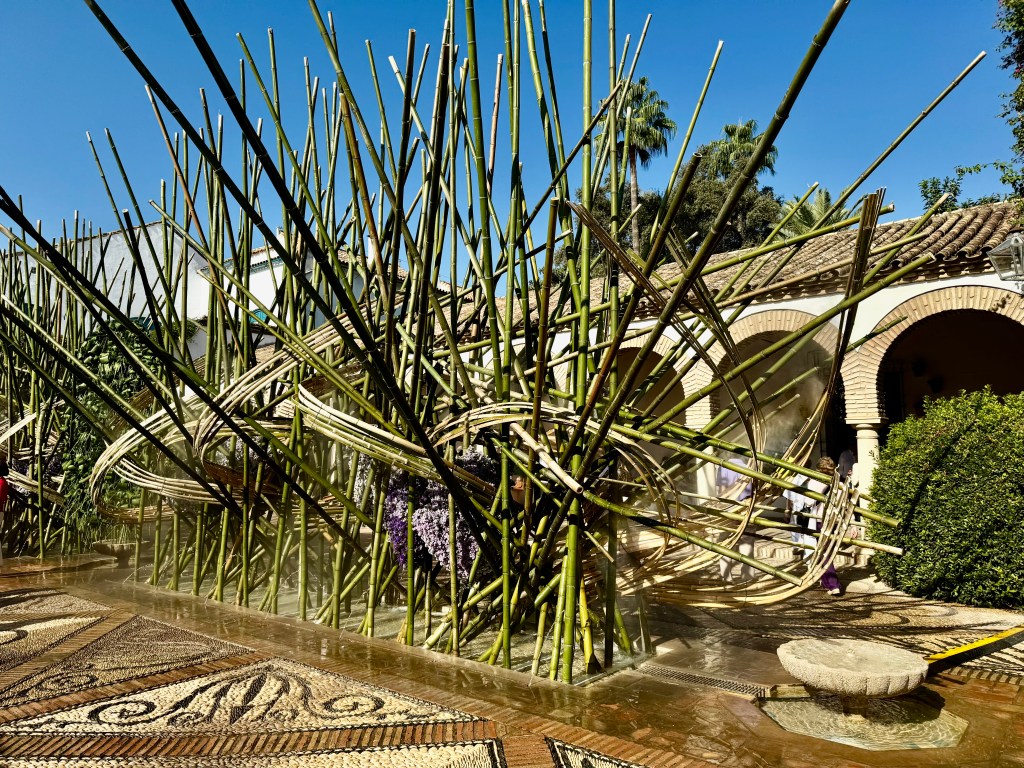
FLORA 2025’s first-place winner was Wagner Kreusch, a Brazilian who fashioned a monumental structure out of green bamboo canes, fountains, a misting feature, and purple and white aspidistra flowers. Titled Rio Flotante, or “Floating River,” his entry wowed onlookers at Palacio de Viana, the estate of the aristocratic marquises of Viana until 1980. Now a major tourist attraction, the 16th century palace has 12 plant-filled patios, each with a story to tell, and rooms displaying collections of furniture, weapons, porcelain, tapestries and paintings.
Cordoba’s Historic Heart
Threads of Christian and Jewish history, intertwined with vestiges of Roman, Visigoth and Moorish rule, emerge from every corner of Cordoba’s UNESCO-recognized historic quarter, a tourist-friendly maze of narrow lanes snaking between white buildings adorned with iron-grillwork windows, doors and balconies.
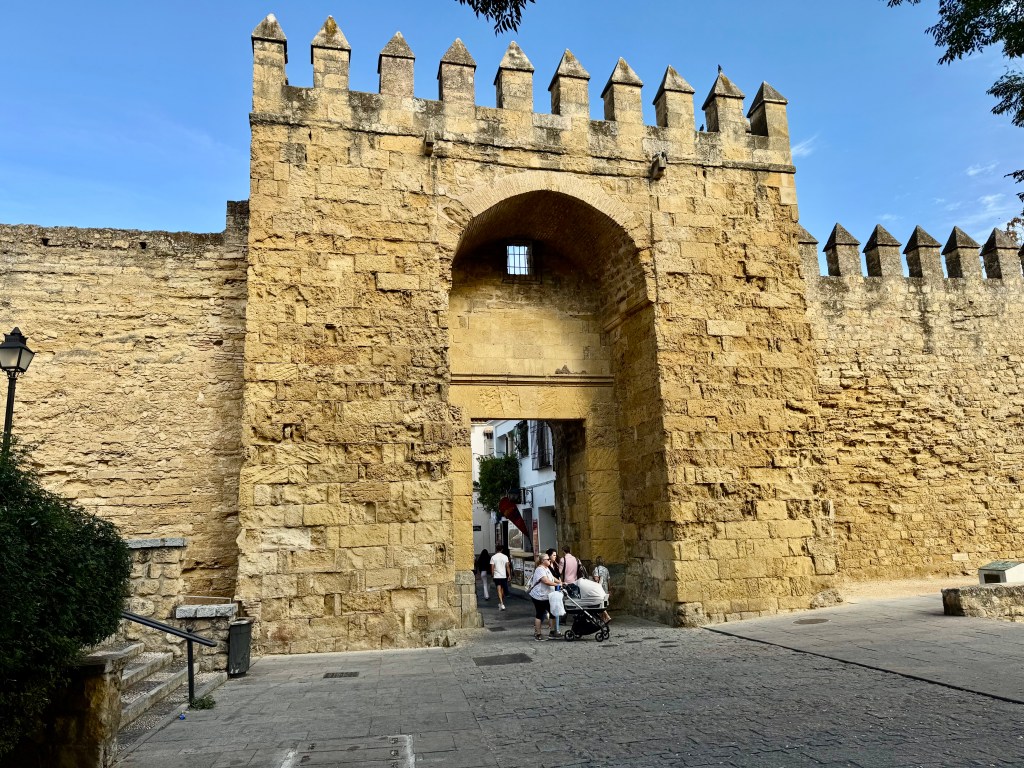
Practically all the city’s top sights lie within this easily walkable district, but it’s also fun just to wander and get lost in the labyrinth, where flower-decked patios, orange trees, and festive taverns and outdoor cafes typify the gracious lifestyle of Andalusia, the region that conjures up our most romantic visions of Spain. Within the old city walls, you’ll also find plenty of souvenir shops. A highlight for our group was a rousing flamenco show with dinner at El Jaleo, an intimate room where dancers electrified us with some thunderous stomping.
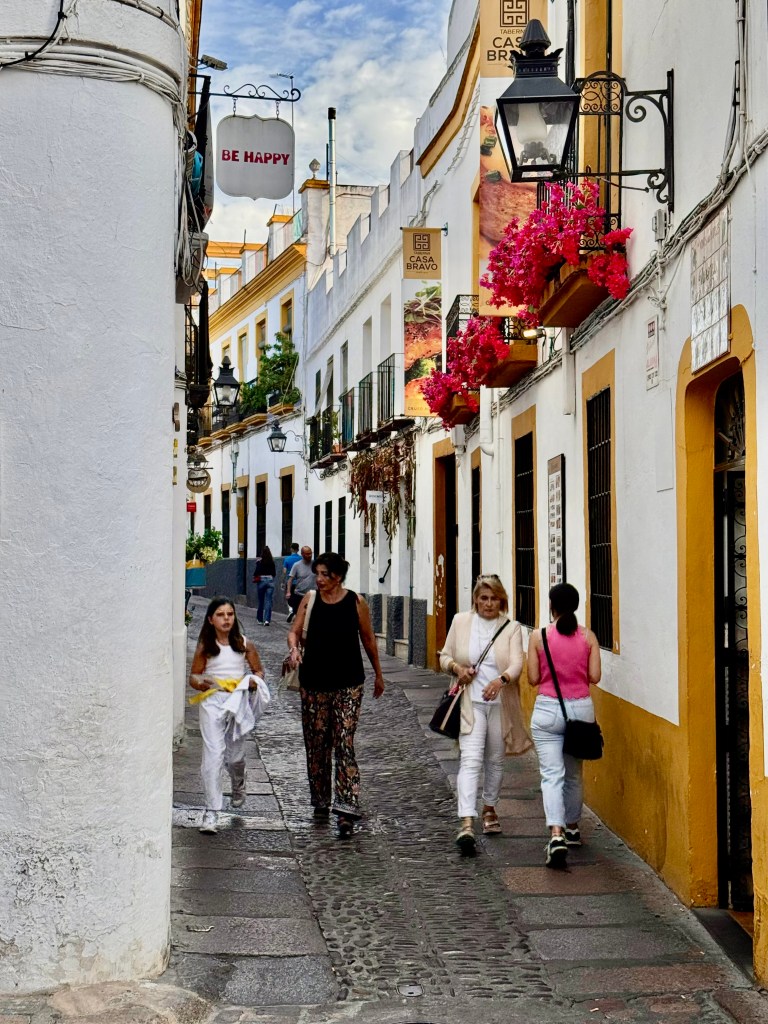
Jewish Quarter
The medieval Jewish Quarter, or Juderia, is the historic core’s most atmospheric neighborhood, and its pleasures lay right outside the door of our hotel, the NH Collection Amistad Cordoba. Featuring flower-decked alleyways and patios, along with reminders of Jewish culture that flourished in Cordoba long ago, the quarter is home to the Synagogue, built in 1315. No longer used for worship, it’s the only Jewish temple in Andalusia to survive the Inquisition in 1492, when Jews were expelled from Spain or forced to convert to Christianity. Inside the small building you see Hebrew inscriptions, Arabic decoration and even a Cross (it was used as a church in the 19th century). For many years the Jews lived in harmony with the Muslims and some held prestigious positions in the government, professions and arts. Toledo claims Spain’s other two remaining medieval synagogues.
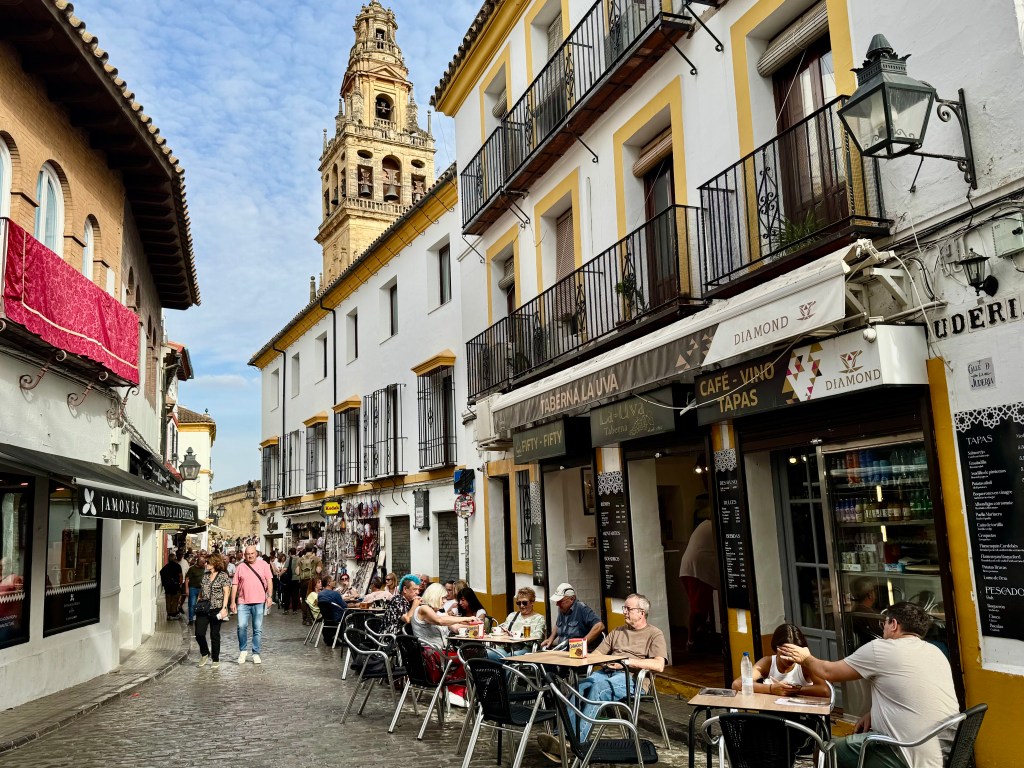
Nearby, in a beautifully restored 14th century house, Casa de Sefarad is a museum that tells the story of the Sephardic Jews in Iberia and other Mediterranean lands (a group differentiated from the Ashkenazi Jews of Central and Eastern Europe).
At the Bullfighting Museum (Museo Taurino), right across the plaza from my hotel, I learned about some of Cordoba’s greatest matadors. Though much of the exhibit text was in Spanish only, the two short audio-visual presentations provided an option in English. With a wrap-around screen, one film puts you right in the middle of the ring with a ferocious bull.
Cordoba’s Crown Jewel: The Mezquita
First-time Cordoba visitors make a beeline to the Mezquita, a former mosque that has been a church since the 13th century. Rather than destroy the mosque, the Christians decided to modify it. In fact, the church—complete with an elaborate main altar, a giant nave, an organ, religious artwork, tombs of important citizens and intricately carved Cuban mahogany choir stalls—appears to have been plopped smack into the middle of the mosque. The cavernous Mezquita (Spanish for “Mosque”) was once the second largest mosque in the world after the Great Mosque in Mecca.

A seemingly endless forest of columns and arches mesmerizes visitors to the Mezquita, a mosque turned church. It is Cordoba’s most important tourist sight. 
The Mezquita’s bell tower was built over the mosque’s minaret around 1600. 
The Mezquita, once the second-largest mosque in the world, has been a Catholic church since the 13th century.
The Mezquita’s most dazzling sight is the endless forest of marble, granite and onyx columns topped with red-and-white-striped, horseshoe-shaped double arches, Islamic style; many of the pillars were recycled from Roman and Visigothic times. Fashioned over the centuries from a jumble of architectural styles, the dimly lit Mosque-Cathedral, as it’s known, is vast, mysterious and hard to wrap your head around. The columned arcades seem to march on forever, melting into infinity. There is no other building like it.
I wanted to climb the Mezquita’s bell tower (built around 1600 over remains of the mosque’s minaret), but tickets for the day were sold out. So, I crossed the Guadalquivir River via the 2,000-year-old Roman Bridge, a wide pedestrian walkway, and took in panoramic views from the rooftop terrace of the Calahorra Tower, a crenellated 1369 structure that houses a museum of Andalusian culture.
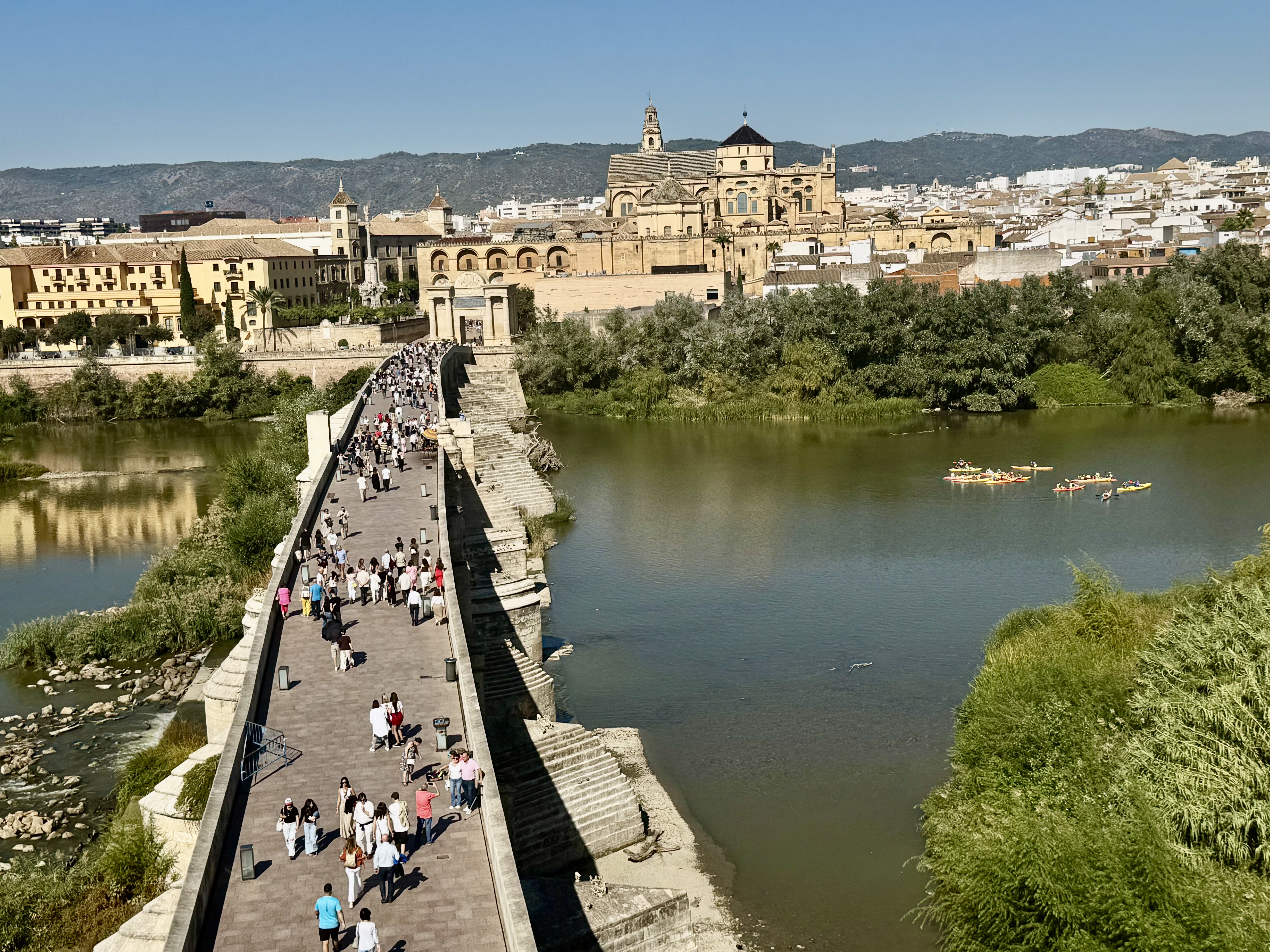
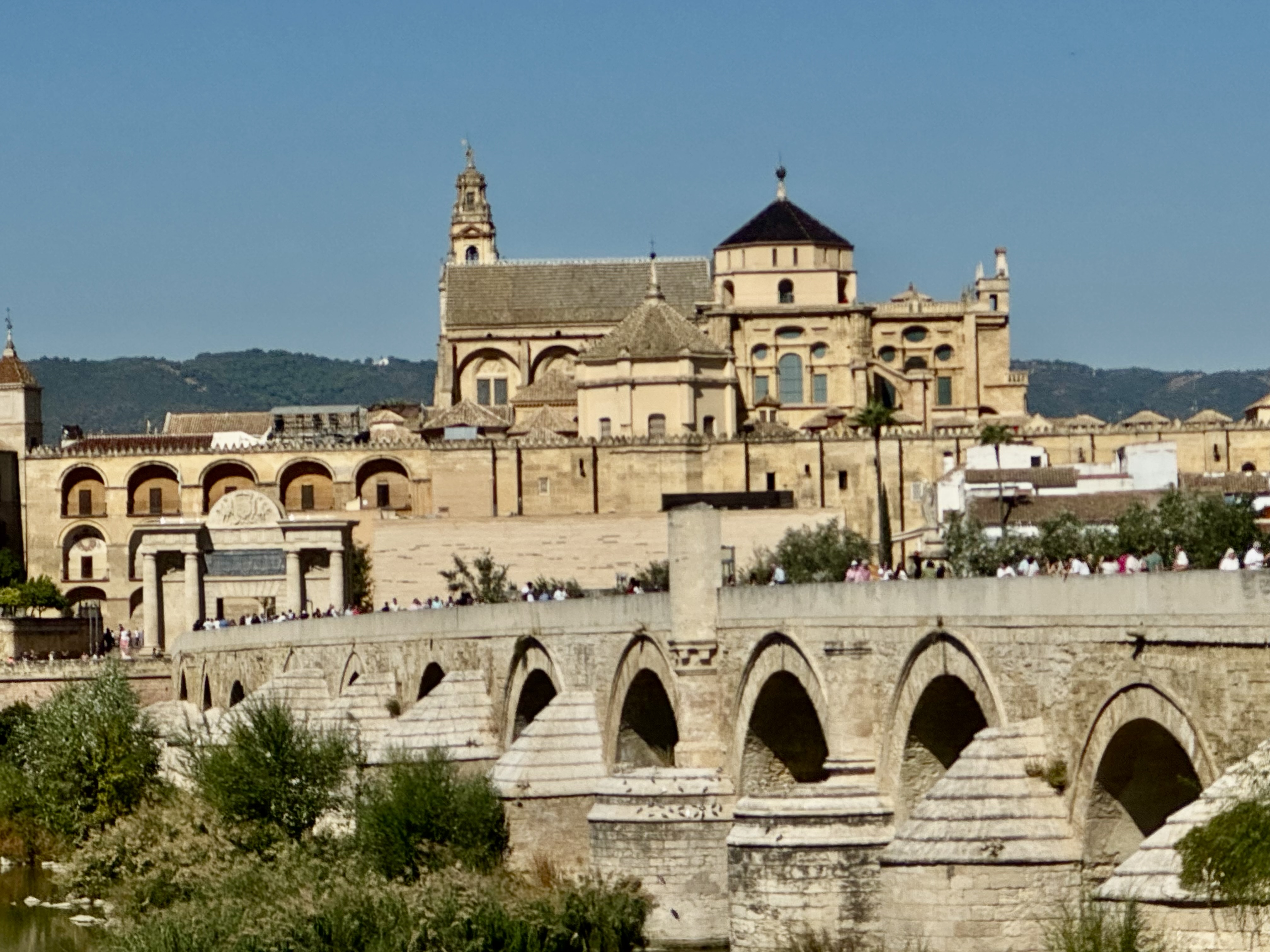
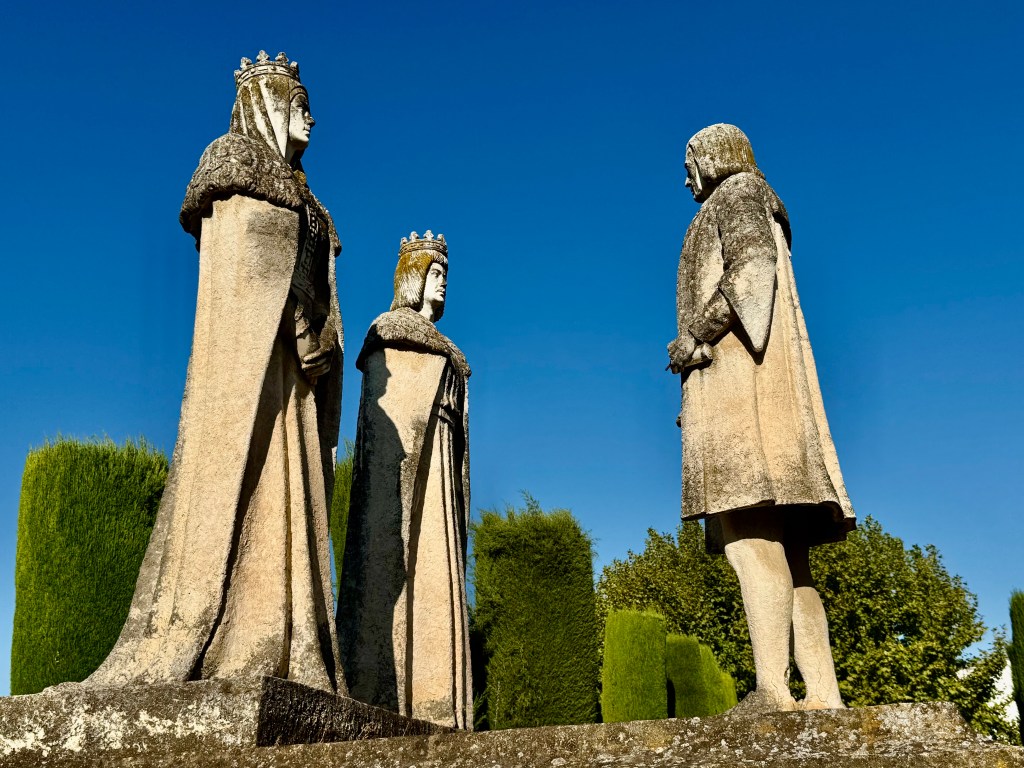
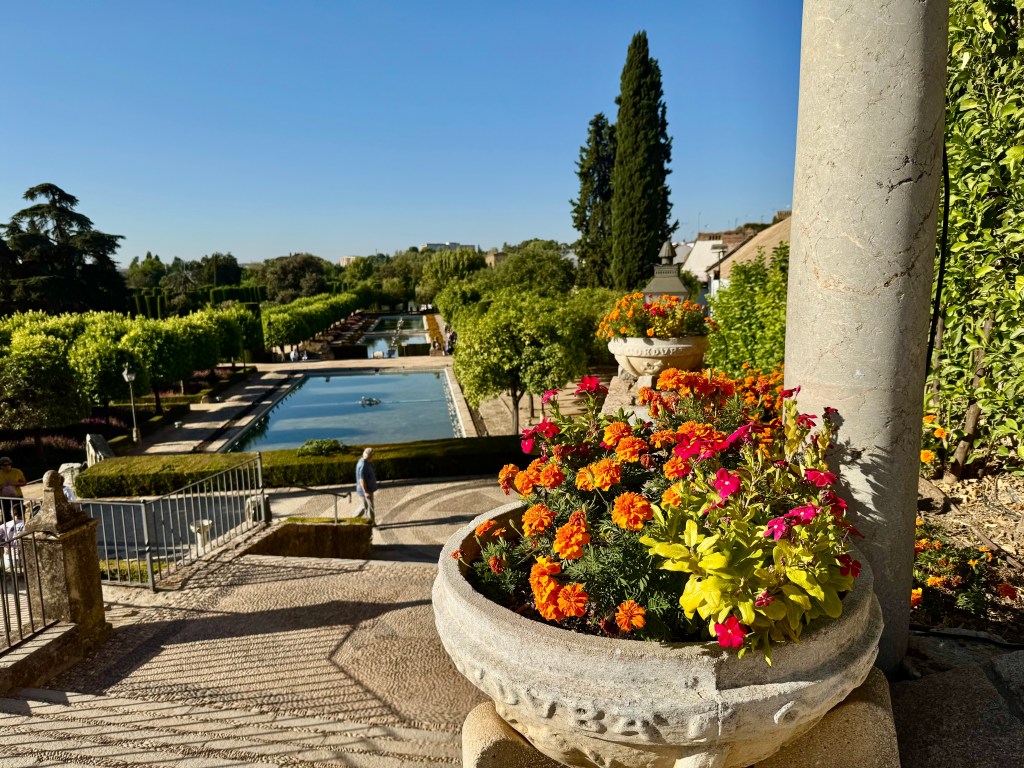
The bridge and Mezquita are a short walk from Alcazar de los Reyes Cristianos, residence of the Christian monarchs. The palace-fortress currently is closed for renovations, but I enjoyed walking through its terraced gardens, admiring the plantings and statuary. One sculpture depicts Christopher Columbus being received by King Ferdinand and Queen Isabella, sponsors of his 1492 voyage to the New World.
When it comes to destinations in Andalusia, Cordoba often gets short shrift, as Seville and Granada tend to get the most attention. But Cordoba should be on every traveler’s radar. Indeed, this overlooked city merits a day or two for a good looking over.
For more information log on to www.spain.info/en/destination/cordoba/








 European Traveler