Monastic and Modern: Central Spain’s Parador de Cuenca

Visitors to the Castilla-La Mancha region can absorb Spanish traditions at this strategically located monastery-turned-hotel

By Randy Mink

For soaking up the heritage and romance of Spain almost by osmosis, nothing beats staying overnight in one of the country’s government-owned paradors. Many of the parador network’s 90-plus hostelries occupy former castles, palaces, fortresses and other types of historic buildings. They’re a big hit with North Americans seeking out Old World flavor.

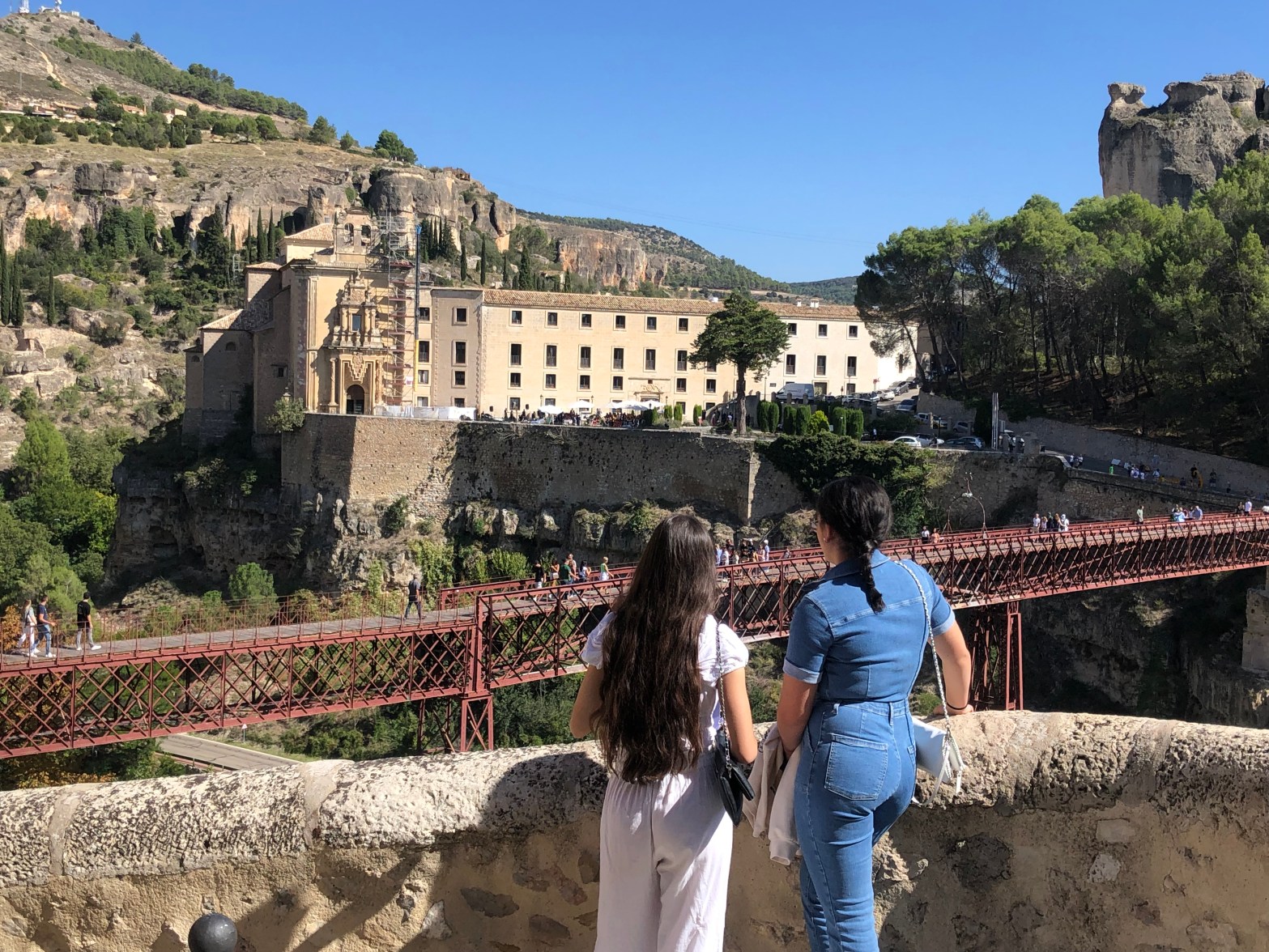
Both for its prime location and historical ambience, the 63-room Parador de Cuenca, once the monastery of San Pablo, makes an ideal home base in the enchanting city of Cuenca. Set on a rocky outcrop high above the Huécar River, the hotel affords postcard-perfect views of ancient buildings clinging to the cliffs across the gorge. And just steps from the entrance lies the city’s photogenic San Pablo Bridge, a gorge-spanning walkway that leads to the Ciudad Alta (Old City).

Parador de Cuenca overlooks the gorge-spanning San Pablo footbridge. (Randy Mink Photo)

A destination in itself, Parador de Cuenca was built in the 16th century by the Dominican order. The monastery, with a Gothic-style church, Renaissance cloister and Baroque facade, was converted into a university in the 1800s and later served as a hospital, secondary school and military headquarters.

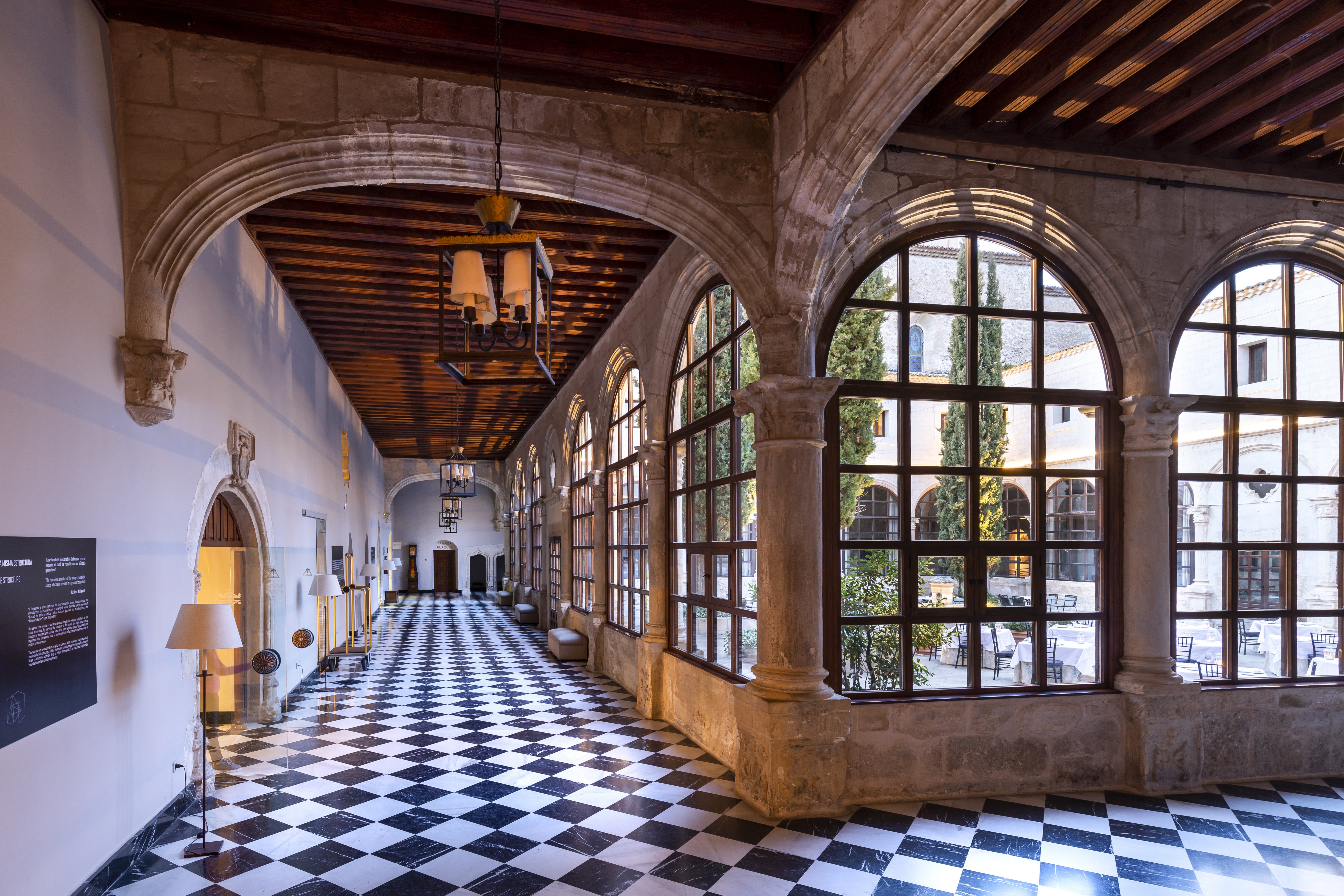
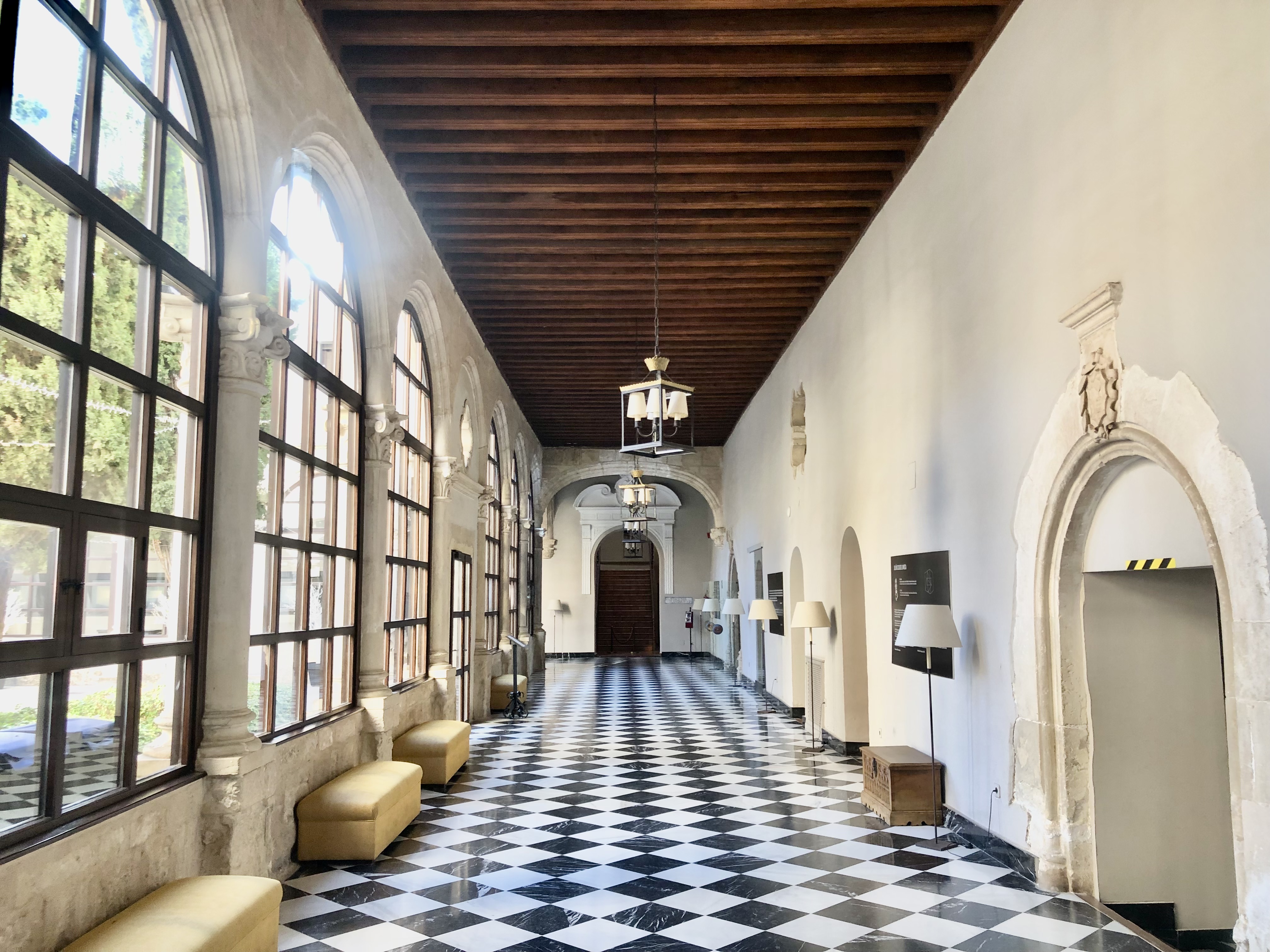
One of the hotel’s most striking features is the beautiful cloister that wraps around an open-air courtyard where you can enjoy a drink on a summer evening. The arcades, graced with semi-circular arches, beamed ceilings and black-and-white-tile floors, are accented here and there with antiques, including wooden chests and a grandfather clock. (On the Saturday of our visit, a wedding party had taken over the courtyard after a ceremony held under a tent in the plaza out front.)

The former monastery’s gracious cloister has been well preserved. (left, Paradores de Turismo de España; right, Randy Mink Photo)

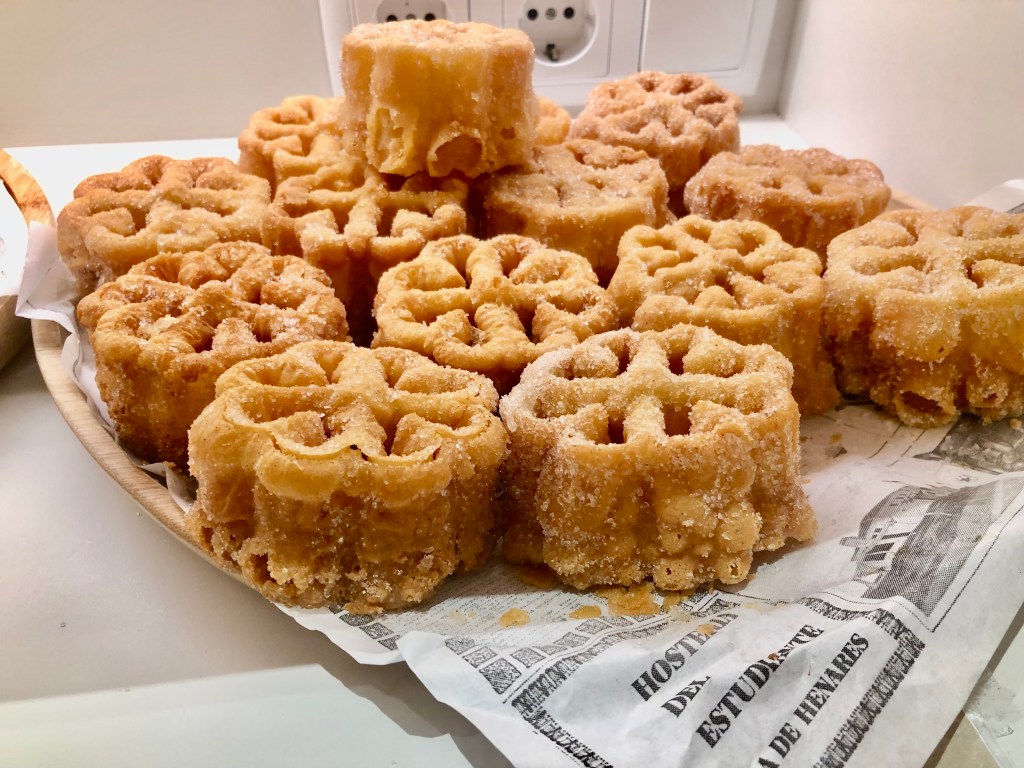
Also impressive is the coffered wooden ceiling of the parador’s restaurant. Once a chapel where monks prayed, the vaulted room is a heavenly place for breakfast. At the buffet we helped ourselves to fresh fruits, meats, cheeses, yogurt, artisan breads and all kinds of homemade pastries. A fan of baked goods, I filled up on mini brioches with chocolate chips, pretty pink-frosted strawberry chocolate donuts, shortbread cookies made by nuns from a local convent and Manchego flowers (or flores manchegas), a flaky, flower-shaped pastry of fried dough dusted with sugar and cinnamon.

Among the many pastries offered at the parador’s bountiful breakfast buffet are Manchego flowers, or flores manchegas. (Randy Mink Photo)


From the a la carte menu we could order piping-hot churros or eggs any style, but both days I went for migas, a humble dish that became a favorite of mine while traveling in Spain. A satisfying comfort food, migas combines fried crumbs from stale bread (soaked in water to get moist), olive oil, garlic, paprika (coloring it orange) and bits of chorizo. The crispy concoction is usually topped with a fried egg.

Paradors are known for purveying the best in Spanish gastronomy, and the restaurant’s dinner menu features many dishes with traditional recipes from central Spain’s Castilla-La Mancha region. Entrees include shoulder of suckling lamb, Manchego-style roasted lamb with rosemary sauce, and baked cod with Manchego ratatouille and saffron sauce.

The word “Manchego”—known to North Americans as the name of a prized, semi-hard sheep’s milk cheese—and its various forms refer broadly to the La Mancha region. A man from La Mancha would be a Manchegan (with a capital “M”) in English, or a manchego in Spanish.

To explain it further, Americans have only heard the adjective manchego in reference to the cheese, so often when they see the popular Spanish vegetable dish, pisto manchego, they assume it has to do with cheese, but it actually has no cheese at all; it just means it’s a Manchegan dish. The parador’s menu offers a selection of Manchego cheeses, or quesos manchegos.

Like the dining hall, the bar evokes the spirit of the old monastery. Just look up at the lovely religious ceiling frescoes framed by ornate plasterwork.

Summer guests can enjoy the parador’s swimming pool. Long ago, the parador’s dining room was the monastery’s chapel.(Randy Mink Photos)


Across the road are the tennis courts, outdoor swimming pool and party room. The main building has a fitness room.

The high-ceilinged guest rooms at Parador de Cuenca are tastefully appointed. My third-floor nest had a desk, TV, refrigerator and individual temperature controls. There were two floor lamps, two upholstered chairs and a coffee table. The red-tile floors and carved wooden doors lent a rustic look. Bathroom amenities included vanity and dental kits, make-up mirror and hairdryer. In both the bedroom and bathroom, windows let in fresh air and allowed me to hear crowing roosters at the farmstead across the river.

For information on the paradors of Spain, visit www.paradores.es.

Saxony’s Sweets and Treats Take the Cake

Story and photos by Alison Ramsey

There’s something irresistible about German bakeries—the fresh brötchen and Berliners, croissants, and the bold espresso you can order alongside—something that makes it feel okay to stop at various locales throughout the day, even beyond just a morning coffee and pastry. It seems that a thick slice of cake and a mug of strong, steaming coffee any time of day makes a whole lot of sense when you’re in a region with such a rich baking history. Dresden, the capital of Saxony in Germany, and nearby Meissen and Leipzig have much to offer snack lovers when it comes to pastries and cakes. So pour a fresh cup, heat up a bun, and read all about the role Saxony played in the rise of gluten-filled goodness.  

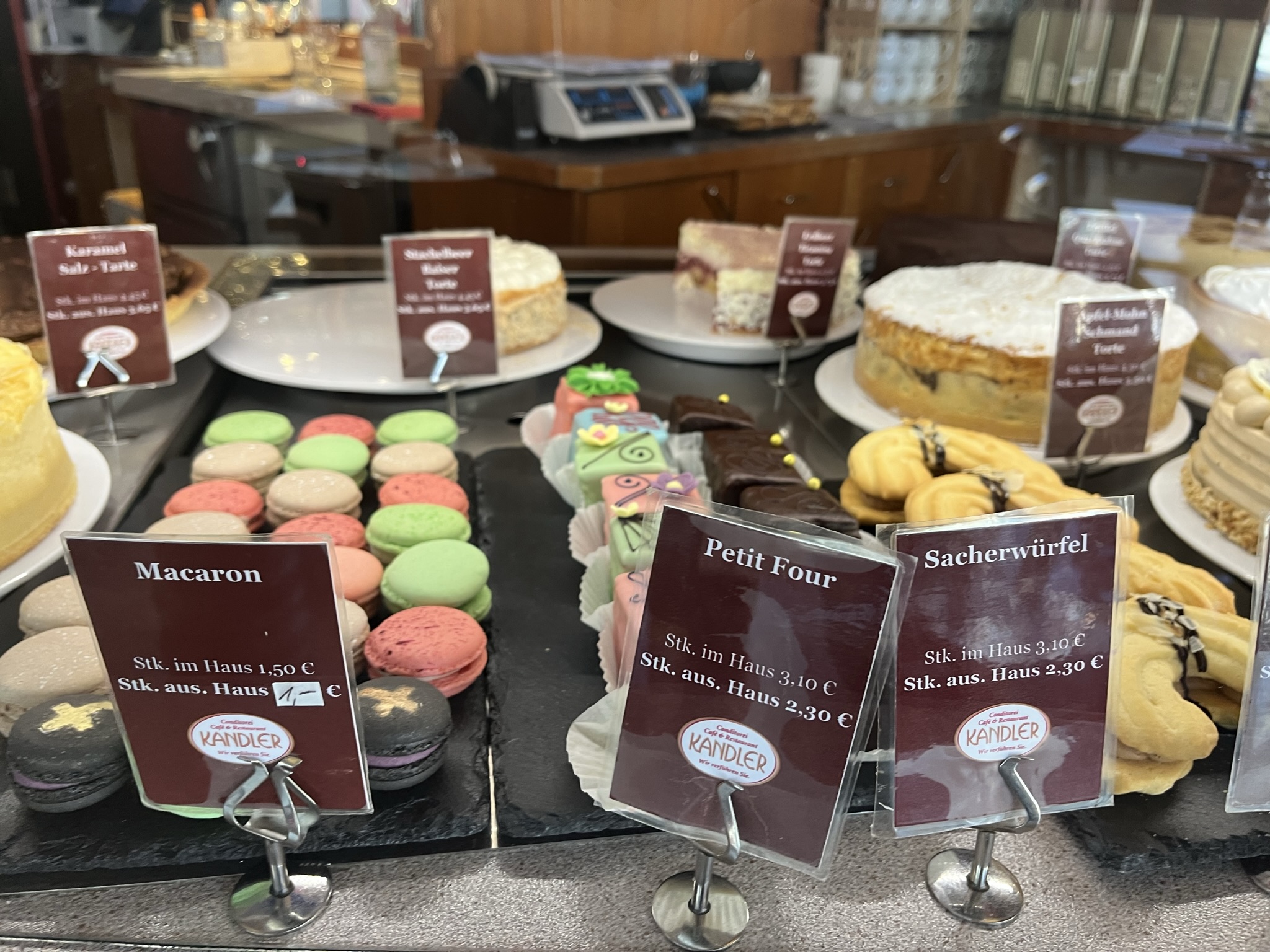
The five locations of Kandler Konditerei in Leipzig are always stocked with sweet temptations.

Russisch Brot
During the late 19th century, Dresden-based master baker Wilhelm Hanke adopted the 1845 St. Petersburg, Russia, recipe for Russisch Brot (Russian bread), which are crunchy glazed cookies made from sugar, egg whites, water, and flavoring, and formed into the shapes of alphabet letters. These are sold under the Dr. Quendt label and remain a popular Christmas treat or a delicious snack to help teach reading. The letters “M” and “W” are too fragile to be stable, so Dr. Hartmut Quendt ensured bags contain mirrored 1’s that snackers can use to create their own “M” and “W” shapes. It’s clear permission to play with your food!

Stollen
Dresden is also the birthplace of the authentic stollen Christmas cake—the Dresdner Christstollen. When stollen was first baked in the 1400’s, under the supervision of the church council, the bread was not allowed to contain butter or milk during Advent, so it was a dry and bland pastry consisting of flour, yeast, oil, and water. Ernst of Saxony and his brother Albrecht appealed to the Pope and asked that the dairy ban be lifted, so they could replace the oil with butter, as butter was cheaper than oil at the time. The appeal was denied, but finally, five popes later, Pope Innocent VIII sent Dresden the famous 1491 “Butter Letter,” in which he granted permission for dairy ingredients to be used in the stollen—although the Dresden bakers must, in return, pay a fine to be used toward the building of churches.

In 1730, Augustus the Strong, a stollen lover, commissioned a group of 100 Dresden bakers to bake an almost 4,000-pound loaf, which was brought to the king’s table using eight horses. A giant oven was built especially for this occasion, and an oversized knife was designed specifically for the event. This is the basis for the annual Dresdner Stollenfest (or “Striezelmarkt”), which takes place in Dresden the Saturday before the second Sunday in Advent. The festival is a highlight of the pre-Christmas season and celebrates the stollen baking tradition, featuring a colorful parade and the sale of varieties of stollen.

A huge stollen is still made annually and divided into smaller pieces on a specially shaped stollen cutting board—using a 26-pound replica of the original baroque knife from the Residenzschloss (Royal Palace) Court Silver Collection of Augustus the Strong—with cake portions sold to raise money for charity. The Stollenfest knife design features a swooping stainless-steel blade and Augustus the Strong’s coat of arms and rose tendril.

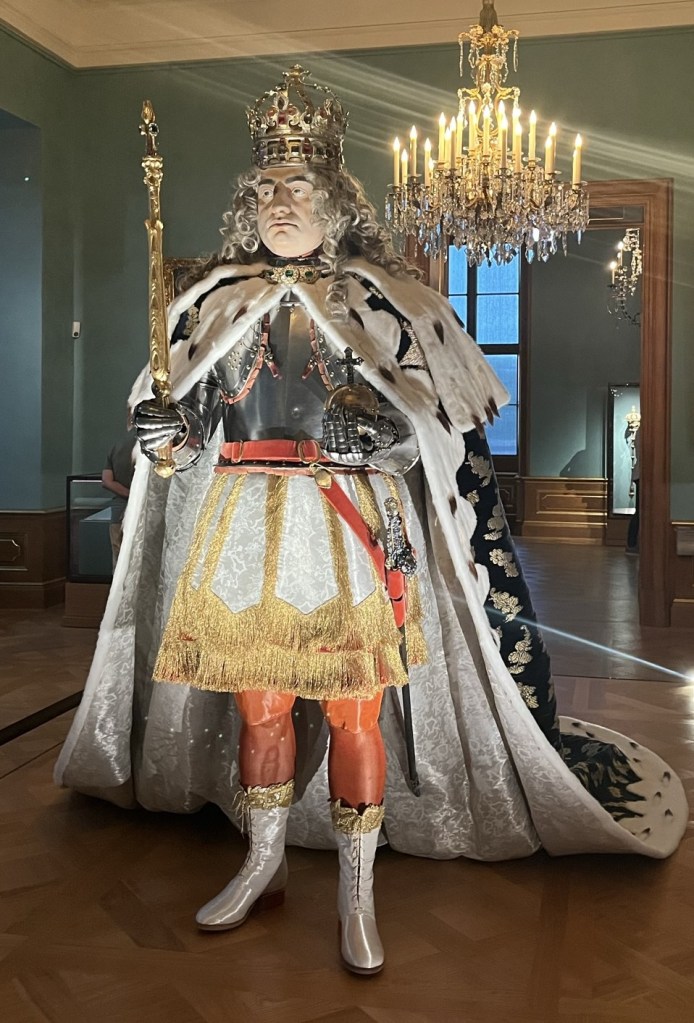
Left: A Dresden bakery displays its stollen seal. Right: This life-sized figure of Augustus the Strong is displayed in the Dresden Residenzschloss.

Stollen has its own protected name and registered trademark, and the recipe needs to follow certain guidelines to earn the golden, oval “stollen seal.” The cake only passes the test for high quality and validity if it contains no margarine and no artificial flavors or preservatives. The Dresdner Stollen Association requires that each cake contain butter, rum-soaked raisins, candied orange peels and lemon peels, and sweet and bitter almonds to receive the seal. Outside of these requirements, the approximately 110 Dresden bakeries that produce this sweet each use their own secret spice mixture, passed down through generations, which results in varied and distinctive flavors from bakery to bakery. Each stollen is labeled with a 6-digit seal number, to identify and track the bakery of origin. Also identifiable by the European Union-protected geographical indication, true Dresdner Christstollen is marked with a blue and yellow Geschϋtzte Geografische Angabe (“protected geographical indication”) sticker. Dresdner Christstollen can only be produced within Dresden itself or within specific boundaries surrounding the capital. This cake is best enjoyed by removing slices from the middle and pushing together the ends, eating the cake from the center outward. It is seen as traditional Dresden “finger food,” with no need to use a fork.

Eierschecke
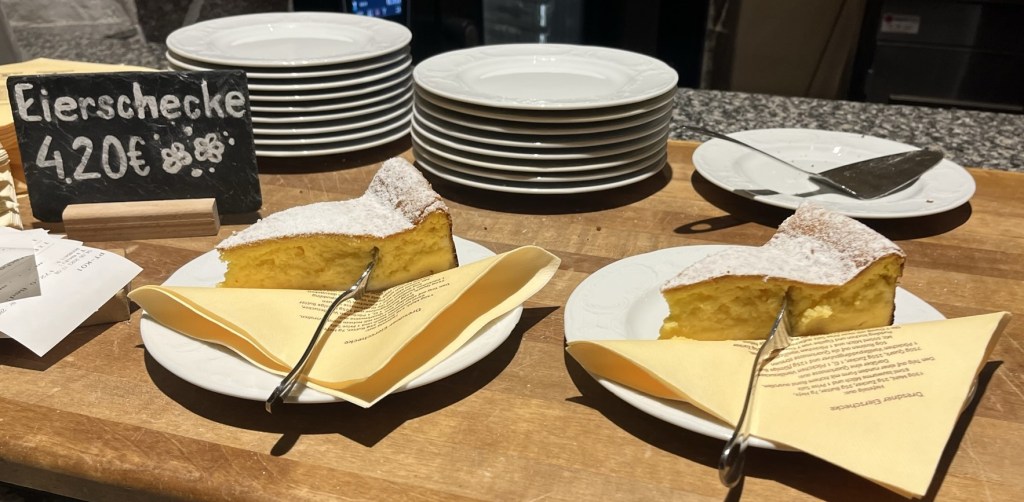
For something slightly sweeter, the Dresdner Eierschecke is a popular pastry choice. It’s a 3-layer confection consisting of a cake base topped with a custard-like quark cheesecake center, and a layer of sweet vanilla egg white on top, dusted with powdered sugar. Only found in Saxony and neighboring regions, this treat is often served with coffee or tea, and makes its way into celebratory menus for birthdays, weddings, and holidays. Some bakeries add chocolate, dried fruit, and sliced nuts, but the original recipe is simply the three-layered stack of varied texture.

Eierschecke and other traditional Saxon specialties are served at the Pulverturm.

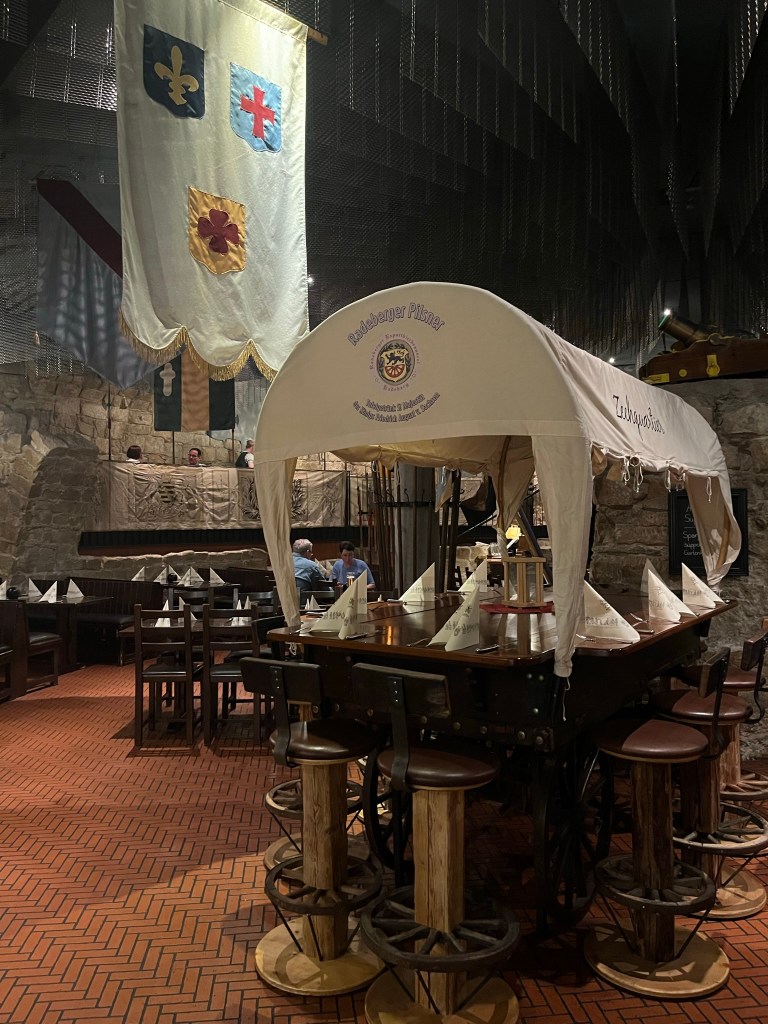
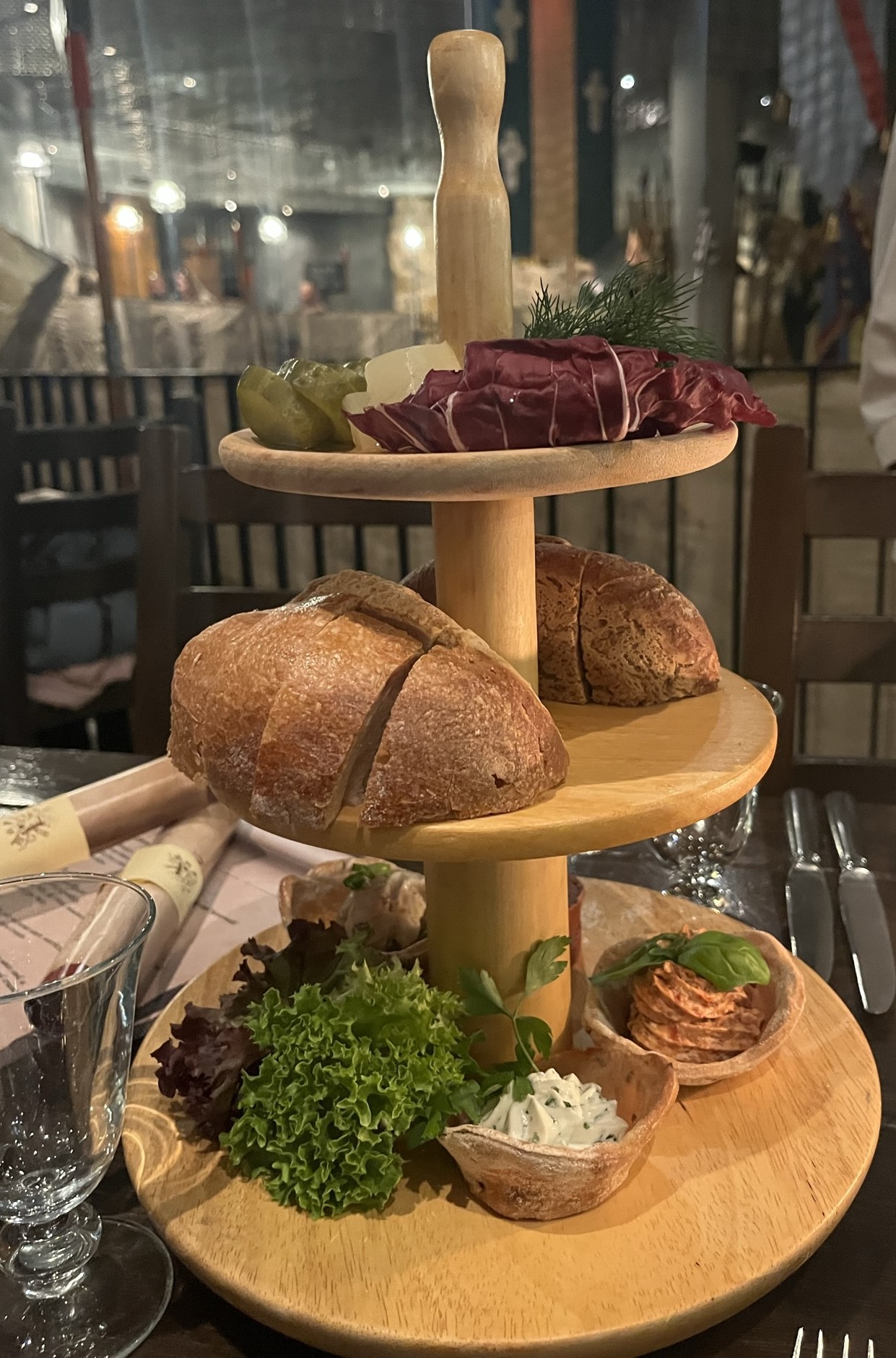
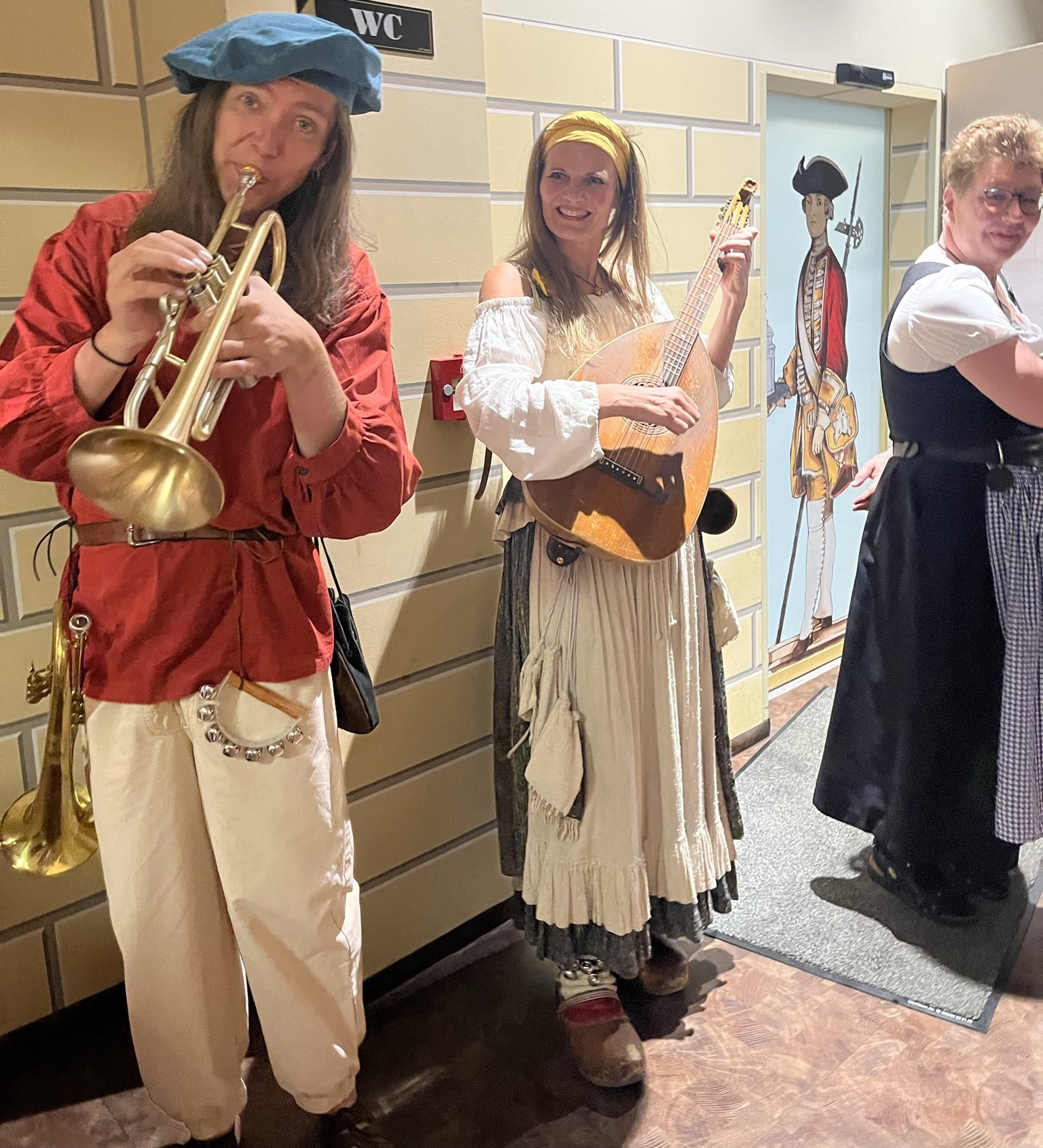
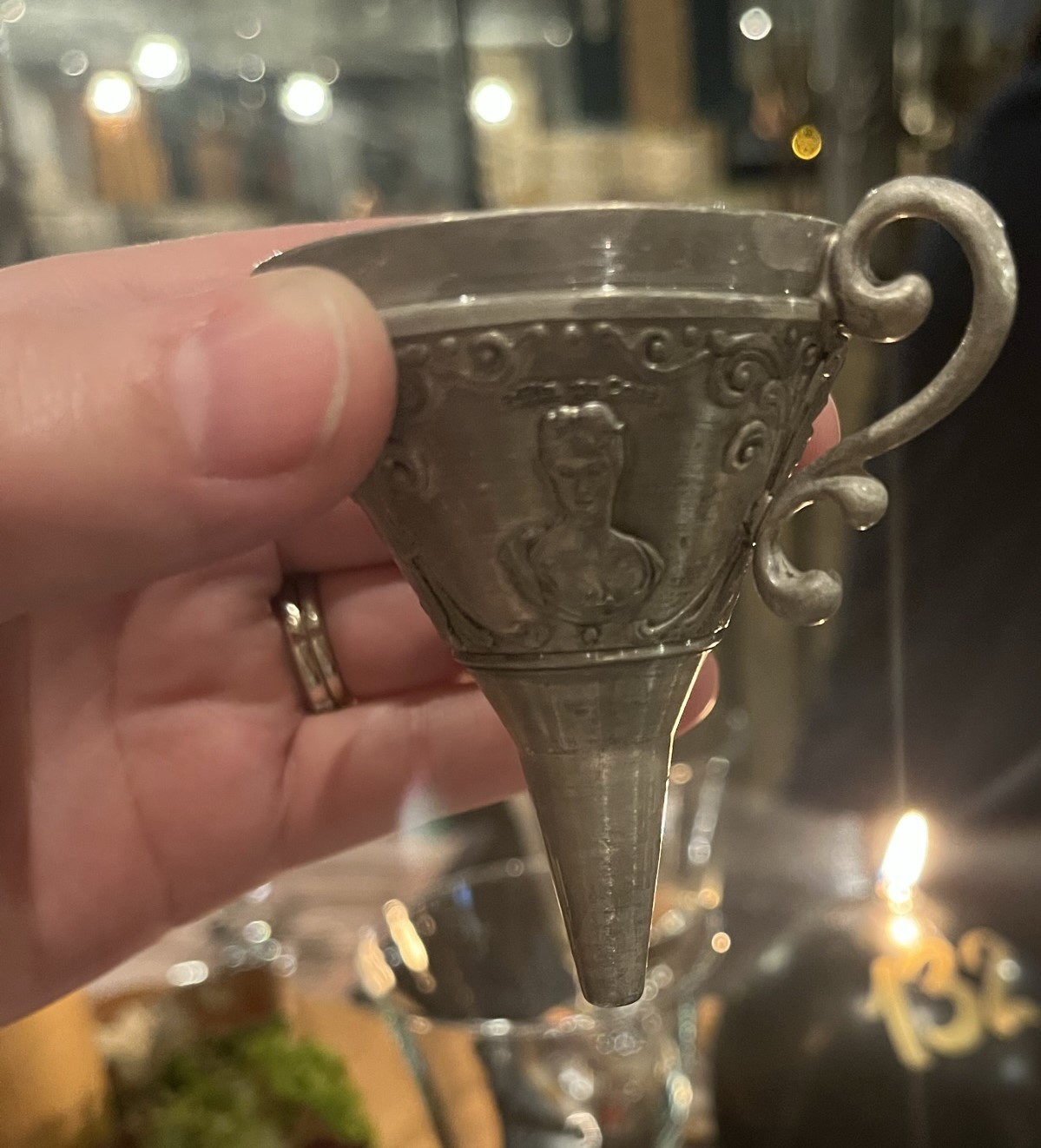
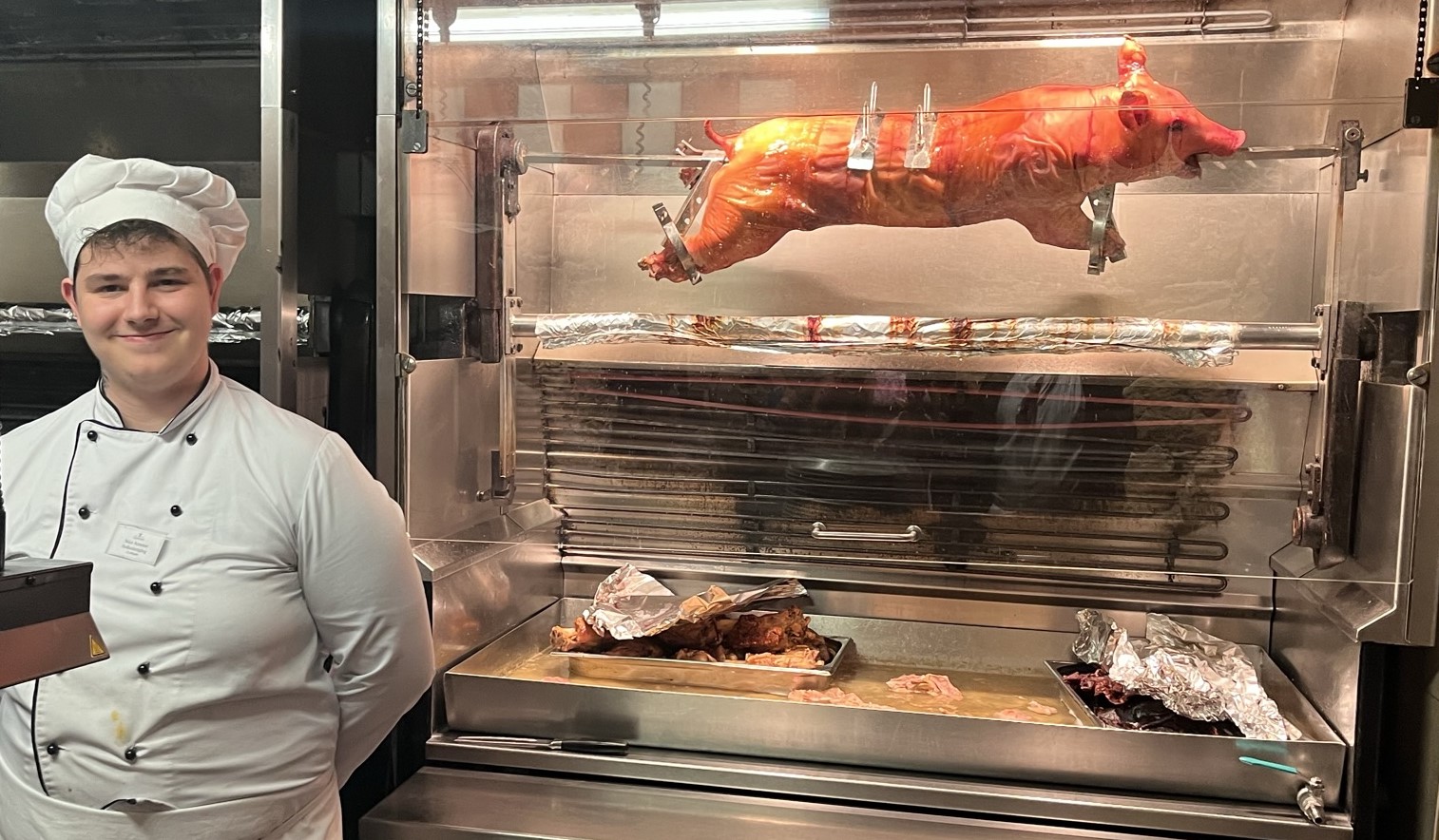
Eierschecke is on the dessert menu at the Pulverturm restaurant next to the Frauenkirche. A historic vaulted powder tower containing portions of the original walls, Pulverturm delights guests with Saxon specialties, homecooked suckling pig, and rousing tableside performances by lively, costumed, character musicians. Be sure to try your hand at funnel-drinking here—a practice that stems from Augustus the Strong’s love of Saxon wines but his court’s dislike for washing numerous wine glasses. The court created a special funnel fit to Augustus’ mouth measurements, so servants could pour the wine directly through the funnel into his open mouth. At the Pulverturm, a variation on this method involves drinking herbed liquor from tiny funnels. Named “Cosel’s Tears,” the drink’s herbs were said to grow from the tears of Augustus’ former mistress, the Countess of Cosel, whom he banished to Stolpen Castle for more than 40 years because of her interfering interest in politics. After a satisfying Saxon meal, have a sugar-dusted slice of Eierschecke and cup of espresso to complete the full Pulverturm experience.

Pulverturm restaurant in Dresden is a full-service, medieval-themed entertainment and dining experience.

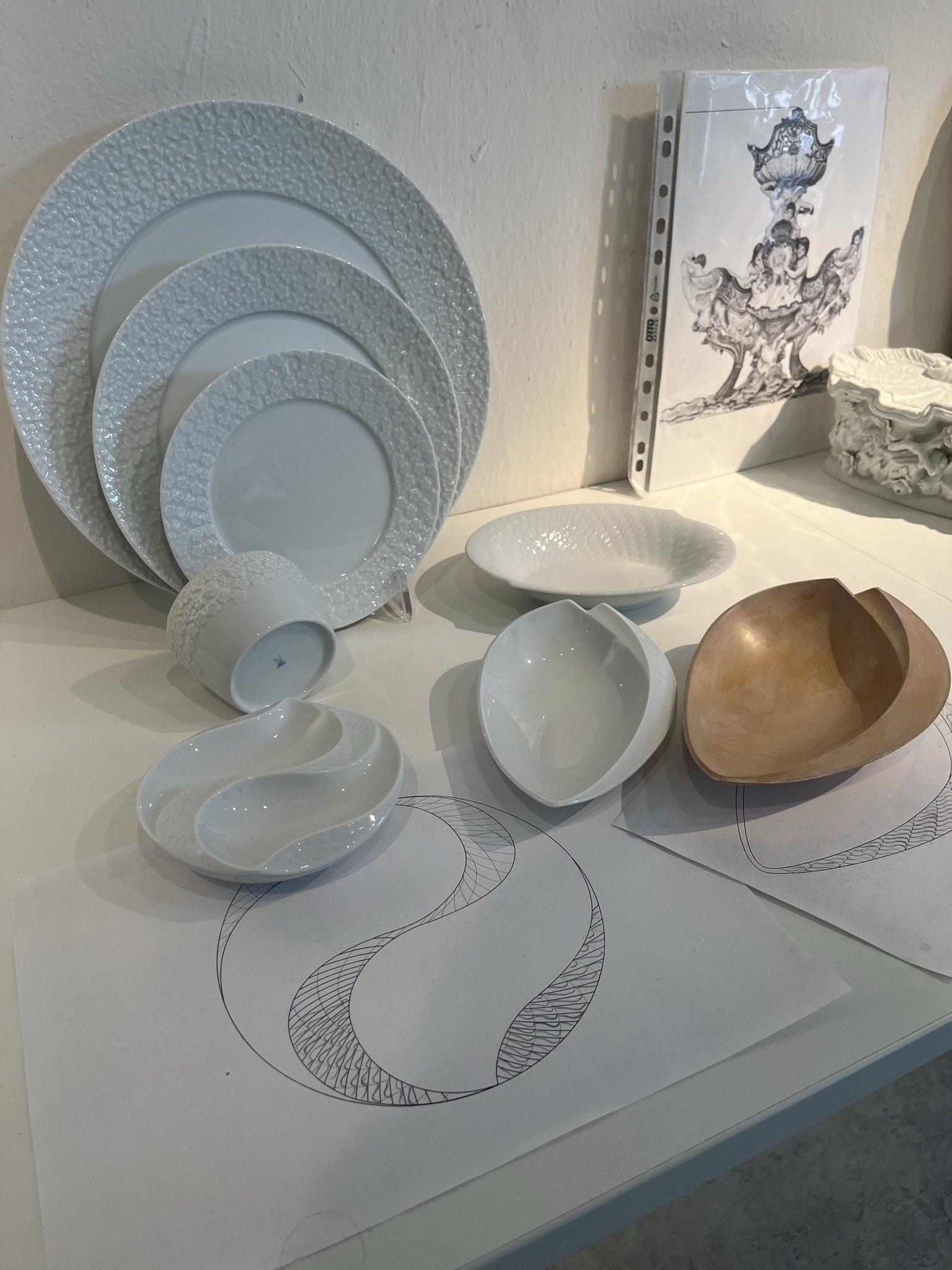
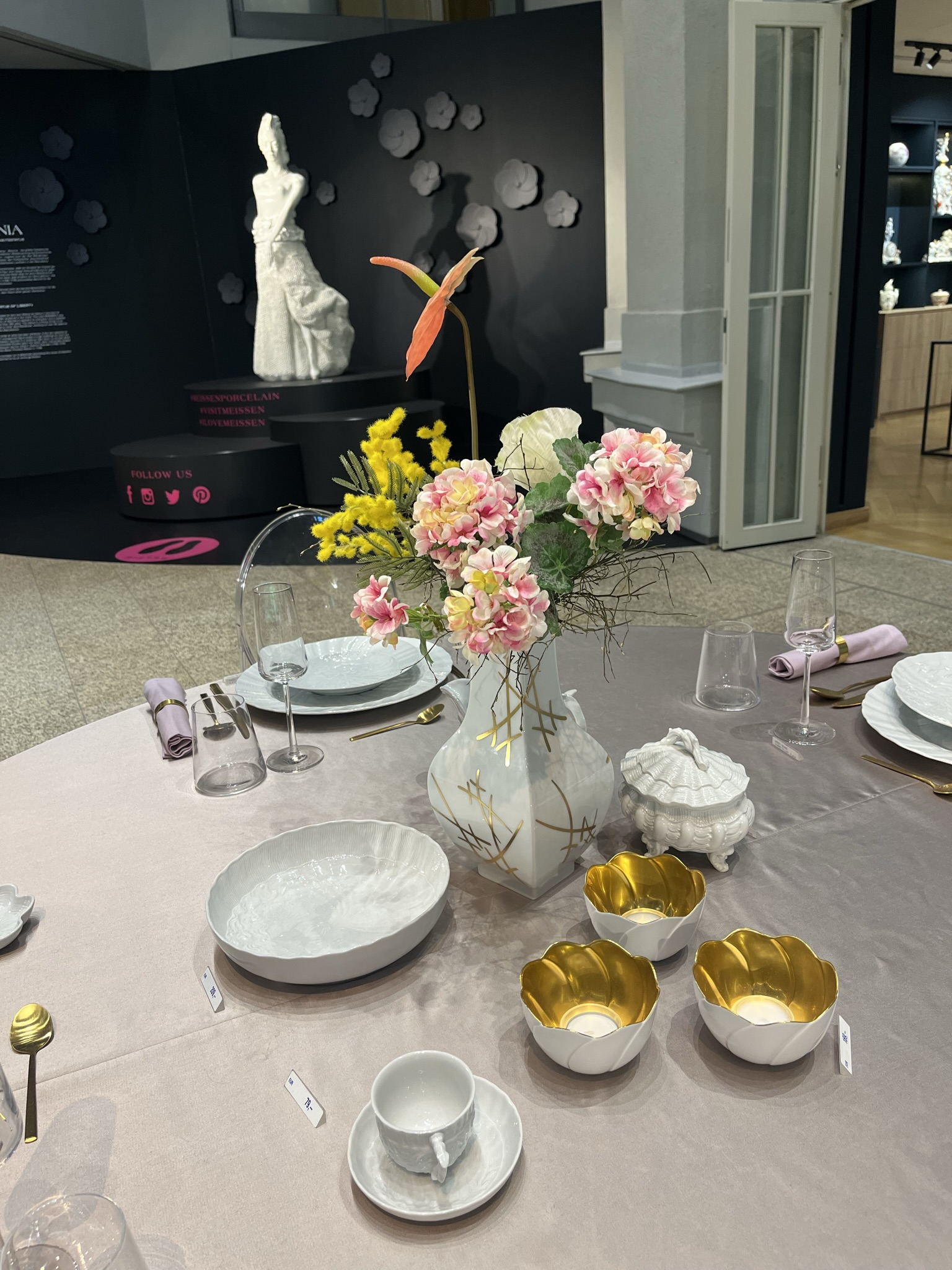
To make your own Eierschecke, try the recipe provided by Meissen porcelain manufactory underglaze painter Marlies Moser in the cookbook Cooking With Meissen. A 30-minute drive from Dresden, the Meissen manufactory creates fine porcelain vessels on which to serve tempting treats. At this company that labels its pieces with the forgery-proof “Crossed Swords” trademark, Moser worked for 40 years in production, painting underglaze onto unfired, porous porcelain—a skill that requires much training, a high level of precision, and years of experience—because the paint immediately penetrates and spreads, making later touchups impossible. The work of an underglaze painter is especially important for iconic Meissen designs like the 1731-created “Blue Onion,” whose luminous, metal oxide cobalt blue color only releases upon final firing. Moser now works in the demonstration workshop at the House of Meissen, and contributed her “Leutewitz Eierschecke” recipe for the company cookbook. Imagine a piece of this cake presented on a beautiful artisan-decorated Meissen porcelain dish!

The Meissen company cookbook features 24 recipes from appetizers to desserts. Saxon potato soup, Saxon meatballs, beef sauerbraten, quark dumplings with plum compote, and an inverted apple tart are among the list, and each submission includes a biography of the Meissen employee who contributed it. This beautiful, full-color hardbound book shows the food plated on fine porcelain tableware and includes sections about dining etiquette and the history of the craft.

Meissner Fummel
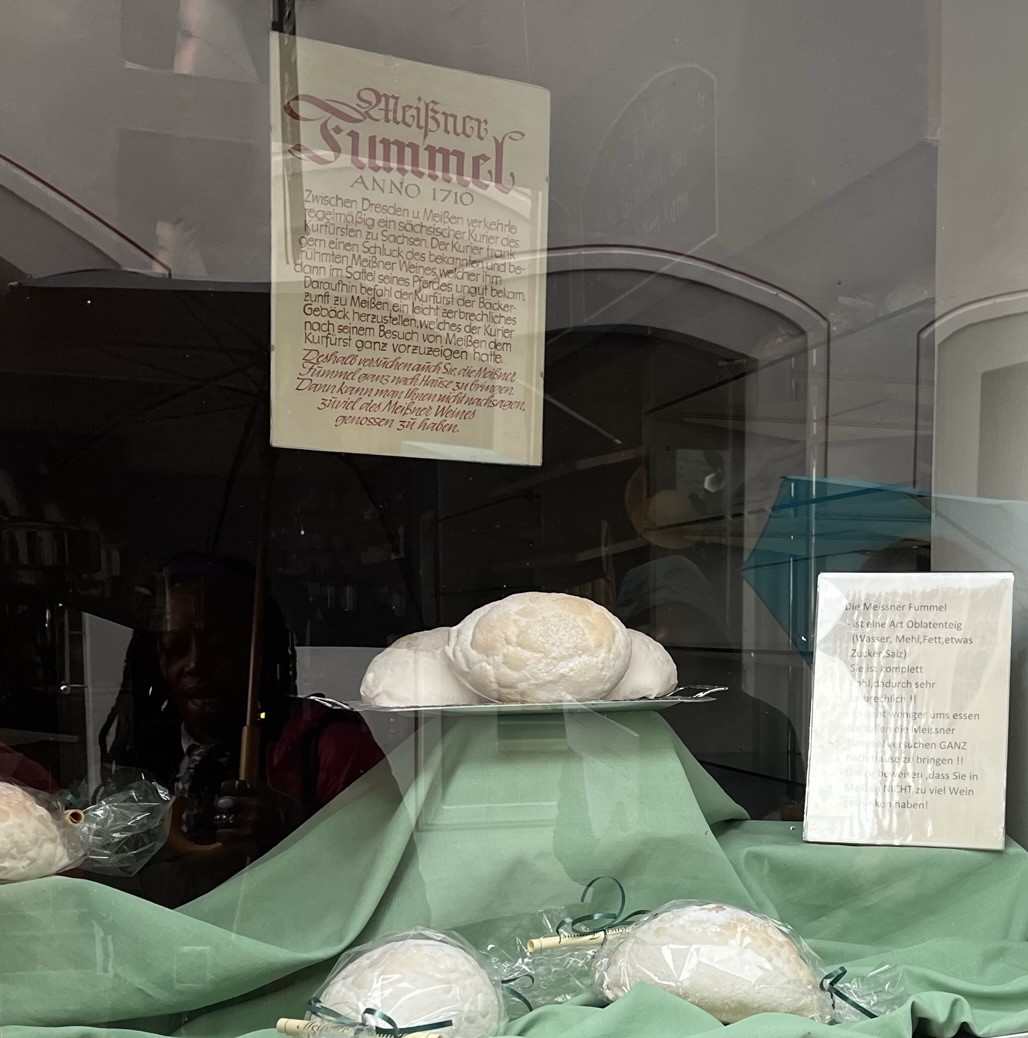
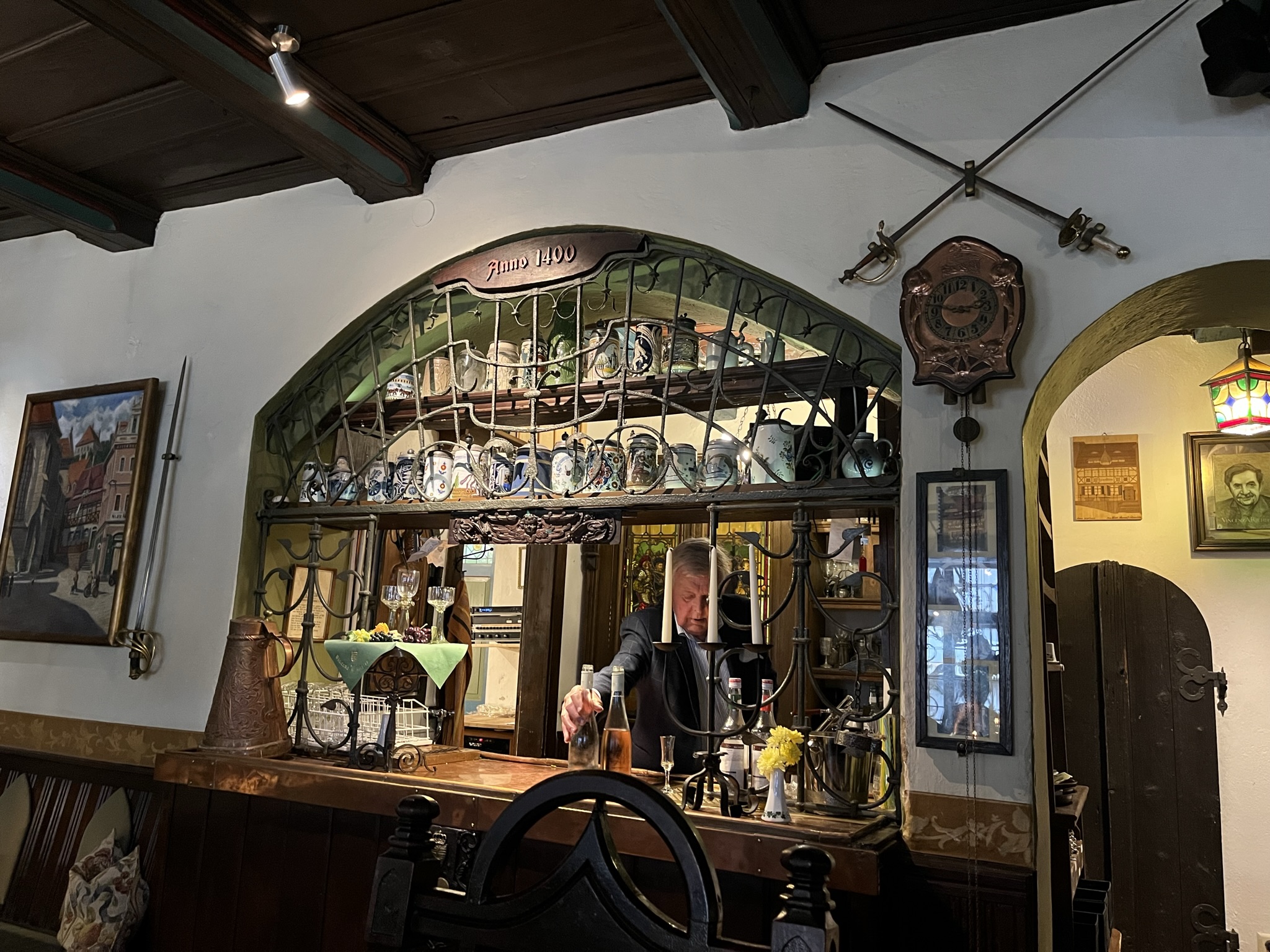
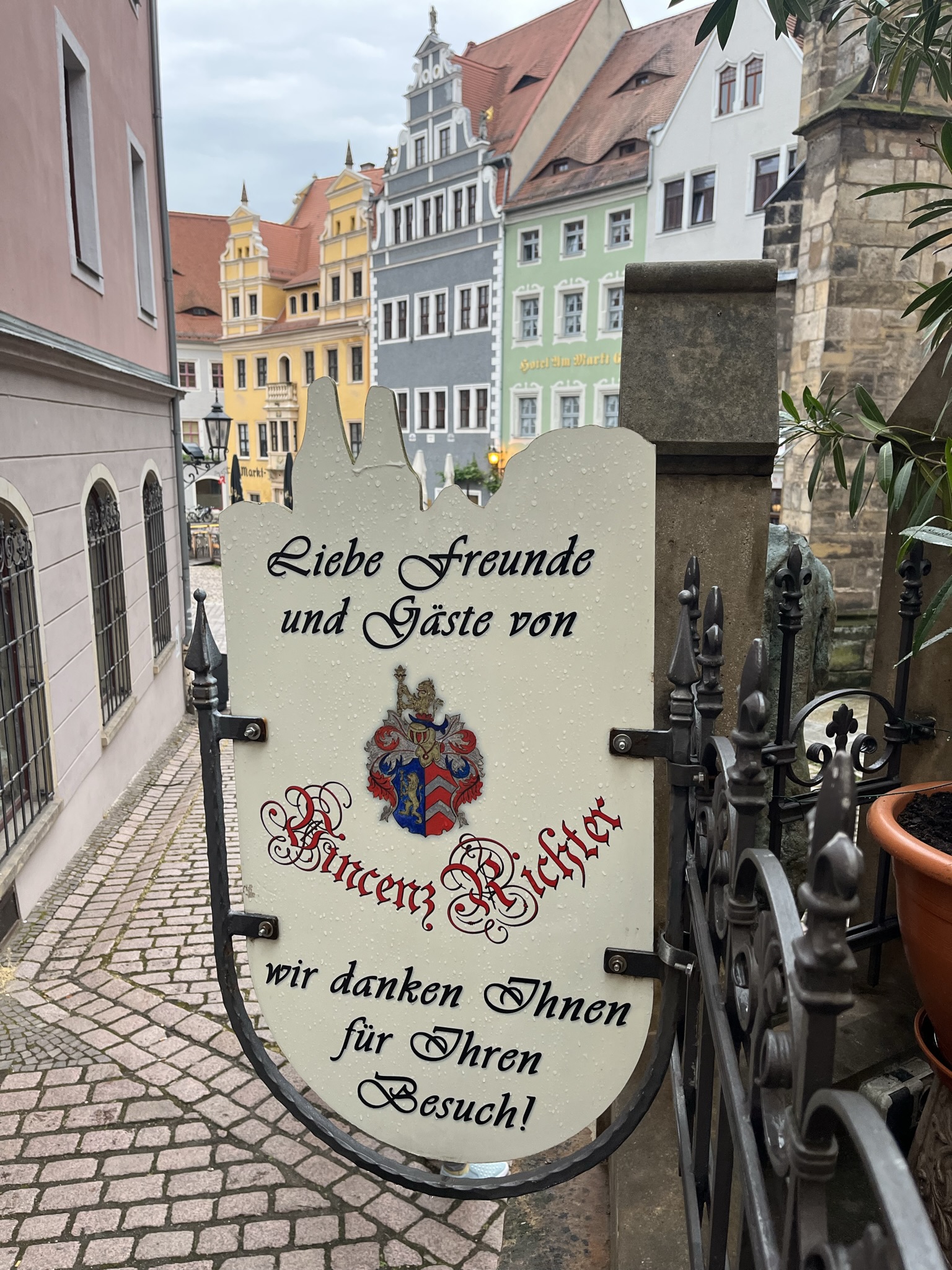
Eighteenth century legend tells that Augustus the Strong, who first commissioned the now-famous Meissen porcelain, used to send couriers back and forth between Meissen and Dresden with factory status updates. The town of Meissen is known for its excellent wine production (try the romantic, antique-filled Vincenz Richter wine restaurant!) and the couriers would often arrive back at the Dresden court intoxicated. Augustus’ solution was to instruct Meissen bakers to invent a pastry so fragile that it could remain intact only if delivered by a sober courier. The result was the hollow, brittle, extremely delicate Meissner Fummel cake, which had to be safely delivered to the Saxon Elector along with the progress reports about the porcelain. Made only with simple ingredients, Fummel is essentially a shell of flaky bread sprinkled with powdered sugar. Zieger Konditerei in Meissen produces this balloon-like baked good, which has been a protected geographical indication since 2000 and can only be manufactured in Meissen. The Fummel is often given to newly married couples in Meissen as a symbol of love’s fragility, and small gifts or cards are sometimes tucked into the center.

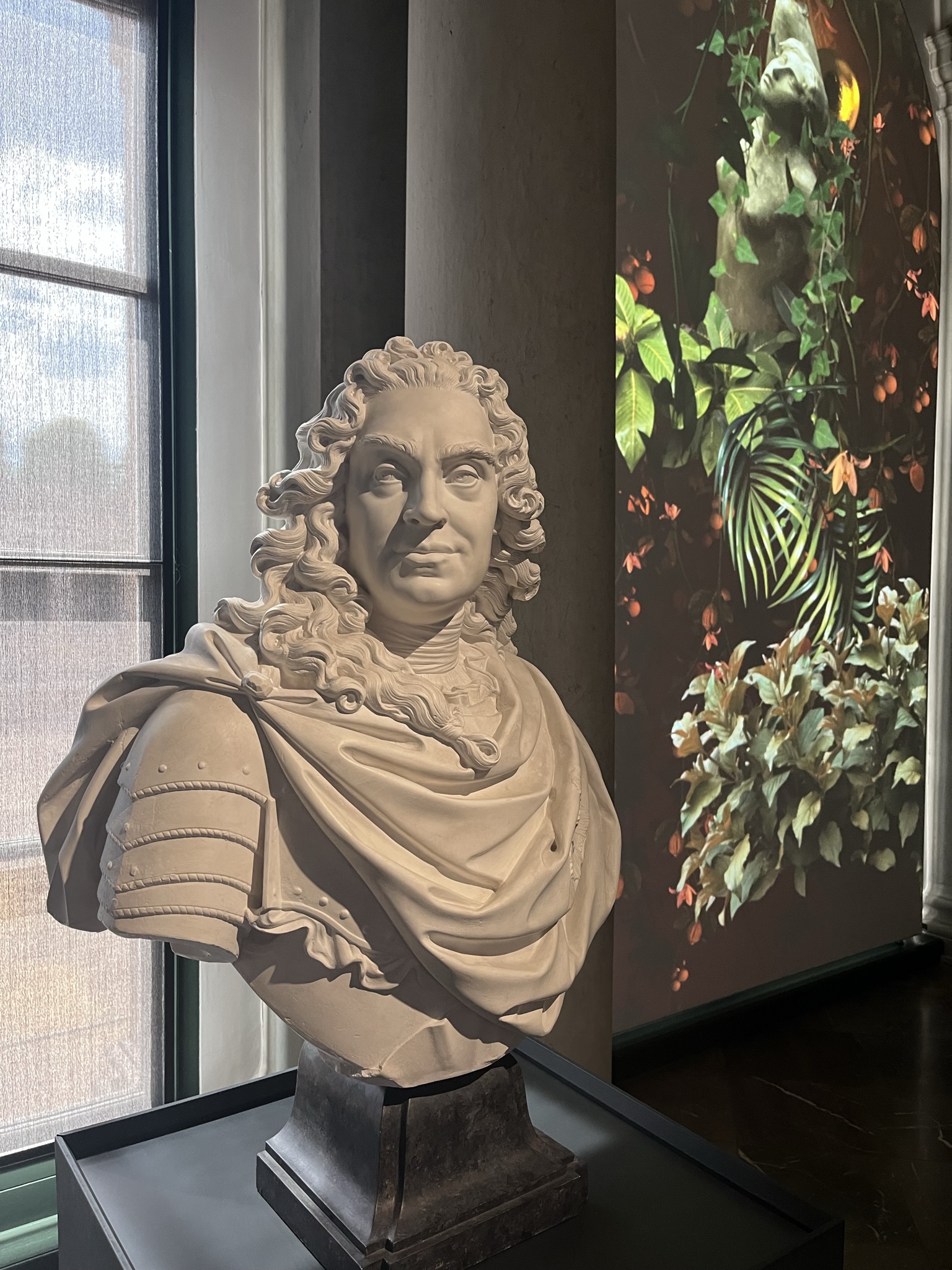
Left: A bust of Augustus the Strong appears in the interactive Zwinger Xperience, a multi-media immersion into the story of the baroque Zwinger building and festival area commissioned by Augustus. Right: This street window in Meissen displays loaves of Fummel along with a poster telling the humorous German story of why the bread recipe was initially invented.

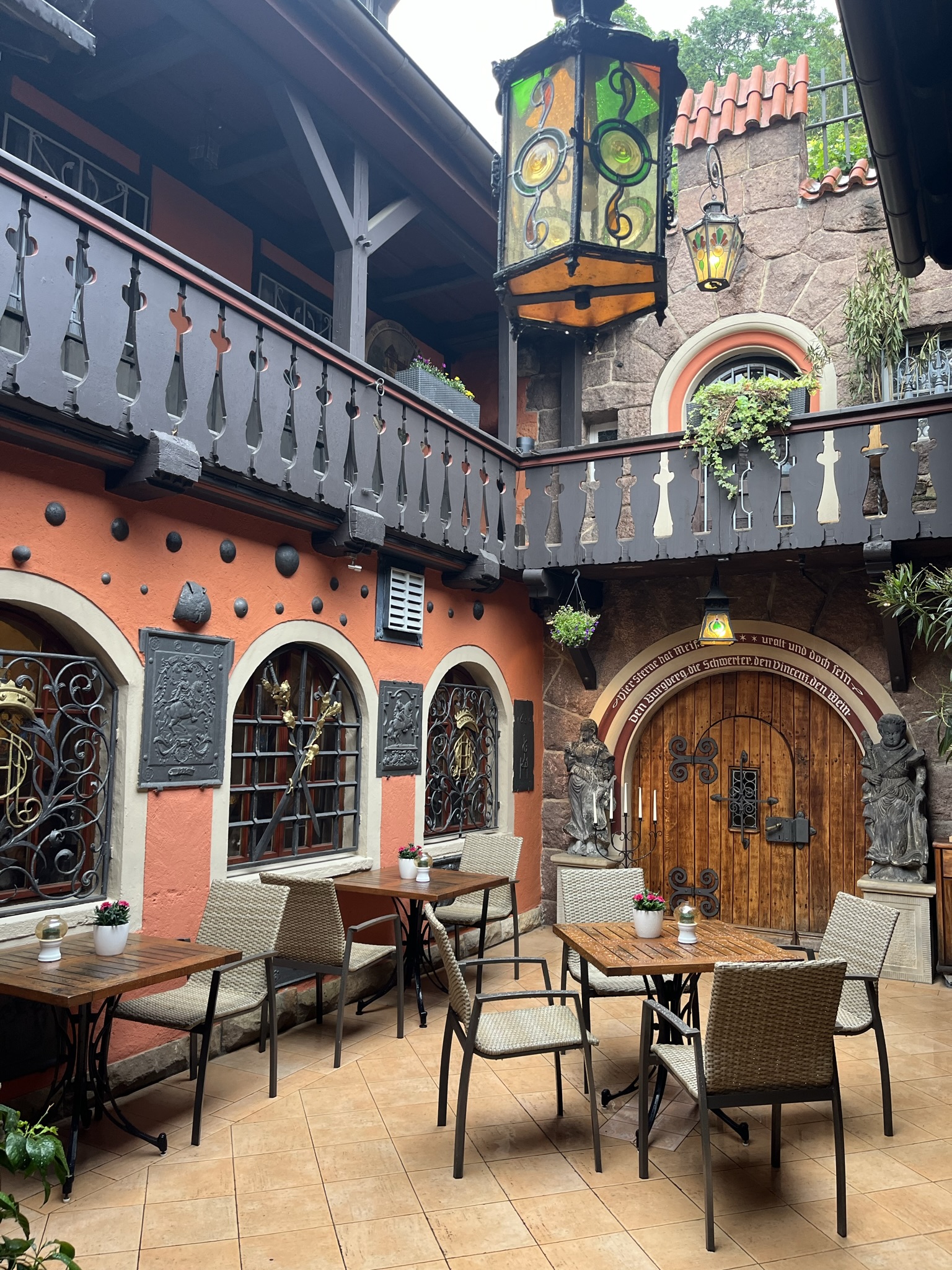
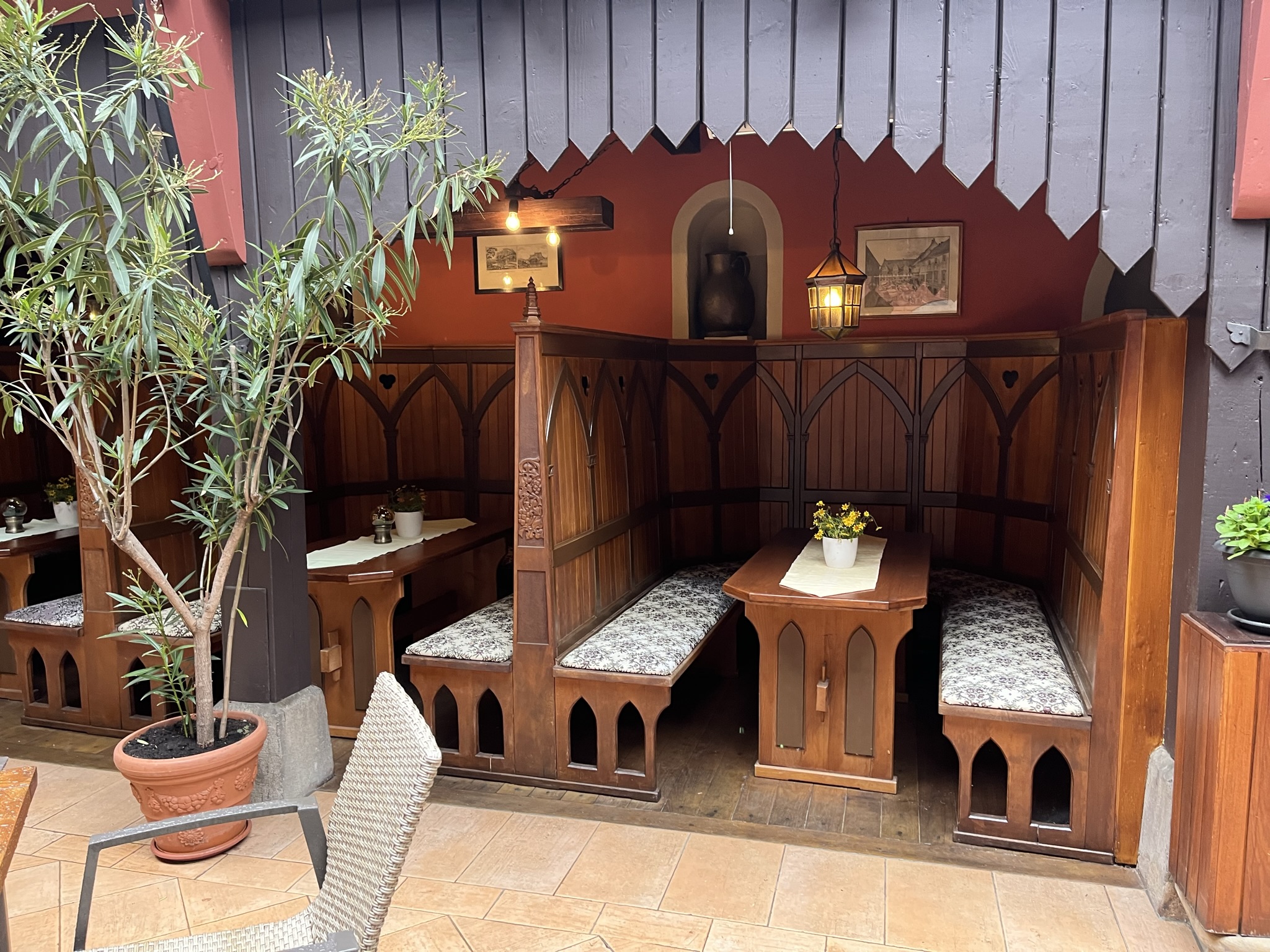
You’ll be sure to fumble that Fummel after a few glasses of wine here! Vincenz Richter wine restaurant in Meissen celebrates its 150th anniversary this year. The 500-year-old building that houses hundreds of antiques and historical items is known as one of Germany’s most romantic places. The family winery produces its delicious wine varietals on the steep slopes of Meissen’s Elbe River valley.

Leipziger Lerche
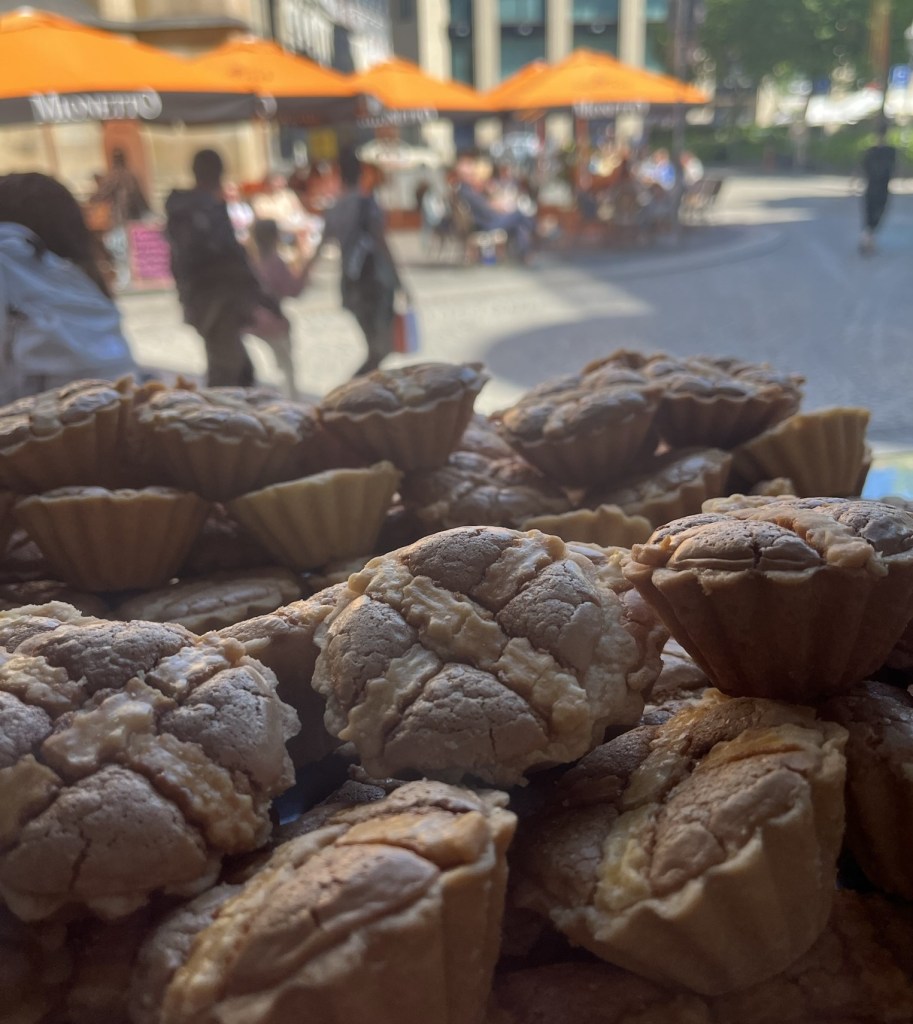
The Leipziger Lerche (“Leipzig Lark”) dessert was born as part of the animal protection movement in the 19th century. Songbird larks used to be hunted and baked with herbs and eggs into a pastry crust and then served as a hearty delicacy. This culinary luxury was enjoyed in Leipzig and beyond, and many bird carcasses were bound in twine and shipped from Saxony to various countries around the continent for others to cook. The bird-baking business boomed, and the bird population declined. In 1876, after overhunting and a severe storm had killed off many of these birds, King Albert of Saxony banned lark trapping. To combat the suffering of this Leipzig business, some clever confectionaries in Leipzig then created a marzipan-stuffed shortcrust tart as a substitute for the traditional meat quiche. Now served in a small, fluted muffin cup, like a miniature pie, this baked good features two strips of dough crossed over the top to represent the trussing used to tie up stuffed larks. Beneath the ground almond and egg white mixture of the tartlet, there is often a cherry or dollop of jam to symbolize the heart of the lark. Kandler Konditerei in Leipzig is a popular source for “Kandler Lerche” pastries of this style, baked fresh daily and as naturally and preservative-free as possible, with numerous packaged options sold for a sweet, Saxony-specific souvenir.

Save a songbird and let Kandler Konditerei tempt you with a Leipziger Lerche.

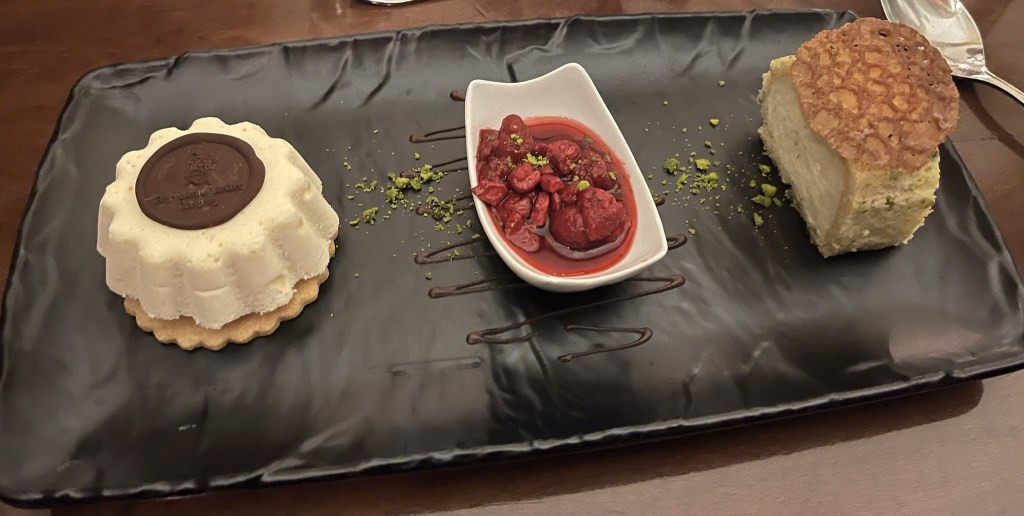
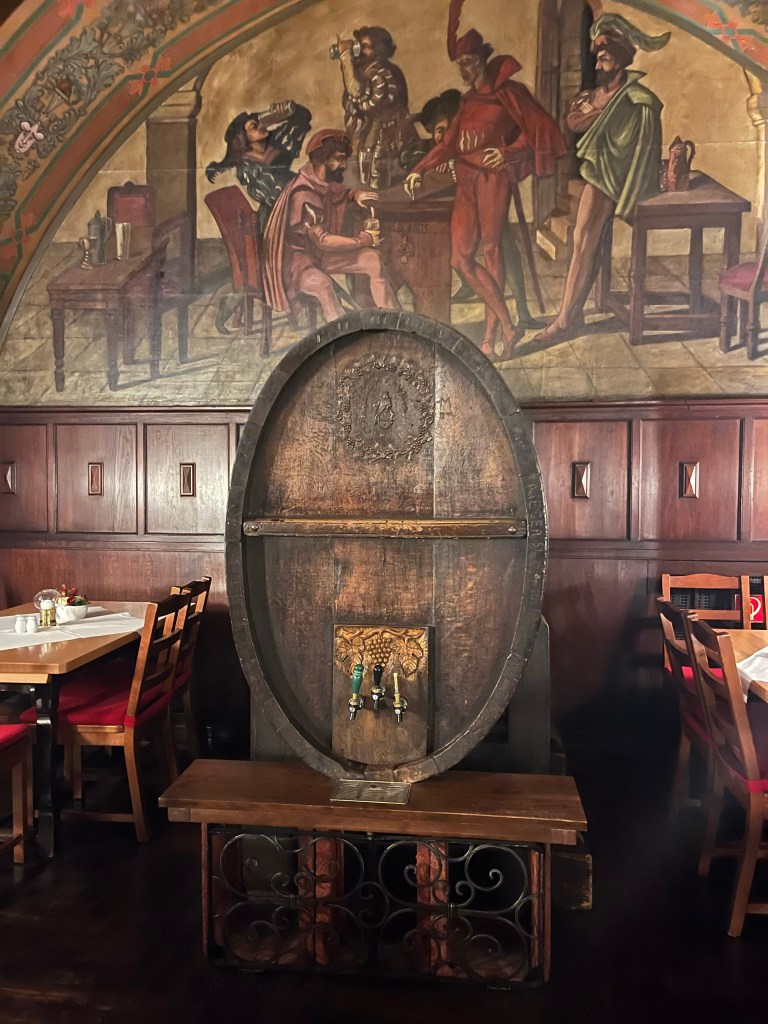
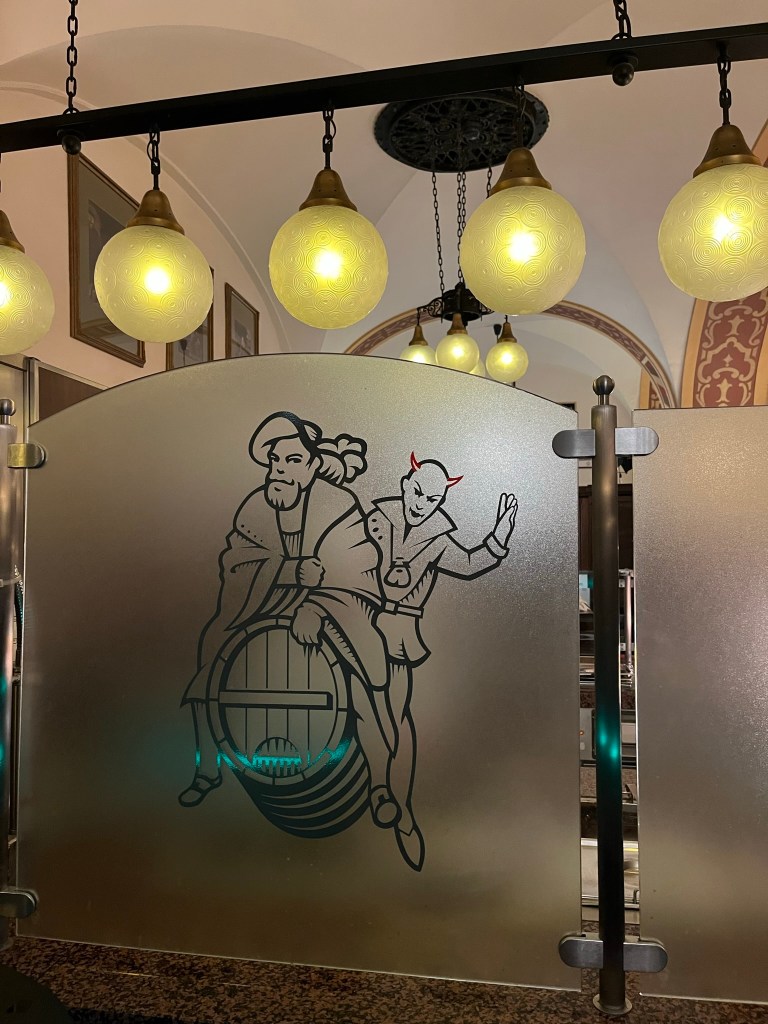
For a tasty variation of Leipziger Lerche, try the ice cream version served at Auerbachs Keller in Leipzig. This bundt-cake-shaped mound of ice cream is seated on a petaled crust and topped with a dark chocolate medallion stamped with “Auerbachs Keller Leipzig” and an image of Dr. Faust riding astride a wine barrel. Goethe and Martin Luther were regular guests of Auerbachs Keller, and it’s a treat to dine in the historic basement rooms of the Mädler Passage where they sat and to eat traditional Saxonian cuisine, including this new take on a famous regional dessert.

Auerbachs Keller Leipzig serves a special iced Leipziger Lerche with curd-cheese-lime-mousse and raspberry sauce.

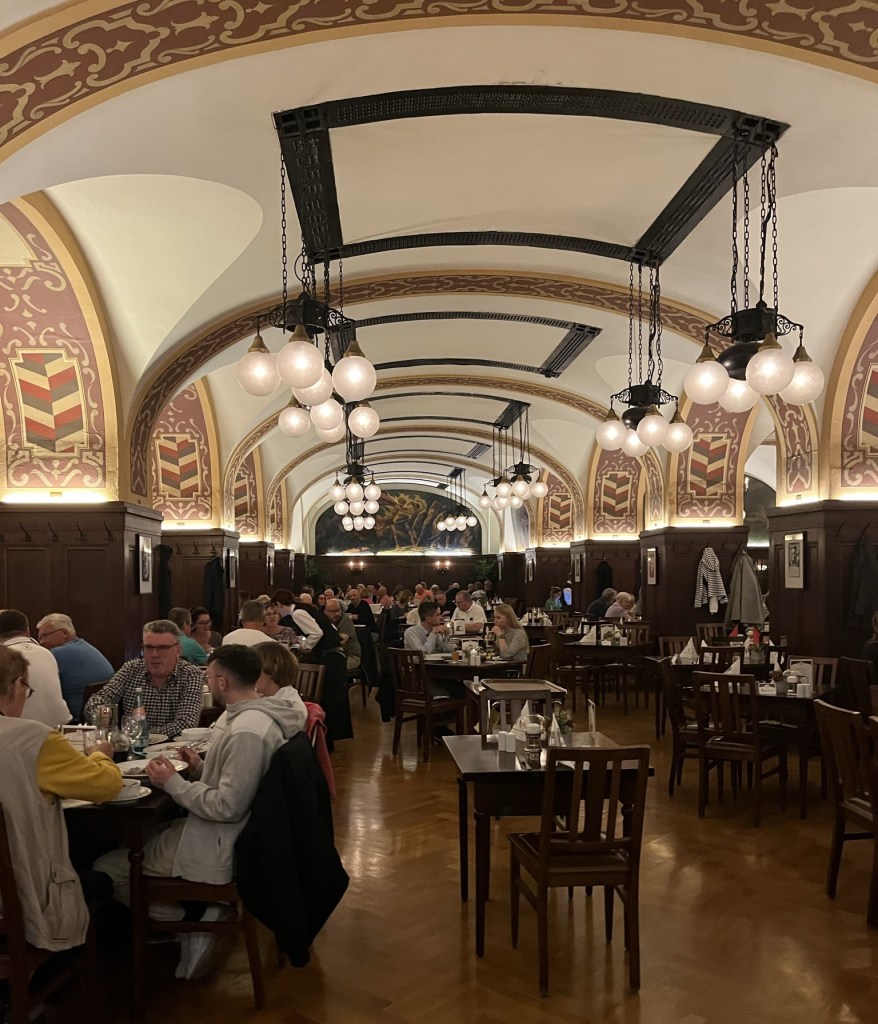
Auerbachs Keller in the Mädler Passage is the most famous and second oldest restaurant in Leipzig, and was one of the most popular places for wine in the 16th century.

Visiting Saxony?
Take an audio guided tour through the Meissen Manufactory and visit the Meissen Porcelain Foundation Museum. Enjoy coffee and delicacies at the Café & Restaurant Meissen, where your snacks are served on fine porcelain and you can sample the specially created Meissen cake featuring the crossed swords trademark. Register for a porcelain casting class or creative workshop and make your own Meissen masterpiece—available for adults and kids alike—or personalize a Meissen coffee mug and have your unique creation safely shipped directly to your home. Sign up your kids for an etiquette class to learn the art of fine dining or join a themed specialty meal (brunch with organ recital, Advent dinner, Christmas dinner, or Ladies Crime Night dinner). The one-hour “Women at Meissen” social history class highlights the significant role women have played in the manufactory’s workforce since the 18th century. The “Tea, Coffee, and Chocolate” event is offered once a month and teaches participants about the three “pleasure drinks” that were popular luxury goods during the Baroque period and how Meissen porcelain played a role in providing many varieties of elegant drinkware.
Meissen porcelain tableware makes every cake look better. Sweets and special place settings are a suggested Saxony souvenir.

Clixo Fidgety Fun Inspires Creativity During Travel and Beyond

By Alison Ramsey

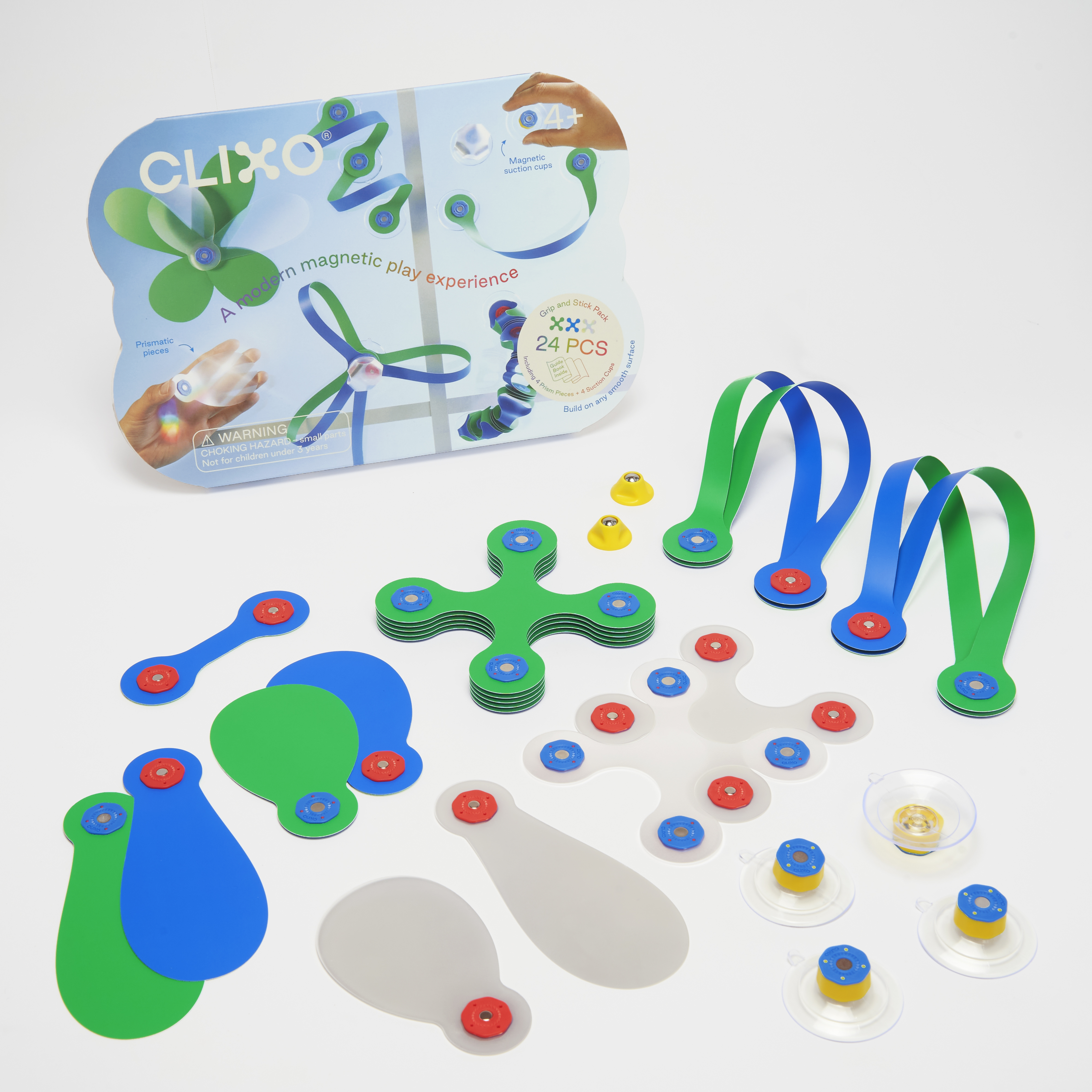
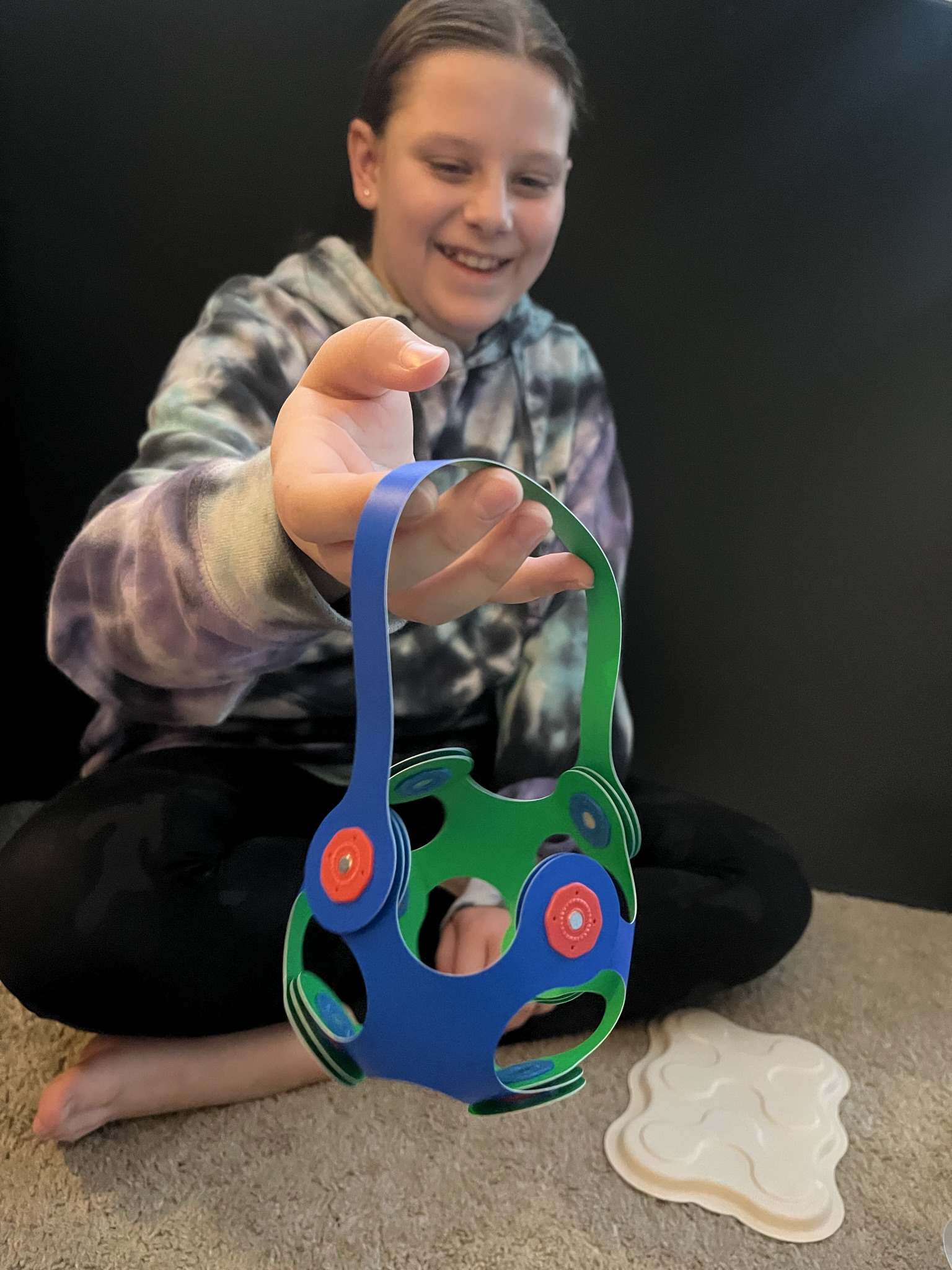
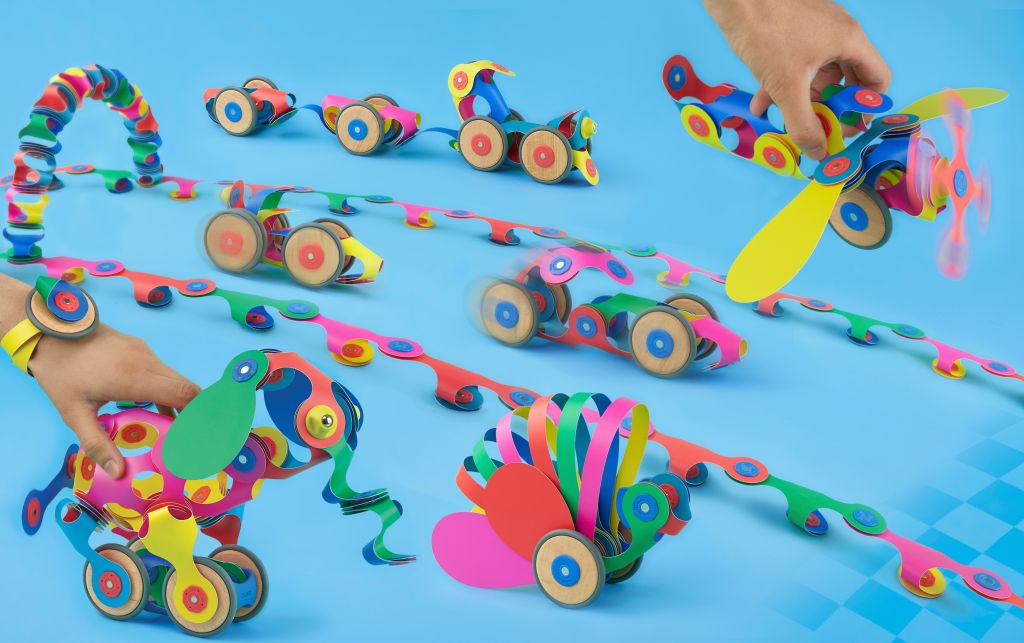
A unique toy for kids and adults alike, the easy-to-pack Clixo magnetic play system encourages freeform building and exploration—no rules or instructions required! Tuck a set of these flat, flexible building pieces into your day bag and pull them out to see your fussy or feisty traveling companions turn into creative geniuses.

Photos courtesy of Clixo.

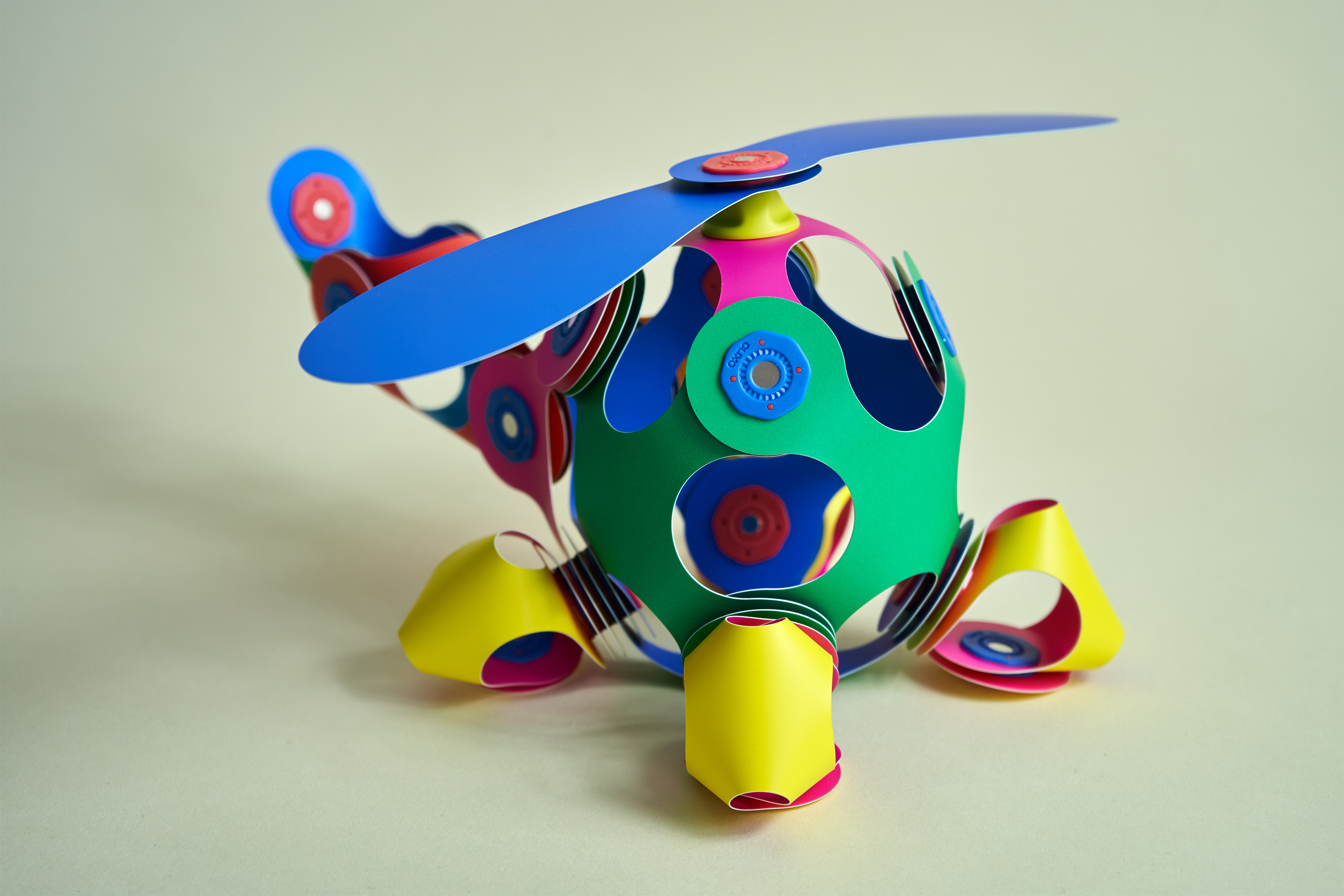
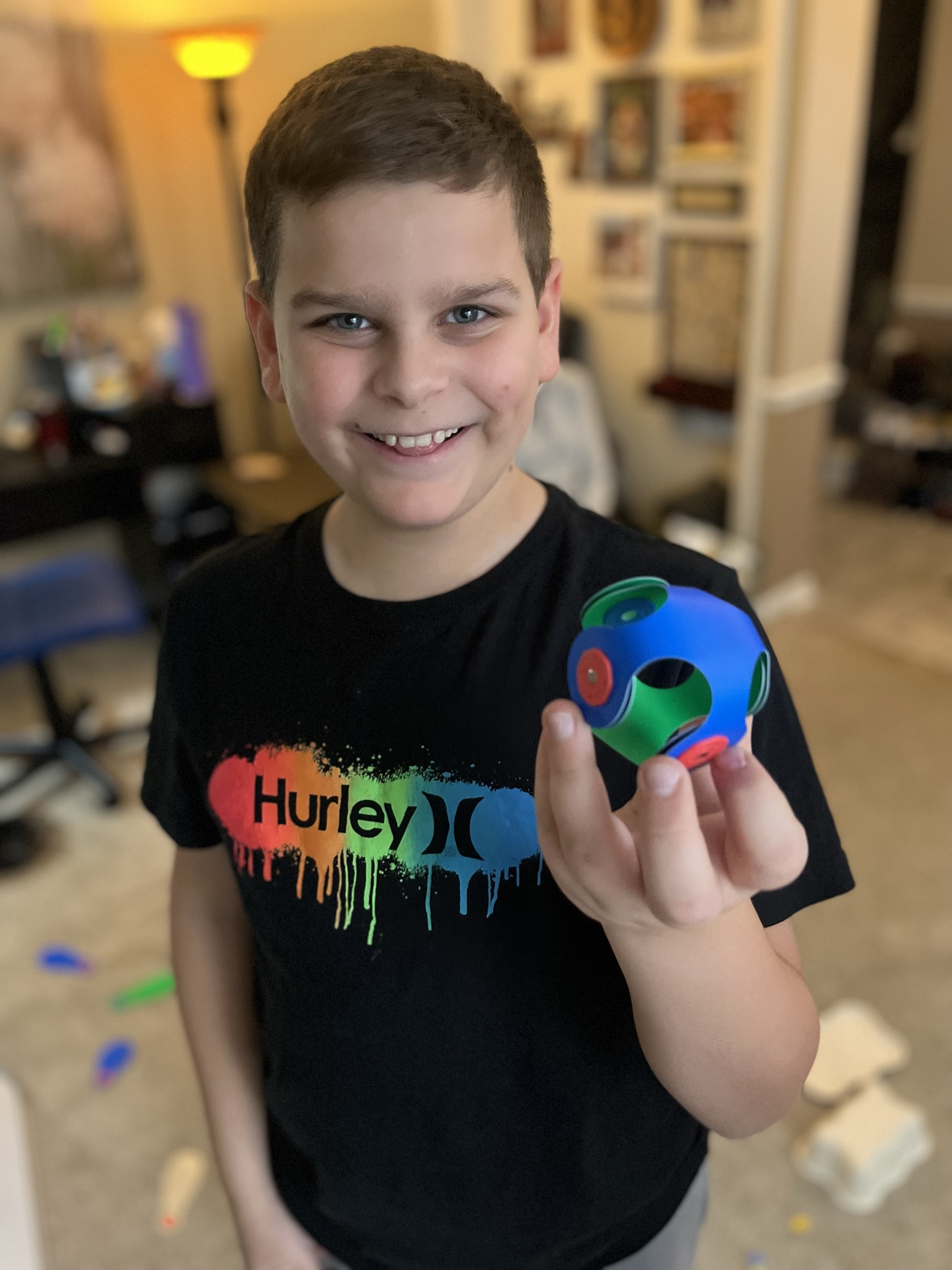
Visored motorcycle helmet, floppy beagle ears, a colorful handbag—within five minutes of opening a package of Clixo lightweight and flexible magnetic shapes, my kids’ creativity using these colorful pieces resulted in a plethora of fun creations. This award-winning building toy from Toyish Labs is packed with endless possibilities for playtime on the go or at home. The durable and compact flexible pieces can be stored flat and easily cleaned and sanitized. Secure magnets are safely fastened to key edges, allowing toy enthusiasts of all ages to snap together pieces and discover limitless creative possibilities. Creations can be stuck to the fridge, worn as accessories or, as with the Grip and Stick Pack, secured via suction cups to a window or flat surface—great for road trips and sticking to the interior of car windows! Some packages include special units that allow attached pieces to spin or roll on wheels, encouraging construction of propellers, vehicles, and other movement-inspired shapes.

Clixo needs no instructions or preamble. My kids were initially confused about what they were opening, but within several moments were excitedly clicking and snapping together pieces with no assistance or explanation needed. Open-ended, screen-free, hands-on play is Clixo’s strength, offering opportunities to create fun 3D structures from 2D pieces. These unique building sets were a finalist for the 2021 Toy of the Year Award, won the Top Toy of the Year Award from the 2022 Creative Child Awards, and have won the Oppenheim Toy Portfolio Gold Seal Best Toy Award and the Tillywig Toy Awards Best Creative Fun Award.

This summer, Clixo partnered with the Museum of Ice Cream (MOIC) in Chicago, Austin, and New York City to launch an interactive experience that allows guests to build colorful 3D creations on magnetic building walls. A special MOIC Clixo pack is sold on-location at these three venues, and features strawberry- and cherry-colored shapes. If your travels bring you to these cities, stop into the MOIC and add some creative constructions to the wall.

Photos courtesy of Clixo.

Assaf Eshet, CEO and Founder of Toyish Labs and creator of Clixo said, “We’re very excited to be working with Museum of Ice Cream on this collaboration and sharing Clixo with MOIC visitors. Museum of Ice Cream provides a fun and engaging experience for all kids and their parents. At Clixo, we share the same values of bringing play and creativity to kids and kids at heart.”

Photo courtesy of Clixo.

For more information or to purchase Clixo building sets, please visit www.clixo.com. The Black Friday Super Sale is currently offering up to 40% off sitewide, so take advantage of the sale prices for these colorful stocking stuffers or Christmas gifts while you can! May your holidays and holiday travel be peaceful, joy-filled, and inspiring.
Chicago “Staycation” Offers Family-Friendly Fun

Stories and photos by Alison Ramsey

The kids’ favorite part of a weekend in Chicago? “The hotel! The hotel’s fitness center!” Weekending in downtown Chicago with small children sounds overwhelming, but a kids’ suite hotel stay and a family-friendly itinerary ensure a safe, fun, and memorable vacation. Swissôtel Chicago’s kids’ suites are like a sky-high family apartment, with a cozy master bedroom and bathroom, spacious common area and bathroom, and a separate but adjoining bedroom and bathroom for the littles. Plenty of full-wall windows provide a panorama of the Windy City, with views of Buckingham Fountain, the Chicago River, Pritzker Pavilion, Maggie Daley Park, and Navy Pier.

The suite’s shared rooms and kids’ wing are equipped with age-appropriate toys, games, and art supplies to engage and entertain without even needing to turn on the TV. The teepee tent provides a snug hideaway and place to house stuffed animals along for the trip. A giggle-filled game of Twister, marker doodling on fresh paper, birds’-eye boat-watching, and exercising in the huge, clean, and upscale Penthouse Fitness Center—you can enjoy the city without ever leaving Swissôtel!

Eventually you’ll need to eat, though, and if room service isn’t your preference, you have plenty of dining options near the hotel. Eggy’s diner at the Chicago-Benton Place location is a 5-minute walk from Swissôtel across a beautifully landscaped park and serves home-cooked breakfast and lunch, coffee and tea, and bar drinks. Milkshakes, fresh-squeezed juices, smoothies, chocolate-chip pancakes, waffles, biscuits and gravy, crepes, skillets, sandwiches, and soups are among the delicious options for feeding a range of tastes. Crayons and a coloring sheet of cute food characters make waiting time seem fast.

Chicago’s one-of-a-kind spy-themed dining experience at the SafeHouse is a 15-minute walk from Swissôtel down the Magnificent Mile to River North. The Red Door at 60 E. Ontario is the entry point to spy headquarters, where you start in a non-descript office and either whisper the correct password to Moneypenny, the front office “secretary,” or engage in an amusing test to gain clearance. Upon entering the underground restaurant and Interpol Bar, you can make your way through dimly lit rooms to explore spy memorabilia, discover secret rooms, complete a checklist of secret agent duties, climb through a sewer pipe labeled “DANGER,” and email goofy selfies from the photo booth.

Silly surprises like one-way mirrors and alarms await in the bathrooms, and kids and adults alike can play with futuristic tech gadgets and create their own agent names. In-character waitstaff check with “Command” regarding food allergy inquiries and provide junior agents with top-secret disguises (sticky-backed fuzzy mustaches) upon request. Reasonably priced fare includes A License to Kill Mac & Cheese, “007” Layer Salad, Mission Impossible burgers, Camp Stanley Nachos, and Russian Finger Potatoes. Junior Spies can request meals like Goldfingers chicken nuggets, Carmen Cortez mac & cheese, or an Uncle Machete chopped taco salad. Make your escape by dialing a secret code in the hidden phone booth, dodge the maze of red lasers in the dark hallway, slap your agent nametag on the wall, and make your discreet exit back onto the city street.  

To head from dinner toward an evening at Skydeck Chicago in the Willis Tower, ride the scenic water taxi from the north side of the river at Michigan Avenue to the Ogilvie/Union Station stop, followed by a short walk, or call for a 13-minute Lyft drive. The winding, museum-tour walk to get to the elevator bank displays an artful collection of exhibitions, facts and figures about Chicago, and fantastic photo opportunities—an El simulation with vibrating seats and city scenes sliding by the window; a giant, plastic Chicago-style hot dog and deep-dish pizza to rest on; jazz, Oprah, The Second City, Wrigley Field, Cadillac Palace Theatre, and iconic city scene backdrops to pose in front of. A speedy ride in the elevator (1,600 feet per minute) shoots you up to the skyscraper’s viewing level.

The highest observation deck in the U.S., the Skydeck Ledge juts out over four feet from the 103rd floor—a breathtaking 1,353 feet above the Chicago River and Wacker Drive. View the city below with confidence, knowing that the Ledge can withstand four tons of pressure, hold 10,000 lbs, and is seamlessly constructed using three layers of half-inch thick laminated glass. Groups of guests are given a timed five minutes to step into one of the Ledge booths and take in the view, jump, do handstands, yoga poses—however they want to spend their time in the sky. Some feedback from kids who were initially wary of traveling up so high included, “We’re in the air, we’re super-secure, and we’re looking down 100 stories. It was a cool experience!” and “Well, that was awesome, and I totally don’t regret going on it!” A 1.5-mile Lyft ride or walk brings you back to Swissôtel.

From Swissôtel to the massive Chicago Park District play area, Maggie Daley Park, is a 7-minute walk. The largest free activity is the Play Garden, a series of interconnected, imaginative play spaces integrating landscaping with the sculptures and structures. The Sea area features a large-scale ship and lighthouse tower with ladders, slides, talking tubes, and lookout scopes. The Watering Hole’s animal-themed splash pad includes a shady area with a bench for parents. A Harbor boat play zone, Enchanted Forest sensory exploration pathway, and Wave Lawn of rolling topography and sloped hills offer varied equipment and opportunities to engage all senses and stimulate imagination. Slide Crater’s giant suspension bridge slung between two towers is thrilling to run across while trying to keep your footing. Experience slides of all sizes and formations in this area (although the metal variety can be HOT in the summer sun!). Talk through tubes with others around the structure, rotate knobs to spin giant wheels, and be the lookout at the viewing scopes.

Other free areas include the tennis courts, picnic groves, Cancer Survivors’ Garden, and skating ribbon (rollerblades and Micro scooters are available to rent if you don’t bring your own equipment). For a fee and no reservations needed, visitors of any age can scale the Climbing Wall (shoes, helmet, and harness rental is offered), and kids aged 4-8 can even take a 15-minute climbing lesson with an instructor to assist them. Mini golf and a bungee jump are available for a fee. Conveniently located by the skating ribbon, the Rink Café food truck sells hot dogs, burgers, giant pretzels, ice cream, and other refreshments to enjoy under shady umbrellas.

For an energetic, colorful, laughter-filled theater experience, bring the kids to the Blue Man Group at the Briar Street Theatre in the Lakeview neighborhood. While you wait for the show to begin, a scrolling marquee featuring jokes and ridiculous facts sets the tone for the event, warms up the crowd, and encourages audience participation. Through a series of comedic, surprising, awkward, and artful vignettes and instrumental songs involving PVC pipes, paints, lights, water, glow sticks, cereal, remastered instruments, and drums, the talented Blue Man Group cast opens an otherworldly dimension of sensory entertainment that enthralls and mesmerizes. Audience members in the front few rows don rain ponchos as protection from the show’s shower of water droplets, food, and paint. Several individuals were also singled out to participate in the show—on stage or from their seats—in “we’re laughing with you, not at you” situations. There is truly no comparison for this unique performance, and remembering those expressive, endearing blue faces will keep you smiling long after the lights go up.

Back at Swissôtel, the family can order refreshing drinks or nightcaps from the lobby bar and bring them upstairs to the suite, relaxing together in the living area to wind down for the night. A leisurely round of Pictionary or Connect Four or a warm shower under the rainfall showerhead brings an end to the eventful excursion in the city. Watch out the windows as Chicago dims its lights and rests up for a new day ahead.   

Menorcan Lobster Stew: A Seaside Specialty

By Alison Ramsey

There is a first time for everything. First time visiting Menorca in the Balearic Islands of Spain; first time eating traditional lobster stew; first time holding a live lobster! The first two “firsts” were by choice, and the third was a complete surprise, as waiter Carlos at Es Cranc in Fornells Harbor gestured for me to hold out my hand and suddenly I was gripping a ridged pair of long antennae in my fist, with a huge lobster hanging at the bottom of them.

A lively, rambunctious lobster indicates that it is fresh.

This particular lobster did not end up in our soup bowls at lunch, but a similar one did, and it was key to the flavor of this traditional Menorcan dish. Invented by fishermen and later tweaked by chefs across the island, caldereta is the most renowned dish of Menorca’s seafood cuisine and can be made with lobster, eels, and varieties of fish. Surprisingly, the lobster that visitors relish in Menorca was once considered by islanders to be food for the poor due to its overabundance. Now it is a highly coveted gastronomical treat that restaurateurs take pride in preparing, especially during peak tourist season.

The tanks at Es Cranc can hold 3,600 lobsters—all from Menorca only. Elevated trays hold the lobsters that arrive that day, whereas lobsters from previous catches crawl along the bottoms of the tanks.       

Caldereta de langosta (spiny lobster stew) is a simple recipe traditionally made by braising the locally caught spiny lobster over high heat with a savory sauce containing peppers, onions, tomatoes, garlic, and parsley. Typically served with homemade bread, you can soak the sauce into the slices, or you can simply spoon it up. The lobster stew served at Es Cranc contains several large, meaty portions of tender lobster in a hot, flavorful broth. Dainty eaters, don’t despair—Es Cranc provides bibs, lobster picks, and small bowls of cleansing water for messy hands.

The word “caldereta” refers to the earthenware cauldron in which the stew is prepared.

Whether it’s your first trip to Menorca or you’re a repeat visitor, plan for a meal at Es Cranc. You, too, might get to hold a wiggling crustacean!

A digestif of chilled “herbes” (herbal liqueur) brought the meal to a close. This sweet liqueur can be made with a variety of plants, the most popular being chamomile, as it is found in abundance across the island.  

Gin Xoriguer is the most popular Menorcan gin, made from grapes and juniper berries. The distillery has used traditional methods to make this drink for almost a century, and the creator’s family windmill featured on the unique bottle has become a recognizable symbol of the island. Mixed with lemonade, this gin makes a delightfully refreshing drink called a pomada.

Lobster Stew Recipe

A traditional recipe for lobster stew, as printed in Menorcan Cuisine Yesterday and Today: Undiscovered Recipes.

Ingredients
2 kg lobster
2 onions
2 cloves of garlic
1/2 green pepper
250 g tomatoes
1 bunch of parsley
7 tbsp. of olive oil
1.5 litres of water
slices of bread for soup or toasted bread
salt

Preparation
Cut the live lobsters into two on a wooden chopping board, separating the head from the tails; reserve the juices in a separate bowl. Split open the body and remove the black intestines using your hands or one of its feelers or antennae. Remove the legs and other feelers. For female lobsters, place the eggs in the bowl, and do the same with the stomachs and livers. Finally, cut the heads in half down the middle, and cut the bodies into slices, making sure to save all the juices.

Finely chop the onion, garlic and green pepper. Place the oil in an earthenware pot and gently fry the vegetables over a low heat. When the onion is translucent, add the very finely diced tomatoes (or they can be grated or blended). Cook over a very low heat for around 10 minutes.

Place the lobsters in the pot and leave to cook a little. Then add the juices, water and chopped parsley, season with salt and cook over a high heat for 15 minutes. When it starts to boil, reduce the heat and cook for a further half an hour.

Meanwhile, grind the lobster eggs, stomachs and livers in a pestle and mortar with a little garlic and parsley, adding the rest of the liquids and a little water to moisten the mixture. When there are just a few minutes’ cooking time left, add the mixture to the pot.

Turn the stove off and leave the stew to rest for at least two hours. In fact, it will be much tastier if made the day before eating. To serve, pour the broth with the lobster pieces into soup bowls, with slices of toast.