Menorca Artisans Keep Traditional Craftsmanship Alive

Story and photos by Alison Ramsey

In the west Mediterranean Sea, the Balearic Islands’ Menorca makes the most of its natural resources. And for being only about 30 miles long and 10 miles wide, it has a lot! This haven of coves and turquoise water licking untouched white sand beaches has been a Biosphere Reserve since 1993, and due to its wide diversity of habitats and landscape it is UNESCO-designated as the headquarters for the World Network of Island and Coastal Biosphere Reserves for matters pertaining to sustainable development. Local farming practices focus on sustainability and preserving the island’s natural heritage. Using environmental resources found within the island’s ecosystem, resident farmers and artisans make a living from the offerings provided by landscape and livestock.
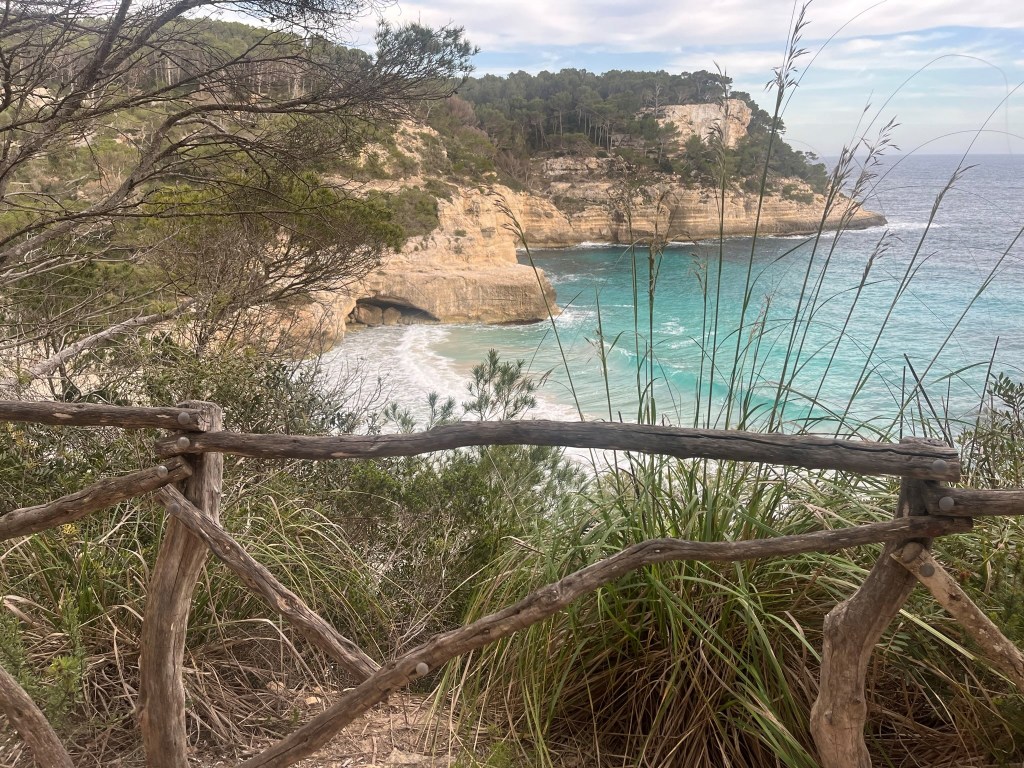
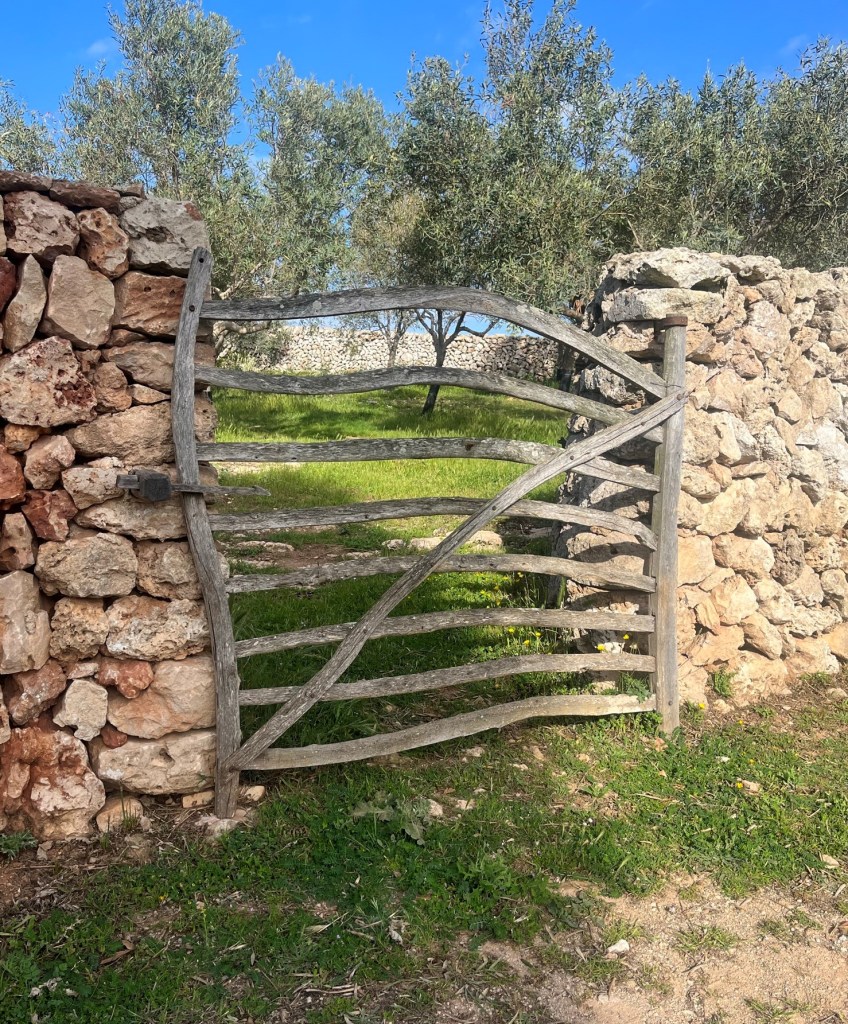
Across the island, wild olive tree wood is fashioned into fences to divide land and act as guard rails.

Menorca’s “mosaic landscape” of varying ecosystems consists of farmland, forests, and villages, with a bird’s-eye view revealing small plots of land divided by a network of dry-stone walls. Since ancient times, agrarians have gleaned rocks from the soil to build these mortar-less barriers that cover about 6,835 miles of the island (more than half the length of the Great Wall of China) and reduce erosion by blocking the wind from shifting soil to neighboring plots. Even the island’s prehistoric navetas (burial chambers) and talayots (shrines) were built by carefully selecting stones of varied size and shape, filling gaps with sand, and relying on gravity to secure them together.
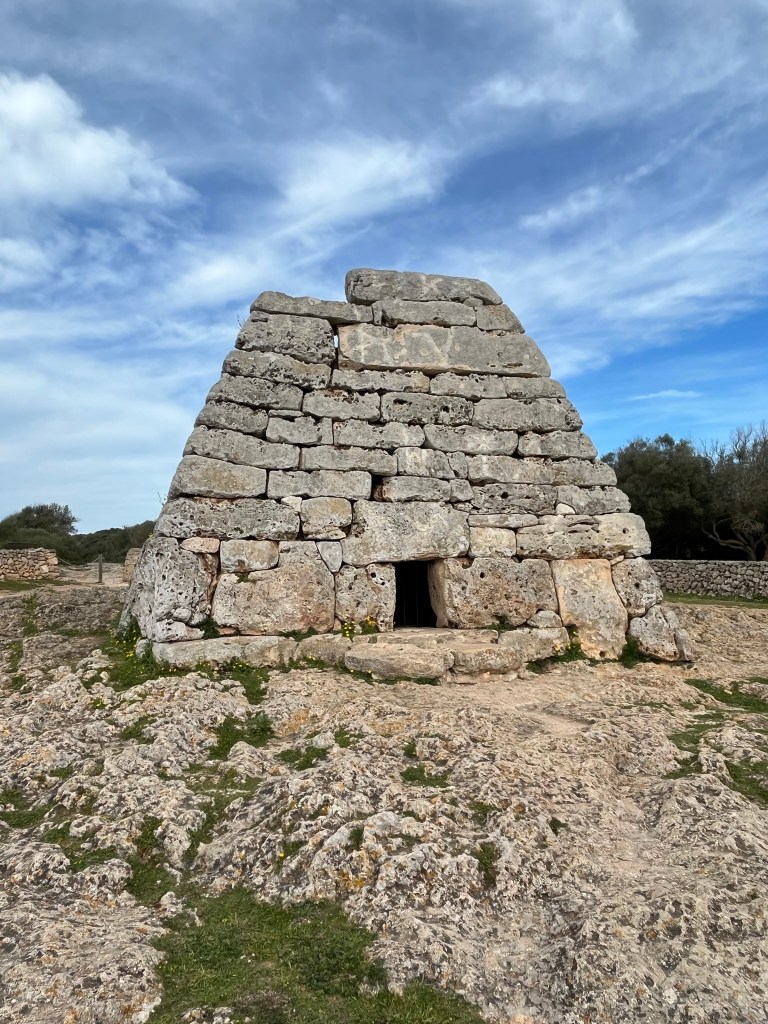
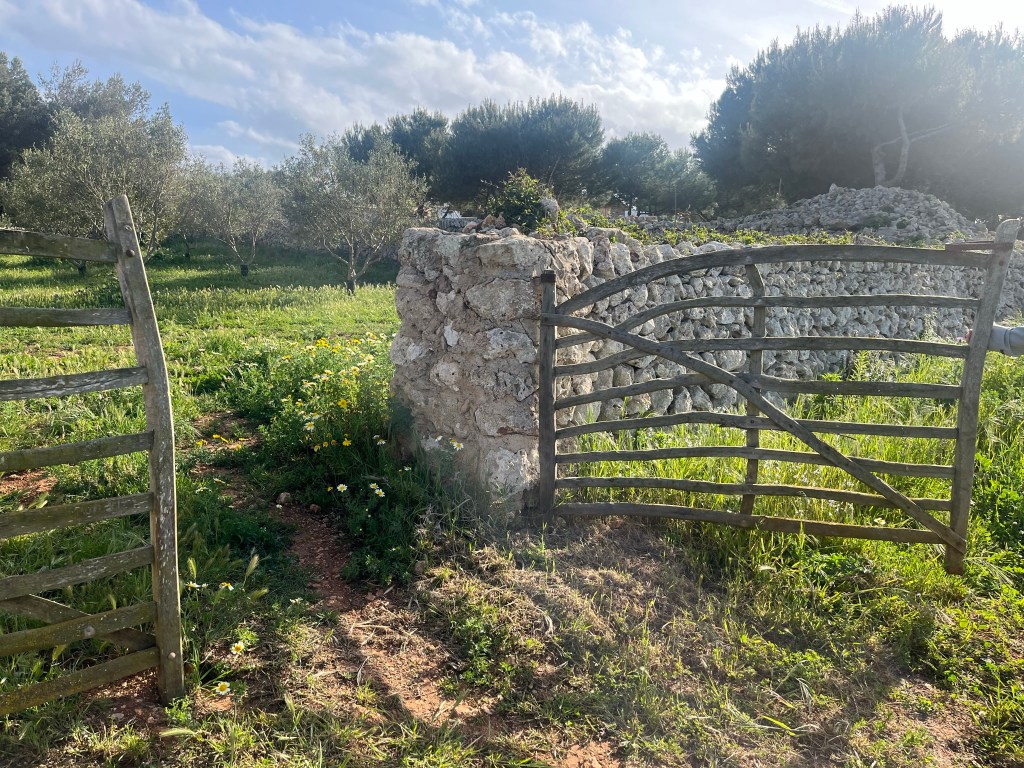
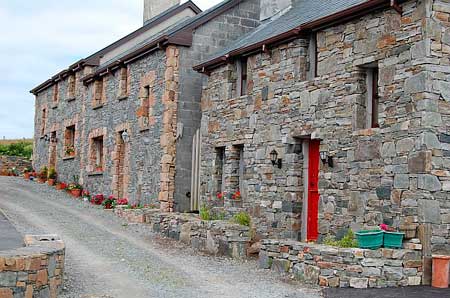
(left) Unique to the island, Menorca’s navetas are pre-Talaiotic burial monuments shaped like an inverted boat and built using only large stone blocks. (middle) The island’s naturally rocky soil is gleaned to build stone walls that separate land plots. Wild olive trees with olives not suitable for harvesting are formed into farm gates using their distinctive, curvy wood. (right) Prevalent on Menorca are cement-free stacked-stone walls and sturdy gates crafted from wild olive trees.

Vineyards on Menorca are typically surrounded by these stone walls, a drainage situation that adequately waters the vines without leaving them overly damp. Local beverages created from the natural flora offerings of the land include the Vi de la Terra Illa de Menorca indication of quality wine, aromatic Menorcan gin (the oldest in Spain) produced using wine-based alcohol distilled with native herbs and juniper berries in old copper stills, and herb liquor digestifs.

The olive tree is another landscape prevalence, including the Spanish arbequina variety, which is used to produce a popular extra virgin olive oil with a mild, creamy flavor and slow kick. Oral history says the famous condiment mayonnaise heralds from Menorca, where the invading French Duke of Richelieu first tried the local sauce (a simple mixture of olive oil, egg, and salt) and brought it back to the French court, naming the recipe “mahonnaise” after the town Mahón. The oldest written source of Menorcan recipes is Art de la Cuina, a book by Fra Francesc Roger detailing the island’s cultural gastronomy in more than 200 18th century recipes, including a recipe for mayo using native olive oil. Not only are olives used for oil production, the strong wood from wild olive trees whose olives aren’t large enough to harvest is crafted into rustic, swing farm gates in a distinctive curvy design seen all across the island.

The oldest written source of Menorcan recipes is Art de la Cuina, a book by Fra Francesc Roger detailing the island’s cultural gastronomy in more than 200 18th century recipes, including a recipe for mayo using native olive oil.

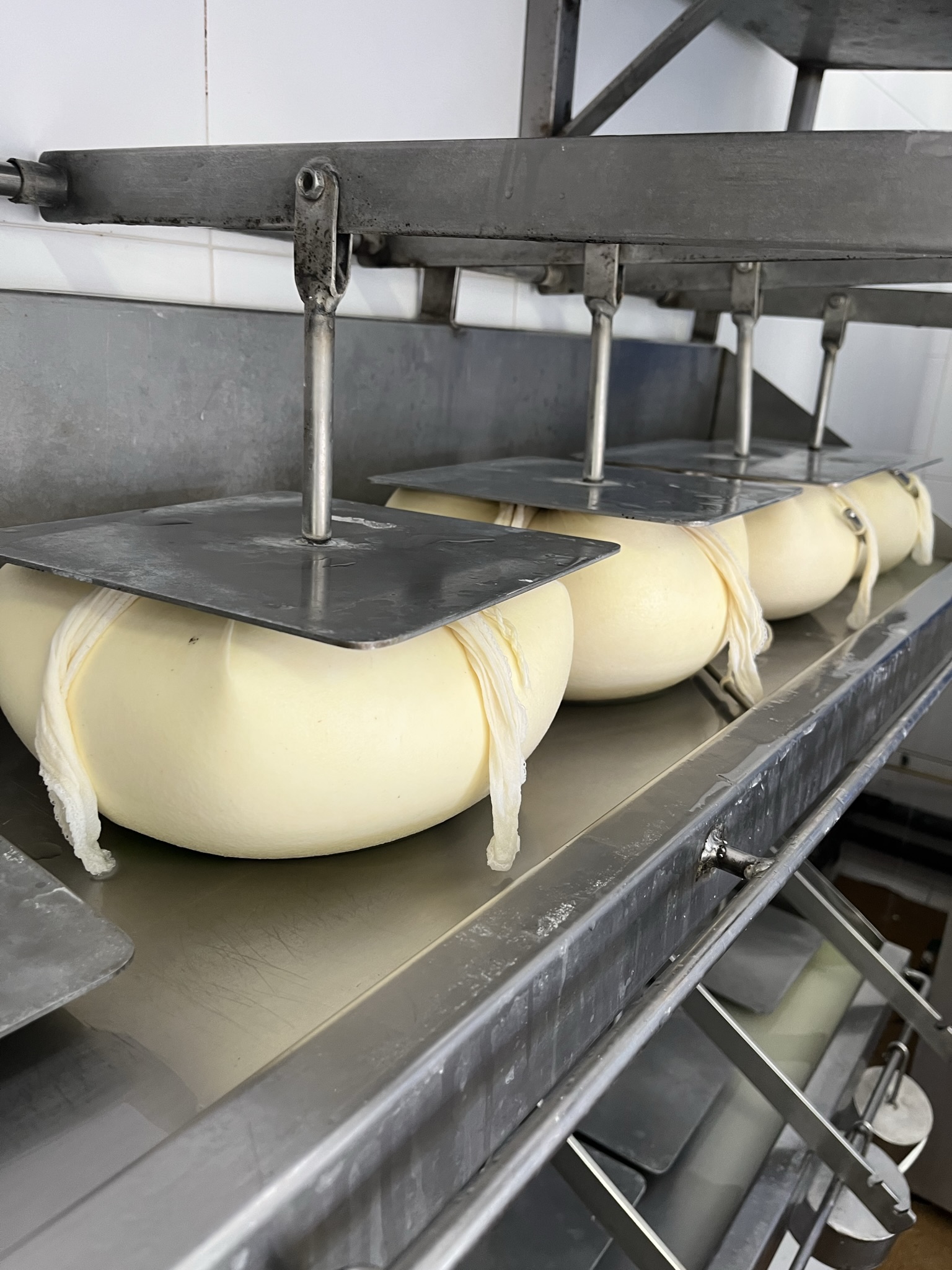
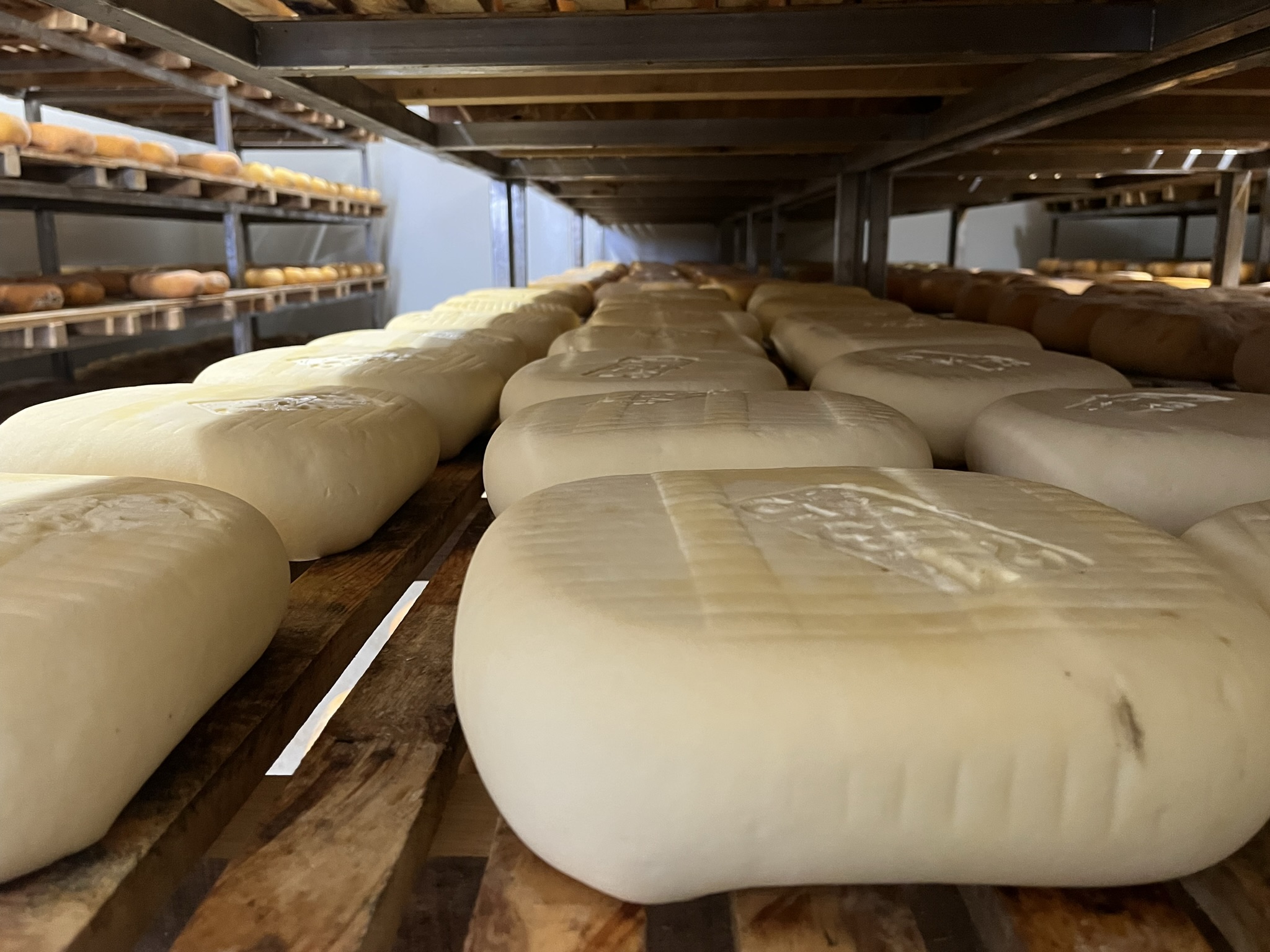
Using age-old methods, farmers use milk from Menorcan cows to produce rounded-edge square blocks of Mahón-Menorca Denomination of Origin cheese with a flavorful, oily dark rind (even Arabic documents from the year 1000 describe the tasty qualities of cow’s milk Menorcan cheese). Farms like Son Piris produce artisan cheese (made with raw milk and intended for immediate consumption) or the more industrialized and slightly sweeter pasteurized-milk cheeses. Martina Fedelich of Son Piris explained that it is difficult to imitate the Menorcan bacteria used in their cheese, as they are unique and isolated from other cheeses and even differ from those on neighboring island Mallorca. Easy to identify, Mahón-Menorca cheese’s unique shape comes from the cheesecloth used during the pressing process, and fabric lines from the cloth remain visible in the rind.

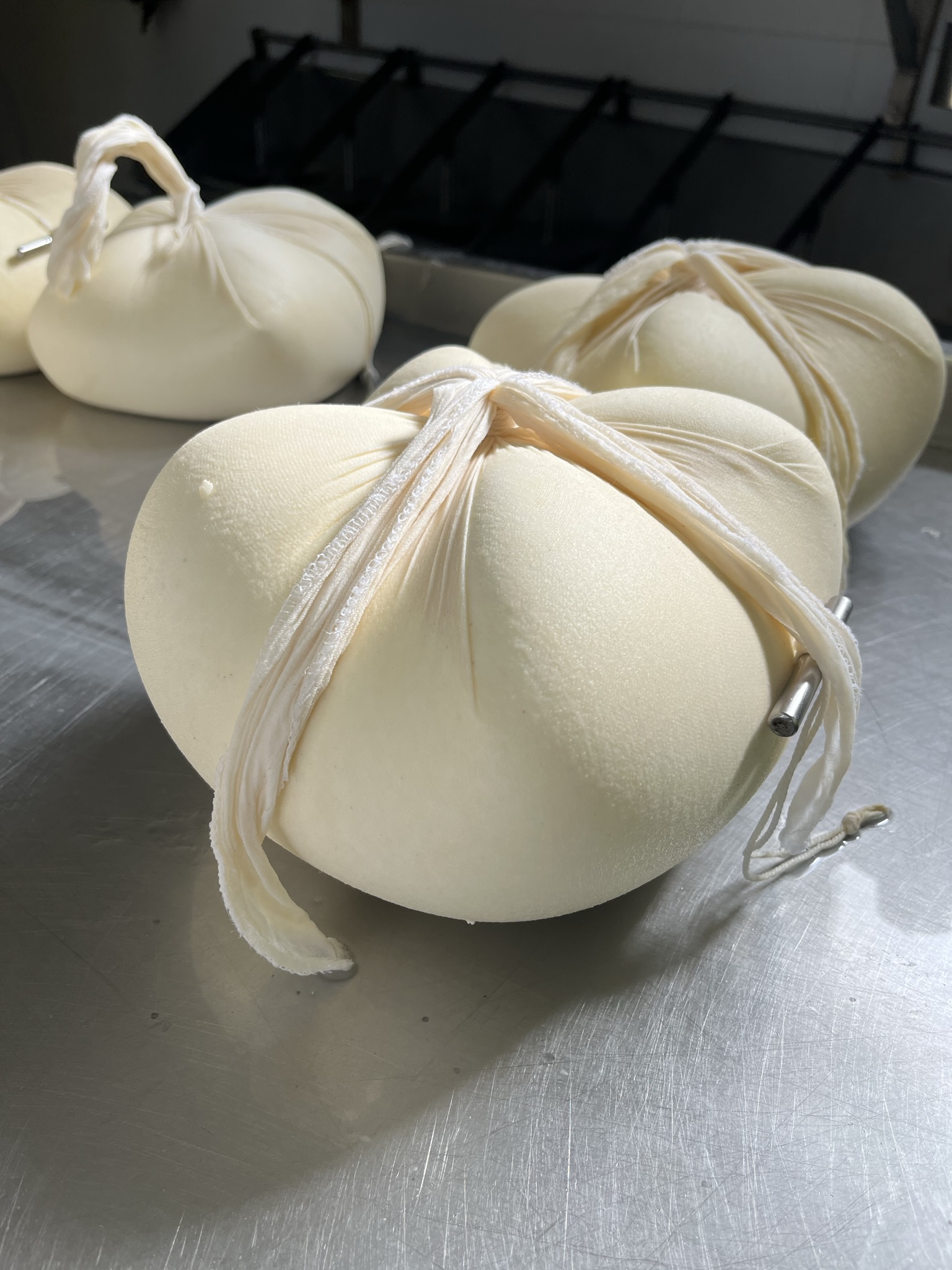
(clockwise from upper left) The unique shape of Mahón-Menorca cheese comes from the cheesecloth used during the pressing process, and fabric lines from the cloth remain visible in the rind; Son Piris cheeses are wrapped tightly in cheesecloth, which holds together the solid cheese curd while allowing for drainage of liquid whey; Wrapped cheeses are pressed to remove excess moisture; After their tightly wrapped cloths are removed, the cheese is set out to dry; Martina Fedelich of Son Piris serves the famous farm-to-table Mahón-Menorca Denomination of Origin cheese.  

Agriculture is a key trade on Menorca; however, the most important manufacturing business on the island is shoe design and production—an industry dating back to the 18th century. Footwear made in Menorca is known for its high quality and meticulous craftsmanship. The most famous sandal shape, with a cowhide leather upper and sole, was first created to protect farmers’ feet while working the rocky soil. Nowadays, these avarcas (also called abarcas or menorquinas) are sold with heels and straps of all styles and colors, but use recycled tires as a hardy sole. Popularity and production have been increasing especially over the past few years, and they are worn by Menorcans and visitors alike.
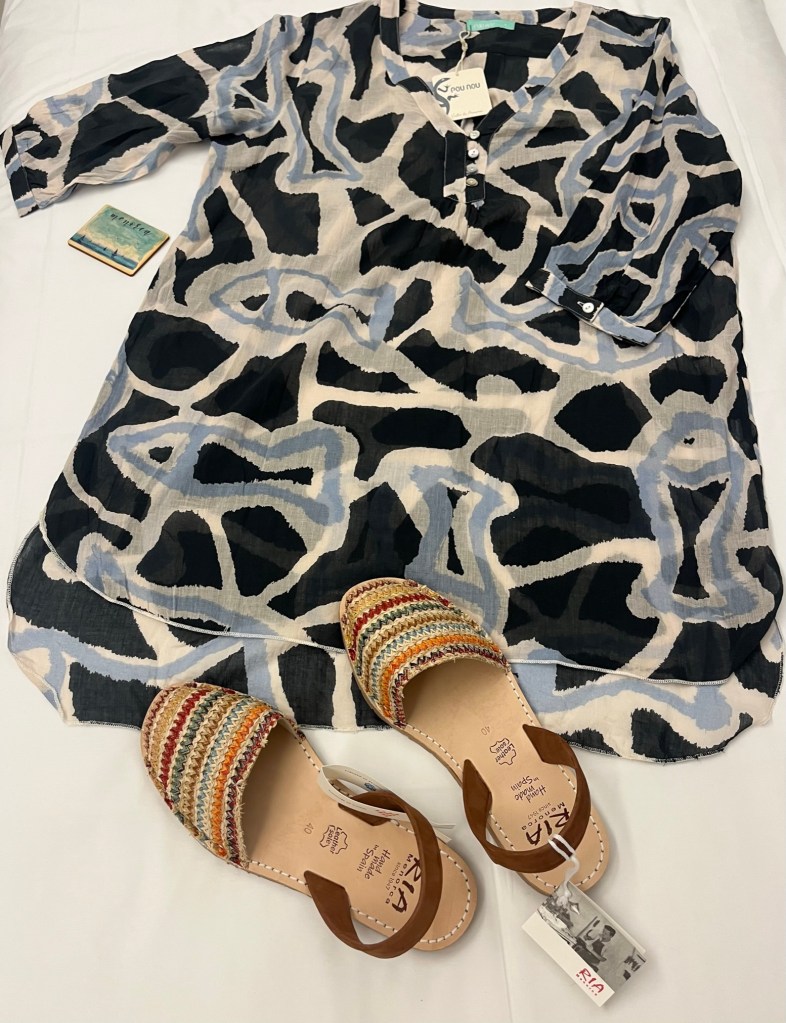
RIA brand avarcas fashioned from leather with a colorful woven upper are a stylish update to traditional peasant footwear. Pou Nou clothing motifs echo the sea life and landscape of the island, like this fish-print tunic in shades of blue.

Avarca company MIBO proudly carries the Avarca de Menorca hallmark—another island-specific denomination of origin—which guarantees that their footwear is crafted locally and made with high-quality materials. Founded in 1998 by Miguel Pascual and Bosco Moll, MIBO designs and manufactures these iconic Menorcan sandals using traditional methodology combined with modern technology. Moll said, “The process to make a pair of avarcas from Menorca has about 25 operations, which all need the hands of craftsmen to be able to make them. We also use technology that helps the craftsmen, but it always requires expert hands. … The future of our product and our brand passes through the qualified training of our craftsmen-workers since there are no schools or training cycles that help this task.”
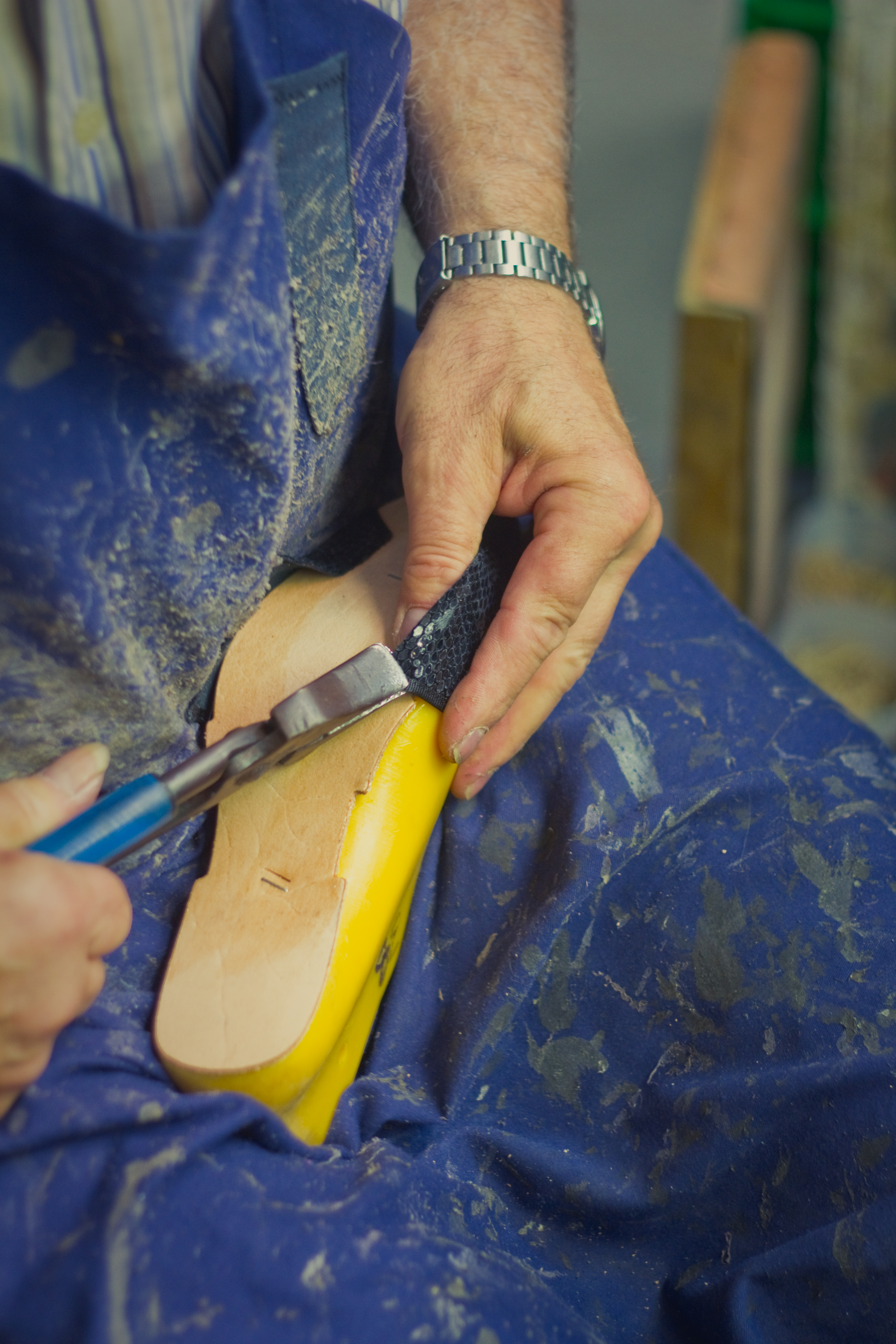
(left) A traditional style with modern updates, some MIBO avarcas feature trendy details like cut-outs, bows, and textured mosaic prints. (right) A MIBO artisan carefully guides a hallmark-stamped leather sole through machine stitching. Photos courtesy of MIBO.

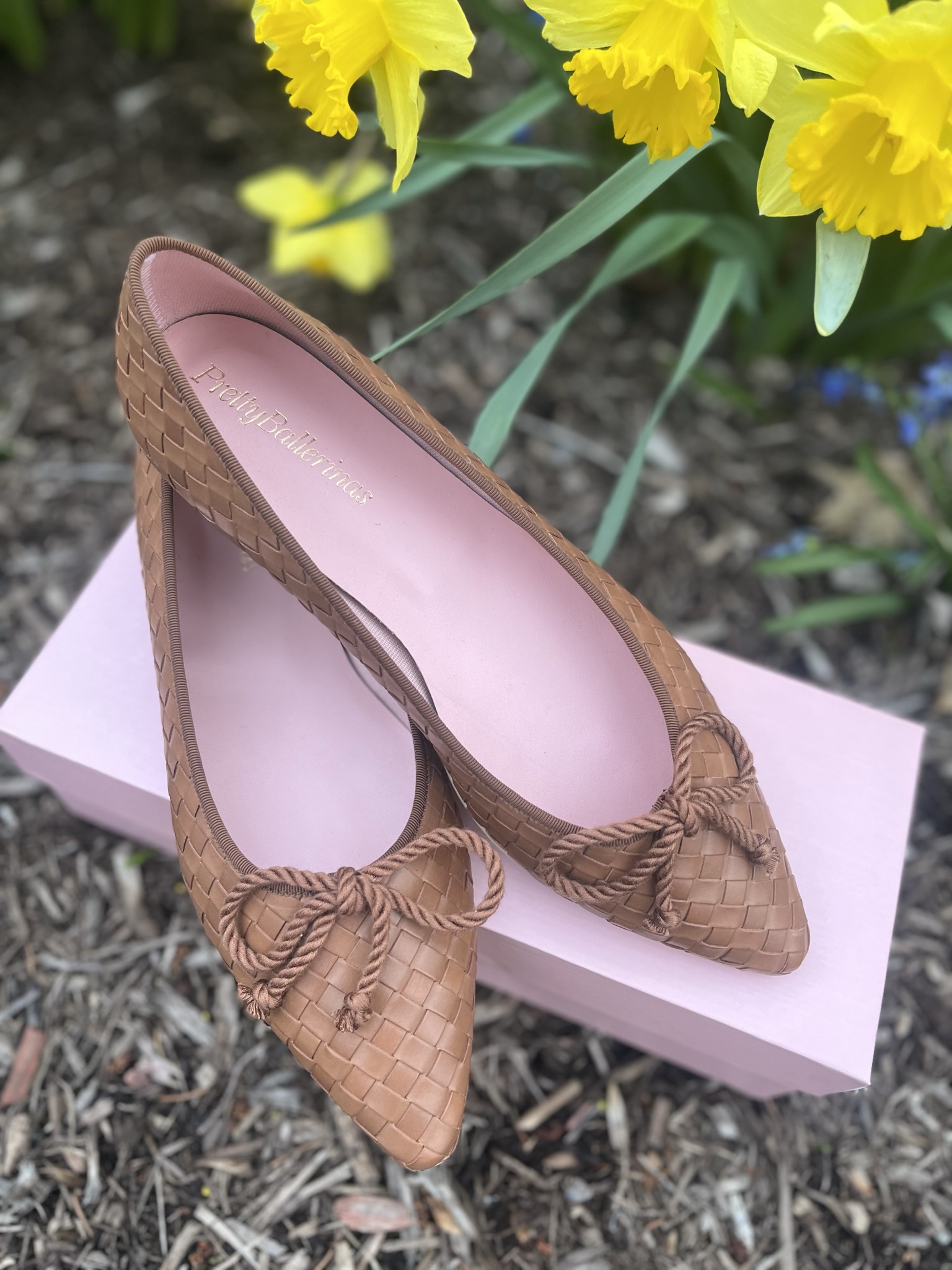
Another prestigious Menorcan shoe brand known internationally for its impeccable quality and innovative designs is Pretty Ballerinas, a unique line of leather flats produced by the Mascaró Group footwear company. These fashions have been famously worn by Kate Moss, Kate Middleton, the Queen of Spain, Elle Macpherson, Claudia Schiffer, and Angelina Jolie, among other celebrities. Fanny Cano, vivacious franchisee and owner of Pretty Ballerinas U.S. (the sole U.S. store, located in New York City), was born on Mallorca and has worked for the Mascaró brand since 1998. Fanny said:

“I love when through our very personal customer service we get to transmit to our customers the island’s vibes. They know they are wearing a unique piece crafted by hand on a small island in the Mediterranean. They feel the quality and the time invested in their pair of shoes. Explaining to the clients where and how the shoes are made—in a very artisanal and old-fashioned method—it really helps them to get tele-transported to the smell of the leather, the artisan hands sewing the shoes, mixed with the breeze of the sea and the taste of the food.”

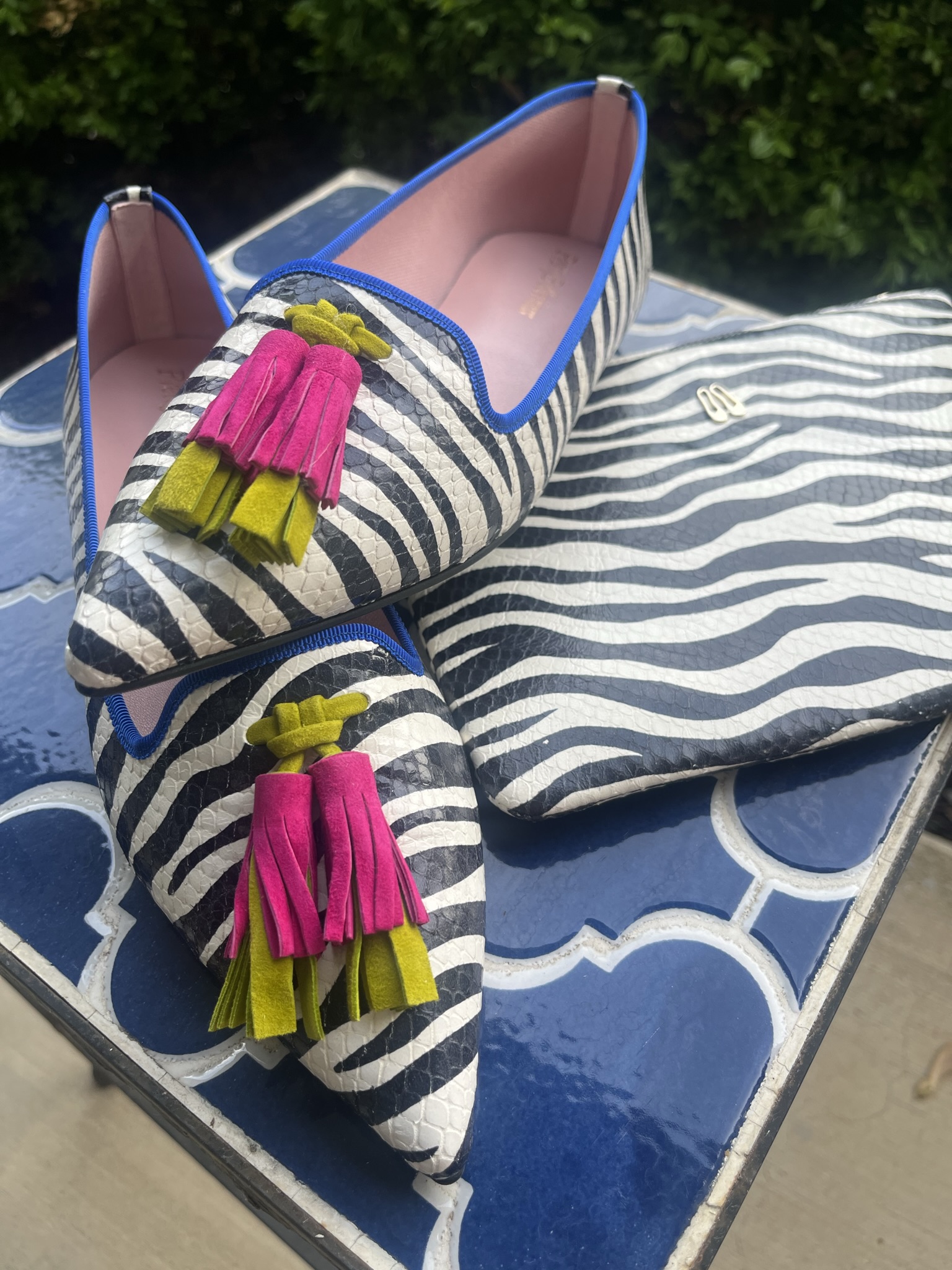
Fanny Cano, Pretty Ballerinas franchisee and owner of the New York City store, poses before the iconic pink boxes and glamorous storefront that identify this high-quality brand of Menorca-made women’s leather flats. Easily identifiable by a pink lining and stamped ballerina slipper icon on the underside, Pretty Ballerinas flats and matching handbags exhibit a unique style and luxurious leather silhouette. Top-left and bottom-right photos courtesy of Fanny Cano.

Woodworking, earthenware, basket weaving, traditional llaüt wooden boat carpentry, and other crafts using fabrics, stone, and paper are sold in island shops and markets during the summer months. The quality of local, professional artisans’ work is acknowledged by the Artesanía de Menorca (Craft of Menorca) hallmark, and the Centre Artesanal de Menorca (Artisan Centre of Menorca) at the Es Mercadal fairground exhibits and sells many of these handmade products.

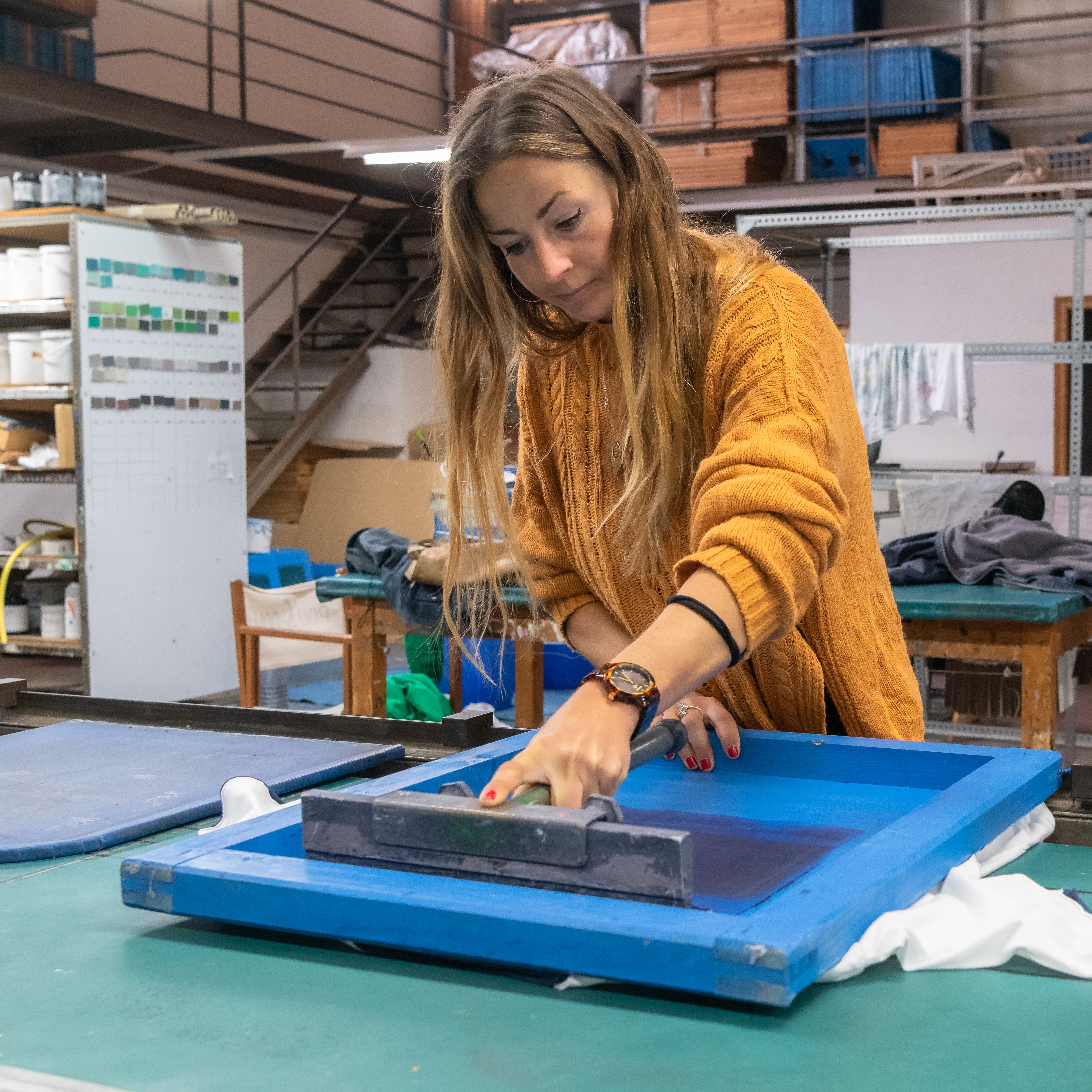
A Menorca-born leader in local artistry is Pou Nou clothing company, whose designers work closely with area artists to produce contemporary designs and stylish garments that reflect the colors and shapes of Mediterranean life. Drawing inspiration from the sea, sky, and island itself, Pou Nou creates hand-printed T-shirts and breezy, comfortable fashions for all ages using natural fibers like linen and cotton.

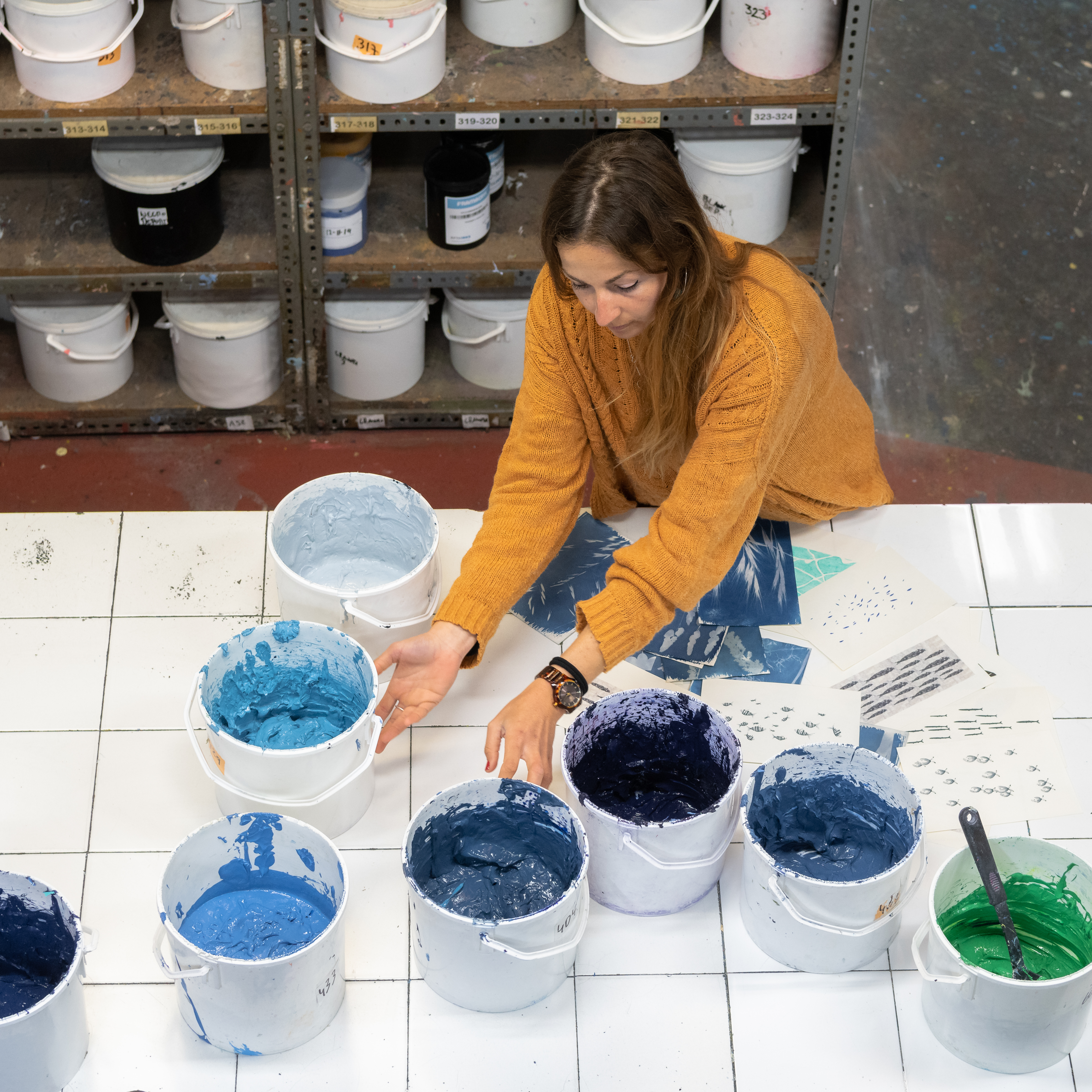
(clockwise from left) Pou Nou team members select nature-inspired artwork for clothing designs; Pou Nou colors and designs are inspired by Menorca’s flora and fauna, sea, and sky; Using a Mediterranean-inspired color palette, a Pou Nou team member tests a screen-print design.
Photos courtesy of Pou Nou.

Collaboration with local artists results in Pou Nou’s unique island-wear designs.

Owner Joan Carrés said, “I am proud of having been in the business for 36 years, following my original idea of combining good quality garments with original artwork from local artists.” Pou Nou’s easy-to-wear styles and unique artist collaborations feature screen-printed sea creatures, flowers, geckos, insects, boats, bikes, palm leaves, and nautical themes. With Pou Nou only available for purchase in Spain and other European countries, U.S. travelers looking for this island-wear can reach the Balearic Islands by flying directly from New York/Newark (EWR) to Palma de Mallorca (PMI) through United Airlines’ new, seasonal direct flight offerings. Menorca has been like a hidden treasure for many years, largely reached only from mainland Spain, but these new direct flights from the United States allow easier access to Menorca-made specialty items and scenic views of iconic landscape features. The island’s varied ecosystems and natural offerings provide ample resources for a thriving artisan business, with agriculture, footwear, fashion, and handcraft industries using materials and inspiration offered by the beautiful land and sea.
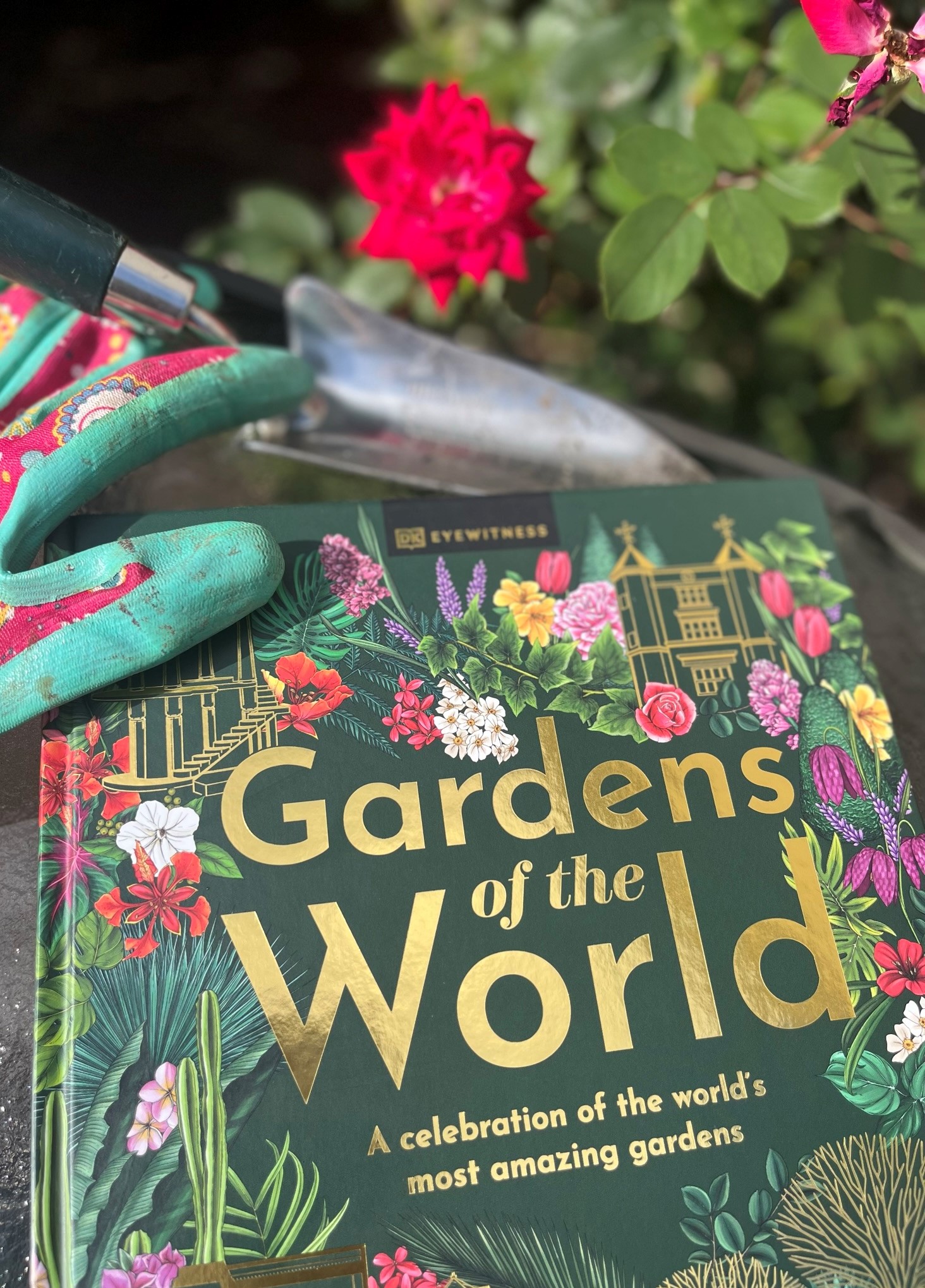
Gardens of the World: A Celebration of the World’s Most Amazing Gardens

From Monet’s idyllic water garden in Giverny, France, to the terraced gardens within Jewel Changi Airport in Singapore, this book introduces and explores places that uniquely celebrate the beauty of nature. Inspirational, iconic, and innovative gardens from all over the world have been selected for inclusion in this volume and are organized by theme: Carefully Curated, Mindful Spaces, Wild and Wonderful, Urban Oases, and Innovators and Influencers.

Pages from the Wild and Wonderful segment of the book include photos of the tumbling wisteria, rambling roses, wildflower-filled meadows, and sparkling crystal river that compose Giardini di Ninfa in Italy. Known as one of Italy’s most romantic gardens, lush foliage drapes over the crumbling ruins of medieval town Ninfa across a span of 20 acres. Pillaged by mercenaries and ransacked into ruin in 1381, the formerly vibrant town that Pope Boniface had bestowed upon the Caetani family became an “overgrown ghost town” until the overgrowth was cleared and some unstable structures restored in the early 20th century. This transformation, initiated by Prince Gelasio Caetani and his mother, included creating canals and a stream from once-stagnant, swampy waters. Other family members stepped in to design and maintain the gardens, add favorite plants and perennials, and set into motion the growth of a dreamy naturalistic garden gracing history-filled, ancient ruins.

Learn about unique landscape elements, native plant species, horticulture design inspiration, and history, and discover features and flora of 67 intriguing gardens that are yours to explore.    

For more DK Eyewitness titles, and further information about “Gardens of the World,” please visit https://www.dk.com/us/.  

Gateway to Connemara

By Susan O’Brien
Photos by the author

The early part of the 21st century has changed Ireland in many ways both good and bad. A building boom (now gone bust in the world-wide recession) had Irish-style mini-mansions going up throughout the beautiful and rugged western part of this once-impoverished country. Many immigrants were returning home to take advantage of the employment opportunities created by the famed “Celtic Tiger” economy.

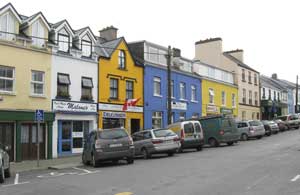
But if you are a visitor looking for a place that still holds the bucolic charm for which Ireland is famous, Clifden in County Galway is a perfect base for exploring beautiful Connemara. This little Irish village is perfectly situated between bustling Galway City and the rolling countryside of western Ireland, which is justly famous for its rugged, desolate beauty.

Kylemore Abbey, Connemara

One of the newest towns in Ireland, Clifden was founded at the beginning of the 19th century by John D’Arcy, who hoped the town would bring prosperity to the poverty-stricken area. Today the village is much as it was built more than 100 years ago, but as a hub for tourists exploring the surrounding countryside, it is home to numerous restaurants, shops, B&Bs and hotels.

Clifden is a logical and pleasant home base or jumping-off point for anyone wishing to explore Connemara and its beautiful coastline, quaint villages and rugged mountains. It is also a convenient hour’s drive into Galway City, with its more cosmopolitan nightlife and shopping scene.

To check out accommodations, restaurants and things to do in Clifden, go to www.clifdenchamber.ie. For information on the region, go to www.connemara.ie or discoverireland.com.

Hiking + Swiss Alps = Fun

By Barbara Gibbs Ostmann
All photos courtesy Switzerland Tourist Board

Switzerland is celebrating 150 years of Alpinism this year, and there’s no better way to celebrate than by going for a long mountain hike.

Aristocratic English adventurers were on to a good thing back in 1857 when they reached the summit of the Finsteraarhorn and later, upon their return to London, founded The Alpine Club, the first mountaineering association in the world.

By 1863, English climbers had ascended more than 50 Swiss peaks, firmly launching Switzerland as the playground of Europe and the center of mountain tourism. Today’s hikers can choose from more than 40,000 miles of well-marked paths throughout the country.

NEED COMFORTABLE BOOTS
Touring Switzerland by foot is a lot different than touring it by train or car, and worth all the sweat and effort. The key to a successful hiking trip is a pair of well-broken-in hiking boots — it is not the time to try out a new pair.

Having lived in Switzerland for two years as a graduate student, and visiting it many times, I had my doubts about going on an organized hiking tour. But hiking in a group proved to be a great way to visit Switzerland, providing moral support and camaraderie. Although we had prepared for the trip by hiking at home, we all benefited from the well-planned itinerary that began with easy walks and built up to the steeper climbs, preparing us physically for the more difficult parts of the hike.

My group of hiking companions, ranging in age from 13 to 67, set off in high spirits from Les Avants, above Montreux on Lake Geneva in the French-speaking part of Switzerland, and arrived 10 days later, foot weary but fulfilled, in M̹rren in the heart of the Bernese Oberland in German-speaking Switzerland.

STARTED EASY
The adventure began with an easy hike through the forest up to the Col de Jaman (Jaman Pass), above Lac Leman (Lake Geneva). We spent the first night on the trail in a matratzenlager or dormitory — a large room filled with side-by-side mattresses. It was a good introduction to what to expect in the final stages of our hike when we would be in the mountains for three days, carrying all our food and clothing. For most of the trip, we carried a day pack and a sack lunch each day, while our suitcases were transported by bus to the next village and hotel where we would spent the night.

It was early to bed because it was early to rise. At a little more than 11 miles, the next day’s walk was the longest of the trip, and much of it was on paved roads— hard on the feet and legs. However, the scenery along the Lac de L’Hongrin was beautiful and the weather was sunny and warm. The day’s hike ended in L’Etivaz, a small village in the French part of Switzerland.

DAY THREE
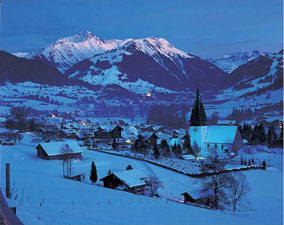
The third day’s walk was more typical of those to come. We started with a steep climb out of the valley and up to the windy Col de Jable (Jable Pass), where we huddled behind a rock fence to eat lunch. Upon crossing the Col de Jable, we left the French Canton of Vaud and entered the German Canton of Bern. Descending, we arrived in the glitzy resort town of Gstaad. There was time to shop, but in our hiking gear, we didn’t look the part of fashionable Gstaad jet-setters.

In the morning, we hiked through drizzling rain to the bus stop and took the postal bus from Gstaad to the village of Lauenen, where we set out on the day’s hike. As we trudged over the Tr̹tlisberg Pass, the rain grew heavier and the temperature dropped. At the top of the pass, it was sleeting, and we were wet, cold and miserable. No stop for a picnic lunch at the top of this pass! In fact, no stop for lunch at all. All we wanted was to get to the next town, Lenk, and get warm and dry.

We did hole up briefly on the porch of an unoccupied chalet where we nibbled chocolate bars, changed from wet to dry clothes (if you were lucky enough to have any dry ones in your pack) and generally fortified ourselves for the remaining descent. We finally arrived at our small hotel in Lenk, where we rushed to get into hot baths midpoint of hike the hotel quickly ran out of hot water.

The next day, the midpoint of the hike and a free day, dawned sunny and bright. Many of us took the ski lift up to Leiterli from where we could see across the valley to the pass we had crossed the day before in the rain. We could pick out the chalet where we stopped, the place where we got lost and had to climb on our hands and knees on the slippery scree to get back up to the path, and where we had turned off to take a shortcut to town. It looked better in the sunshine than it had in the rain the day before!

Sunday, it was back to the trail. We started with a short bus ride to the hamlet of B̹elberg, from which we hiked to the Hahnenmoos Pass. It was drizzling, but nothing like the rainy day we’d had before. As we descended, the rain stopped, and we arrived in the lovely town of Adelboden with time to visit the shops.

The journey from Les Avants to Adelboden had been an introduction to the days to come. From Adelboden on, the mountains were higher and more rugged, and much of the trail was above the timberline.

The next day’s 9-mile hike began with a long, hard climb up to the Bunderchrinde Pass — more than 3,500 feet over slippery shale rock — then on to Kandersteg. As I sweated, puffed and panted, I wondered if I could actually make it. But when I reached the pass at 7,500 feet, it was more than worth the effort.

In my notebook I wrote, with words inadequate to describe the satisfaction of being there: What a thrill. The view is worth the whole hike. We are above the clouds, and in the clouds, as they move and change position. The north face of the Eiger just popped out of the clouds — thrilling! Eiger and Munch

Later, both the Eiger and the M̦nch were stunning as they poked through the clouds. Sighting the Eiger that day was the first of many such glimpses as we continued toward it and ended up directly across from it at our final destination of M̹rren. We were now at the heart of the hike — three days in the mountains with everything on our backs, hiking from Kandersteg to M̹rren, across the Bernese Oberland into the shadow of the Jungfrau, the magnificent mountain and glacier above Interlaken.

Luck was with us, and we had great weather for the three days, and even the next day in M̹rren, when we visited the Jungfraujoch in bright sunlight.

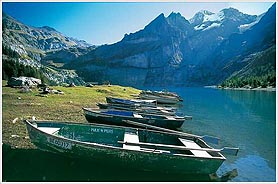
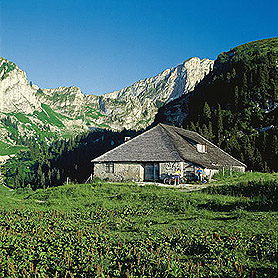
Leaving Kandersteg and its comforts, we started with a chairlift up to the Oeschinnensee, a spectacular Alpine lake with blue waters in an incredibly beautiful setting. From the lake, it’s a climb of more than 3,600 feet to the Hoht̹rli Pass, where we spent the night in an Alpine hut on the Bl̹misalp, next to a glacier. The hut, perched precariously on the top of the pass, is a popular spot for summer hikers and mountain climbers. In the winter, it is covered completely by snow. The accommodations at the hut consisted of a large room filled with mattresses, where we all piled in and slept like logs.

COLORFUL, AWESOME SUNSET
One of the thrills that day was watching the colorful sunset, as the sun sank into the clouds, framed by the mountain peaks. From the pass, we could pick out the Eiger, now bigger and closer than its first sighting yesterday, as well as the Schilthorn with its restaurant perched on top, the scene of the James Bond movie, “In Her Majesty’s Secret Service.”

We began the morning’s descent by clinging to a steel cable pegged into the mountain wall as we slipped and slid on loose scree. The descent of 4,000 feet before reaching Alpine pastures seemed interminable. We just kept walking-and walking-and walking and going down and down and down.

We finally reached the valley floor where a glacial river flowed, icy cold and steel gray in color. We peeled off as much clothing as we could and still be decent and cooled off in the stream. Then it was on to a nearby chalet for cold beer and our sack lunches.

In the afternoon, we hiked along a wide path with wildflowers and bright sun. It was a delightful walk, leading us to our accommodations for the night: a cow and goat barn at Unter D̹rrenberg.

A ‘LOFTY’ SLEEP
We climbed a ladder from the stables to the loft. (You quickly learn to hold the sides of the ladder, not the rungs, unless you want a handful of cow manure!) In the loft, there were side-by-side mattresses, as in the dormitories. Only here, the air was scented with ammonia from the goats and cows below. It was primitive, but one of the trip’s highlights for me, but not for some of my fellow hikers. It was probably a good thing that the next night we would find ourselves in a comfortable hotel once again.

The next day was the last day of the hike, and we hated to see it end. The morning’s climb was the most difficult of the entire trip — or maybe I was just getting tired. I thought I’d never make it across all that slippery scree and obtain the summit. But once again, upon arriving at the pass, the Sefinenfurke, the views were so spectacular and the feeling of accomplishment so great that I immediately forgot the ordeal of arriving there.

MAKE IT LAST
We dawdled over lunch at the pass; everyone wanted to make the day last as long as possible. A snooze in the sun, a scramble to a nearby peak for photos, and soon it was time to descend. We crossed from the shale into Alpine pastures into forest and down into M̹rren, a picturesque village perched on the side of the mountain, facing the Jungfrau, M̦nch and Eiger across the valley.

The snow-covered mountains radiated sunlight as we descended, alpenstocks (walking sticks) in hand. After watching the Eiger grow larger and larger for several days, suddenly there it was, bigger than life and bathed in bright sunlight.

The feelings of the group could be summed up in the words we saw carved in German on an ancient chalet in the village of Kandersteg:

“He who drinks of the high mountain light, shall know no unhappiness on earth.”

I’ll drink to that.

ET EXTRA
The company I traveled with is no longer offering the Swiss hiking itinerary, but several other companies offer similar guided or self-guided trips. Start with these links and do some research to find the trip that suits you.
* Ryder Walker Alpine Adventures, www.ryderwalker.com.
* Wanderweg Holidays, www.wanderwegholidays.com.
* Active Journeys, www.activejourneys.com.
* Ibex Treks, www.ibextreks.com.
* European Walking Tours, www.walkingtours.com.
* The Wayfarers, www.thewayfarers.com.
* Alpinehikers, www.alpinehikers.com.

For hiking tips and itineraries specific to Switzerland, visit www.myswitzerland.com and click on “hiking.”

The most important item for a hiking trip is a good pair of boots that fit you well and are thoroughly broken in. Other things to include in your pack are: moleskin, Band-Aids, Swiss Army knife, water bottle, sunscreen, Ace bandages, medicated powder, poncho, wool or fleece sweater or jacket, flashlight, binoculars, compass, hat, sunglasses, resealable plastic bags for keeping articles dry. Be sure to dress in layers — the weather in the mountains can change swiftly.

ABOUT THE WRITER
Barbara Gibbs Ostmann is an award-winning journalist with 30 years of writing and editing experience in newspapers, magazines, cookbooks and newsletters. She was food writer for the New York Times Regional Newspaper Group from 1993-2005 and food editor of the St. Louis Post-Dispatch from 1975-1990. She joined the faculty of the University of Missouri-Columbia as an assistant professor and the coordinator of the Agricultural Journalism program from 1991-1993.

Barbara has co-edited 12 cookbooks and is co-author of “The Recipe Writer’s Handbook,” a style manual, and was copyedited or contributed to 17 other books. She writes about travel, food and wine for regional and national magazines, and copyedits manuscripts for several publishing houses.

Barbara is treasurer of The Culinary Trust, the philanthropic arm of the International Association of Culinary Professionals (IACP). She is also on the Board of Directors of the Midwest Travel Writers Association and the Missouri Association of Publications. She has traveled extensively in Europe, Asia, Australia, Africa, North America and South America.

Self-Guided Walks the Wicklow Way

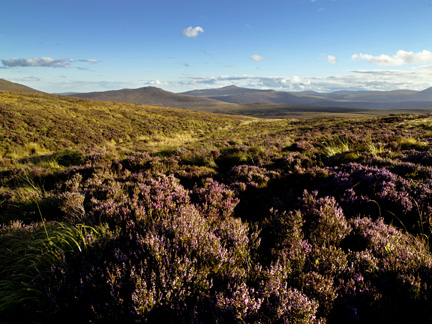
Wilderness along the Wicklow Way

Hiking the Wicklow Way in Ireland’s “Garden County” is an unforgettable experience.

Photos courtesy Tourism Ireland

The 79-mile trail stretching from the southern suburbs of Ireland’s capital, Dublin, through the mountains of County Wicklow and into neighbouring County Carlow is one of the most popular parts of Ireland’s network of long-distance walking trails.

Wicklow Mountains

Starting at the outskirts of Dublin, walkers head southwest through the beautiful and varied Irish countryside encompassing rugged mountains, ice-age glacial valleys, upland lakes, mountain streams and pine forests. Along the way are scattered many remnants of Ireland’s long and colorful past, including the extensive remains of the early medieval monastic settlement at Glendalough.

As the walks are self-guided, walkers can proceed at their own pace, and take time to appreciate the spectacular views.

The Wicklow Way is one of 43 National Waymarked Trails in 25 counties in Ireland, offering a variety of hiking experiences against the backdrop of an endlessly stunning landscape.

For more info, go to www.ireland.com