Victorinox Values Safety Stylishly

By Alison Ramsey

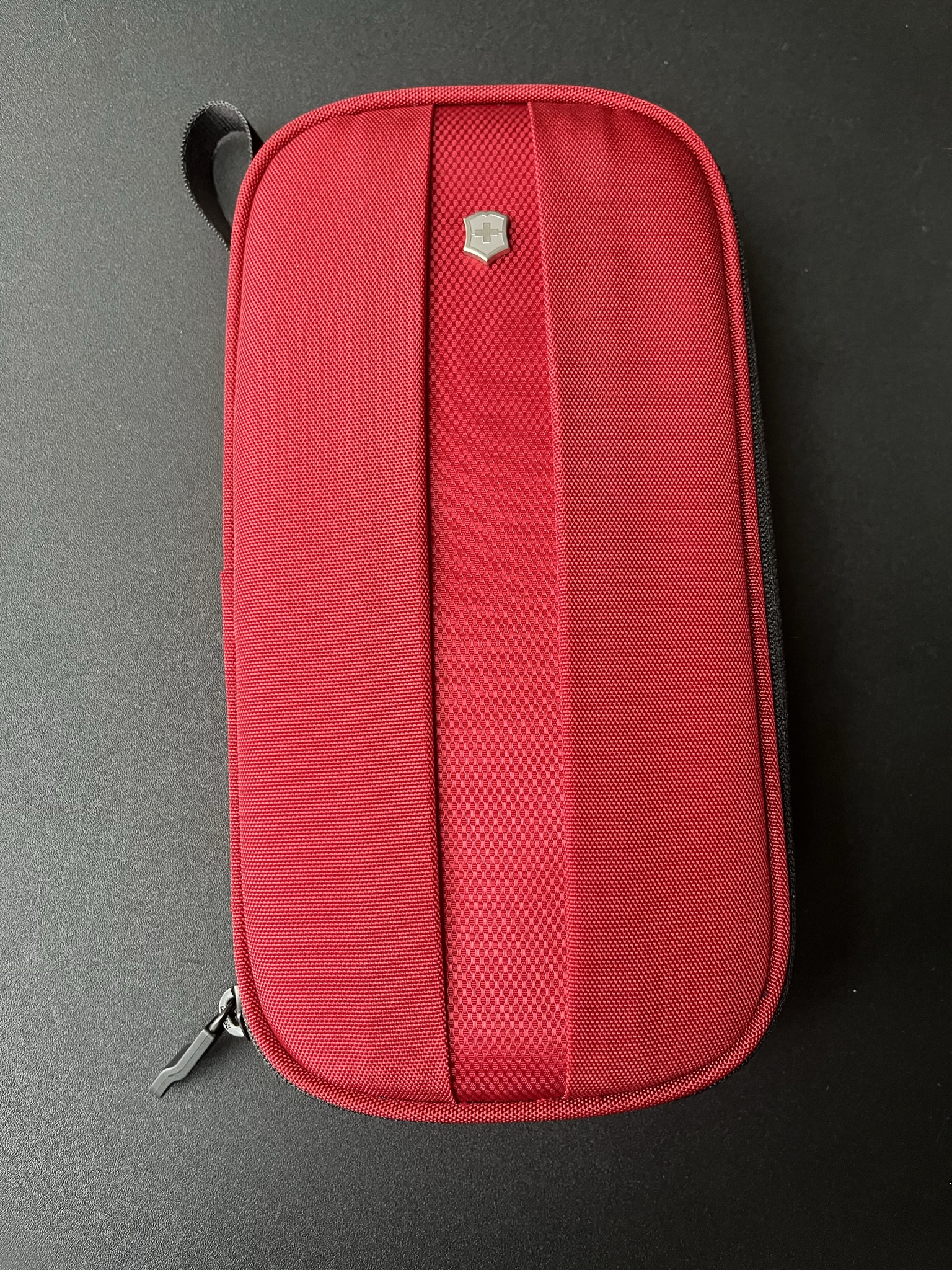
Airport check-in is hectic and rushed. We juggle handbags, wallets, snacks, laptops, babies, cellphones, boarding passes, IDs, passports—and all while trying to pour out the rest of our water bottles before security demands it. I did A LOT of research before purchasing the attractive accessory that majorly simplified my check-in process—the Victorinox Travel Organizer with RFID Protection. The $55 price tag might seem like a lot, but Victorinox is a brand I stand by because they focus on quality, sturdy construction, and smart technology. A brand leader in Switzerland and the rest of the world, Victorinox puts its energy into several categories of products, although it all began with the legendary and esteemed Swiss Army knife. Besides cutlery, this Swiss company produces watches, fragrances, and travel gear.

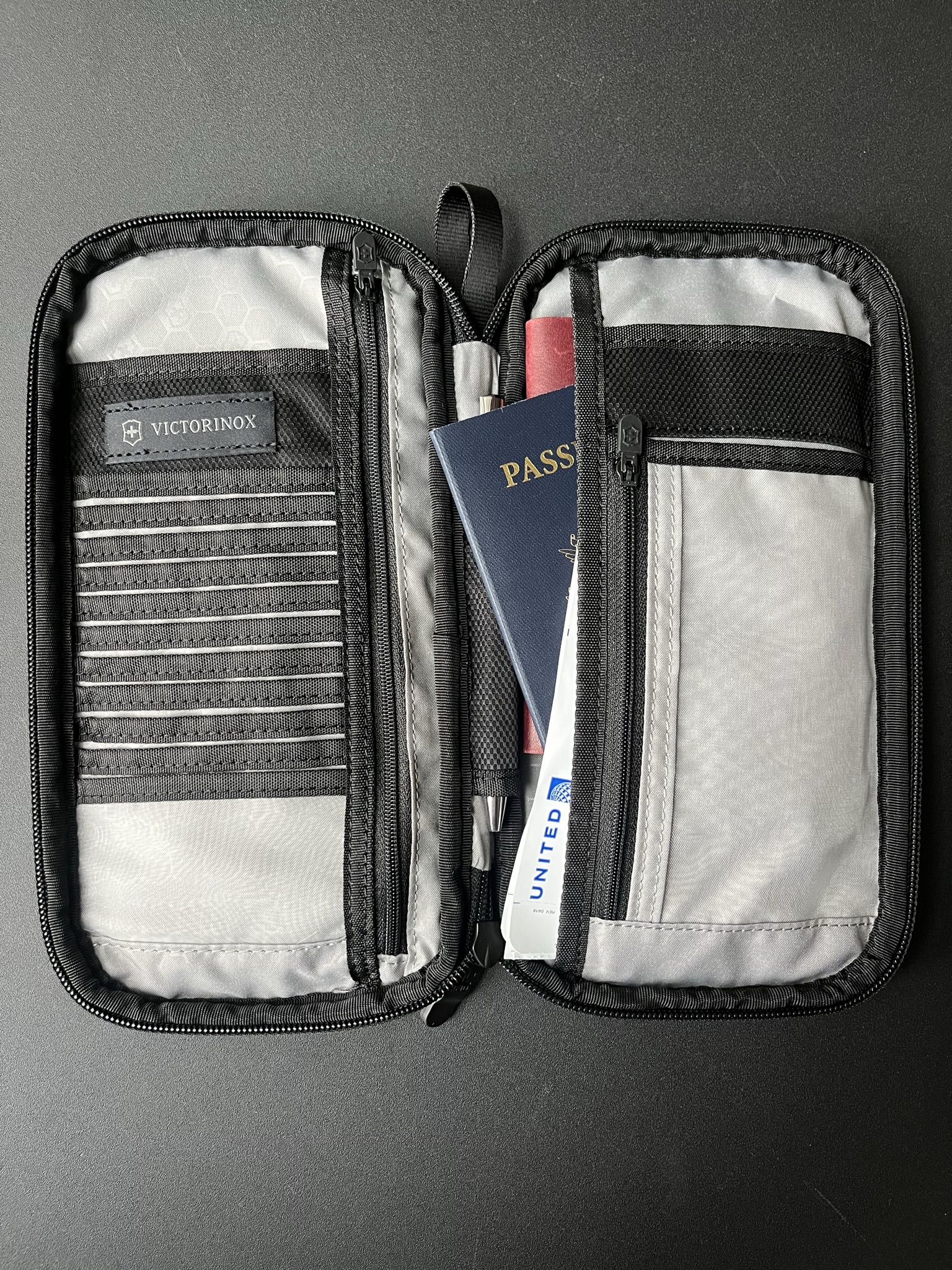
In terms of travel gear, the Victorinox Travel Organizer specifically meets my needs due to its large capacity to hold multiple passports and boarding passes (so I can keep track of my kids’ passports and papers as well as my own). Although it comes in either black or red, I chose the eye-catching bright red color so it would show up in my dark-lined bag and would be easy to spot if I misplaced it. The zipper is sturdy and secure, zipping around 3 sides of the wallet to completely contain the contents.

The interior offers 12 credit card slots, with one covered in a see-through mesh to keep an ID or business card visible. Its long, zippered pocket is perfect for cash or documents that need safe keeping. The interior “spine” of the organizer reveals a canvas tube for storing a pen. The right side of the wallet consists of 4 tall pockets and dividers that help you separate your boarding passes and passports, and can even hold reading glasses, earbuds, and your cell phone. The zippered mesh pocket on this side is perfect to hold coins, jewelry, more open-faced IDs, or small items that need containment. The outer, backside of the organizer even has a wide, extra pocket for storing customs papers and tickets that you want to keep easily accessible without unzipping the whole wallet. A strong canvas loop at the top corner allows you to keep a firm grip on your valuables by sliding a finger through for extra security.
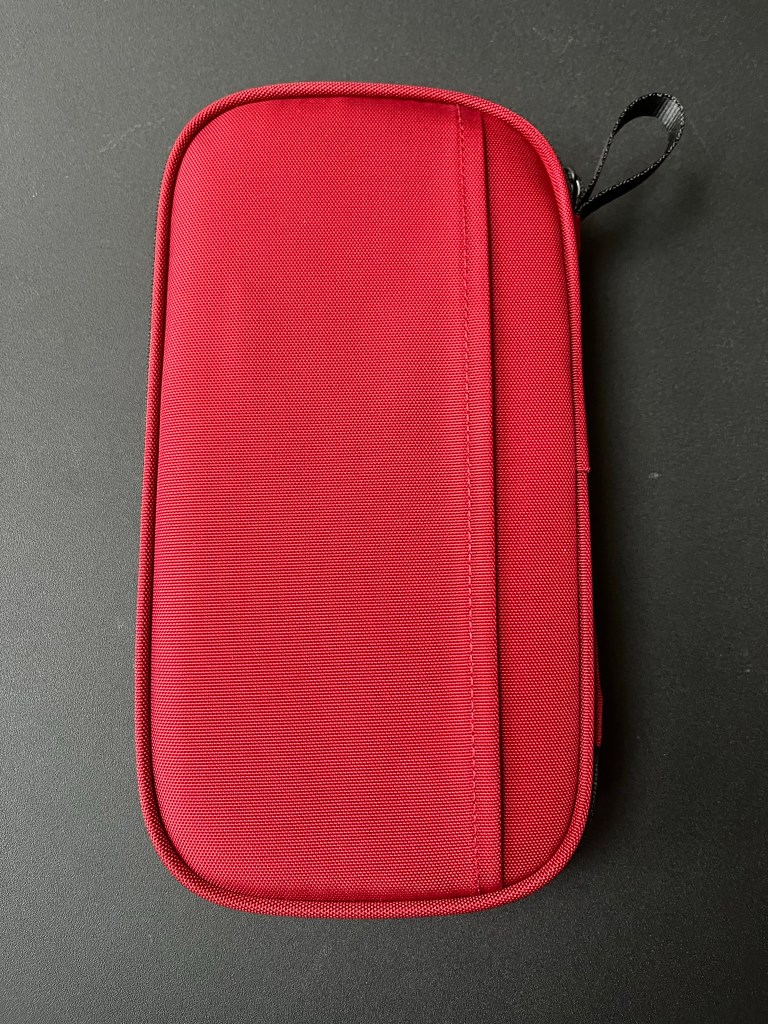
Back side

Speaking of security, this wallet safeguards your private data by blocking radio-frequency identification (RFID), preventing others from scanning your credit cards and ID cards and wirelessly obtaining your personal information. I felt very confident storing my travel documents and accessories in this handsome wallet as I traveled internationally through multiple airports and customs desks.

10.2”H x 1.2”L x 5.1”W; Weight 0.4 lbs
$55, www.victorinox.com

Eurostar on a Roll

By Don Heimburger

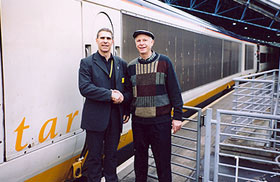
Don Heimburger and Eurostar Driver Detlef Hofmann shake hands prior to departure from Waterloo Station, London, when the train left from this station.

Nearly 22,000 travelers hop aboard a Eurostar train each day, and more than 75 million have traveled the Eurostar routes over the last decade.

That figure represents more rail passengers than all the airline passengers combined on both Eurostar routes out of London.

So what’s new with Eurostar for 2008?

NEW FOR 2008

For one, since November, 2007 Eurostar has moved to a new station, from Waterloo to St. Pancreas, reducing the rail journey between London and Paris by 20 minutes. (I loved Waterloo Station!)
The travel time is now 2 hours and 15 minutes, and between London and Brussels it is only 1 hour and 51 minutes.

Also opened was Great Britian’s first high-speed line (called HS1) which carries the Eurostar exclusively. This allows travelers from London to Paris or Brussels to use the train for a one-day business or leisure trip. Every day the train runs 18 roundtrips between London and Paris and 10 between Brussels.

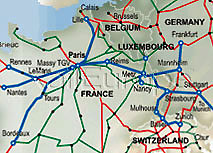
Eurostar trains feature 18 cars each, with car configurations changed depending on if the train is designated as a Business Premier train or a Leisure Select train. The train also runs to Lille, Eurodisney/Marne La Valle, Avignon (summer only), and Bourg St. Maurice (winter only).

TRAINS SEAT 766

Trains seat 766 persons, with special cars situated between cars 7 and 12, and standard class cars 1-5 and 14-18. There are always two bar cars, 6 and 13.

If you are a U.S. citizen, you will probably want to book your trip through Rail Europe, especially if you want to purchase a Eurail Pass that can include the Eurostar (and you can receive up to a 60% discount). Go to http://www.raileurope.com for the details.

In other European rail news, last summer the new French Railway TGV East train broke the world’s rail speed record, reaching a top speed on the trip of 357 miles per hour! A Rail Europe spokesman said, “This accomplishment is monumental for the SNCF and the rail community, and will have a positive impact on all who wish to travel east from Paris.”

The average speed, however, of the TGV East trains is 200 miles per hour. Each first class seat features its own electric power outlet, and broad seat cushions; first class passengers can book a taxi through the train conductor; and on-board messages are in French, German and English.

As an example of faster speeds on the TGV, here are new travel times posted by Rail Europe for travel between some stations:

  • France-Geneva:
    Paris-Bellegarde: 3 hours 10 minutes;
    Paris-Geneva: 3 hours 45 minutes
  • France-Switzerland:
    Paris-Lausanne: 4 hours;
    Paris-Zurich: 6 hours 10 minutes
  • Brussels-France:
    Brussels-Lyon: 3 hours 40 minutes;
    Brussels-Avignon: 5 hours

Gotthard Tunnel Celebrates its 125th Anniversary

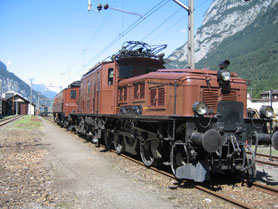
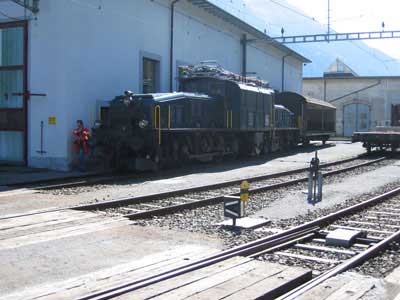
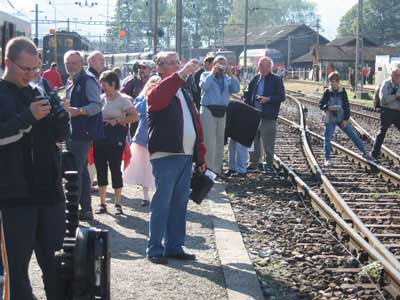
A giant electric Crocodile locomotive was on display September 8 and 9 in Erstfeld, Switzerland when 50,000 visitors showed up there and in Biasca to celebrate the 125th anniversary of the opening of the famous 15-mile-long Gotthard Tunnel. Heimburger’s European Traveler was at the giant party and recorded these photos. As many as seven steam engines and dozens of vintage pieces of equipment were available for viewing. There were also many interactive displays. For more information, go to www.sbbhistoric.ch.

Spotlight on Lucerne

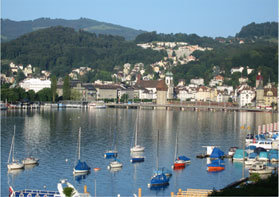
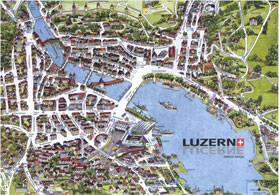
Lucerne, Switzerland is a great city for pedestrians. A walk around Lucerne, a city of only 57,500 people, is invigorating and beautiful, with the majestic Alps at your doorstep.

Founded as a small fishing village on Lake Lucerne (Vierwaldstattersee) the city (at 1,430 feet), is the focal point of the region, and the most populous city in central Switzerland.

The city is called “the essence of Switzerland” and the “Festival City” with numerous events such as the World Band Festival, Mozart Festival and the Lucerne Festival. There are numerous bridges in the city, with the Chapel Bridge the most famous, built  circa 1300 as part of the city’s fortifications.

The Musegg Wall with its nine towers was built in 1400 after the Battle of Sempach and today it is considered the longest and best preserved rampart walls in Switzerland.

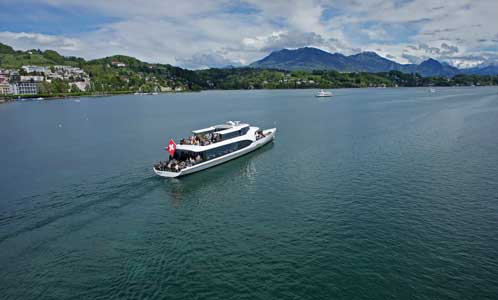
A ride on the many beautiful lake steamers is a must to enjoy the surrounding countryside. Boats leave right from a dock downtown across from the train station (Bahnhof). While in Lucerne, walk through or stay at the 101-year-old historic Palace Hotel and ask for a lakeside room. 

While you are in Lucerne, stop by the Swiss Transport Museum (www.verkehrshaus.ch) and look at all the restored trains, planes, and other forms of transportation. If you have a full day each, also see Mt. Rigi (www.rigi.ch) and Mt. Pilatus (www.pilatus.ch), two spectacular mountains each obtainable by hiking or cog railway. You can take boats, trains or drive to the base of each mountain.

For more information on Lucerne, go to www.luzern.ch.

Hike Around Lake Lucerne

Consists of 44 square miles of hiking trails complete with breathtaking views of the Alps

Photos courtesy Lucerne Tourism

A walking trip around Lake Lucerne in central Switzerland provides impressive views of the Alps, as well as the surrounding hills and the lake.

Trekkers can pass through alpine meadows, steep cliffs and placid mountain lakes. While there, hikers can also enjoy the magnificent flora and fauna. Mountain inns are an invitation to fortify yourself, while mountain rails ensure that the strenuous uphill and downhill sections become excessive.

(LUCERNE) NIEDERRICKENBACH VILLAGE – EMMETTEN 5:30 (HOURS) TO (SEELISBERG)
Leave Lucerne by train and enter Niederrickenbach by cable car. In the village, there are shops selling alpine herb trees gathered by women from the monastery. The tour continues further along the sycamore woods on a well-known game observation trail along the edges of the hills of Schwalmis and Oberbauen to Niderbauen. EF Valley ride using the cable car to Emmeten, then by post bus to Seelisberg.

SEELISBERG TO FLÜELEN 5:05
The Road of Switzerland, opened in 1991 in commemoration of the 700th anniversary of the Swiss Federation. It winds around the deep Urnersee — sometimes high above it, then again directly on its shores, at times along steps hewn into the cliff side, then again on broad, comfortable tracks, past numerous inns and swimming locations, and with frequent, splendid views of the lake and the surrounding hills.

FLÜELEN TO BRUNNEN 5:55
Between Flüelen and Sisikon the trek passes over a path on the shores, such as at the Riviera, past Tellskapelle and Tellsplatte. The climb from Sisikon onwards is rough, but there is an exciting adventure pool in Morschach for recuperating.

BRUNNEN/URMIBERG – RIGI KALTBAD 4:10
Hikers can travel by cable car to Urmiberg. The Rigi is a trekker’s paradise. The path from Urmiberg via Scheidegg to Kaltbad is also a trek that can only be described using superlatives. Unmatched views, which can cover up to four lakes at a time, are guaranteed. The panoramic view of the hills stretches from Säntis to the Bernese Alps.

RIGI KALTBAD – RIGI KULM – KÜSSNACHT 4:30
Rigi Kaltbad is nicknamed the Queen of the Mountains, and at its highest point extends more than 5,900 feet. It is no wonder then that, on a fine day, thousands of people eager to enjoy the sun make an excursion to this mountain. An unforgettable experience! Descent to Seebodenalp and Küssnacht. EF Seebodenalp – Küssnacht by cable car.

KÜSSNACHT – LUCERNE 5:30
The round trip around Lake Lucerne ends with a splendid finishing stretch across the Dietschiberg. The view of the sea is magnificent, and it is enjoyed by the golfers playing here above Lucerne. After a short descent, the path leads back to the heart of Lucerne, along the lakeside promenade. Brittany Petrillo