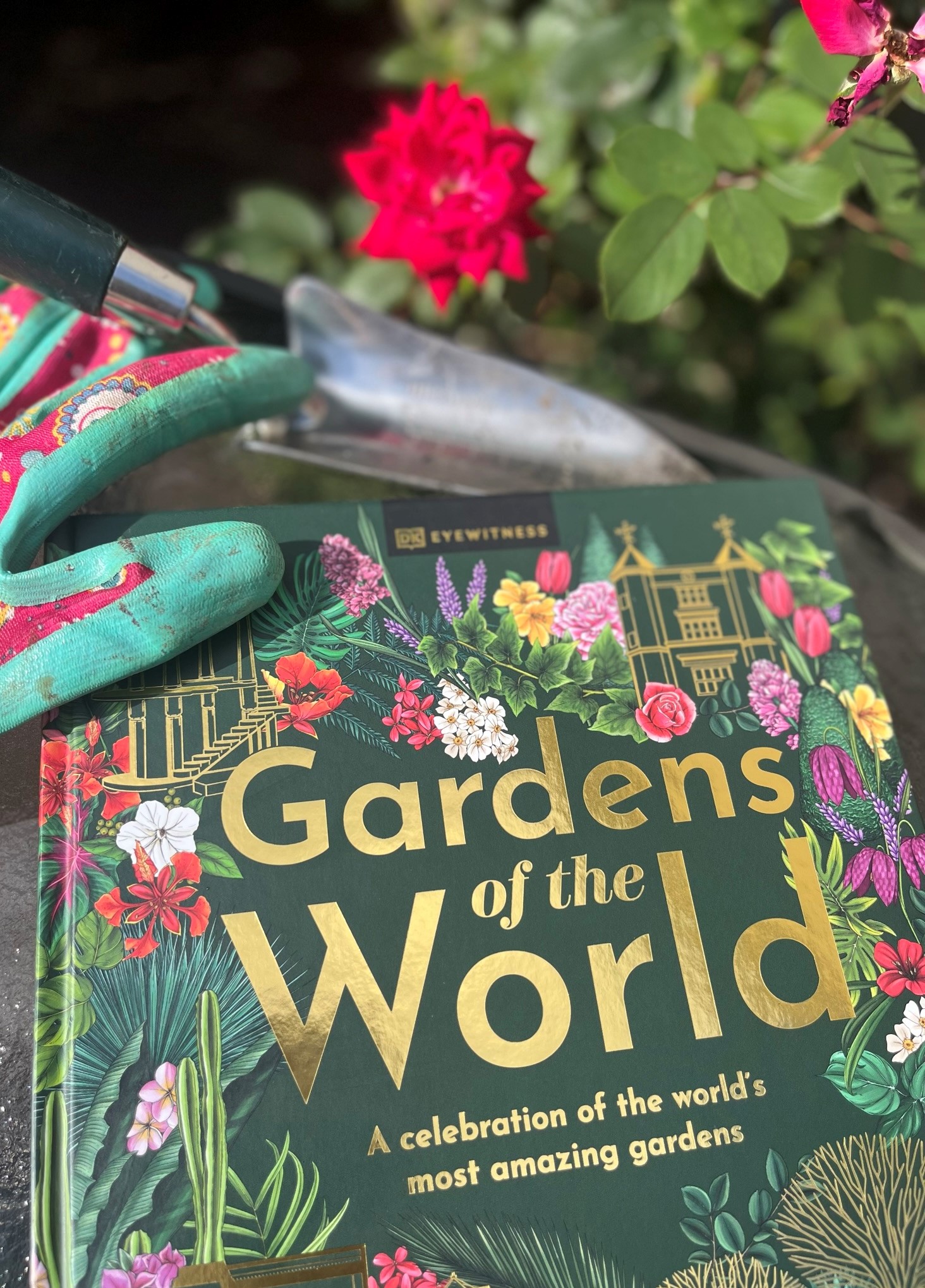
From Monet’s idyllic water garden in Giverny, France, to the terraced gardens within Jewel Changi Airport in Singapore, this book introduces and explores places that uniquely celebrate the beauty of nature. Inspirational, iconic, and innovative gardens from all over the world have been selected for inclusion in this volume and are organized by theme: Carefully Curated, Mindful Spaces, Wild and Wonderful, Urban Oases, and Innovators and Influencers.
Pages from the Wild and Wonderful segment of the book include photos of the tumbling wisteria, rambling roses, wildflower-filled meadows, and sparkling crystal river that compose Giardini di Ninfa in Italy. Known as one of Italy’s most romantic gardens, lush foliage drapes over the crumbling ruins of medieval town Ninfa across a span of 20 acres. Pillaged by mercenaries and ransacked into ruin in 1381, the formerly vibrant town that Pope Boniface had bestowed upon the Caetani family became an “overgrown ghost town” until the overgrowth was cleared and some unstable structures restored in the early 20th century. This transformation, initiated by Prince Gelasio Caetani and his mother, included creating canals and a stream from once-stagnant, swampy waters. Other family members stepped in to design and maintain the gardens, add favorite plants and perennials, and set into motion the growth of a dreamy naturalistic garden gracing history-filled, ancient ruins.
Learn about unique landscape elements, native plant species, horticulture design inspiration, and history, and discover features and flora of 67 intriguing gardens that are yours to explore.
For more DK Eyewitness titles, and further information about “Gardens of the World,” please visithttps://www.dk.com/us/.
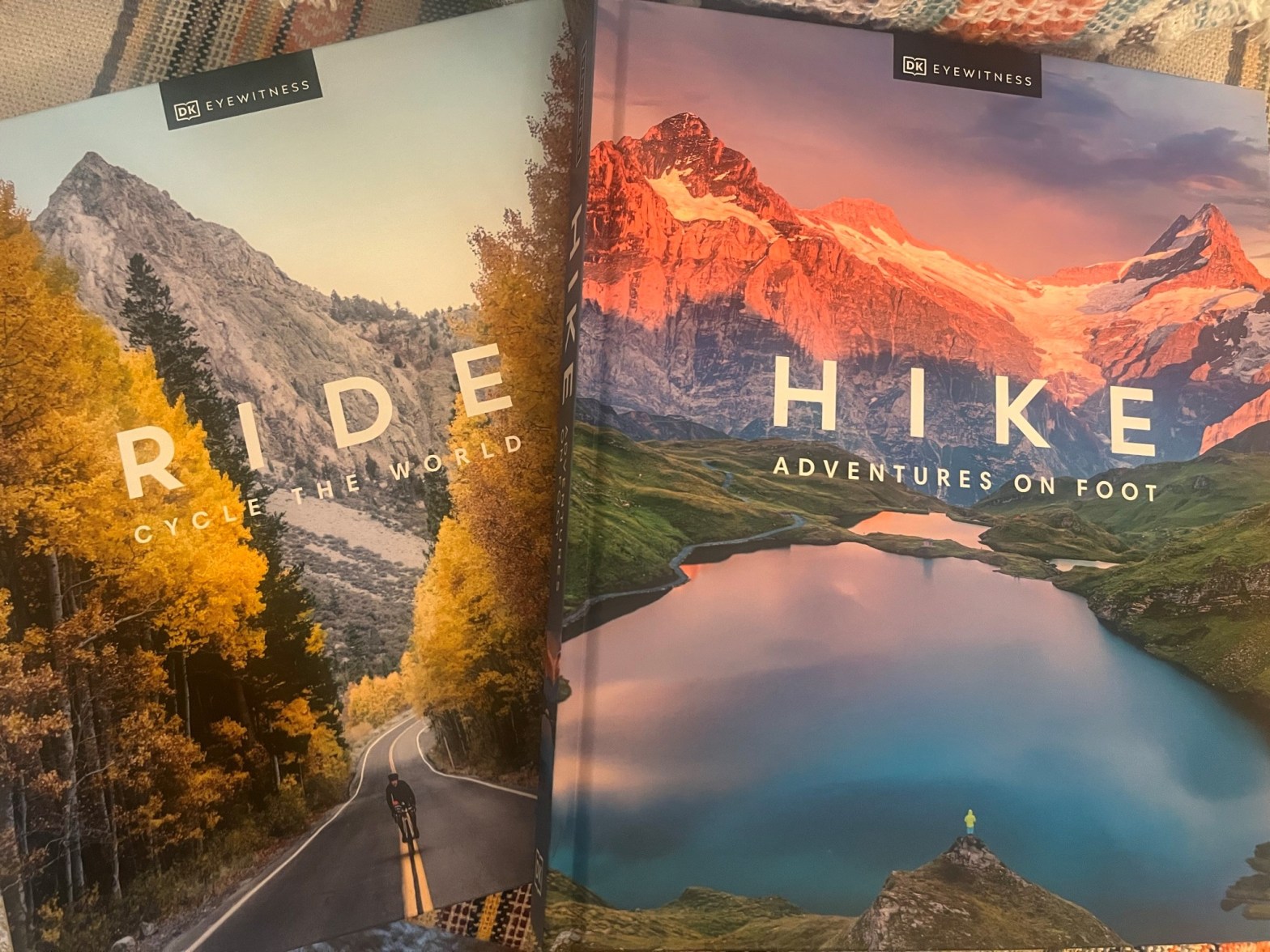
HIKE: Adventures on Foot One hundred and twenty-five opportunities to move your body across the world in an exhilarating, sustainable way! This published compilation of walking trails is the work of outdoor enthusiasts who have selected each featured route for its spectacular scenery, interesting history, or unique challenges. Each trail suggestion includes practical information to help you plan your trip, including the distance, total ascent, elevation, duration, as well as sightseeing tips. Hiking newbies and veterans alike can benefit from the book’s preparation tips, trail etiquette guidelines, and essential gear checklist.
One scenic hiking trail suggestion, Dove Lake-Cradle Mountain (Ronny Creek, Tasmania, Australia), is a one-day circuit traversing boardwalks over moorland, passing through lush rainforest, and ascending large boulders on Cradle Mountain. Readers are advised to look for ambling wombats and gray-furred Bennett’s wallabies near Ronny Creek and to pause for photo opportunities of dramatic vistas from the summit of Cradle Mountain. The return trip passes numerous sparkling lakes and offers a chance to see quill-covered echidnas in their home near Dove Lake.
A fascinating book for active hikers and armchair travelers alike, “HIKE” binds maps, history, geography, and interesting photography together into an inspiring and informational volume.
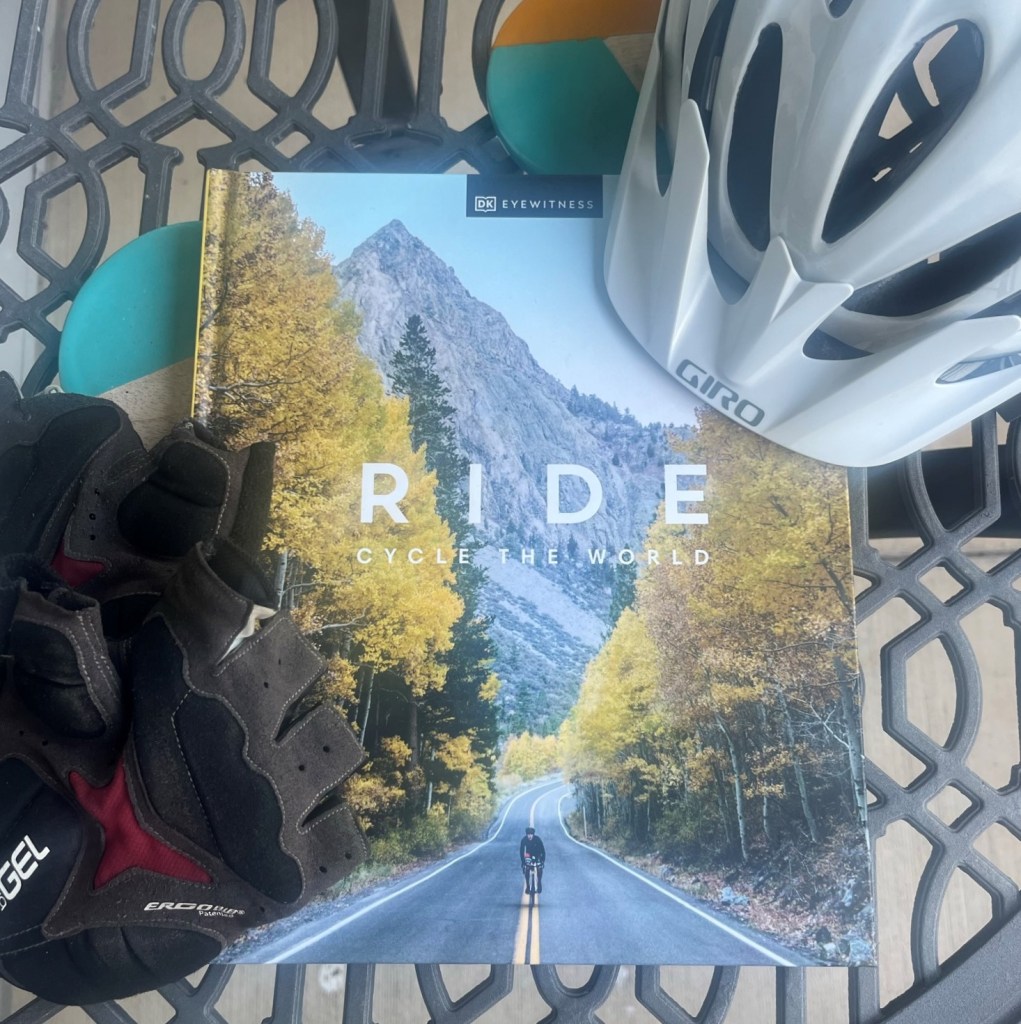
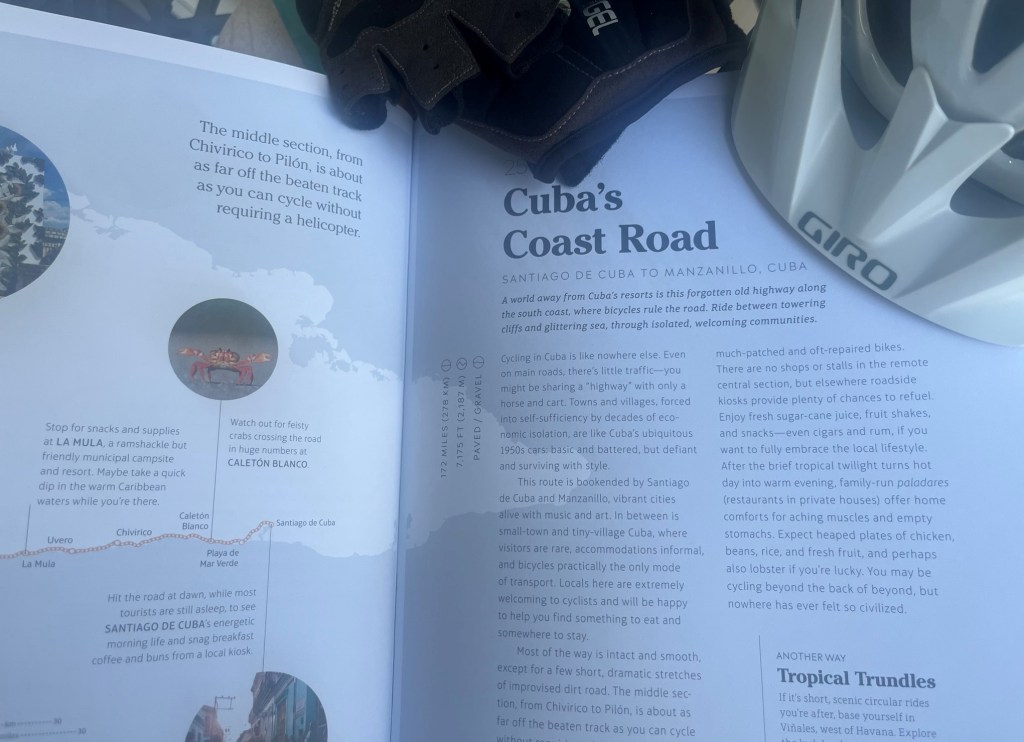
RIDE: Cycle the World Explore the world by bike, cruising along the 100 cycleways presented in this compilation of trails recommended by avid cyclists. Along with colorful photos and area maps, this DK Eyewitness gem contains detailed route information, including road surface, elevation, total ascent, scenic outlooks, distance, and pit stops. Get inspired to go “bikepacking” in North America, Central and South America, Europe, Africa and the Middle East, Asia, and Australasia—wherever your travels take you.
Beginners, or those looking to upgrade their ride, are provided helpful guidance on which type of bike to choose for their adventures; road, mountain, gravel and touring, recumbent, and electric are the options explained and diagrammed in the opening pages of the book. Select a vehicle suitable for your experience level, desired terrain, comfort goals, and mobility needs, and prepare for your trip by reading up on bicycle maintenance, essential gear, and safety precautions.
Included in the book is a trail along the Helgeland Coast in Norway, which features a grouping of more than 6,500 islands rising from the sea. Best as a summertime route, with beautiful light but always a chance of showers, this Helgeland cycling opportunity traverses 126 miles in a “reasonably relaxed” ride on paved and gravel roads. “Syklist Velkommen” signs abound along the route, welcoming cyclists to stop for food, safe bike parking, and laundry facilities. Riders can expect photo-worthy vistas of mountain peaks, sandy beaches, and quaint and colorful wooden cabins, fishing huts, and houses. Along this route, stop at an old wharf along the trail to tour and sample sweets at Heidi’s Chocolate Factory in Dønna, eat a tasty meal cooked by famous chef Jon Aga at the Vega Havhotell, and visit the Vega World Heritage Centre to learn about eider ducks and how they helped earn the island UNESCO status.
Stock up on supplies and water, and prepare to feel the wind against your face as you explore spectacular sights via bicycle.
For more DK Eyewitness titles, and further information about “HIKE” and “RIDE,” please visit https://www.dk.com/us/.
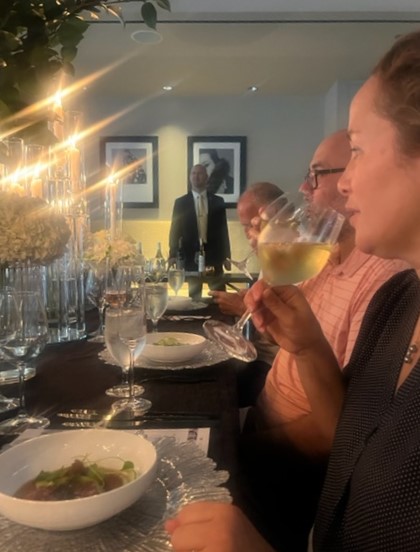
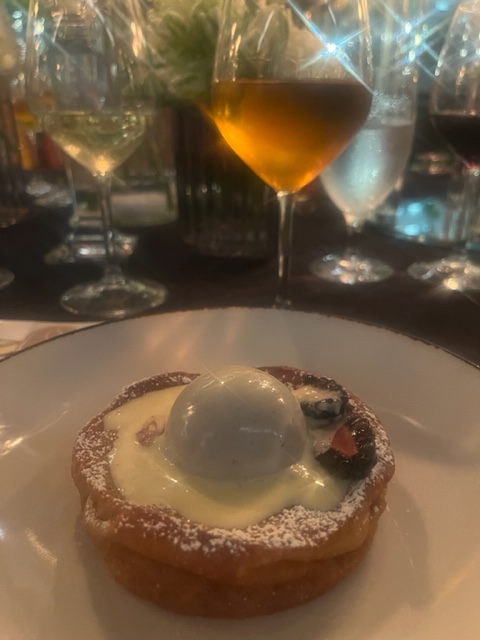
Dozens of blooming white flowers and shimmering candles in glass holders grace the center of a long dining table. Greeted with a glass of sparkling wine upon entry to the Cigale Room, Sofitel Chicago Wine Dinner guests seat themselves around the table and sip their bubbling beverages while reviewing the printed menu of culinary delights and drinks to come. The varied-height centerpieces create intimacy between clusters of conversing guests, allowing privacy within a group setting. Per French ideals, one simple joy of life is savoring food and wine that bring out the best in each other, and Sofitel Chicago is an expert in this pairing of dishes and drinks, offering fine dining experiences through its creatively curated Sofitel Wine Dinners. This series of seasonal dinners introduces guests to exquisitely prepared courses matched with wines and cocktails whose notes enhance flavors in the meal.
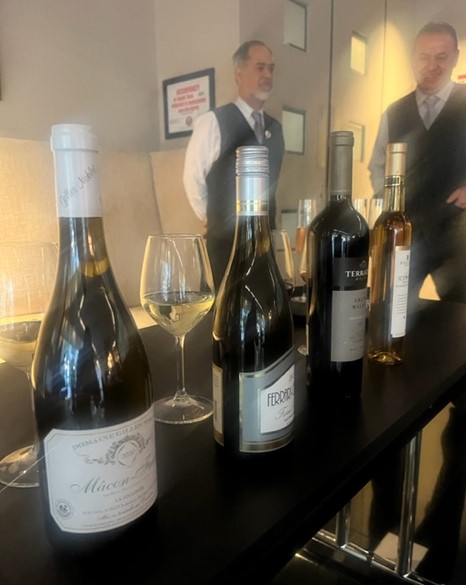
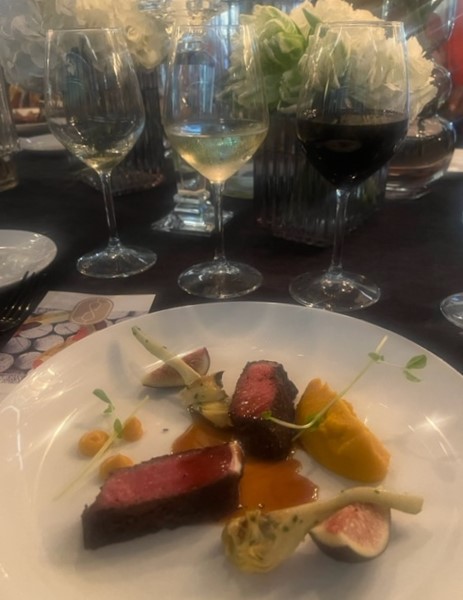
The September 2022 Sofitel Wine Days Dinner at Sofitel Chicago was prepared by Executive Chef Cliff Crawford, who crafts meals that embody Sofitel’s “Live the French Way” motto. He said, “I always strive to have a noticeable French influence in the menus. It can be ingredients used, such as cheeses or pâtes, or could be a modern take on French classics.” Per this ideal, the September dinner’s first course was a beautifully plated French-style tuna tartare alongside cucumber mousse and delicate cucumber curls, ponzu onion, and topped with a marquise-shaped scoop of paddlefish caviar. This flavorful delicacy was accompanied by a generous pour of golden Domaine Gilles Noblet Mâcon-Fuissé from vineyards in Mâconnais, Burgundy, France.
Sofitel Chicago began hosting these wine dinners in late 2021, and a gourmet dinner is scheduled for each of the remaining three months of 2022. The dining room’s exquisite décor changes based on the time of year, as does Chef Crawford’s menu planning. “It is really just about the season and the ingredients that are best at that time of year. It mostly revolves around produce. Wild mushrooms, for example, are one of my favorites. I love to have morels in the spring and black trumpets in the winter,” Crawford said.
The Fall Harvest Wine Dinner on October 7will feature wines from France, Italy, and the USA, alongside seasonal spreads. The November 11 Winter Whiskey Dinnerwill serve an exclusive Maker’s Mark bourbon mixed into cocktails, in lieu of wine. The December 9 Art de Noel Dinner will feature holiday décor and include festive cocktails to compliment the meal.
Regarding guests at these luxurious dinner experiences, Chef Crawford said, “I would like to see them leave with plans to return. I feel we are a bit of a ‘hidden gem’ here in downtown Chicago; we are a great location, but not everyone has heard of us. I want them to feel like they have found something special.” To purchase tickets for upcoming dinners at Sofitel Chicago, please visit https://www.sofitel-chicago.com/dining/wine-dinner-series/. To round out the evening, a convenient and comfortable overnight stay in the posh rooms above can be booked at https://www.sofitel-chicago.com/.
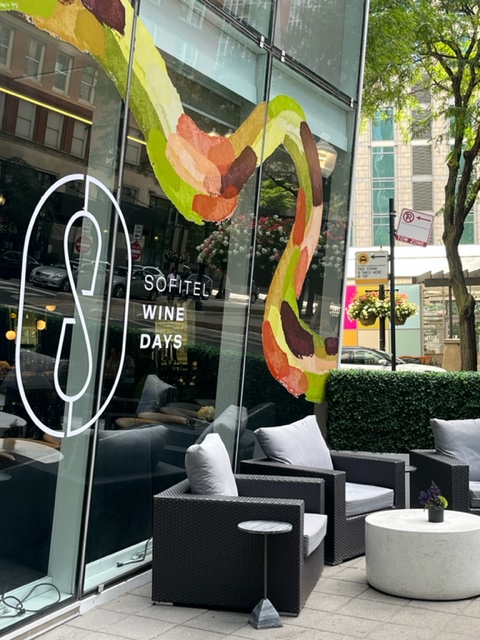
The 5-star Sofitel Chicago is part of a French luxury hotel chain that embodies “living the French way” by celebrating life through a sophisticated and unique approach to luxury accommodations and hospitality. Its stylish avant-garde exterior is a preview of the interior’s chic design and atmosphere. Le Bar, the glass-walled bar and lounge on the lobby level of the hotel, is a trendy place to unwind and socialize while indulging in savory appetizers, flatbreads, main dishes, and desserts, and sipping unique libations like the Banana Old Fashioned. A combination of Bacardi 8-year, Giffard Banane Liqueur, Angostura bitters, Angostura cocoa bitters, and Demerara syrup, with a dark cherry and an orange peel garnish, one patron described this drink as “a really interesting take on an old fashioned. Not too sweet, and very banana, which was fun!”
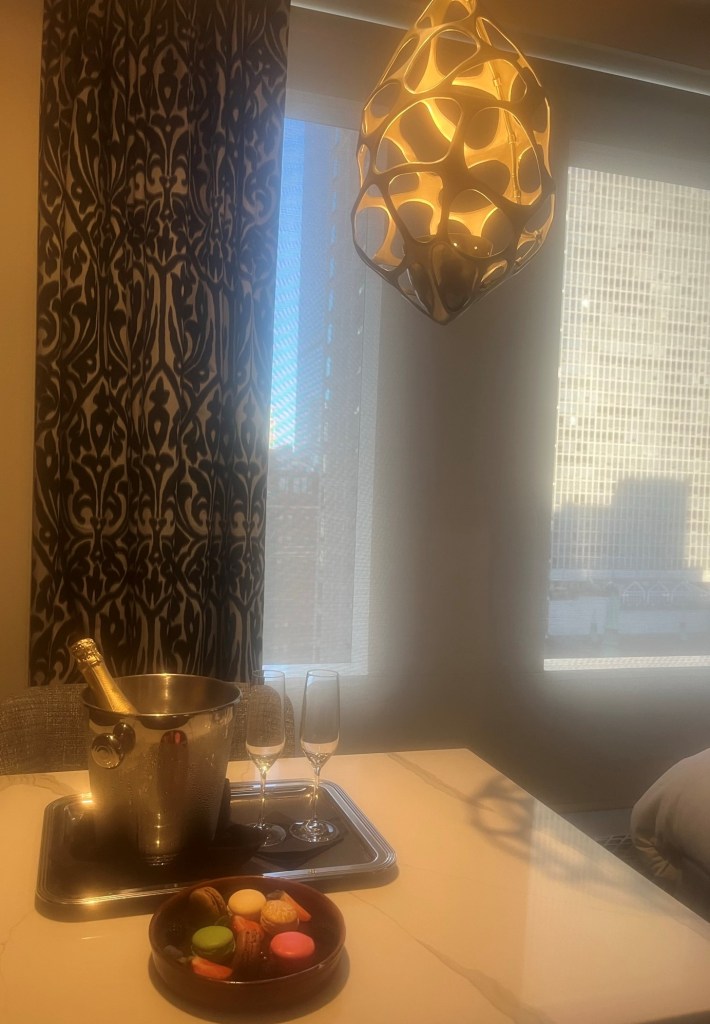
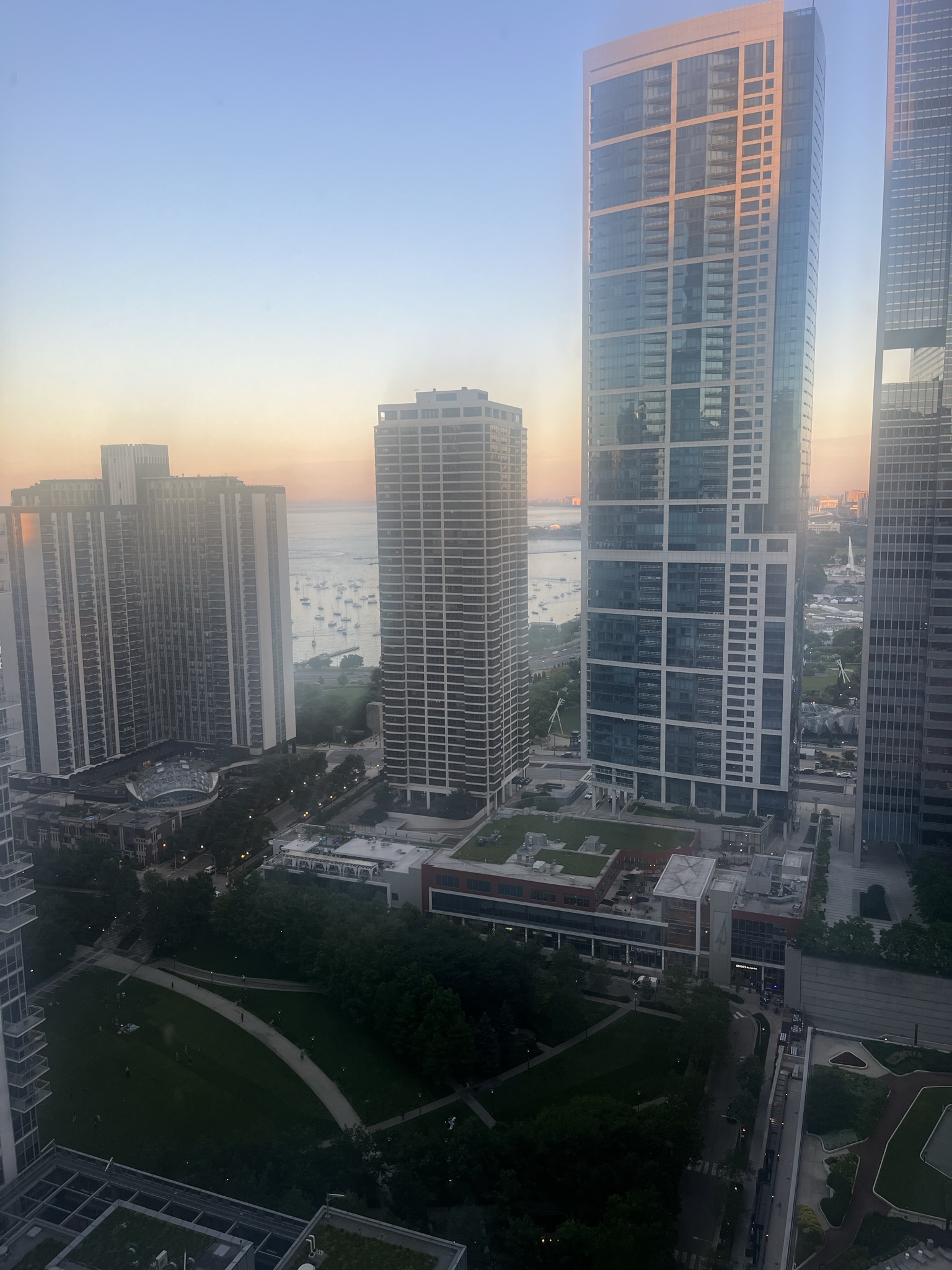
The higher floors of Sofitel Chicago offer a wide-windowed, stunning view of the bustling city below, while an easy flick of a switch lowers the blinds for privacy and comfort. In the European way, the fluffy bedding provides a warm nest in which to rest beneath a soft duvet with no need for a top sheet. Room bathrooms are supplied with bath and skin products by LANVIN Paris, a soft white robe, soaker tub, and rainfall shower. Luxurious and cozy, Sofitel Chicago provides home-away-from-home accommodations that pamper and allow for chic indulgence.
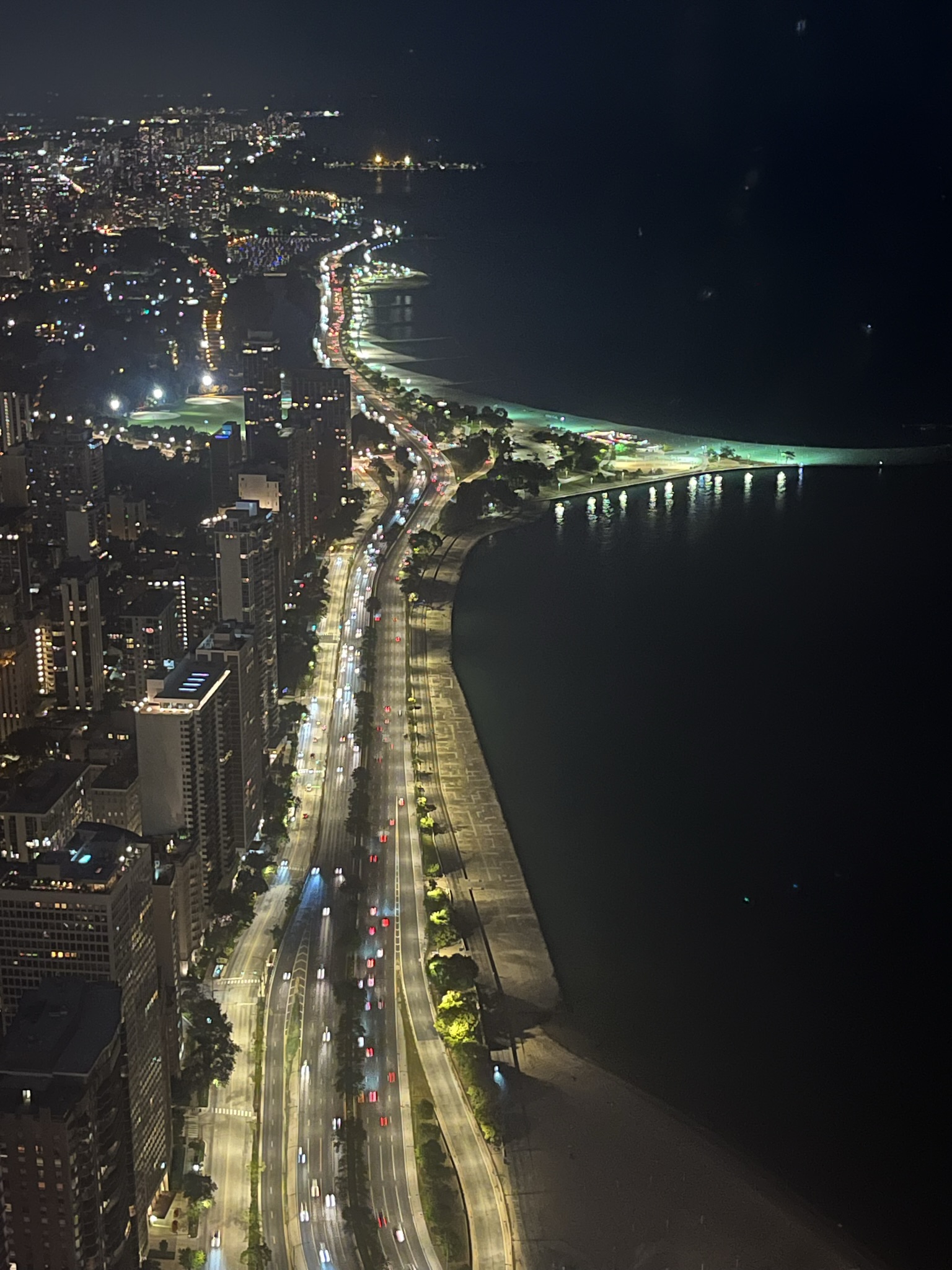
Further celebrate the art of living—l’art de vivre—and say oui to a nearby adventure that will bring the soirée to new heights. A mere five-minute walk from Sofitel Chicago, you can experience elevation to an even higher viewpoint of the city, at 360 CHICAGO, the top of the former John Hancock Center. The observation deck sits 94 floors high (1,030 feet above the Magnificent Mile) and is the home of Chicago’s highest thrill ride, TILT. To get to this height, you first stroll through an exhibition celebrating the history of Chicago and nine of its culture-rich neighborhoods. A quick 20-miles-per-hour elevator ride then lifts you to the glass-walled, 17,000-square-foot level that allows breathtaking 360-degree vistas of the city and lakefront. On a clear day, you can even see four states from this lookout deck!
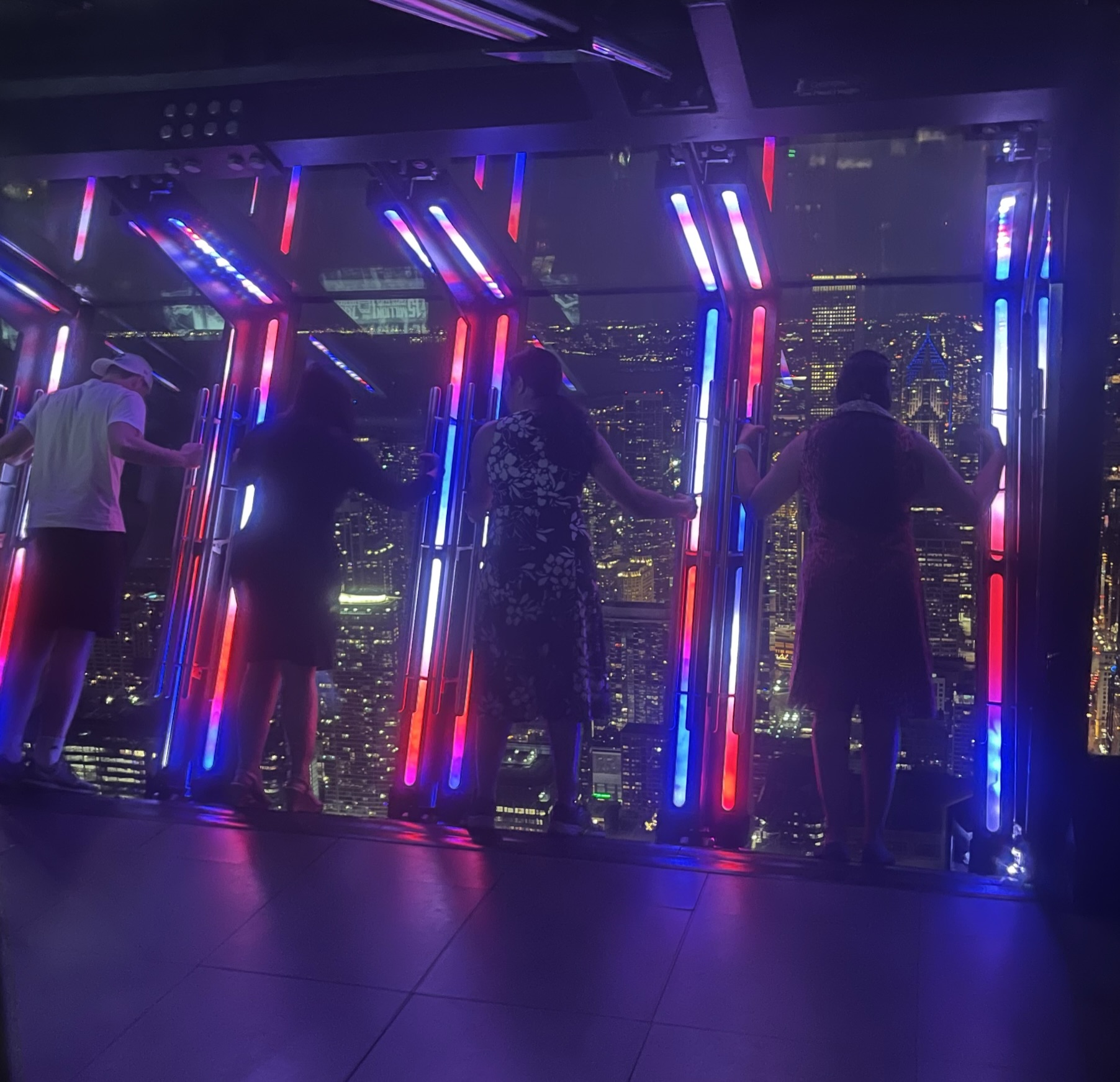
An add-on to the observation deck entry is a ticket to experience TILT, where guests 42 inches and taller can spend 2-3 minutes safely angling forward over the cityscape and peering downward through the glass window. While excited participants tightly grasp handles to their right and left sides, the glass wall is set into action in a series of motion profiles, allowing people to feel the sensation of leaning out into the sky and over the skyscrapers. Energizing music builds as the windows tilt farther and farther out at each interval, causing some people to close their eyes, some to giggle nervously, and others to shriek in terror. At night, colorful lights outline each panel separating participants. In “Extreme” mode (an experience that requires a prerequisite signing of a safety waiver), a window can even slide open for guests to enjoy further thrills and feel the city breeze. Trying out the basic mode, with its increasing angles and exhilarating music, Megan Pletzer from Madison, Wis., said, “You think it’s done, and then it just keeps going!”
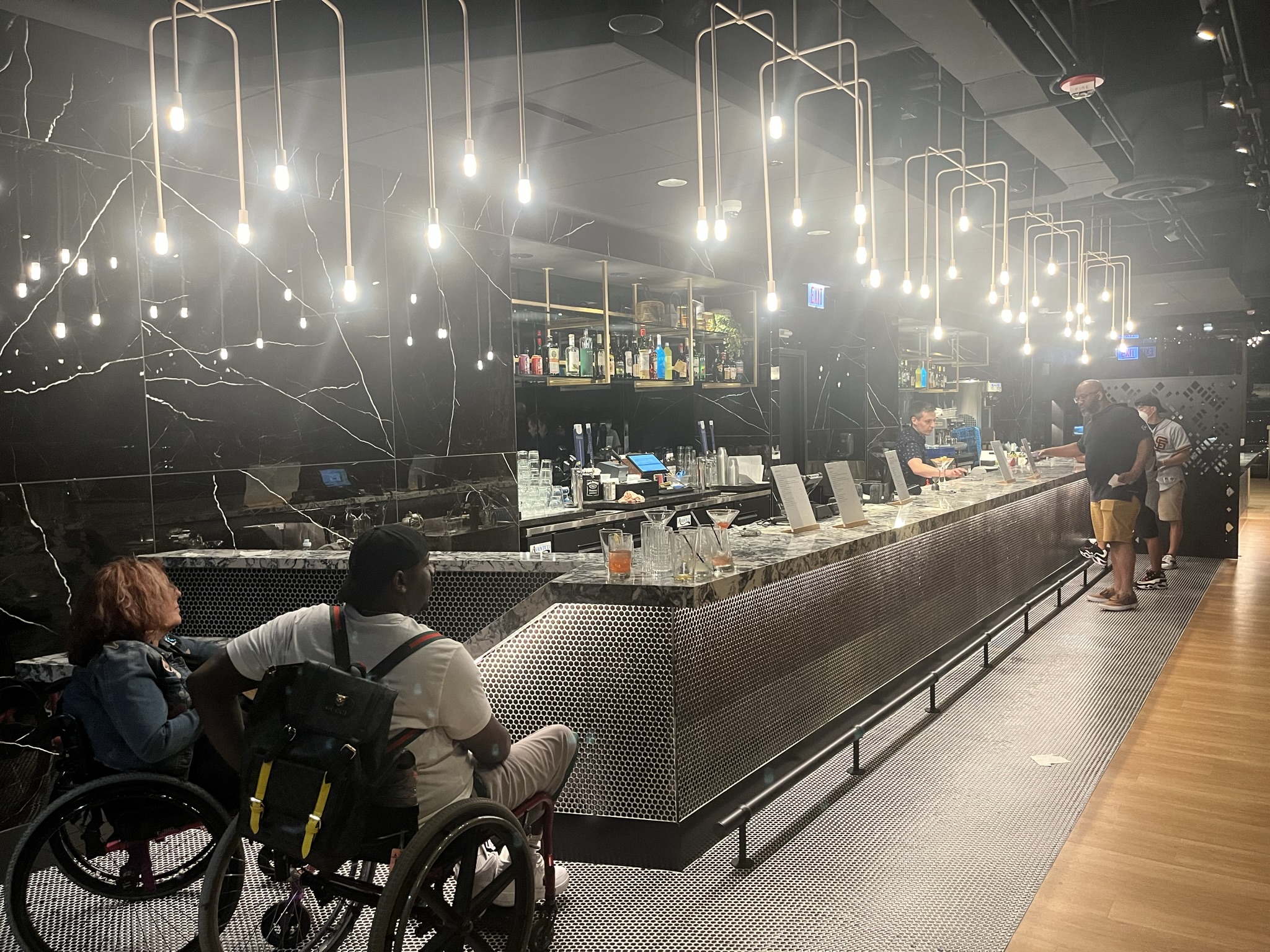
A general admission ticket to the observation deck includes entry to the brand new CloudBar, which officially opened on September 14, 2022. Owned and operated by Magnicity, a Paris-based company, 360 CHICAGO’s CloudBar is a novel, sky-high bar and lounge that magnifies the best of Chicago by featuring local food and beverage partnerships and décor by area artisans. Magnicity CEO, Alexia Vettier, said, “We want each Magnicity location to act as a true city ambassador for our guests—encouraging exploration of the vibrant neighborhoods within our cities and forging new adventures and experiences. We are thrilled to introduce our brand-new bar concept with CloudBar.”
Photos above courtesy of 360 CHICAGO.
The Gettys Group Chicago design team fashioned the area to give people the feeling of “floating in the air.” Numerous reflective surfaces (including the ceiling, drink rails, and back wall) echo the spectacular sights visible through the floor-to-ceiling windows. Modern European lounge furniture and stylish lighting coupled with customized, original graphics by Chicago-based muralist Lauren Asta emphasize the blended cultures found in the city.
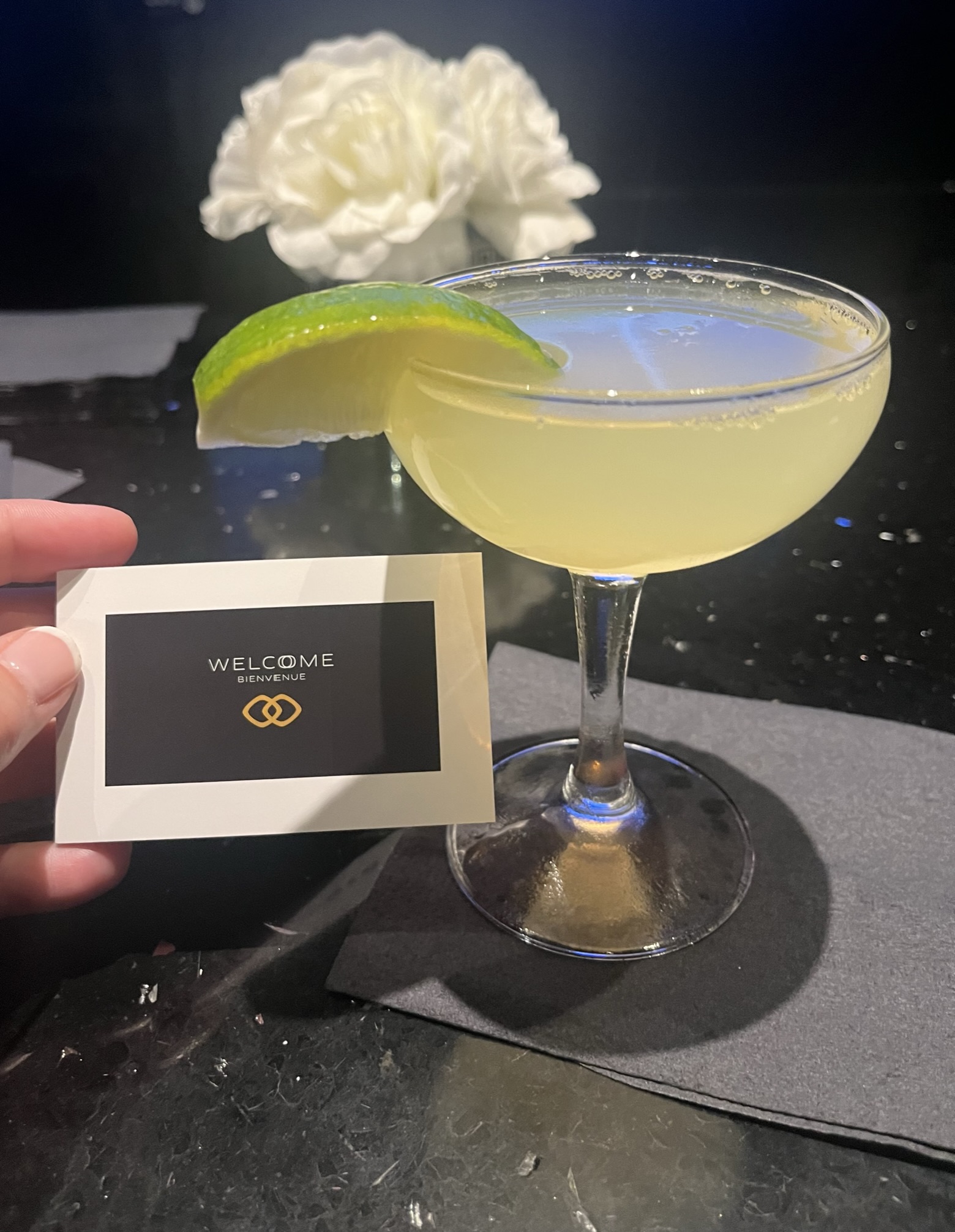
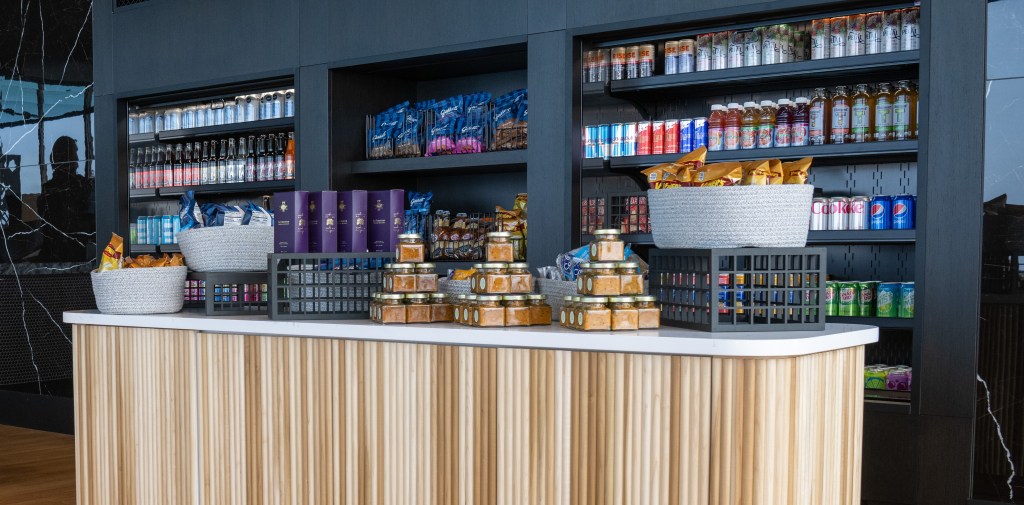
At this great height and surrounded by inspiring art and lights, you can also stimulate your sense of taste with snacks and sips from CloudBar’s offerings. The “Feeling Tilt-sy” cocktail carries on the “TILT” theme, served in a unique glass that leans to one side. Another colorful drink emits a haze of white mist from its lime-accessorized martini glass. Exclusively available at CloudBar is the Magnicity Pilsner, created by Moody Tongue brewery in partnership with 360 CHICAGO. Other true Chicago brands and products can be found at this exciting altitude, including wares from Garrett Popcorn, Vosges Haut-Chocolate, Carol’s Cookies, Kit Kat Lounge & Supper Club, and Kikwetu Coffee Company.
Photos above courtesy of 360 CHICAGO. Pictured at center above is artist Lauren Asta.
This space in the clouds is also available to be rented for private events, weddings, and parties. For information on event reservations, please visit 360chicagoevents.com. Relax at cloud level with besties and beverages, elevate your mood, and let the spectacular city views fill you with joie de vivre, the joy of living.
Straying off the beaten path in Castile-León, a region ripe for discovery
Story and Photos by Randy Mink
Does your town have a distinct look or personality? Something that really sets it apart from others?
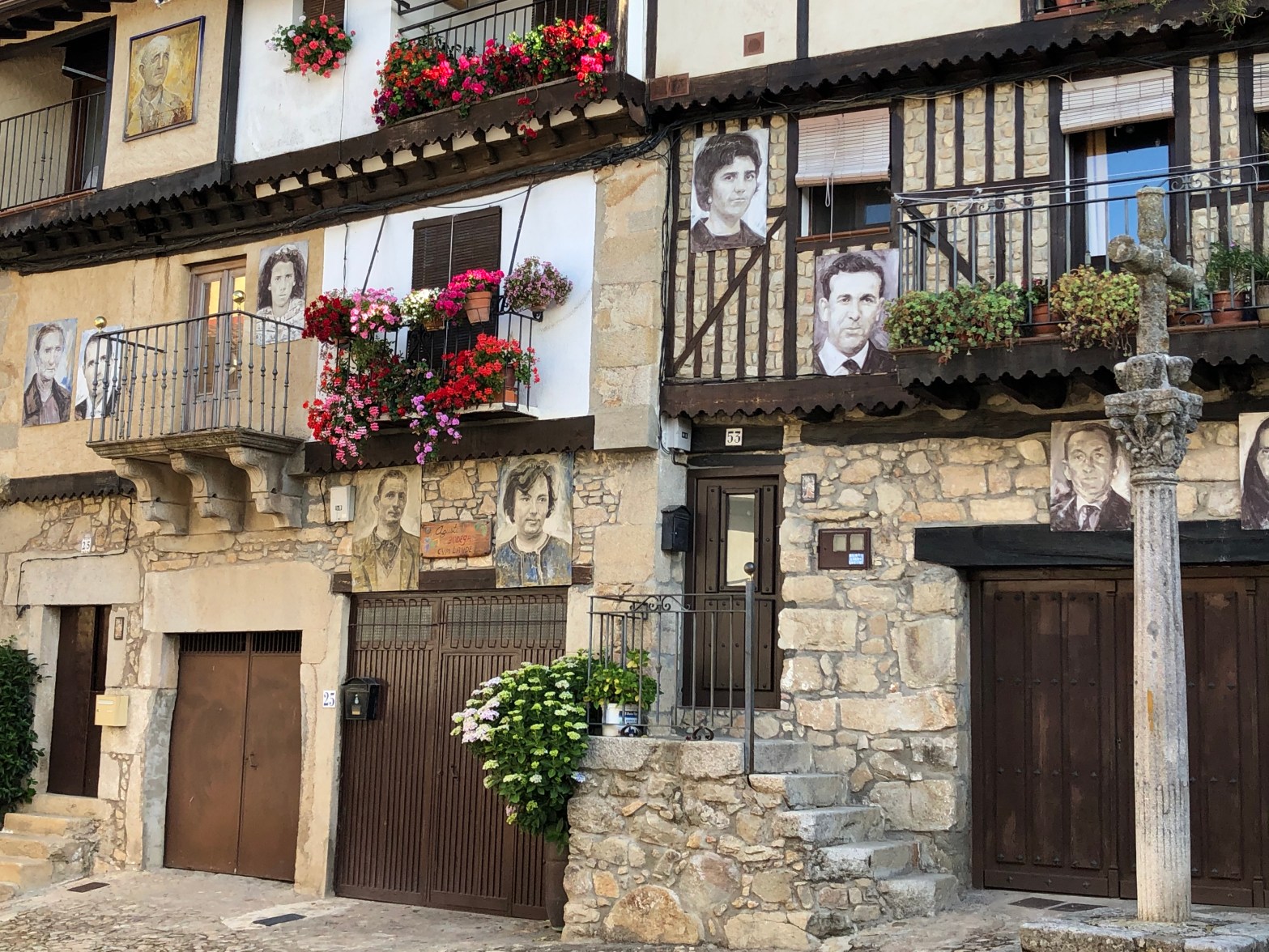
In western Spain, tiny Mogarraz (pop. 250) plasters its personality all over town, festooning houses with pictures of residents past and present. These portraits are large artworks that visitors can’t help noticing as they prowl the little plazas and narrow streets of this obscure town in the Sierra de Francia Mountains of southern Salamanca province.
Overlooked by most travel guidebooks, quirky Mogarraz was one of my favorite discoveries on a recent trip that included some under-the-radar places in Castile-León, one of Spain’s 17 autonomous regions. Our group concentrated on the region’s less-traveled western frontier, dropping in on remote rural areas, sampling three of its designated wine routes and venturing as far as the Portugal border.
This was my first trip overseas in three years, so I was more than revved up. Like a lot of Americans whose international travel plans were stifled by the pandemic, I had been itching to travel abroad. What a joy it was to be in Europe again! Each day was a revelation, a real adventure delving into art history, gastronomy, wine and everything that gets me psyched about Spain. Talk about pent-up wanderlust. The week-long trip provided a much-needed boost indeed.
Castile-León, situated west and north of Madrid, makes up about 20 percent of Spain’s total area but is only its sixth largest region in population (2½ million). Consisting of nine provinces, the vast chunk of real estate is slightly bigger than Portugal. Castile-León claims nine of Spain’s 34 wine routes and counts more than 400 wineries. It boasts three UNESCO World Heritage Sites—Salamanca (which our group visited), Segovia and Ávila.
The quaint medieval village of Mogarraz, on the Sierra de Francia Wine Route, would be a delightful destination if just for the enchanting cobblestone lanes that snake past its stone and half-timbered houses, many with flower-filled balconies. But portraits of the people who live in these ancient buildings add a strange twist.
The novel art project began in the 1960s, when poverty in the area drove many residents to seek jobs in South America, for which they needed a photo ID card. These IDs inspired the idea of decorating houses with photographs of the adults who lived in them. In 2012, local artist Florencio Maíllo took over the project and today he paints each of the 300-some portraits, from wizened grandmothers to young men in military caps.
Mogarraz, a tiny village in the Sierra de Francia Mountains of Salamanca province, is known for the portraits of residents that adorn its houses. These sketches of townspeople give the streets a personality all their own.
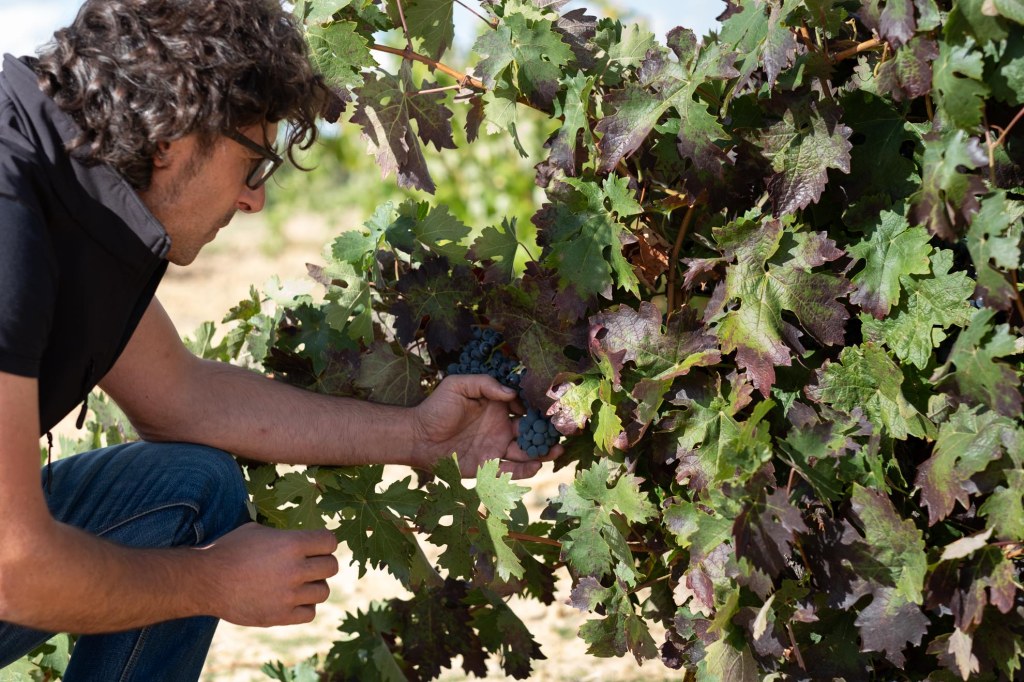
Mogarraz and other towns in this mountainous region base their economies on tourism and winemaking. The delicate, dark-skinned rufete grape is special to the Sierra de Francia area in southern Salamanca province, where vines have been tended in terraces for centuries.
Our nest for the night, Hotel Spa Villa de Mogarraz, was right in the heart of the fairy-tale town and just steps from Bodega Vinos La Zorra. Under a tent canopy on La Zorra’s streetside patio, bistro patrons savor wines and tapas at tables fashioned from colorfully painted oil drums. We noshed on croquetas (croquettes), those addictive deep-fried balls of mushy goodness, and patatas meneás, mashed sweet potatoes flavored with garlic and paprika and topped with a pork rind.
Our group also went back in time in Miranda del Castañar, another gem on the Sierra de Francia Wine Route. With a guide we wandered the cobbled streets and took in forested panoramas from the 12th century walls of the pretty hilltop village. The medieval castle is now a brewery.
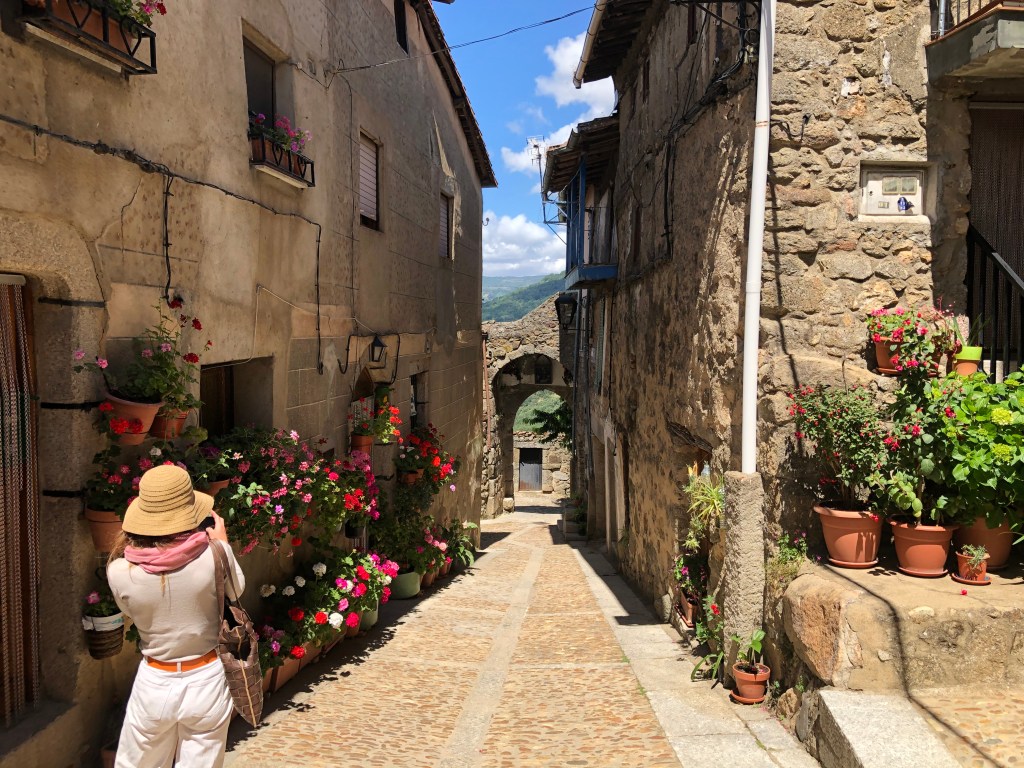
The medieval streets of Miranda del Castañar invite tourists to explore.
The city of Salamanca, unlike sleepy Mogarraz and Miranda del Castañar, is rather well known as a visitor destination, its historical core centering on the venerable buildings of Spain’s oldest university, founded in 1218. With a magnificent central plaza, lively pedestrian streets and youthful vibe, the manageable, medium-sized city of 150,000 residents offers just the right ingredients for a pleasant day or two of seeing the sights and soaking in the ambience. To me, it’s Spain in a nutshell.
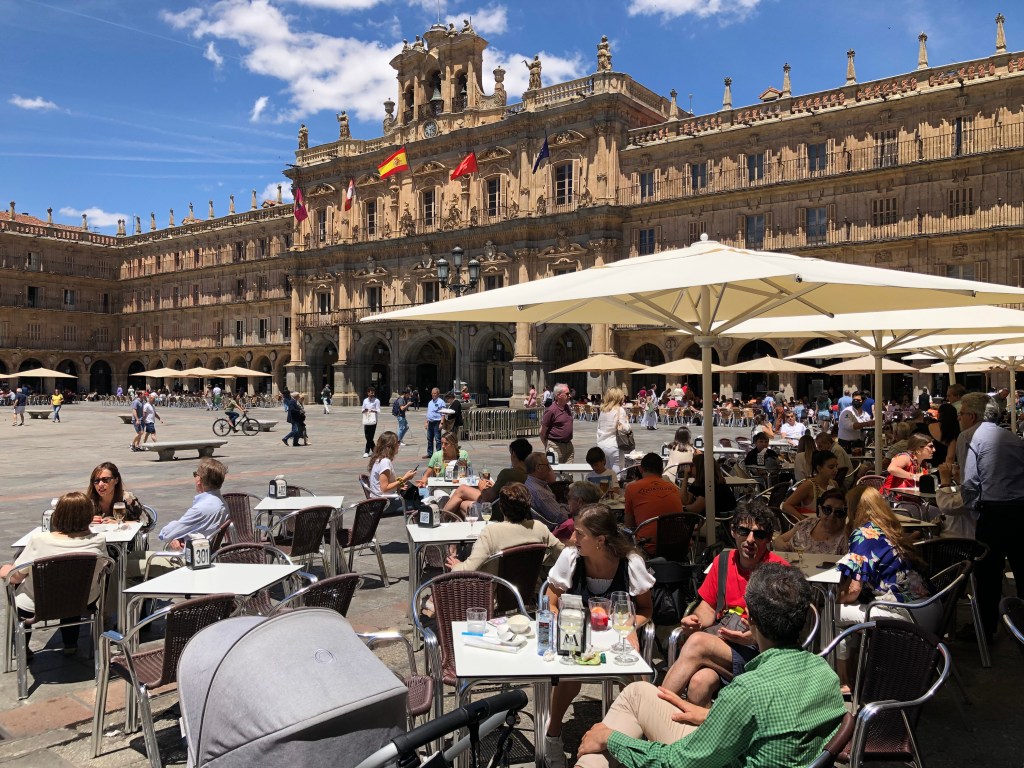
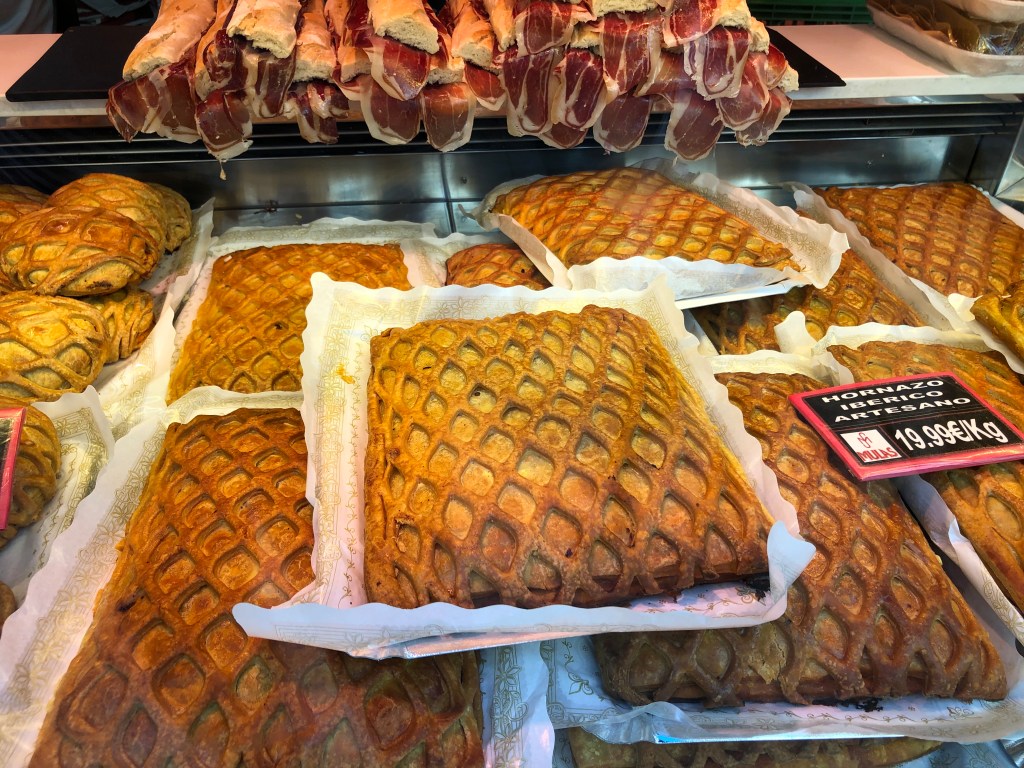
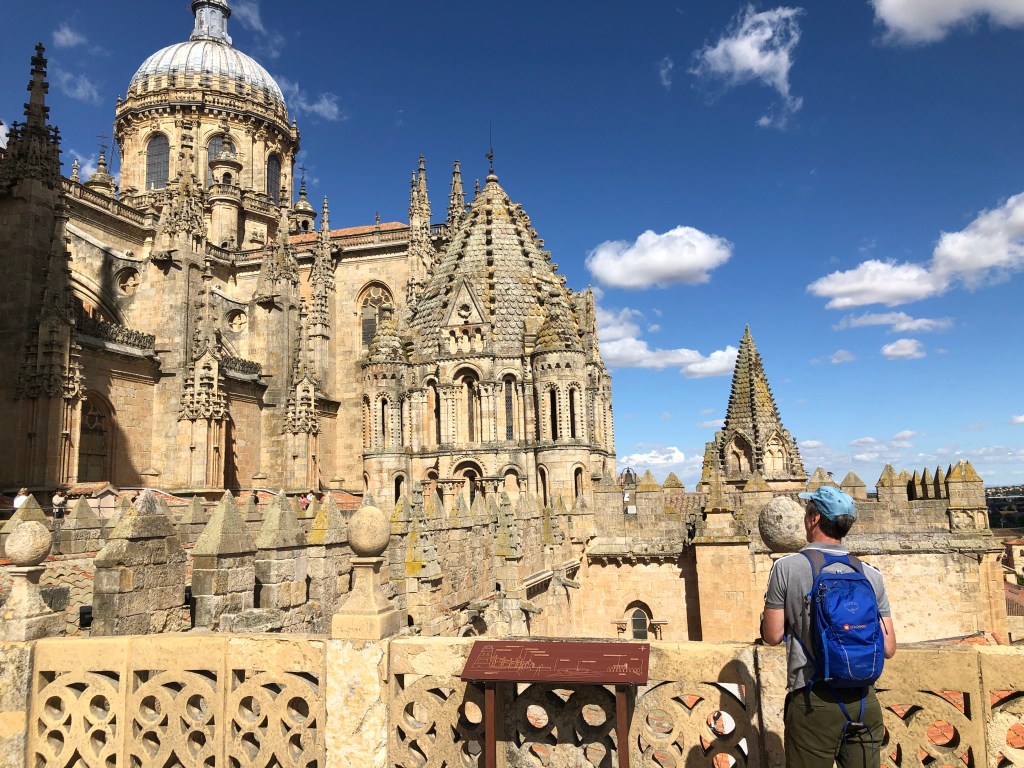
Clockwise from upper left: Relaxing and people-watching on Salamanca’s Plaza Major, one of Spain’s largest and most beautiful squares; The best views of Salamanca’s Old World skyline are from the banks of the River Tormes and its Roman bridge; The author enjoys a hornazo meat pie at a café on Salamanca’s Plaza Major; Hornazo, a meat pie with layers of pork chorizo, pork loin and ham wrapped in lattice-crusted yellow dough, is a specialty of Salamanca province; Exploring Salamanca’s Old and New Cathedrals.
In Salamanca’s Old Town, an open-air museum of radiant sandstone buildings, prime attractions lie within walking distance of each other. I recommend these five experiences:
Touring the Old and New Cathedrals. Built centuries apart, they are attached; you can’t visit the 13th century Romanesque church (Cathedral of Santa Maria) without going through the Cathedral of La Asunción de la Virgen, or New Cathedral, which isn’t new at all. It was built hundreds of years ago in the Gothic, Renaissance and Baroque styles.
Ascending the “Stairway to Heaven” on a 200-step climb up La Clerecía Church’s bell towers for bird’s-eye views of Old Town. The colossal Baroque building, now Pontificia University, began life in 1617 as a training school for Jesuit missionaries.
Walking across the River Tormes’ Roman-era bridge while admiring the classic Old World skyline
Touring the University of Salamanca, a popular place for American and other foreign students to study Spanish. Standing before the main building’s intricately sculpted sandstone façade, tourists try to find the “hidden” frog, said to be a symbol of good luck.
Relaxing over tapas at a café on postcard-perfect Plaza Mayor, one of the largest and most beautiful squares in Spain. Try hornazo, a meat pie with layers of pork chorizo, pork loin and ham wrapped in lattice-crusted yellow dough.
Zamora, a town of 60,000 north of Salamanca, is called the “Romanesque City.” Its 23 Romanesque churches, 10th century walls and Duero River bridge ruins provide a magical setting for communing with the past. The Cathedral of Zamora impresses with its Byzantine-style dome, richly carved choir and 15th century Flemish tapestries.
The Zamora Wine Route in Zamora and Salamanca provinces takes travelers through traditional rural landscapes of sheep pastures, hay fields, vineyards and unspoiled villages with stone houses and Romanesque churches. In Villanueva de Campeán, we did wine tastings in the barrel room and vineyards of Bodegas Viñas del Cenit, which makes Cenit Tradición, an unusual blend of red and white grapes (mostly tempranillo)—a light, refreshing wine with less alcohol. The vines have been mixed since the times of the Franciscan friars who tended them from their 15th century monastery, the ruins of which we saw in the distance. (Older locals remember when monks still inhabited the monastery.)
“They just wanted to make wine, with no worries whether it was red or white. It was just wine for them,” said Ana Belen Hernández, Cenit’s director of marketing. “Cenit Tradición is our commitment to carrying on the tradition and personality of the historic wines of this territory. It’s a wine with no recipe, a wine we think our ancestors would have made.”
Growing grapes for wine is an age-old tradition in the Castile-León region of western Spain.
Cenit’s 90-year-old vineyards are threaded by the Via de la Plata, or Silver Route, one of the 11 pilgrimage routes to the tomb of St. James in the Cathedral of Santiago de Compostela in Galicia; visitors may encounter pilgrims making the trek.
In the nearby village of Casaseca de Campeán, our group enjoyed an atmospheric wine country lunch at Café de Quintano. Deep underground, we feasted amid the rustic trappings of a vaulted, 200-year-old cellar. The hard-working servers must have made 20 trips each from the upstairs kitchen to our cozy “cave.” Besides wines, the group menu featured platters of cheeses and paper-thin slices of cured ham, chickpea soup, tuna steak in garlic sauce and Iberian pork steak with deep-fried vegetables. At dinner the previous night we had two regional specialties—roast suckling leg of lamb and Zamoran-style rice, a zesty dish with pork and paprika.
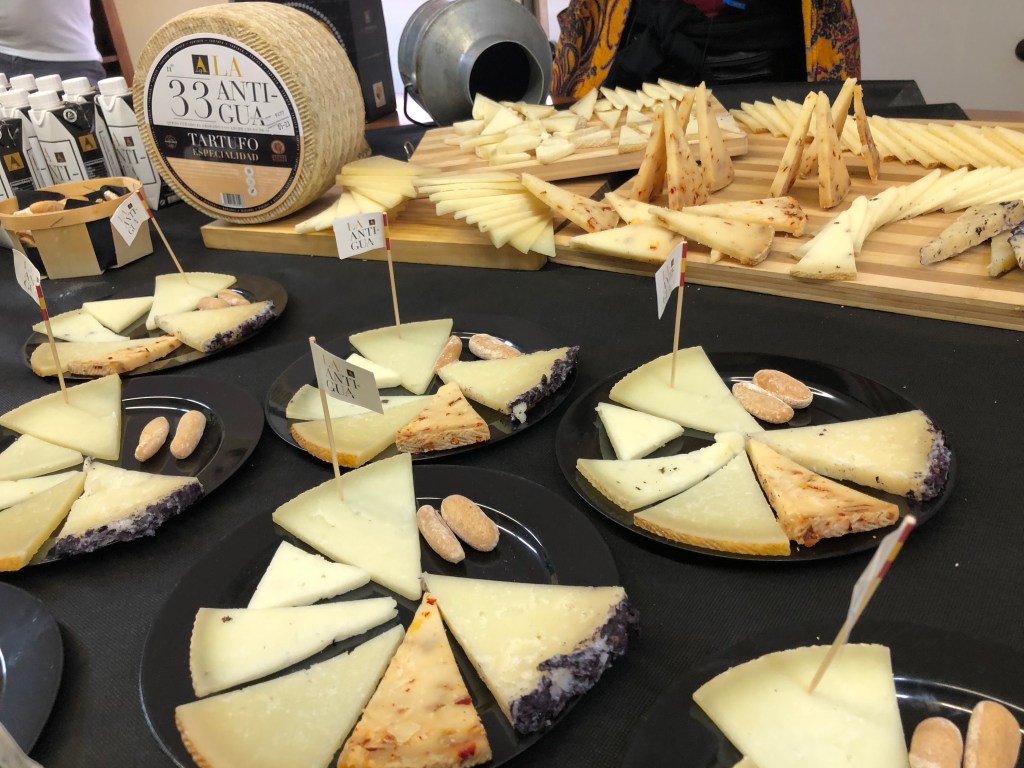
My best memory of the Zamora Wine Route was touring Quesería La Antigua, a high-tech dairy in Fuentesaúco. Donning a white plastic coat, hairnet and shoe covers, we followed guides who explained how sheep’s milk is turned into prize-winning cheeses. Afterward, we watched a video and sampled six varieties, including one with tempranillo grape skins in the rind, another flecked with paprika flakes. Under construction is a museum that will showcase La Antigua’s passion for making cheese.
Sampling the product is a highlight on tours of Quesaría La Antigua in Fuentesaúco, a dairy that makes sheep’s milk cheeses.
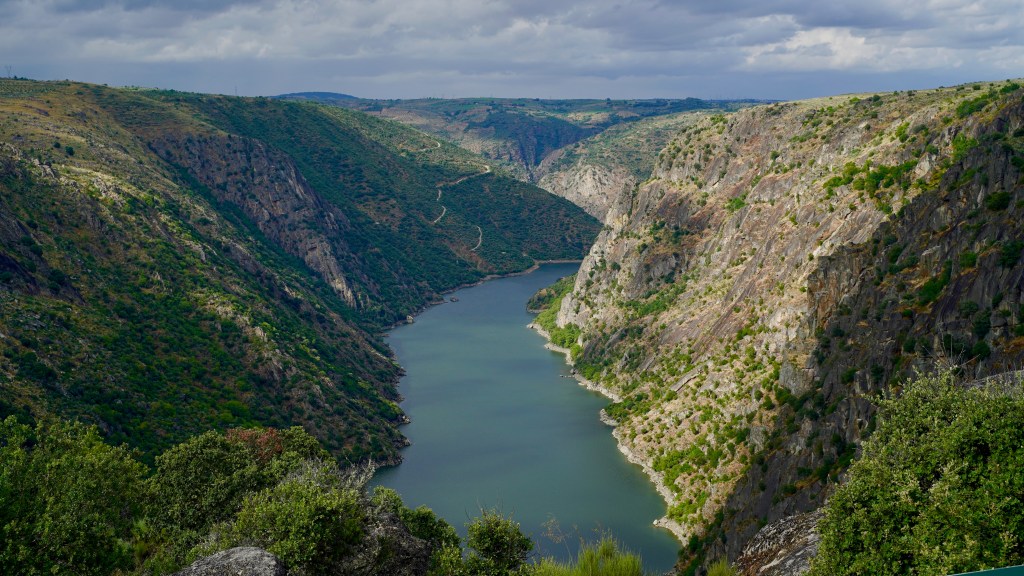
When our bus passed a shepherd tending his flock later that day, we got giddy and were granted a photo stop. We were en route to the far western stretches of Zamora and Salamanca provinces where the Douro River’s scenic canyonlands straddle the Spain-Portugal border. (“Douro” is the Portuguese spelling; it’s “Duero” in Spanish.) For Spaniards, this remote valley of granite cliffs and outcroppings is considered the “Wild West.”
Our introduction to the Arribes del Duero Wine Route, set against the backdrop of the valley’s Arribes del Duero nature park, involved vineyard and winery visits hosted by Bodega el Hato y el Garabato in tiny Formariz. Dinner and overnight were in the comfortable Posada Doña Urraca in Fermoselle, a quiet Spanish border town famous for its centuries-old network of wine caves (more than 1,000, so they say), a few of which have been opened for tourism. After our subterranean tour and wine tasting, we did more sampling at Bodega Frontio, a winery started by a young Danish entrepreneur who goes by the nicknames “Chus” and the “Crazy Dane.”
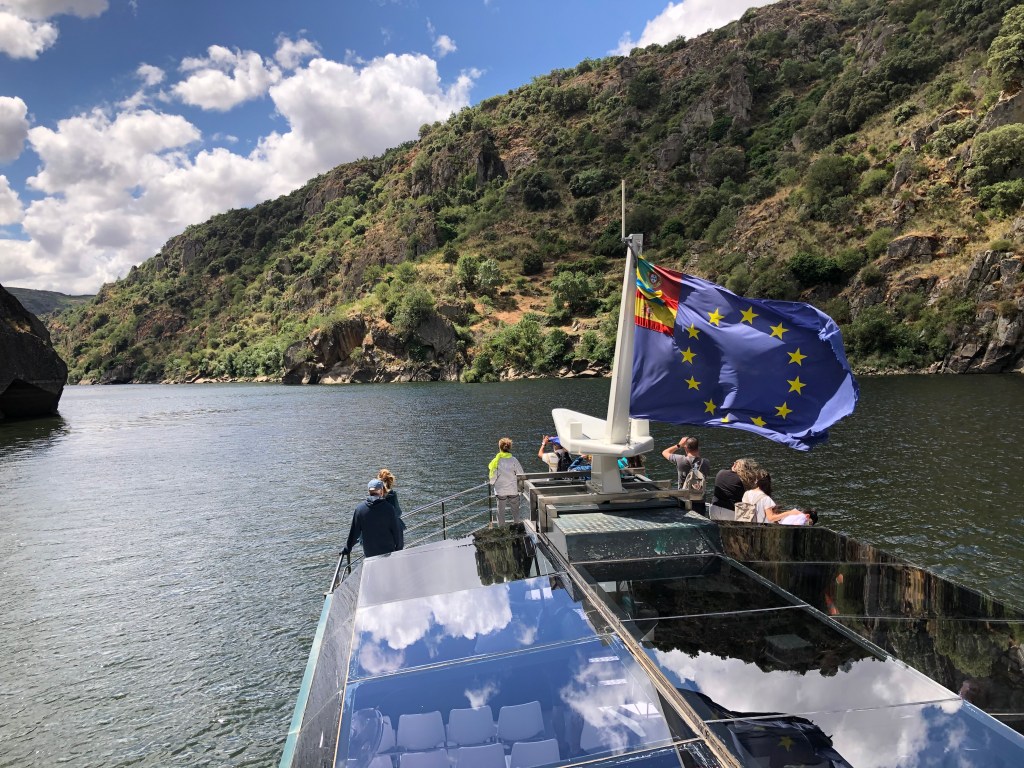
A brief foray into Portugal the next day took us to Miranda do Douro, where we boarded an excursion boat for an ecology cruise focusing on the geology, flora and fauna of the UNESCO Meseta Ibérica Biosphere Reserve. Our one-hour journey provided a chance to witness up-close the spectacular gorge topography we had viewed from a lookout point earlier that day.
Flying the flag of the European Union, this excursion boat offers a narrated environmental cruise spotlighting the geology, flora and fauna of the Douro River Valley, a land of scenic splendor on the Spain-Portugal border.
Exploring Fermoselle and other villages tucked away from the crowds, we often felt as if we had Castile-León to ourselves. On early morning strolls up and down the twisting, shadowy alleyways, sometimes the only sounds were chirping birds, crowing roosters and our own footsteps. It was good to be back in the Old Country, making new discoveries in corners of Spain off the beaten track.
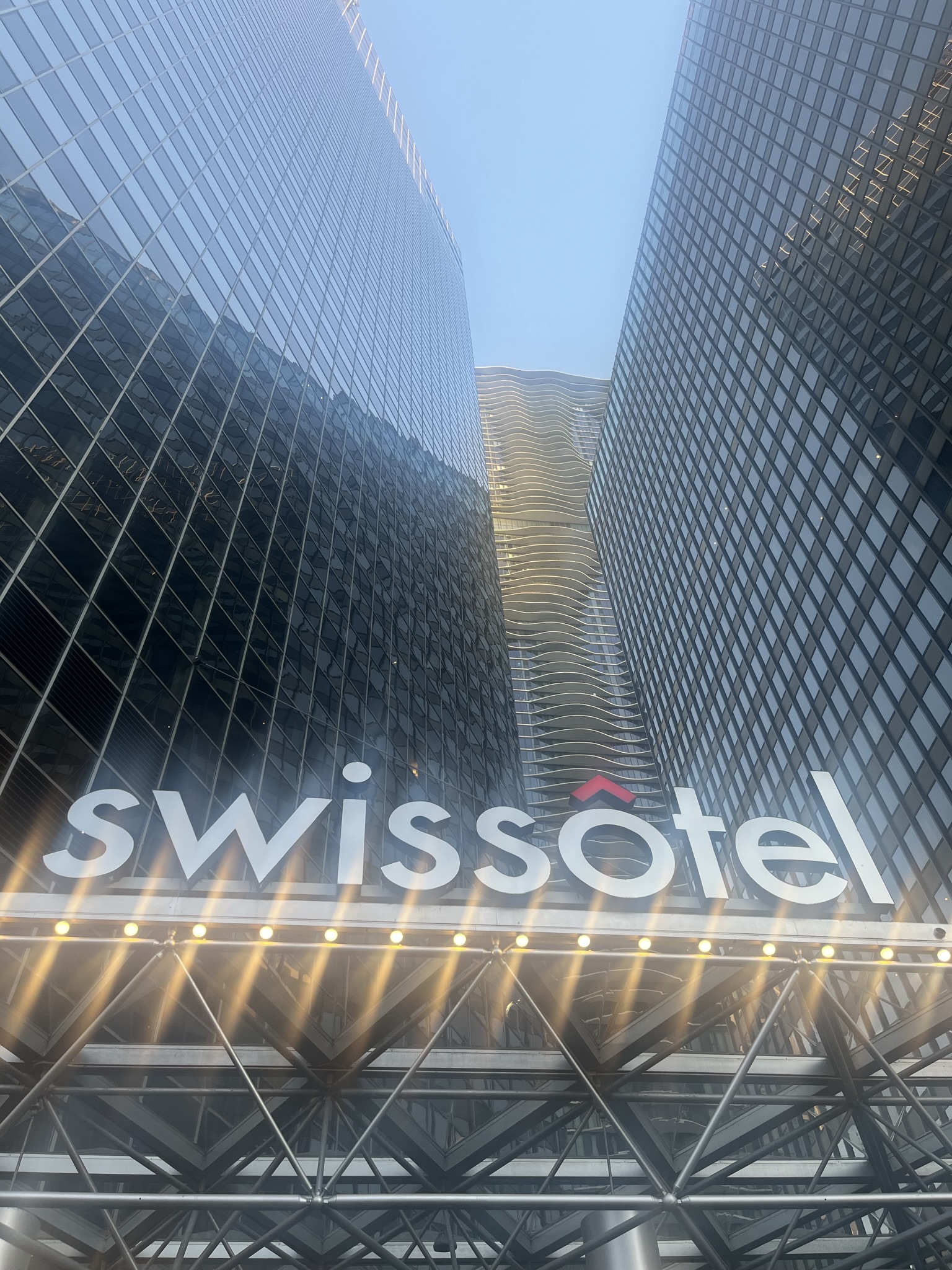
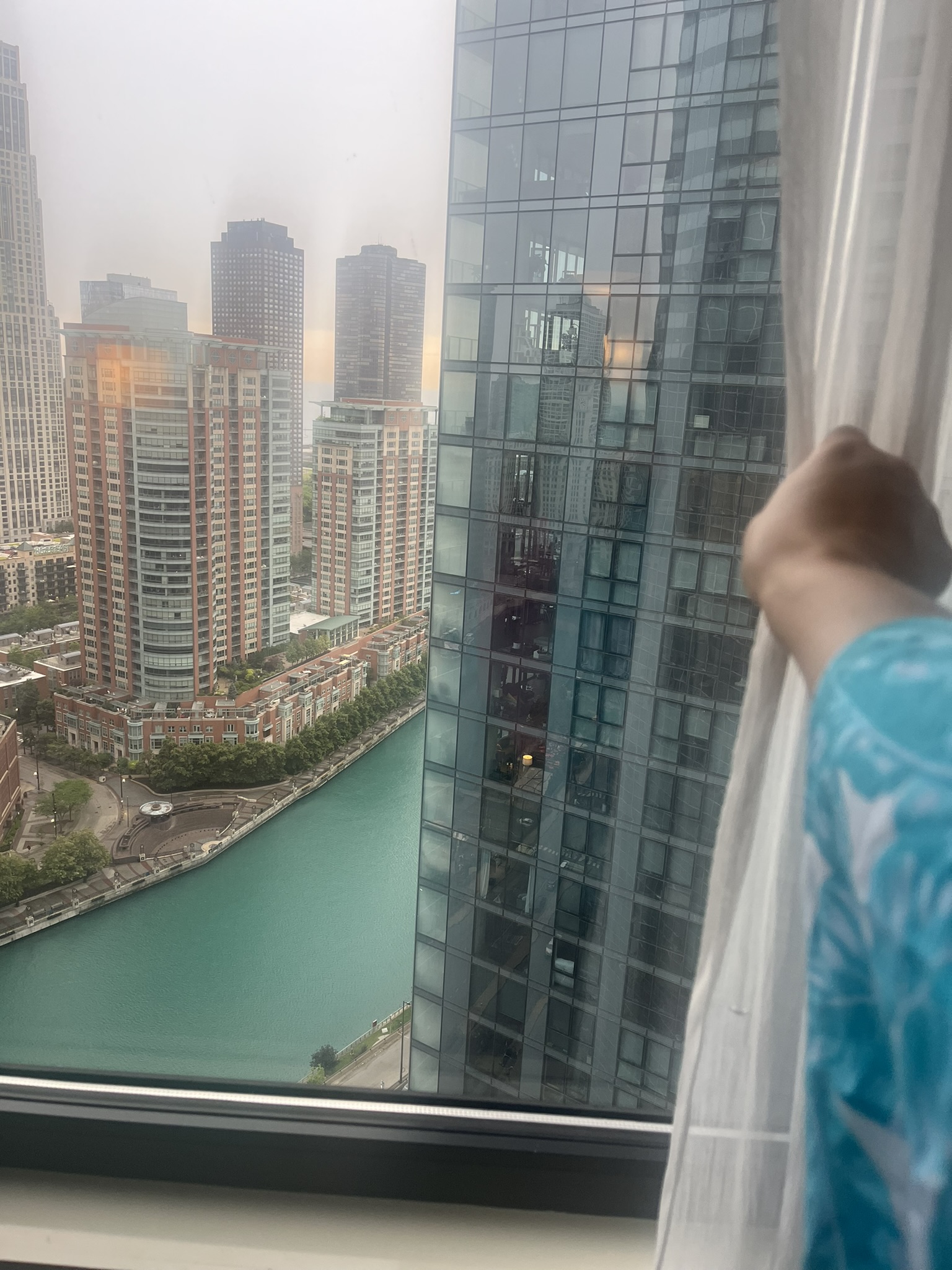
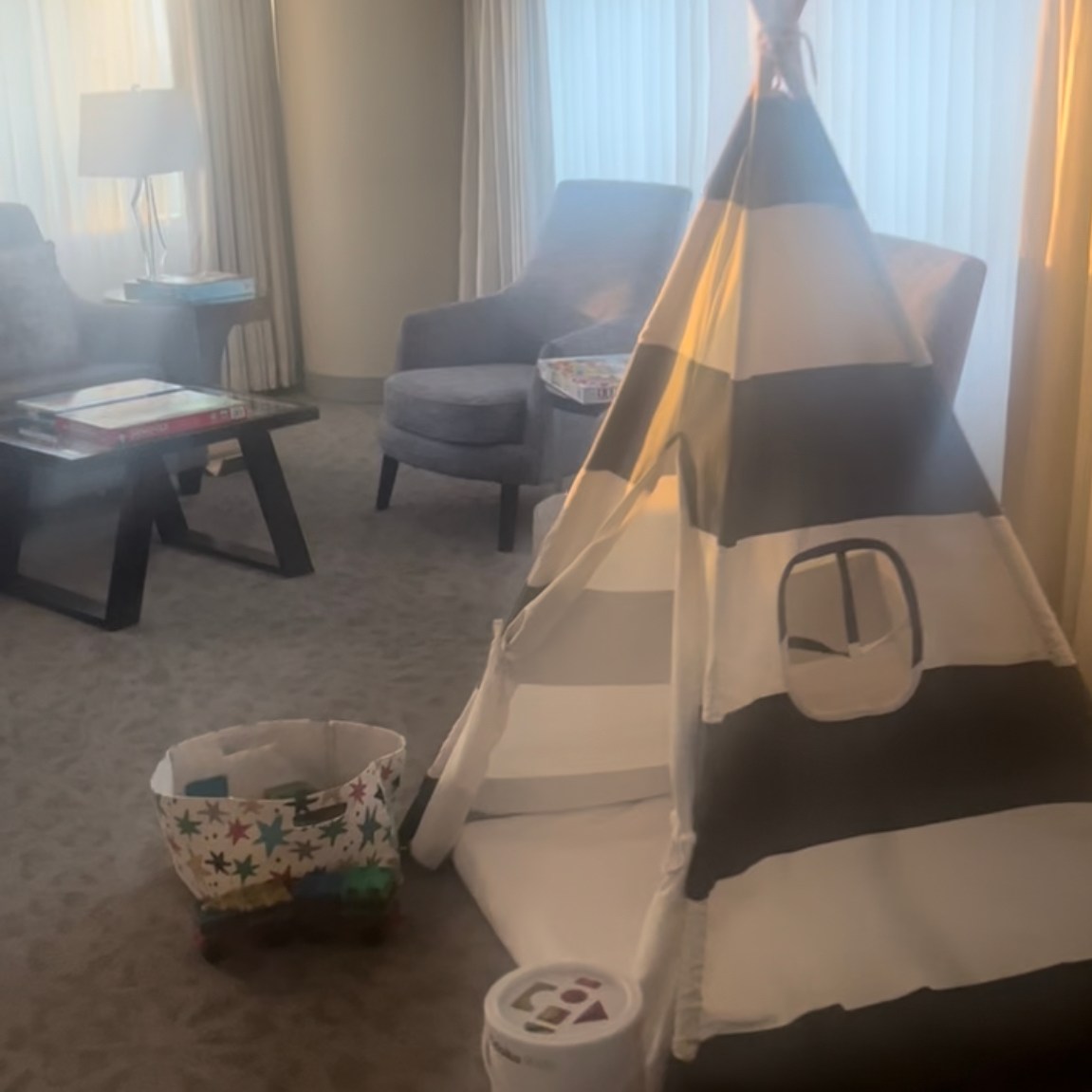
The kids’ favorite part of a weekend in Chicago? “The hotel! The hotel’s fitness center!” Weekending in downtown Chicago with small children sounds overwhelming, but a kids’ suite hotel stay and a family-friendly itinerary ensure a safe, fun, and memorable vacation. Swissôtel Chicago’s kids’ suites are like a sky-high family apartment, with a cozy master bedroom and bathroom, spacious common area and bathroom, and a separate but adjoining bedroom and bathroom for the littles. Plenty of full-wall windows provide a panorama of the Windy City, with views of Buckingham Fountain, the Chicago River, Pritzker Pavilion, Maggie Daley Park, and Navy Pier.
The suite’s shared rooms and kids’ wing are equipped with age-appropriate toys, games, and art supplies to engage and entertain without even needing to turn on the TV. The teepee tent provides a snug hideaway and place to house stuffed animals along for the trip. A giggle-filled game of Twister, marker doodling on fresh paper, birds’-eye boat-watching, and exercising in the huge, clean, and upscale Penthouse Fitness Center—you can enjoy the city without ever leaving Swissôtel!
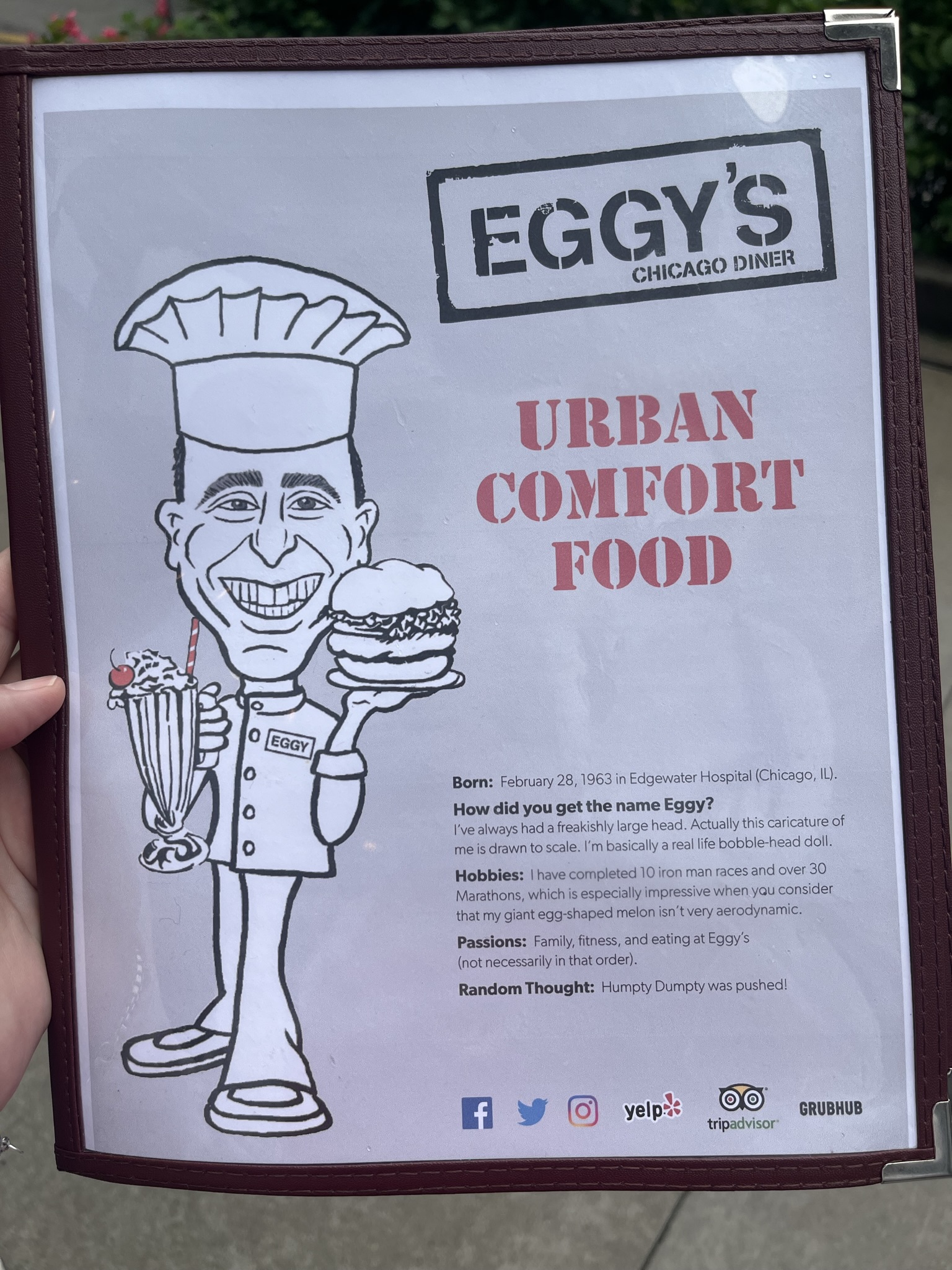
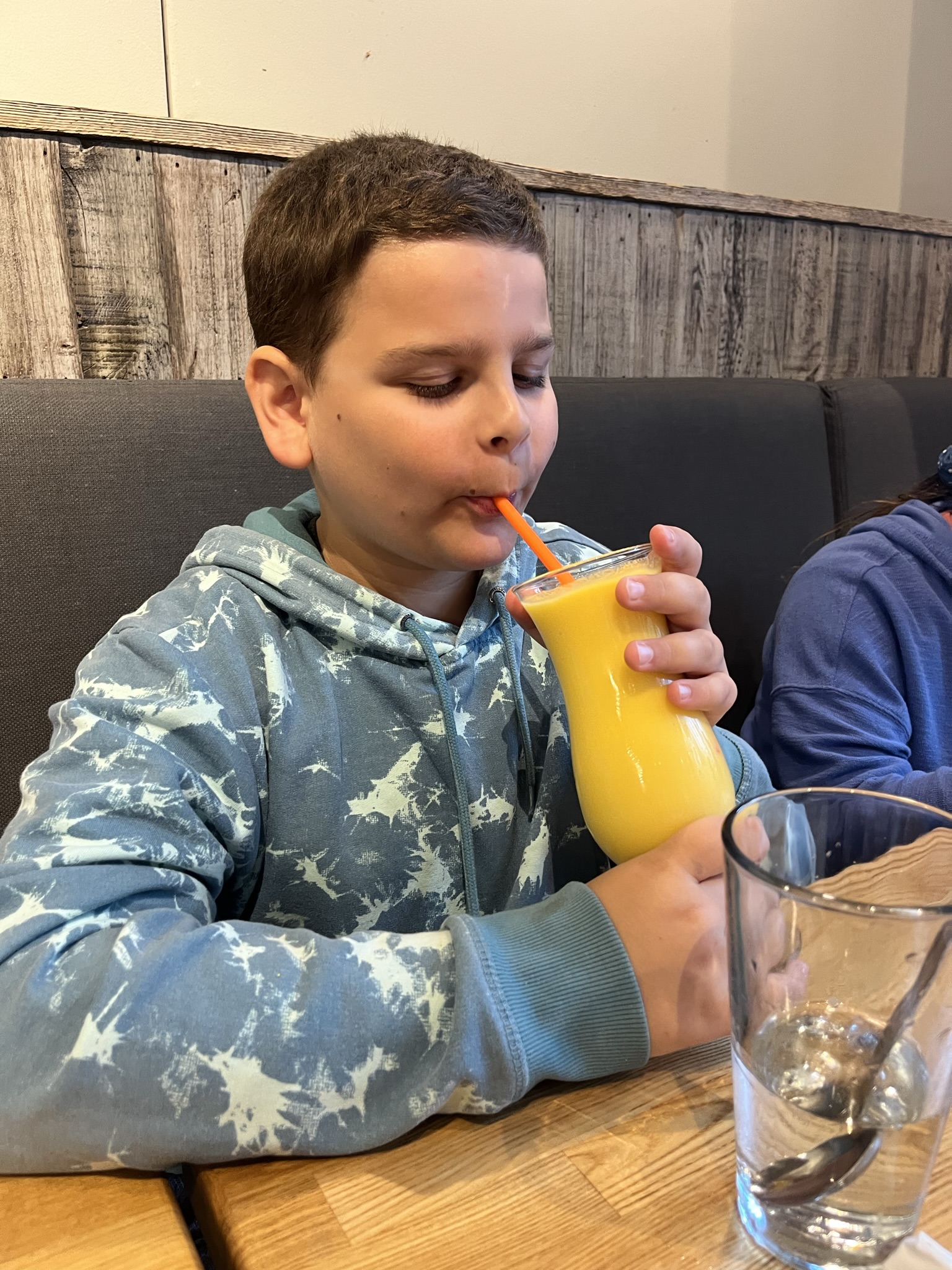
Eventually you’ll need to eat, though, and if room service isn’t your preference, you have plenty of dining options near the hotel. Eggy’s diner at the Chicago-Benton Place location is a 5-minute walk from Swissôtel across a beautifully landscaped park and serves home-cooked breakfast and lunch, coffee and tea, and bar drinks. Milkshakes, fresh-squeezed juices, smoothies, chocolate-chip pancakes, waffles, biscuits and gravy, crepes, skillets, sandwiches, and soups are among the delicious options for feeding a range of tastes. Crayons and a coloring sheet of cute food characters make waiting time seem fast.
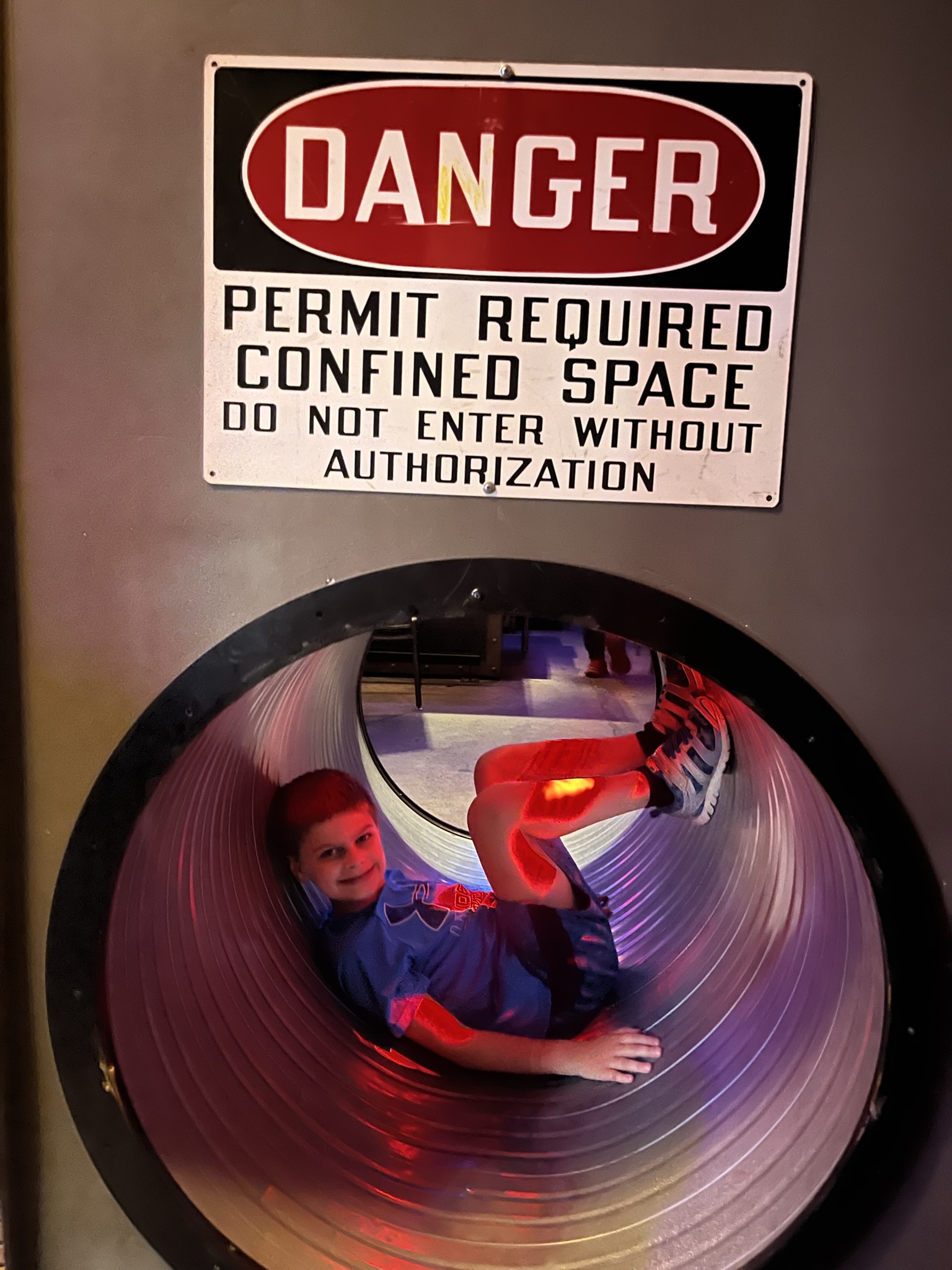
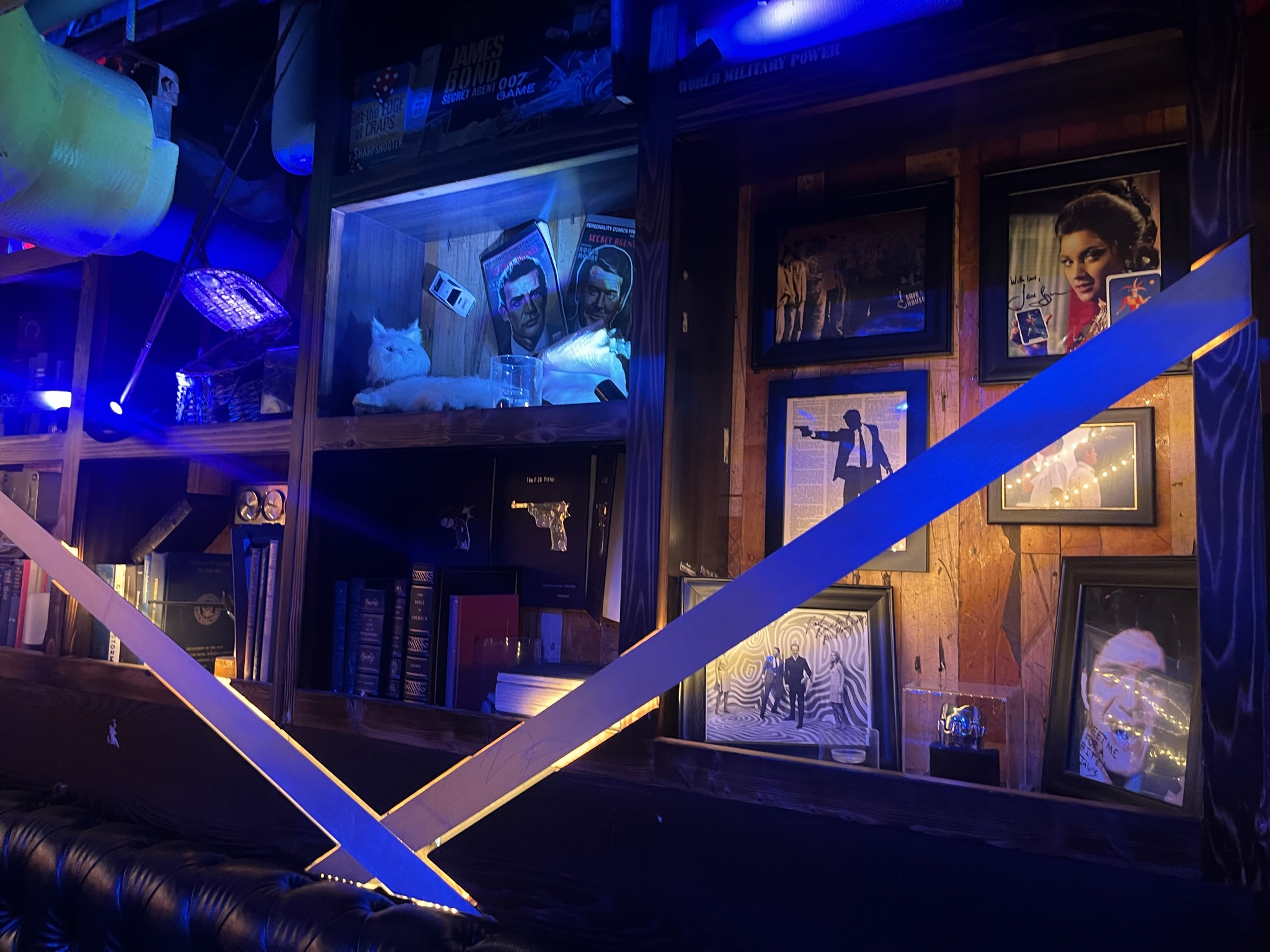
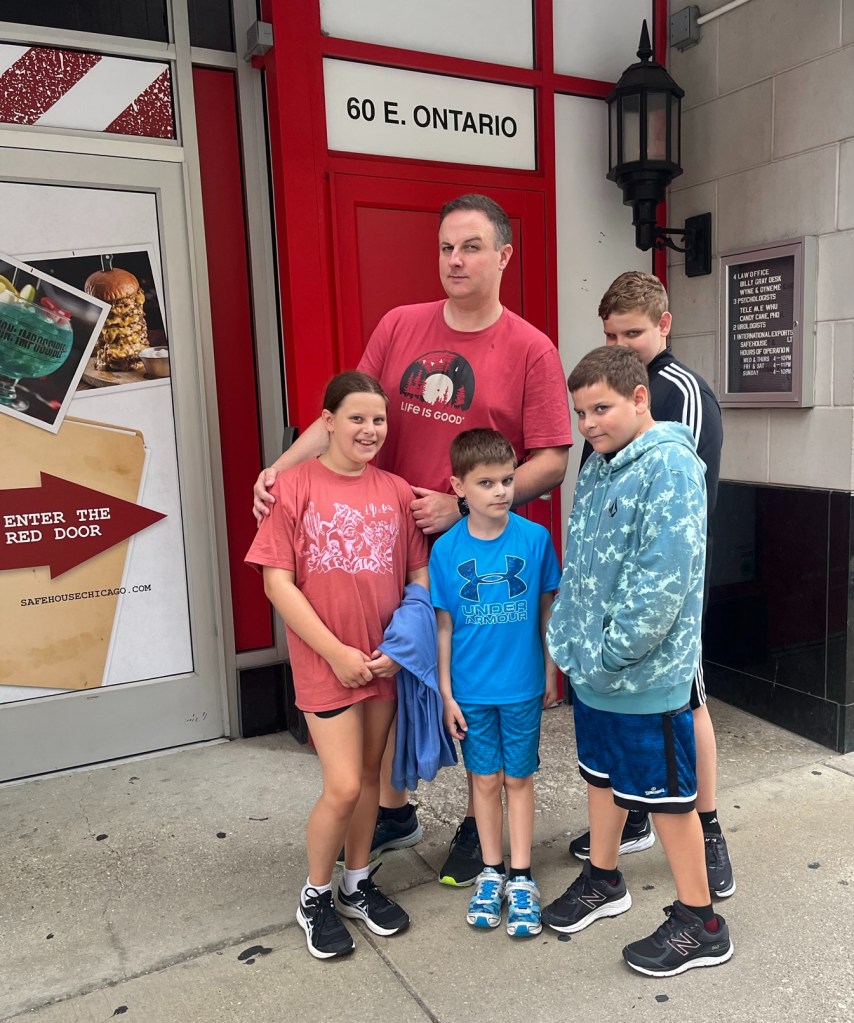
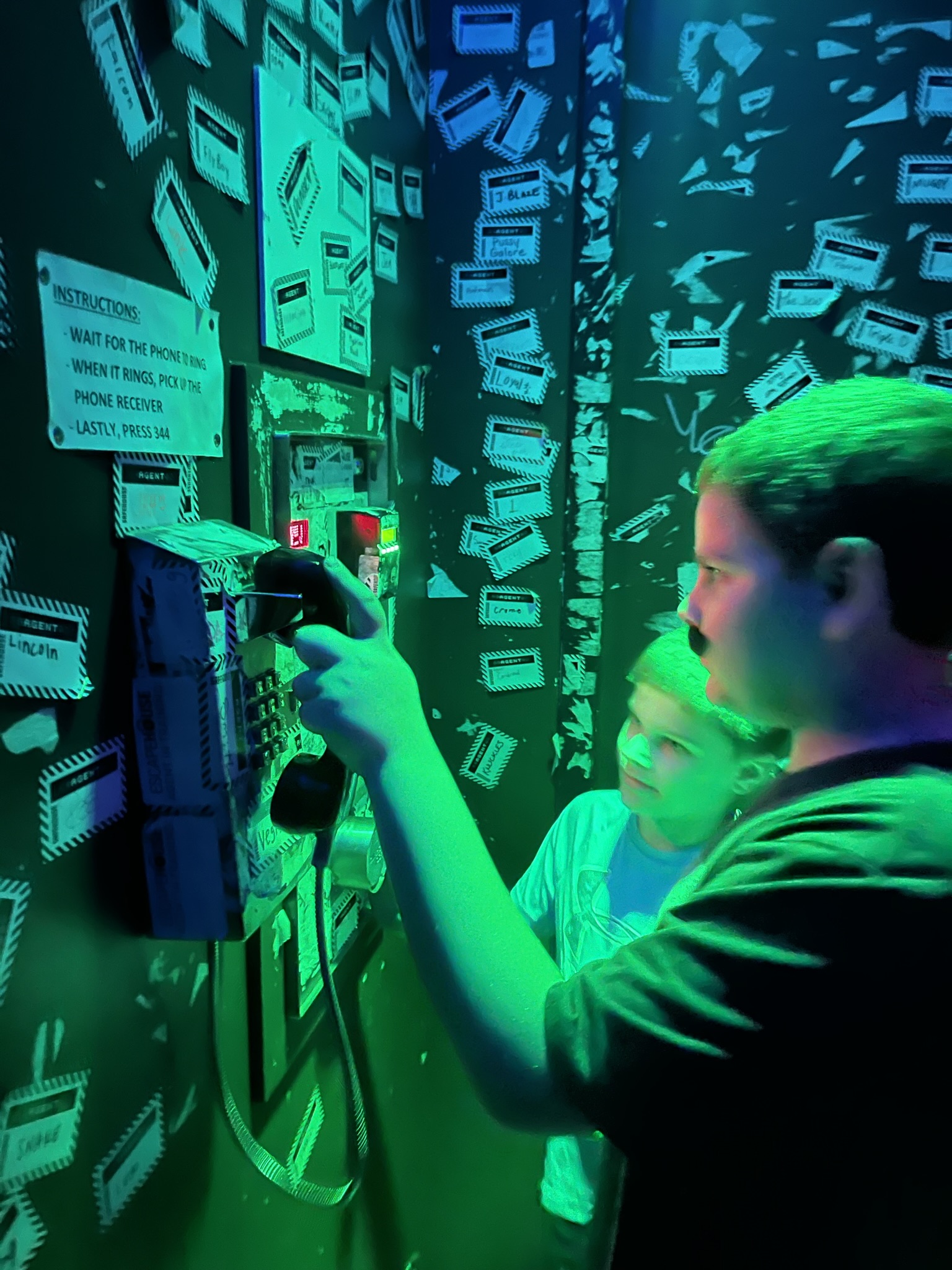
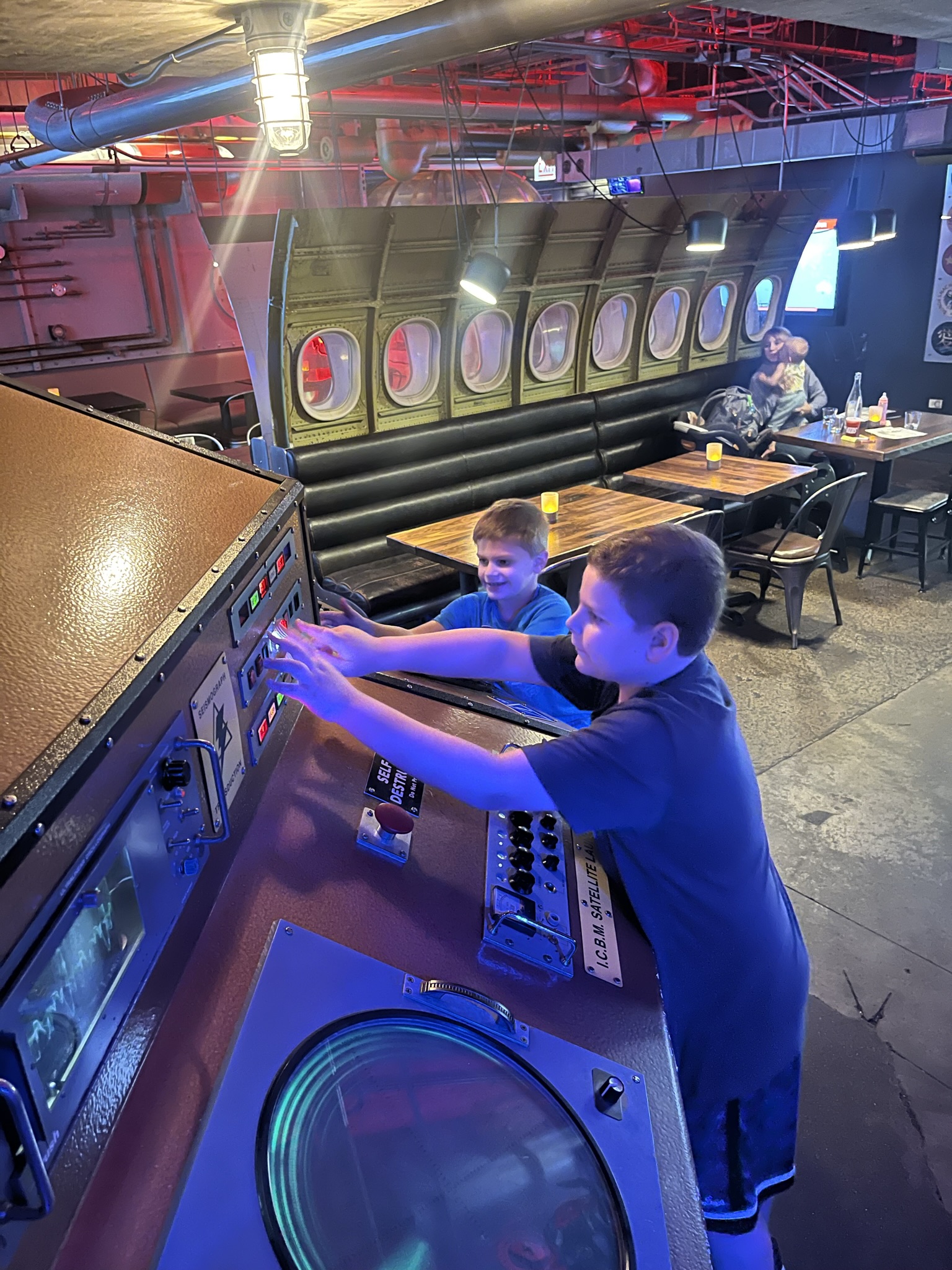
Chicago’s one-of-a-kind spy-themed dining experience at the SafeHouse is a 15-minute walk from Swissôtel down the Magnificent Mile to River North. The Red Door at 60 E. Ontario is the entry point to spy headquarters, where you start in a non-descript office and either whisper the correct password to Moneypenny, the front office “secretary,” or engage in an amusing test to gain clearance. Upon entering the underground restaurant and Interpol Bar, you can make your way through dimly lit rooms to explore spy memorabilia, discover secret rooms, complete a checklist of secret agent duties, climb through a sewer pipe labeled “DANGER,” and email goofy selfies from the photo booth.
Silly surprises like one-way mirrors and alarms await in the bathrooms, and kids and adults alike can play with futuristic tech gadgets and create their own agent names. In-character waitstaff check with “Command” regarding food allergy inquiries and provide junior agents with top-secret disguises (sticky-backed fuzzy mustaches) upon request. Reasonably priced fare includes A License to Kill Mac & Cheese, “007” Layer Salad, Mission Impossible burgers, Camp Stanley Nachos, and Russian Finger Potatoes. Junior Spies can request meals like Goldfingers chicken nuggets, Carmen Cortez mac & cheese, or an Uncle Machete chopped taco salad. Make your escape by dialing a secret code in the hidden phone booth, dodge the maze of red lasers in the dark hallway, slap your agent nametag on the wall, and make your discreet exit back onto the city street.
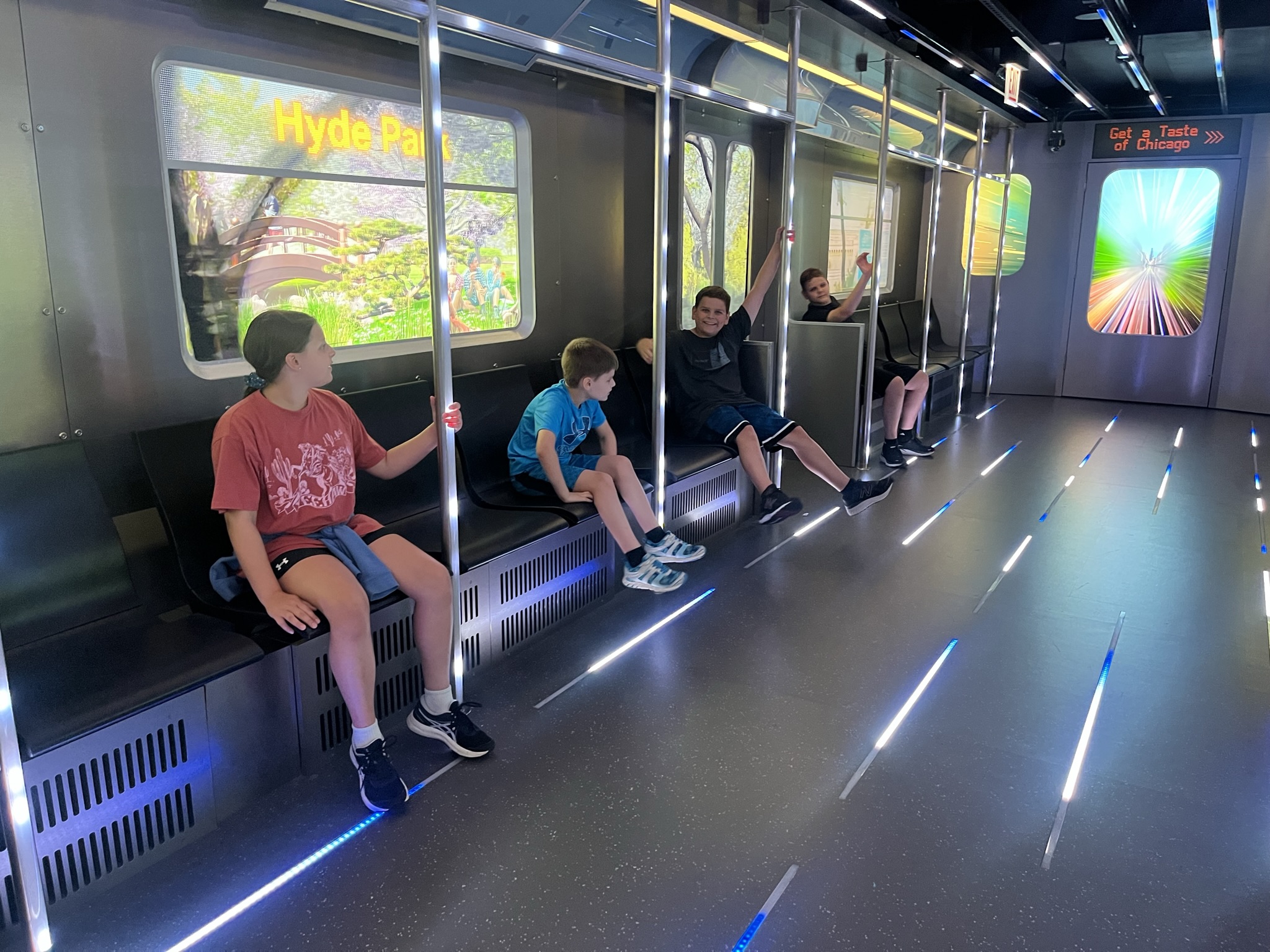
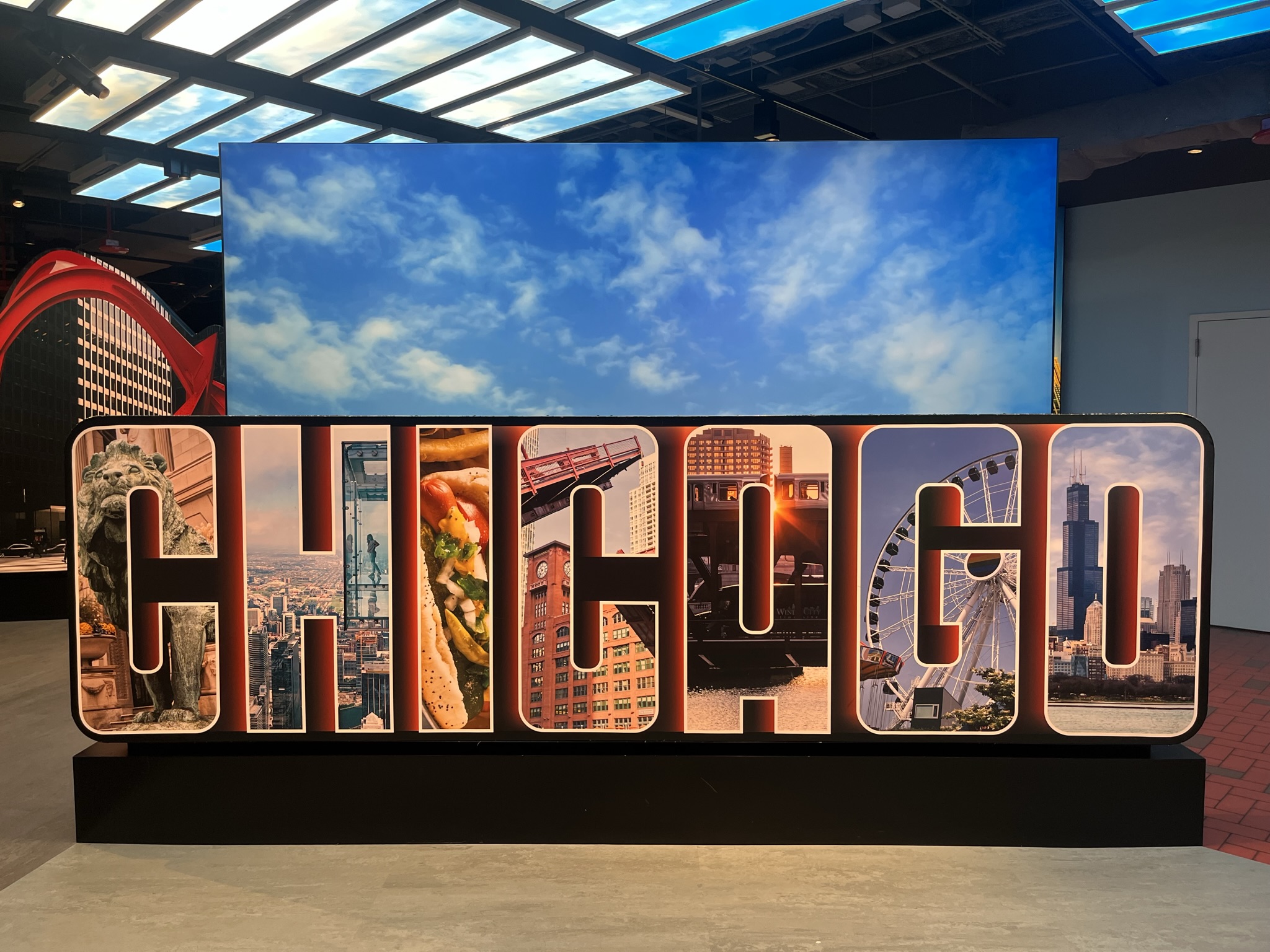
To head from dinner toward an evening at Skydeck Chicago in the Willis Tower, ride the scenic water taxi from the north side of the river at Michigan Avenue to the Ogilvie/Union Station stop, followed by a short walk, or call for a 13-minute Lyft drive. The winding, museum-tour walk to get to the elevator bank displays an artful collection of exhibitions, facts and figures about Chicago, and fantastic photo opportunities—an El simulation with vibrating seats and city scenes sliding by the window; a giant, plastic Chicago-style hot dog and deep-dish pizza to rest on; jazz, Oprah, The Second City, Wrigley Field, Cadillac Palace Theatre, and iconic city scene backdrops to pose in front of. A speedy ride in the elevator (1,600 feet per minute) shoots you up to the skyscraper’s viewing level.
The highest observation deck in the U.S., the Skydeck Ledge juts out over four feet from the 103rd floor—a breathtaking 1,353 feet above the Chicago River and Wacker Drive. View the city below with confidence, knowing that the Ledge can withstand four tons of pressure, hold 10,000 lbs, and is seamlessly constructed using three layers of half-inch thick laminated glass. Groups of guests are given a timed five minutes to step into one of the Ledge booths and take in the view, jump, do handstands, yoga poses—however they want to spend their time in the sky. Some feedback from kids who were initially wary of traveling up so high included, “We’re in the air, we’re super-secure, and we’re looking down 100 stories. It was a cool experience!” and “Well, that was awesome, and I totally don’t regret going on it!” A 1.5-mile Lyft ride or walk brings you back to Swissôtel.
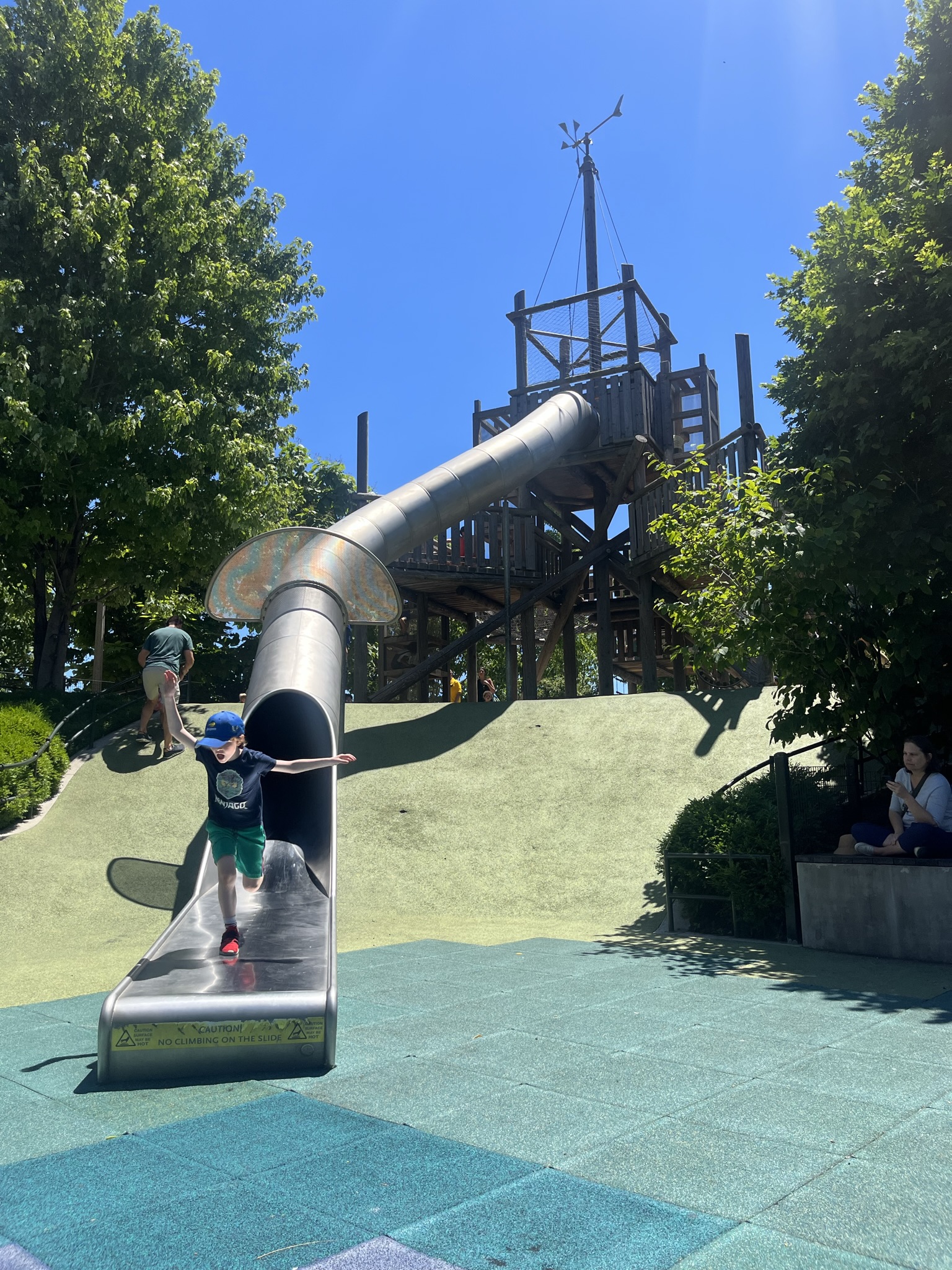
From Swissôtel to the massive Chicago Park District play area, Maggie Daley Park, is a 7-minute walk. The largest free activity is the Play Garden, a series of interconnected, imaginative play spaces integrating landscaping with the sculptures and structures. The Sea area features a large-scale ship and lighthouse tower with ladders, slides, talking tubes, and lookout scopes. The Watering Hole’s animal-themed splash pad includes a shady area with a bench for parents. A Harbor boat play zone, Enchanted Forest sensory exploration pathway, and Wave Lawn of rolling topography and sloped hills offer varied equipment and opportunities to engage all senses and stimulate imagination. Slide Crater’s giant suspension bridge slung between two towers is thrilling to run across while trying to keep your footing. Experience slides of all sizes and formations in this area (although the metal variety can be HOT in the summer sun!). Talk through tubes with others around the structure, rotate knobs to spin giant wheels, and be the lookout at the viewing scopes.
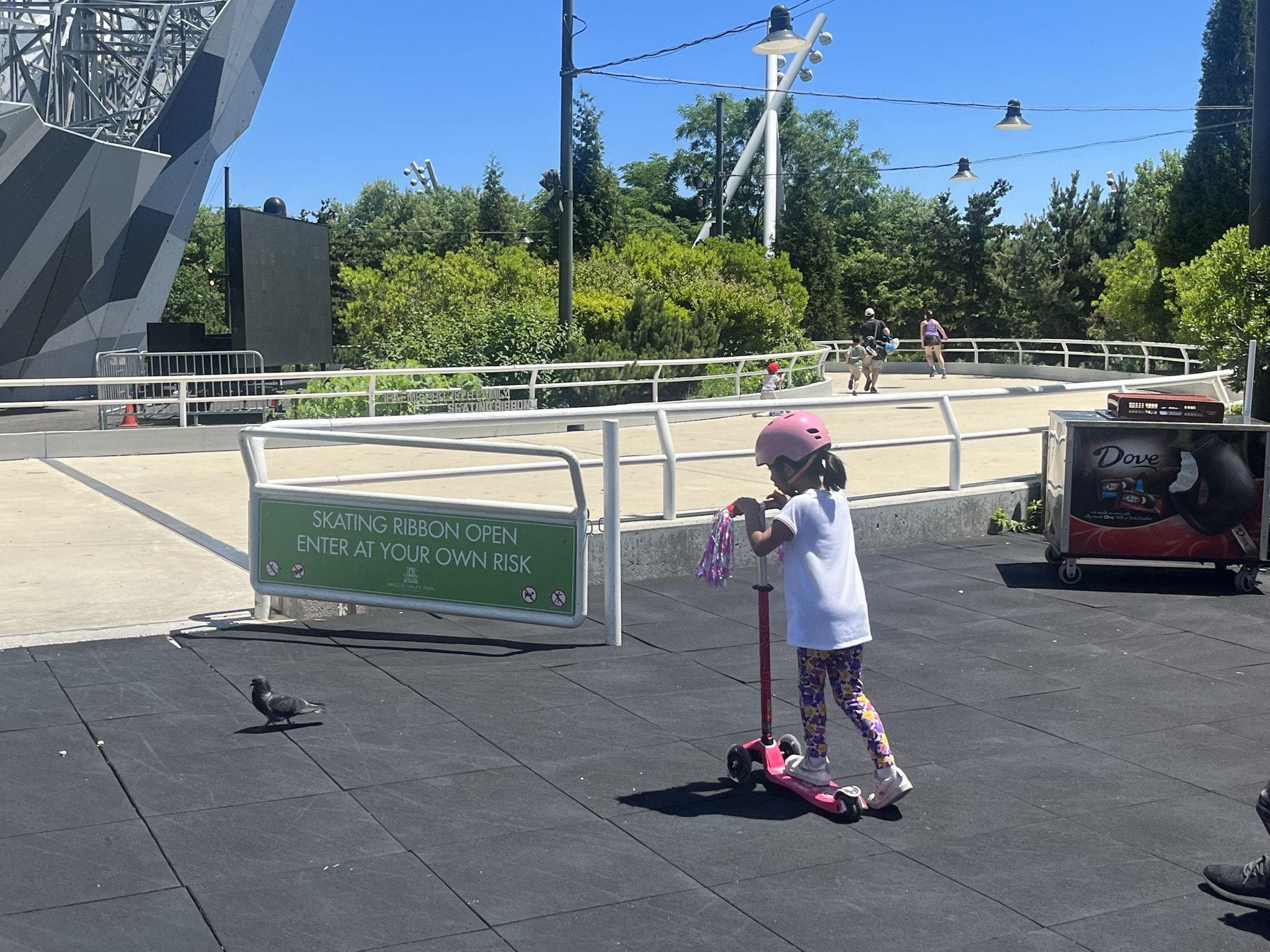
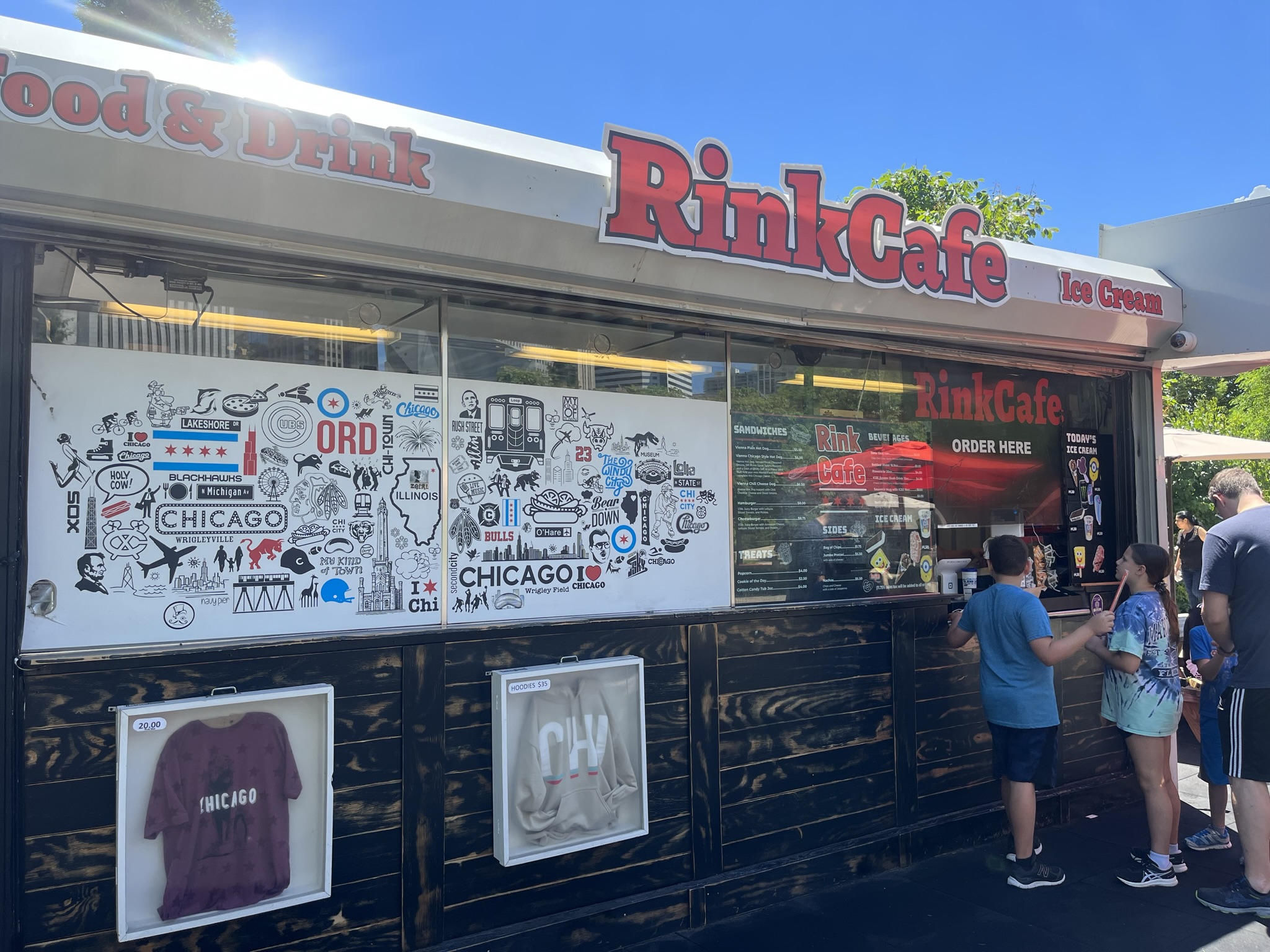
Other free areas include the tennis courts, picnic groves, Cancer Survivors’ Garden, and skating ribbon (rollerblades and Micro scooters are available to rent if you don’t bring your own equipment). For a fee and no reservations needed, visitors of any age can scale the Climbing Wall (shoes, helmet, and harness rental is offered), and kids aged 4-8 can even take a 15-minute climbing lesson with an instructor to assist them. Mini golf and a bungee jump are available for a fee. Conveniently located by the skating ribbon, the Rink Café food truck sells hot dogs, burgers, giant pretzels, ice cream, and other refreshments to enjoy under shady umbrellas.
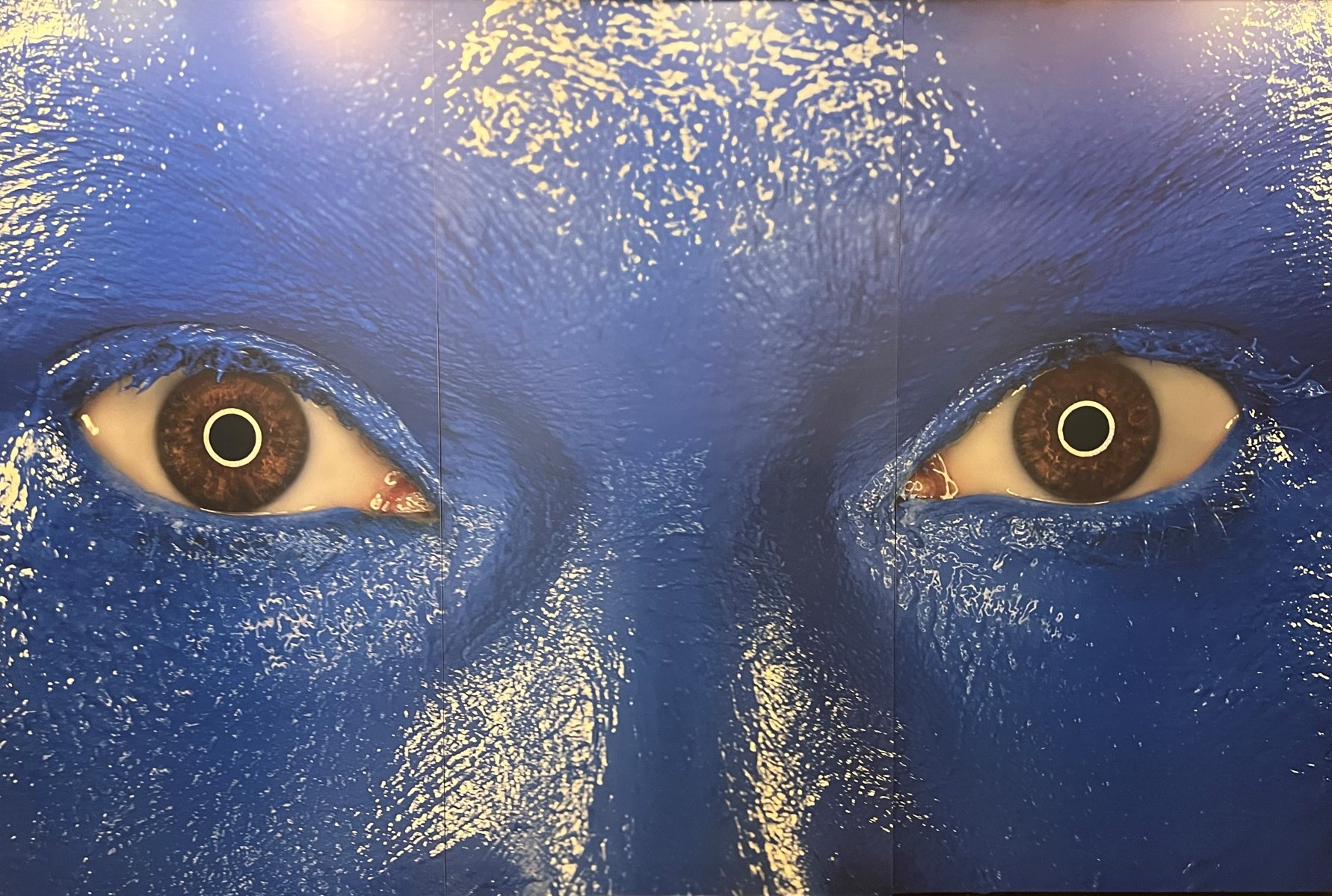
For an energetic, colorful, laughter-filled theater experience, bring the kids to the Blue Man Group at the Briar Street Theatre in the Lakeview neighborhood. While you wait for the show to begin, a scrolling marquee featuring jokes and ridiculous facts sets the tone for the event, warms up the crowd, and encourages audience participation. Through a series of comedic, surprising, awkward, and artful vignettes and instrumental songs involving PVC pipes, paints, lights, water, glow sticks, cereal, remastered instruments, and drums, the talented Blue Man Group cast opens an otherworldly dimension of sensory entertainment that enthralls and mesmerizes. Audience members in the front few rows don rain ponchos as protection from the show’s shower of water droplets, food, and paint. Several individuals were also singled out to participate in the show—on stage or from their seats—in “we’re laughing with you, not at you” situations. There is truly no comparison for this unique performance, and remembering those expressive, endearing blue faces will keep you smiling long after the lights go up.
Back at Swissôtel, the family can order refreshing drinks or nightcaps from the lobby bar and bring them upstairs to the suite, relaxing together in the living area to wind down for the night. A leisurely round of Pictionary or Connect Four or a warm shower under the rainfall showerhead brings an end to the eventful excursion in the city. Watch out the windows as Chicago dims its lights and rests up for a new day ahead.









































 European Traveler