By Danielle Pruger Photos courtesy Austrian National Tourist Office
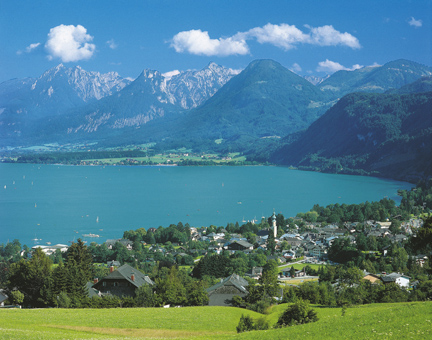
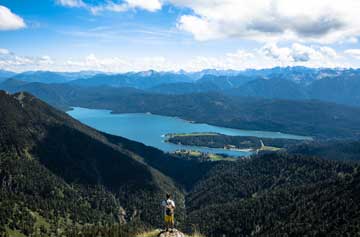
Lake Wolfgangsee
The Salzburg Lake District (Salzkammergut) is said to be one of the most charming regions in Austria: blue lakes, high mountains, green meadows and forests—a storybook landscape. The former emperor Franz Josef and his wife Sissi spent many holidays in this area and hence coined the term “Sommerfrische” (summer health resort).
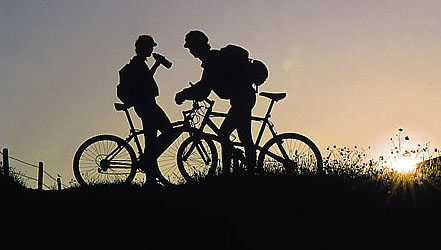
Aristocracy was easily persuaded, and it was not long until half of Vienna passed the hot summer months in the “healthy” region of the Salzkammergut. The artist Gustav Klimt was yet another regular, spending time on the lakes and trying to capture this stunning natural scenery in his paintings. This area is also known as both a cycling and hiking paradise.
One way to experience this region is through self-guided tours through the company Bike Tours Direct. Trails are well-marked and well-maintained, and the terrain varies from flat lakeside trails to hilly meadows to outright mountains. The region is dotted with gorges, waterfalls and other natural wonders, but it’s also filled with culture and history—quaint villages, medieval towns and imperial villas where the Austrian emperors spent their summers.
The self-guided tour is seven nights long. Highlights of the tour include a bike tour of Lake Wolfgangsee, a train ride into Salzkammergut and a stay at the Hallstatt lake resort.
Although the tour is self-guided, van support is available for transfers and shuttles.
If you’re looking for a unique kind of European travel experience, consider a road trip. With the freedom of making your own way around the world comes an opportunity to discover things you would have otherwise missed – and you may be surprised at where the world’s best routes lie. Here are just four European destinations where the road trips are some of the best.
Photo by Raul Taciu
IRELAND It’s perhaps the most unexpected country of all for a road trip, but Ireland actually boasts some of the best, biggest and most beautiful routes in the entire world. Take the Wild Atlantic Way, listed as the best road in the world by The Planet D. It’s also the longest coastal route in the world, too – running for over 1,550 miles along Ireland’s west coast, it’ll definitely make for an adventure.
Photo by Claire Bissell
That isn’t the only road Ireland has to offer, though. From the Burren Loop, surrounding the UNESCO World Heritage Site that is Burren National Park itself, to the scenic Comeragh Mountains, Ireland has some of the most beautiful routes in the world hidden beyond its shores.
ITALY There’s no denying Italy has some of, if not the most wonderous and beautiful routes, perfect for a road trip. Consider driving by the Amalfi Coast near Naples, a scenic coastline with beautiful views across the turquoise waters from the jutting cliffs above. As an added bonus, towns like Salerno and Amalfi can be visited during your journey.
(left to right) Photo by Chris Holgersson; Photo by Ciprian Boiciuc
And Tuscany simply beckons for a relaxed road trip, with its rolling hills and sprawling countryside to discover. It’s a good opportunity to escape from the outside world as it’s quiet and draped in history and heritage – don’t be surprised if you go hours without seeing another soul. That’s the appeal.
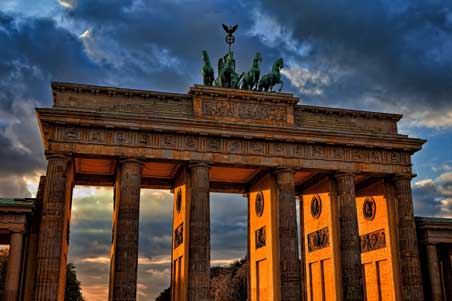
GERMANY Since Germany is one of Europe’s biggest countries, it’s no surprise it boasts some of the longest roads in the continent. The Huffington Post lists Germany’s Romantic Road as the “ultimate European road trip,” with the sheer variety it offers – from wine tasting to majestic castles in the countryside. “1 Cover” highlights Fussen as a must-see, lying at the end of the Romantic Road, so be sure to pull up and explore this picturesque town.
(left to right) Photo by Ricardo Gomez Angel; Photo by Joseph Argus
Many of Germany’s routes have names that are equally as fascinating and intriguing as the Romantic Road. From the 625-mile-long Castle Road to the Fairytale Road, you have a number of choices when it comes to finding the right route for you – it all comes down to what you’re willing to discover along the way.
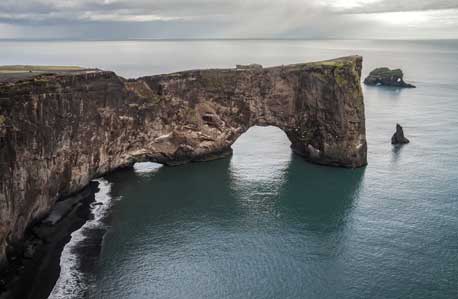
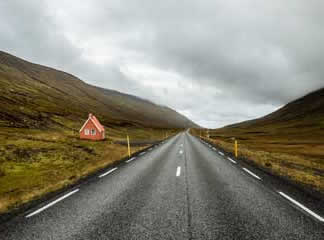
ICELAND It’s safe to say Iceland isn’t a country many tourists are dying to visit – it’s yet to become one of the top hotspots for travelers. It’s a shame, as its offerings, including the incredible Ring Road, are some of the best if you’re looking for a very unique travel experience.
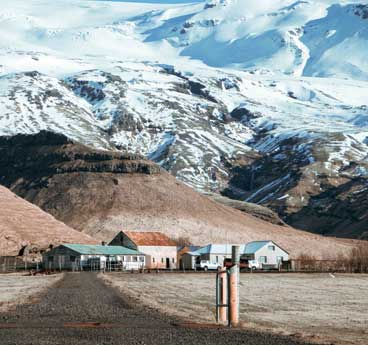
The Ring Road is the route to consider if you’re wanting a road trip like no other. The natural sights offered here are simply incredible – from volcanoes to waterfalls, from icebergs to northern lights, you’ll be overcome by just how beautiful Iceland truly is.
(left to right) Photo by Ivars Krutainis; Photo by Lorenzo Castagnone
Manchester, in the United Kingdom, was the first industrialized city in the world, born of cotton. It was here that the Industrial Revolution took hold, and Manchester was the most productive center for cotton processing in the world. Later it was the world’s largest marketplace for cotton. During the Victorian era it was dubbed “Cottonopolis.”
Times have changed. Now this metropolitan area of nearly half a million people, one of the largest urban areas in the United Kingdom outside of London and Edinburgh, is associated with its interesting architecture, culture, music scene, and scientific and engineering endeavors. And its sports teams such as the Manchester United Football Club, the world’s most famous soccer team, is a constant reminder that Manchester is a highly diversified city, and is looking to the future.
Over the years, the city has reinvented itself from a technological standpoint, but remaining are many of the old historic buildings that attract thousands of tourists each year.
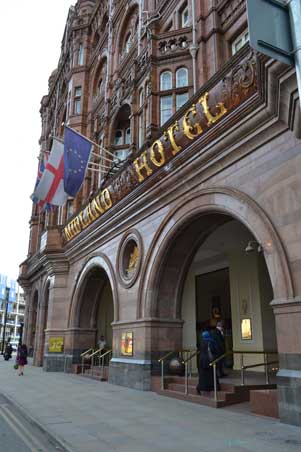
An example is the iconic four-star Midland Hotel on Peter Street, overlooking St. Peter’s Square. This impressive building, built in 1903 by the Midland Railway to serve Manchester Central railway station, stands right in the heart of Manchester city center. Over the course of its 100-year-old history, the hotel has played host to kings, queens, presidents, prime ministers and rock stars, including Winston Churchill, Princess Margaret, the Duchess of York, and the actress Sarah Bernhardt and Jeremy Brett (who played Sherlock Holmes), as well as the Sultan of Zanzibar, who arrived with an entourage of 60 people.
It’s in this 312-room hotel that Charles Rolls met Henry Royce in 1904 to form Rolls Royce. The French Restaurant in the hotel is one of the most important restaurants in the city, and also where a number of films have been shot.
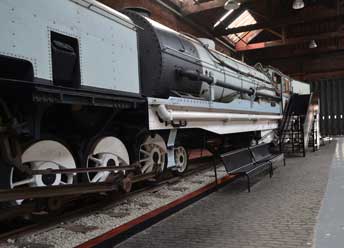
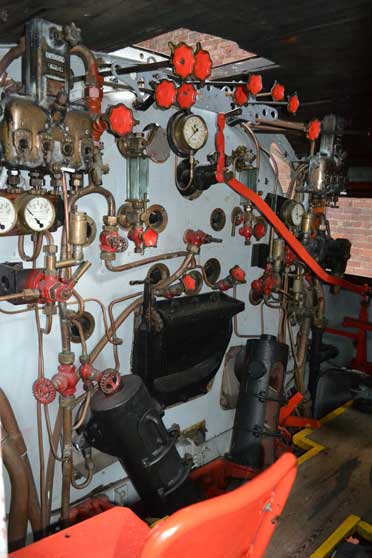
MUSEUM OF SCIENCE AND INDUSTRY Manchester’s Museum of Science and Industry, located at the site of the oldest surviving railway station in the world, is a family-friendly museum with lots to offer. The museum features everything from the first steam-powered mill and to the microcomputer, with lots of hands-on exhibits. There’s a large collection of vintage vehicles and historic working machinery, especially since the Industrial Revolution started in Manchester. You can even take a train ride behind a replica steam locomotive.
The John Rylands Library is less a library in the usual sense and more of a masterpiece of Victorian Gothic architecture: it looks more like a castle or cathedral. Rylands, who died in 1888, was one of Manchester’s most successful industrialists and had a large fortune. This world class collection includes the oldest known piece of the New Testament, the St. John Fragment. Other treasures here include illuminated medieval manuscripts and a 1476 William Caxton edition of Chaucer’s Canterbury Tales.
MANCHESTER ART GALLERY The Manchester Art Gallery on Mosley Street has one of the country’s finest art collections in spectacular Victorian and contemporary surroundings. The gallery’s recent $53 million transformation has enabled the collection to be presented to visitors in new ways. Highlights include outstanding pre-Raphaelite paintings, craft and design, and early 20th century British art. Exhibits are always changing, but I saw a display of French and British Impressionist and post-Impressionist paintings, along with some splendid Victorian paintings.
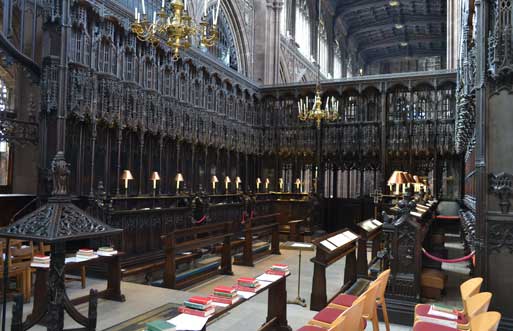
The Gothic-style Manchester Cathedral, in the center of the city and built between 1441-1882, is a medieval church occupied by the Bishop of Manchester. Its official name is the Cathedral and Collegiate Church of St. Mary, St. Denys and St. George in Manchester. It was extensively refaced, restored and extended in the Victorian period, and then again following severe bomb damage in the 20th century; it contains many precious artifacts.
MANCHESTER TOWN HALL A guided tour of Manchester Town Hall is an activity worth doing while here. The hall was designed in Victorian Gothic style by Alfred Waterhouse and opened in 1877. Among its treasures are the Ford Maddox Brown murals which are a monument to the ideas of Victorian Manchester, portraying the science, invention, education, trade and textile industry. Among the impressive rooms is the Sculpture Hall, containing statues of notable Manchester figures from the past, and the Great Hall, featuring a glazed skylight inscribed with the names of every mayor, lord mayor and chair of the town council since 1838. Be sure you see the mosaic pattern of bees on the floor outside the Great Hall. The bee symbolizes Manchester’s industry and is featured on the city’s coat of arms.
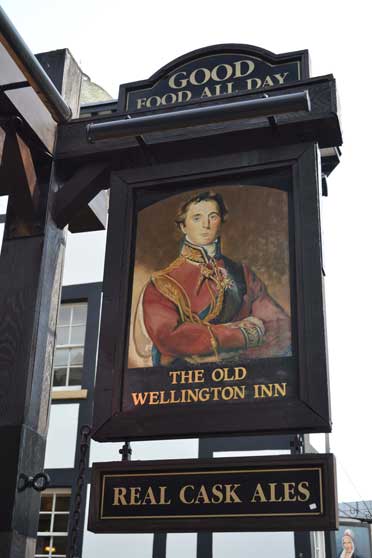
After dark, try out one of Manchester’s “real ale” pubs, or check out Matt & Phred’s Jazz Club, a nightclub where you can hear great jazz from some of the best performers, including Wynton Marsalis. Other clubs include Band on the Wall and Night and Day.
For food, try the Damson, a neighborhood restaurant in Heaton Moor, the relaxed San Carlo Cicchetti’s with delicious small dishes, and the French brasserie called Aubaine, on the top floor of Selfridges, which also offers a great view of Manchester.
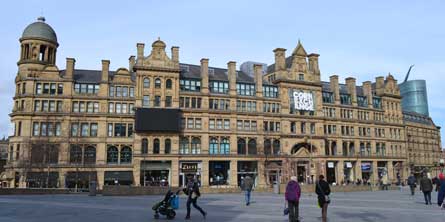
Selfridges Department Store, Manchester
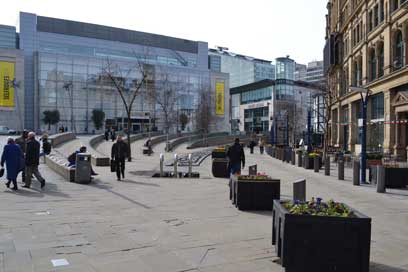
The Romans were known to inhabit the area around Manchester as early as 79 A.D., and the 19th century cotton trade brought great change to this city. Now with new glass buildings and a new development in the northern downtown core where the Industrial Revolution first took root, Manchester keeps re-inventing itself. Visitors will enjoy the mixing of old and new into a masterful blend.
Northern Ireland is one place you don’t want to miss as you travel around Europe. The country’s capital, Belfast, is a charming city known for being the location where the famous Titanic was built.
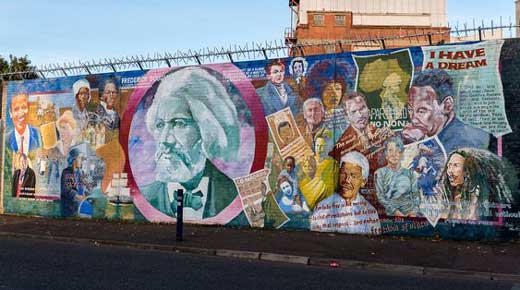
It’s also home to political murals that reflect the “The Troubles”—the conflict that has defined the country’s contemporary history. A little further outside of the city you can see picturesque views of the countryside as well as beautiful cliffs overlooking the sea.
Here are some top experiences you should have on your bucket list when visiting Northern Ireland.
LEARN ABOUT SHIPBUILDING IN THE TITANIC BELFAST MUSEUM Made popular by the 1997 epic film, the widespread history of the Titanic makes this attraction one of the most popular in the city. The self-guided museum takes guests through a series of galleries where you can learn about the RMS Titanic, which was originally built in Belfast by shipbuilders Harland & Wolff. The museum goes well beyond the ship’s building however, and touches on its launch, its maiden voyage, the tragic sinking and its aftermath. However, it’s important to note that as this is one of the most popular attractions in the city, Independent Travel Cats advises getting your ticket in advance to avoid waiting in line.
STROLL AROUND THE BELFAST PEACE WALLS The conflict known as “The Troubles” was a trying time in the city of Belfast. The violence between the unionists and nationalists resulted in 3,500 deaths and 50,000 injuries. During the 1970s, a Peace Line was created which separated the conflicting sides from each other. However, human spirit and kindness also prevailed. Save the Children’s Northern Ireland 1971 report details how children and mothers from both sides of the Peace Line would interact with each other in a friendly and relaxed way, with no sign of animosity. These small interactions weren’t enough to stop the growing conflict, however, and the Peace Walls was erected. This was to prevent violence from erupting between the two sides.
Now, decades later, the walls are painted with colourful murals on either side. Each side depicts the sentiments of the community, and gives a snapshot of the culture and history that runs through the town. One way of exploring these murals is through strolling around and taking your time with each piece. However, if you want a more guided experience, another option would be to take a Black Cab tour. Jump in a black cab and drive around the different murals and points of interest along the Peace Wall. While you’re traveling around, a local guide will tell stories about their own personal experiences of “The Troubles.” Hearing stories from a local’s perspective is always a good way to immerse yourself in a city’s history.
MARVEL AT THE GIANT’S CAUSEWAY Giant’s Causeway is a UNESCO World Heritage Site located on the north coast. The site holds about 40,000 natural columns jutting out to the sea. The columns were formed due to a volcanic eruption that happened many centuries ago.
Legend has it that the giants of Ireland and Scotland were challenged to a fight, and for the duel to take place, the giants created a causeway over the ocean leading to Scotland. Interestingly, you can find the same types of columns at Fingal’s Cave in Scotland which supposedly comes from the same flow of lava or were made by the same giants, whichever you choose to believe. Remember that visiting the Giant’s Causeway is free, although you do have to pay more if you want to explore the Visitor’s Center. To access the Causeway for free, follow the archway to the side of the Visitor’s Center.
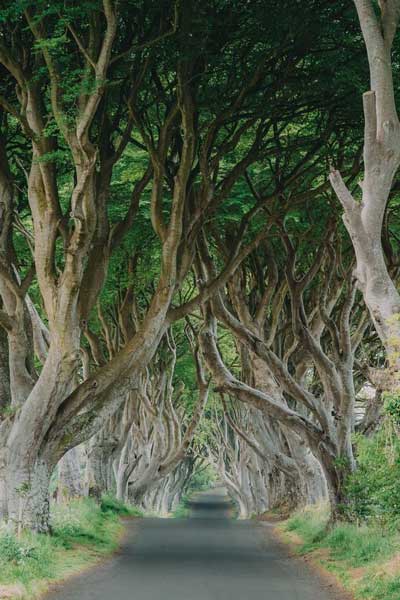
DRIVE THROUGH THE DARK HEDGES Similar to Wales, Northern Ireland is composed of beautiful sprawling countryside. The Dark Hedges is a quiet road near the rural town of Ballymoney in County Antrim where beech trees line each side, creating an eerily imposing tunnel-like entrance. Planted almost 300 years ago, they were made famous when they appeared in the hit TV series Game of Thrones. The hedges originated in the 18th century when the Stuart family planted the trees to impress visitors as they approached their mansion, the Gracehill House. The hedges are just a 50-minute drive from Belfast, so it’s a perfect stopover before going further to explore the north coast.
Fans of the Fab Four can immerse themselves in Beatlemania on a visit to Liverpool, a historic port city that gleams with a revitalized downtown waterfront.
Paul McCartney, John Lennon, George Harrison and Ringo Starr; Liverpool, England, is proud to be the birthplace of the best band in the world, and Beatles fans making a pilgrimage to the city won’t be disappointed. Visit Liverpool
By Randy Mink Photos by author unless noted
Most pop culture icons come and ago, but some seem to live forever. Take the Beatles, for instance.
The band broke up in 1970, but 45 years later the Fab Four’s songs are heard everywhere, and their legacy continues to be a huge tourist draw in Liverpool, their hometown in northwest England.
Decades after Paul McCartney, John Lennon, George Harrison and Ringo Starr took the music world by storm, their fans from the 1960s descend on Liverpool as if it were a religious pilgrimage site.
I recall Beatlemania from my high school days, and though I wasn’t totally wrapped up in it, recently I made my way to Liverpool with Beatle sites at the top of my to-see list.
The Magical Mystery Tour bus excursion and The Beatles Story Museum brought back memories and had me humming Beatles tunes for the next week. While I encountered plenty of nostalgia-hungry tourists of my generation, I was surprised to see so many young people eager to know about the mop-haired group that belted out “Twist and Shout” and “I Want to Hold Your Hand.”
Most of those taking the self-guided audio tour of The Beatles Story the day I visited, in fact, were a third my age. The tour, which follows the boys from their humble beginnings in working-class Liverpool to fame and fortune, has 36 stops and features recorded comments from family members, fans, business associates and the Beatles themselves. Artifacts range from guitars to stage outfits.
The exhibition includes black and white film clips of the Beatles and their adoring female fans, plus glimpses of their movies like “A Hard Day’s Night,” “Help!” and “Yellow Submarine.” I was especially interested in the re-telling of their first American tour and how they captivated U.S. teens. When the four lads appeared for the first time on TV’s Ed Sullivan Show in 1964, 40% of the country was watching.
A Beatles tribute show at the Cavern Club, the famous Liverpool music club where the Fab Four performed prior to their worldwide fame.
Visitors to The Beatles Story also see a re-creation of the Cavern Club, the Liverpool nightspot where the group performed early in their careers. Though the club was demolished in 1973, it was rebuilt with the same bricks to the same dimensions at the same Mathew Street location. Today the Cavern Club plays host to hundreds of bands, but tourists are most interested in the Beatles connection. I attended a Saturday night Beatles tribute show that featured Beatles impersonators who sang a string of hits—“Love Me Do,” “Day Tripper” and “I Saw Her Standing There,” to name a few.
Many older fans were singing along or mouthing the words. One group was celebrating a woman’s 70th birthday. But most in the standing-room-only crowd were born long after the Beatles disbanded.
Music blares out of other bars on pedestrianized Mathew Street, the entertainment hotspot of central Liverpool. Nearby, statues of the Fab Four adorn the Hard Day’s Night Hotel, the only Beatles-themed hotel. Its public areas are filled with Beatles memorabilia. Souvenir stores in the Cavern Quarter abound with Beatles items, from bobbleheads to snow globes.
Adjacent to the Mathew Street corridor is Liverpool ONE, a 42-acre, car-free development that has revitalized downtown. To tell the truth, I wasn’t expecting to find something so glitzy in this old port city. Outdoor escalators connect three levels of stores, which include familiar names like Disney, Toys R Us and Forever 21. Festivals enliven its plazas.
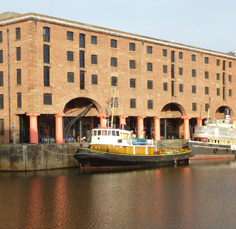
Liverpool ONE is right across the road from the spiffed-up Mersey River waterfront. Albert Dock, a nautically-themed collection of converted 19th century port buildings, houses museums, shops and eateries. The Beatles Story is one of its tenants. Also occupying the red-brick warehouses are the Merseyside Maritime Museum and International Slavery Museum.
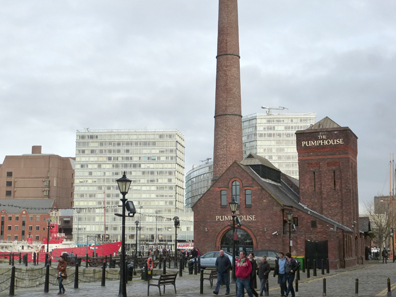
(left to right) Albert Dock, a collection of renovated warehouses on the Liverpool waterfront, abounds with shops, eateries and tourist attractions, including The Beatles Story Museum.; The Pump House, in a former pumping station, is one of many restaurants at Albert Dock in Liverpool.
For lunch one day I visited the Pump House, the old pumping station at Albert Dock, and chowed down on steak and ale pie with mashed potatoes and peas. Dessert was also very British—sticky toffee pudding, a warm square of toffee-flavored sponge cake drizzled with toffee sauce and swimming in a bowl of custard sauce. For dinner I feasted on Indian cuisine at The Spice Lounge, an Albert Dock restaurant around the corner from The Beatles Story. The butter chicken—chunks of chicken bathed in a mild tomato gravy and served over rice—was a culinary highlight of my whole trip to England.
If I had time for another Albert Dock restaurant, I would have chosen Circo and enjoyed circus acts with my meal. Also on the waterfront is the state-of-the-art Museum of Liverpool, a free-admission national museum that tells the story of Liverpool through interactive exhibits. Don’t miss the immersive, 360-degree Beatles film. And there’s a branch of The Beatles Story at Pier Head, the Mersey River ferry terminal. Now showing is the excellent GRAMMY Museum exhibition “The British Invasion: How 1960s Beat Groups Conquered America.” It showcases groups like the Rolling Stones and Dave Clark Five as well as the Beatles.
For a relaxing introduction to Liverpool, take a River Explorer Cruise aboard Mersey Ferries. The narrated 50-minute cruise begins and ends to the strains of “Ferry ’Cross the Mersey,” the 1960s hit by another British pop group, Gerry and the Pacemakers.
The Magical Mystery Tour visits Liverpool sites that inspired Beatles tunes. Visit Liverpool
Perhaps the highlight of my brief visit to Liverpool was the Magical Mystery Tour, a two-hour bus circuit that spotlights places where the Beatles spent their early days in working-class neighborhoods. Filled with revealing tidbits about their lives and how they met each other, the tour visits locations that inspired songs such as “Penny Lane” (a street) and “Strawberry Fields” (an orphanage).
The humble birthplace of George Harrison is a stop on the Magical Mystery Tour, a bus tour to sites associated with the Beatles.
Besides those two spots, we had photo stops at Paul’s family home (where John and Paul wrote 100 songs) and George’s birthplace, a humble brick rowhouse that’s now a private residence. Paul’s place is owned by the National Trust and open for tours. Our guide pointed out the primary school that George and John attended, the church where John met Paul in 1959, John’s house (a National Trust property) and massive Liverpool Cathedral, where Paul auditioned for the choir but didn’t get accepted.
Beatles tunes were interspersed with the Magical Mystical Tour commentary. Passengers on the bus were all ages and from all over the world.
For sheer pampering in Liverpool, I would recommend 2 Blackburne Place, a chic bed and breakfast inside an 1826 Georgian house that’s been divided into six town homes. Run by Glenn Whitter, a former musician and interior designer, and his wife Sarah, a former teacher, it’s an oasis of calm just a few blocks from Liverpool Cathedral and a 15-minute walk from the city center.
The word “plush” best describes 2 Blackburne Place. Think plush towels, plush bathrobes and thick-thick rugs. The deep tub and heated bathroom floor also will spoil you. My room, done in beige and blues, was decorated with original artwork, art objects (including a Chinese vase) and six framed black-and-white photos of the Cathedral. Waiting for me after a day of sightseeing was a special treat—a plate of macarons and a crystal decanter of sloe gin.
At breakfast, serenaded by classical music while seated at a gorgeous, purple lacquered table in a dining room with a built-in bookcase, I appreciated all the helpful tips our guide Sarah gave me for making the most of my time in Liverpool. Cocooned in such comfort, though, I didn’t want to leave.
The Whitters can serve smoked salmon or kippers (smoked herring), but I chose a typical English breakfast of bacon, sausage, scrambled eggs, and baked beans with minced onions and tomatoes. That was after the yogurt course with plump blueberries and slices of kiwi and watermelon. For the toast I had many choices of spreads—from French lavender honey to passion fruit/lemon curd.
Touches of luxury also awaited me the next day at the sleek Epic Apart Hotel on Seel Street, just minutes from the city center. I had a whole apartment, complete with kitchen, living and dining areas and a giant flat-screen TV. Contemporary in design and loaded with upscale amenities, Epic makes the ideal “home” in Liverpool. The friendly people at the front desk, staffed 24 hours a day, were attentive to my needs and had all the answers to my questions about getting around Liverpool. I appreciated their warmth and cheerfulness on the blustery, rainy day. After some soggy sightseeing, the hot chocolate packets I found in the kitchen really revved my spirits, and it was nice to relax on the comfy couch in front of the giant, flat-screen TV.
The kitchen had an oven, microwave, refrigerator and toaster, along with a full range of dishware and utensils. I also liked the oversized rain shower with dual shower heads and the premium towels. Bed linens were Egyptian cotton. Accommodations at Epic Apart Hotel range from studios to two-and three-bedroom apartments.
From the gritty to the luxurious, Liverpool provides a great look at English urban life outside of London.



















 European Traveler