Salamanca Is Spain at its Most Majestic

Salamanca’s Old Town boasts one of the largest and most beautiful town squares in Spain. Its labyrinth of pedestrian streets is a stroller’s paradise.

Story and photos by Randy Mink

Two of my favorite things to do in Europe are: 1) communing with the past in historic city centers with rambling pedestrian zones and 2) watching the world go by while noshing away at an outdoor cafe. For me, life doesn’t get better than this.

In west-central Spain, the perfect place to pursue both passions is Salamanca, a medium-size city just 100 minutes away from Madrid by high-speed train.

Salamanca’s Plaza Mayor, one of the most magnificent town squares in Spain, is ringed with cafes serving up tapas, those delectable little bites craved by locals and tourists alike. Steps away, cobbled, car-free streets invite carefree wanderers to travel back centuries, as distant as the Middle Ages. Giving this outdoor museum a youthful vibe are students from around the world who attend the University of Salamanca, Spain’s oldest. It’s all there for a true European experience in this UNESCO World Heritage City.

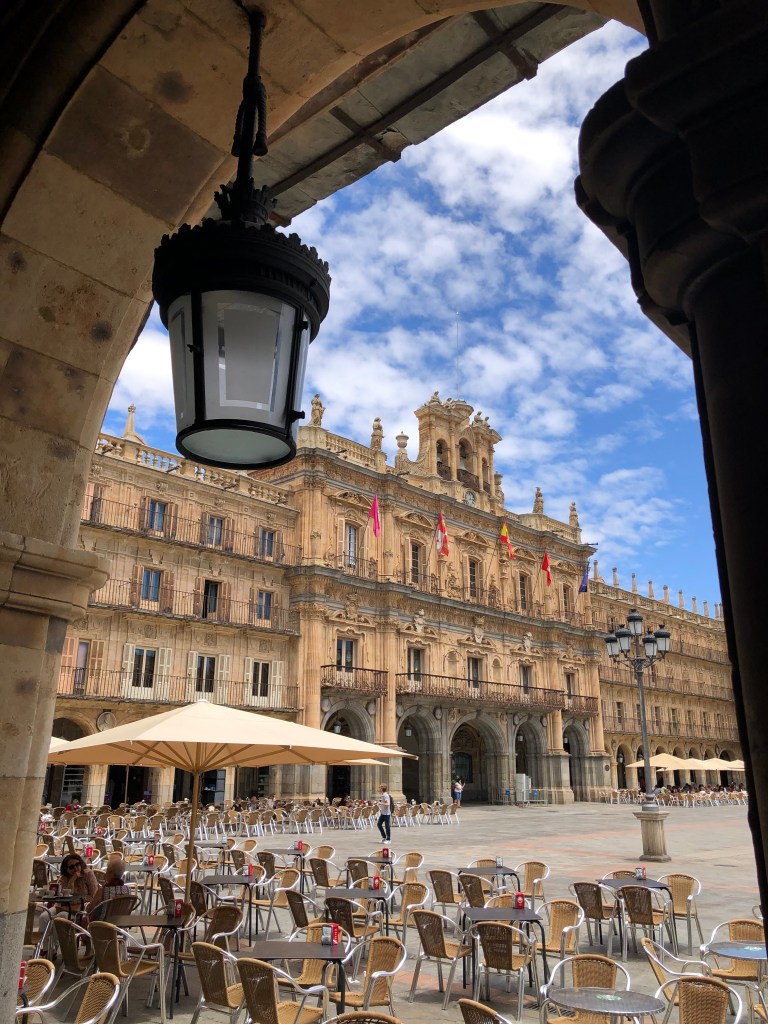
Salamanca’s Plaza Mayor is one of the largest and most beautiful central squares in Spain. The Baroque architecture dates from the 1700s.

Salamanca is not exactly on the way to other big destinations—you have to seek it out. That gives the city a feeling of being undiscovered.

Tourist-friendly but not too crowded, the historic core is compact and manageable. The number of sights is not overwhelming, so there’s time to pause, reflect and loll about eating tapas on the Plaza or Calle Rua Mayor, the main pedestrian artery. Salamanca’s Old Town, to my mind, is Spain in a nutshell.

Salamanca’s Majestic Plaza Mayor

From your umbrella table on the Plaza Mayor, once a bullring and now criss-crossed by constant foot traffic, you can take in the sweeping expanse of Baroque architectural grandeur dating from the 1700s. Cement benches provide seating in the middle of the square, and three floors of stately, balconied apartments rise above the archways that rim its perimeter.

In the arcades, you’ll find not only cafes but restaurants, bakeries, ice cream shops and the tourist office as well. The flag-bedecked clock tower building, a common meeting point, houses the Town Hall. Stone medallions on the colonnades depict great Spanish writers, kings and queens, and explorers like Columbus and Cortes. (After years of controversy, the image of former dictator Francisco Franco was taken down in 2017.) Sort of a community living room, the Plaza Mayor is the heart and soul of Salamanca.

Tapa Tasting in Salamanca’s Old Town

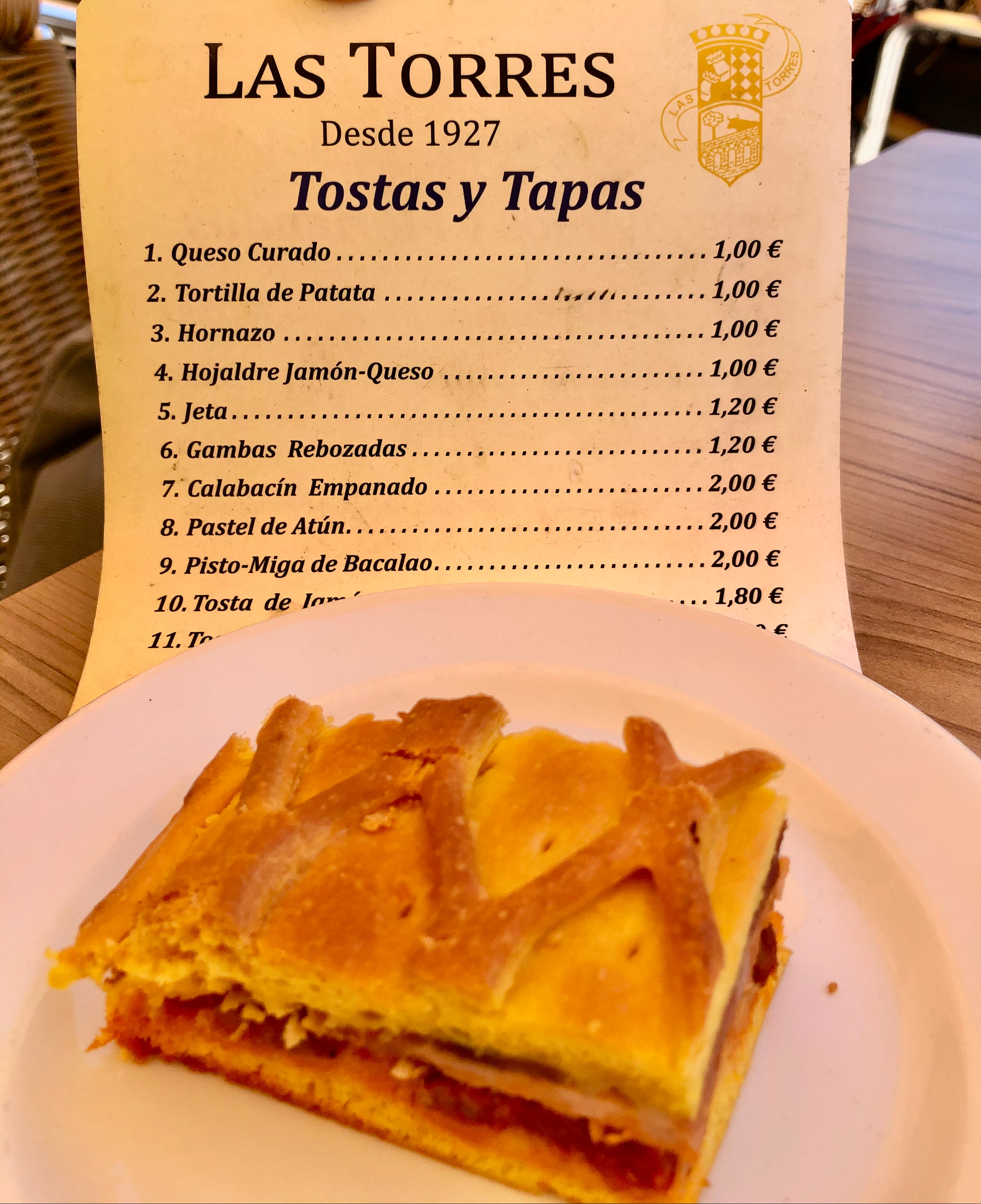
On a bright spring day, I surveyed the splendor from my perch at Las Torres, nibbling on items from the tapas menu at the venerable cafe/bar, a Plaza Mayor fixture since 1927. My favorite was hornazo, a meat lover’s dream. This Salamanca province specialty consists of layers of pork chorizo, pork loin and ham wrapped in lattice-crusted yellow dough, and sometimes includes bits of hard-boiled egg. I also indulged in fried eggplant slices drizzled with honey (crujiente de berenjena-miel in Spanish), more of an Andalusia specialty (from that region’s historical North African influences).

Hornazo,” a specialty of Salamanca province, consists of layers of pork chorizo, pork loin and ham wrapped in lattice-crusted yellow dough. It is served as a tapa at cafes and restaurants, and sold at bakeries and food shops in larger quantities.

During my two days in Salamanca, I had other memorable tapas:

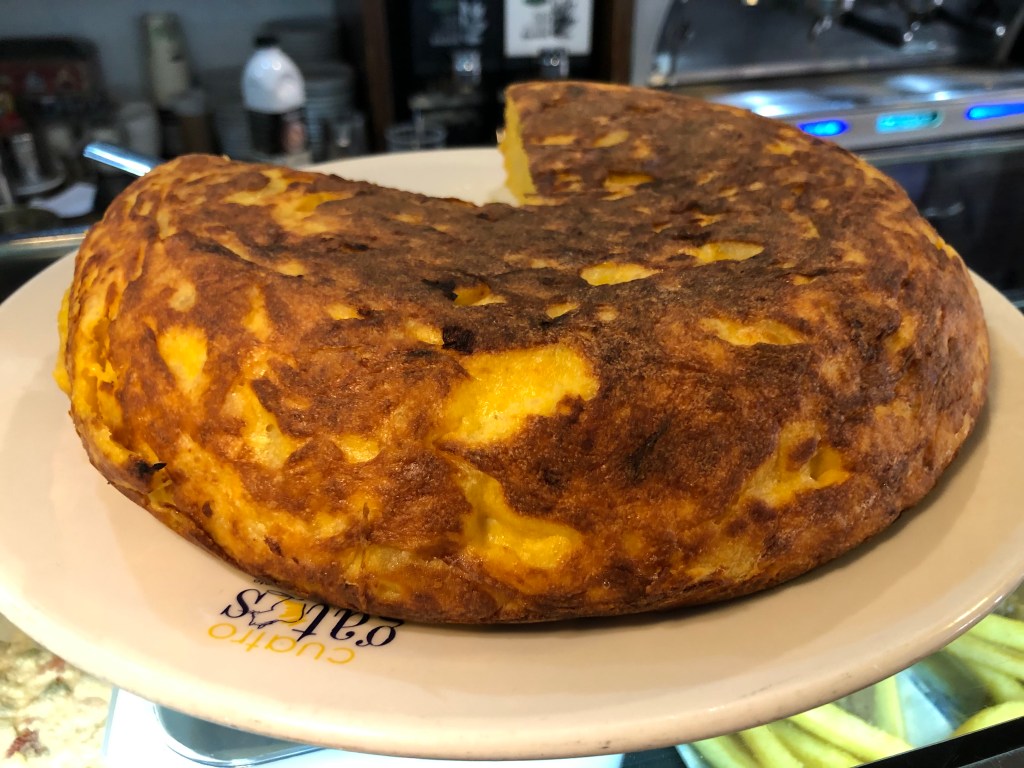
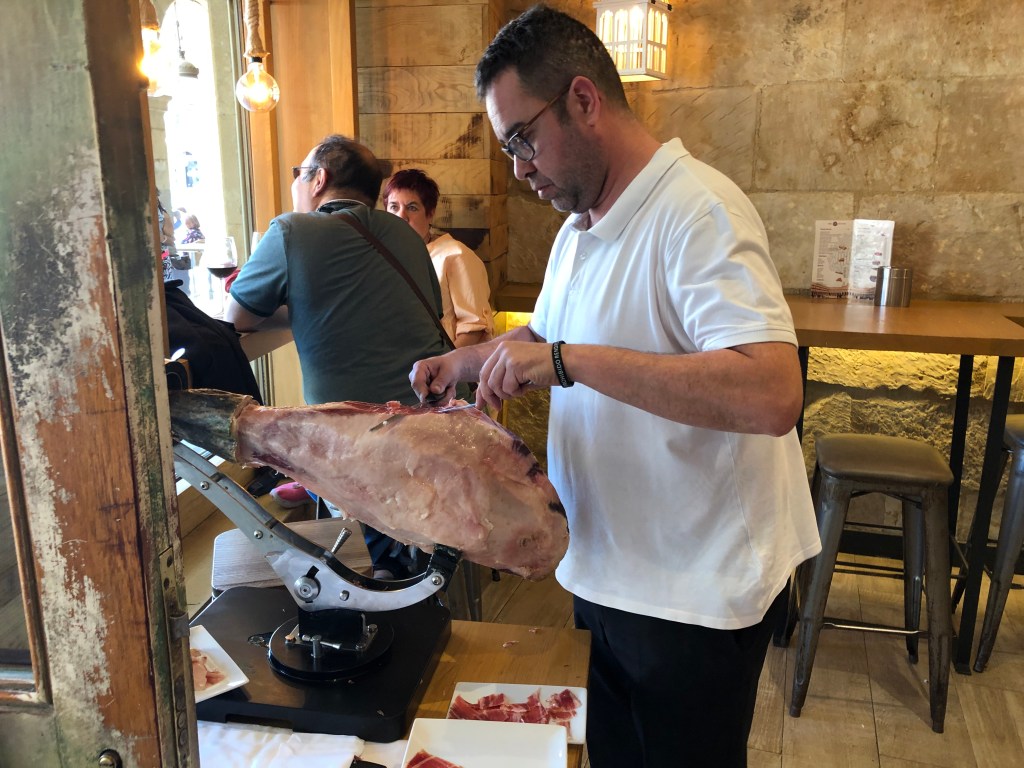
  • At the Plaza’s Cafeteria Los Escudos, I chose two classics—Iberian cured ham (jamon iberico), thinly sliced on the spot, and a wedge of Spanish omelette (tortilla de patatas), a simple egg-and-potato dish.
  • On a visit to Los Escudos the next day, I tried ensaladilla rusa—called paloma in Salamanca—a mayonnaise-y tapa with potato, peas and tiny bits of tuna, carrot, olive and hard-boiled egg, served with a wavy, shell-like crisp.
  • On Calle Rua Mayor, another prime spot for people-watching, I stopped at Cuatro Gatos for revuelto de farinato, a pretty orange-yellow concoction made of farinato (pork fat mixed with bread crumbs and paprika) and fried egg. Flavored with onion, salt, anise seed and other seasonings, farinato is called the “poor man’s chorizo.”
  • At several places, I ordered ham, chicken or Roquefort cheese croquettes. A favorite of mine, the croquette (croqueta) is a diminutive, deep-fried log of mush filled with the hot, creamy goodness of bechamel sauce (olive oil, butter, flour, milk). Yum.
  • For dinner at Lilicook Gastropub, I started with a plate of patatas bravas from the menu’s tapas section. The hefty portion of fried potatoes in spicy tomato/mayonnaise sauce could have been my whole meal.

(left) Among the many tapa choices in Salamanca, Spain is “revuelto de farinato,” a mixture of farinato (pork fat with bread crumbs and paprika) and fried egg. (center) Wedges of Spanish omelette, or “tortilla de patatas,” are popular with tapa lovers throughout Spain. This beauty is a creation of Cafeteria Los Escudos, a cafe on Salamanca’s Plaza Mayor. (right) Iberian cured ham (“jamon iberico”), a favorite tapa in Spain, is thinly sliced on the spot at Cafeteria Los Escudos, a cafe on Salamanca’s Plaza Mayor.

Seeing Salamanca From on High

In Europe, whenever the chance arises, I climb to the top of a major landmark—for bird’s-eye views and just the challenge and bragging rights of making it to the summit. Salamanca’s Old Town presented me opportunities at two buildings a short walk from the Plaza Mayor.

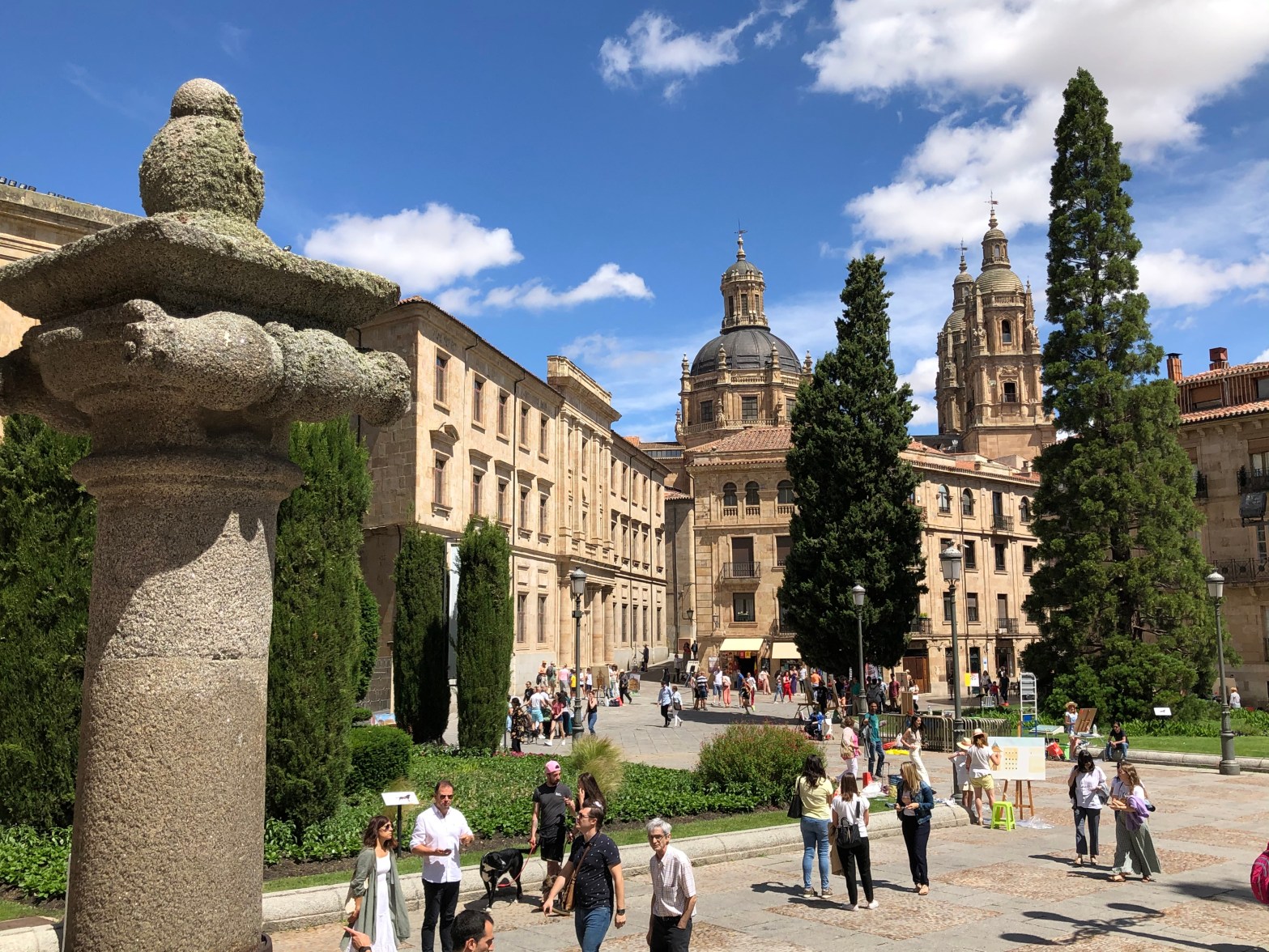
At La Clerecia Church, I ascended the wooden Scala Coeli, or “Stairway of Heaven,” on a 200-step trek to the passageway connecting its two bell towers. Setting my sights even higher, I then took the spiral, bell ringer’s stairwell for a look at the big iron bells. Besides enjoying panoramas of the city’s ancient churches, convents and palaces, I spied migratory storks nesting on the dome of the colossal Baroque church, which began life in 1617 as a training school for Jesuit missionaries and now is home to Pontificia University, a private Roman Catholic school.

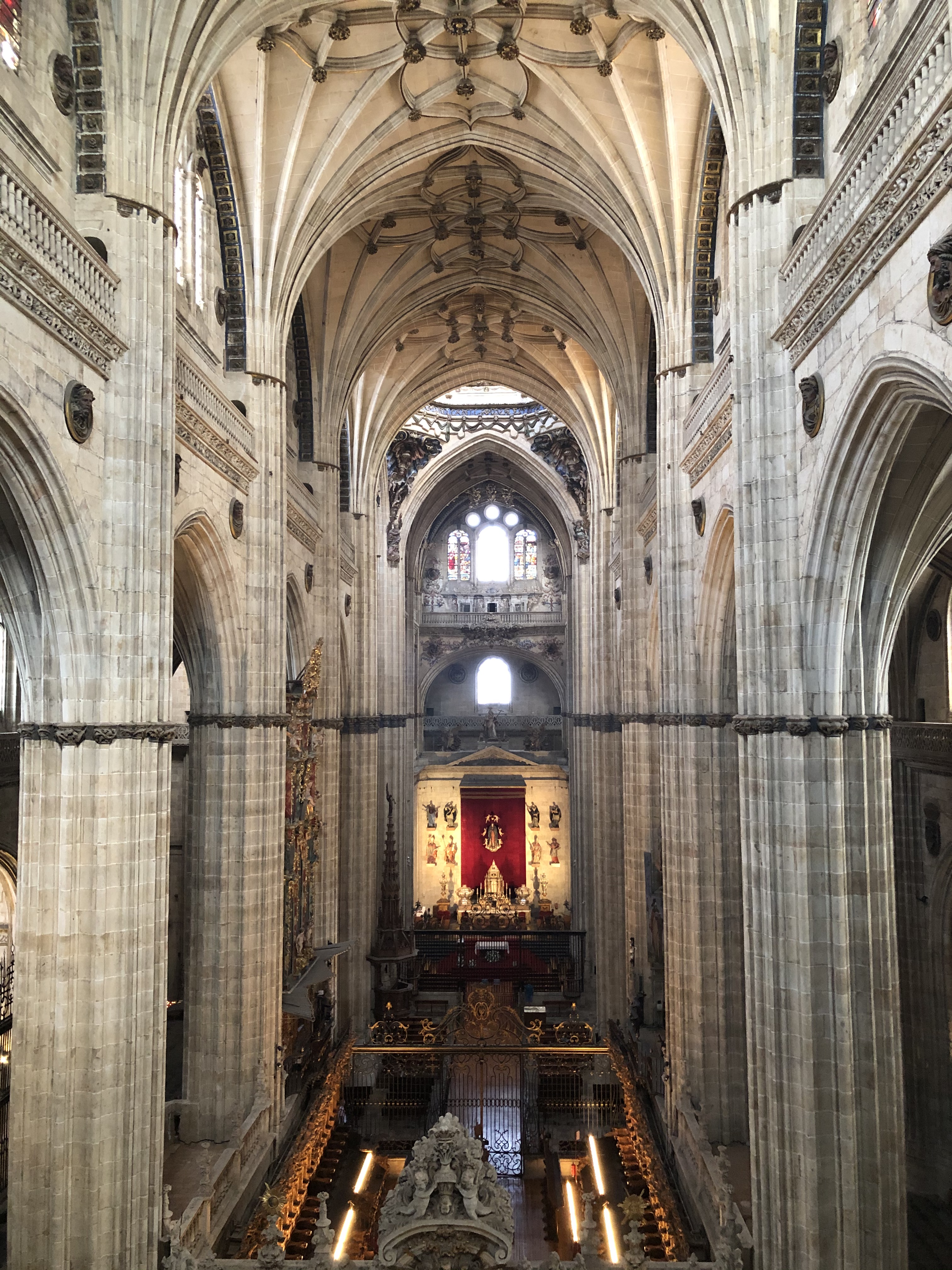
I also tackled the 328-foot-tall bell tower—and tried my hand at bell ringing—at Salamanca’s somewhat quirky double-cathedral complex. Built centuries apart, the Old Cathedral and New Cathedral are actually attached—they share buttresses. In fact, you can’t visit the 13th century Romanesque church (Cathedral of Santa Maria) without going through the Cathedral of La Asuncion de la Virgen, or New Cathedral, which isn’t new at all—it was built hundreds of years ago in the Gothic, Renaissance and Baroque styles. The bell tower is the highest historic tower in Spain after La Giralda in Seville.

From a viewing platform, visitors can admire the Gothic-style nave of Salamanca’s New Cathedral.

For those who don’t make it to the bell room at the top, lower-level terraces offer fine views of the town and the cathedrals’ exteriors. A cell phone tour of the interiors, a cool activity on a hot day, highlights sumptuous wood carvings, murals and a massive organ.

The University Plays a Big Role in Salamanca

For its first 200 years, the University of Salamanca was in the Old Cathedral. Founded in 1218 by King Alfonso IX of Leon, it ranks as one of the oldest universities in Europe, and, though its prestige peaked in the 16th century, clearly enhances the city’s image.

On a walk through the Old Town’s student quarter, it’s not uncommon to hear English spoken, as many American study-abroad programs take place at the university, which includes both historic buildings—some from the 15th century—and modern ones. Besides Spanish language courses, foreigners take classes in Spanish culture and literature.

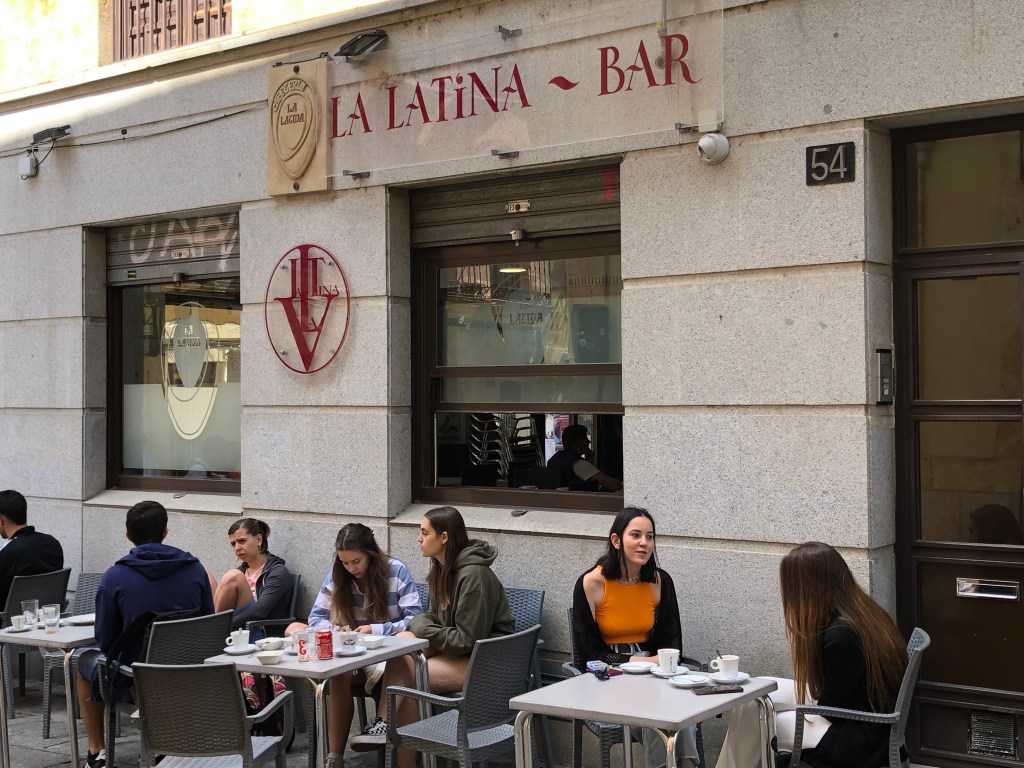
(left and center) Cafes in the student quarter give Old Town Salamanca a youthful vibe. The University of Salamanca, Spain’s oldest, dates back to 1218. (right) The University of Salamanca, the oldest university in Spain, is among the many points of interest in Old Town, a warren of pedestrianized streets filled with examples of architectural splendor.

Intricate stone carvings on the facade of the main university building (Escuelas Mayores, or Upper Schools) provide the focal point for tourists exploring the hallowed streets of academia. The decorative style of ornamentation, popular during the late Spanish Renaissance, is called Plateresque because the filigree-like carvings resemble fine silver jewelry, plata being the Spanish word for “silver.” At any time of day, you’ll see people craning their necks trying to spot the “hidden” frog sitting on a human skull. (Vendors sell croaking toy frogs, and souvenir stores are full of frog trinkets.)

Frescoes and intricate stone carvings impress visitors touring Salamanca’s 13th-century Old Cathedral, a lovingly preserved survivor of the Middle Ages.

Also gracing the splendid facade are carvings of King Ferdinand and Queen Isabella, who financed the university; their grandson, Hapsburg Emperor Charles V; and the pope at the time, plus mythical heroes, religious scenes and coats of arms. (This type of tapestry in sandstone, an Arabic influence, also is found adorning the New Cathedral, St. Stephen’s Monastery and other Old Town buildings from the period.) For an admission fee, tourists can go inside the academic shrine and see the original classrooms and lecture halls, now museum exhibits.

Savoring Salamanca’s Old World Splendor and its Golden Glow

The sandstone used in Old Town’s buildings, quarried in nearby Villamayor, takes on a golden cast as it ages, giving Salamanca a special patina and the nickname Golden City. New buildings constructed with the same stone exhibit a lighter shade.

The best place for photographing the Old World splendor from a distance is the Roman Bridge, a pedestrian span over the River Tormes. Located just outside the city walls, this 1st century relic comprises 26 arches, 15 of them originals. Standing by the bridge is the oldest monument in Salamanca—a weathered stone bull created by pre-Roman settlers about 2,300 years ago. From the bridge you see that the New Cathedral is much bigger than the Old Cathedral. A riverfront park has benches, bike paths and boats for rent.

The Roman Bridge, a walkway spanning the River Tormes, affords fine views dominated by the church towers and domes of Salamanca’s Old Town.

Salamanca Invites Strolling Day and Night

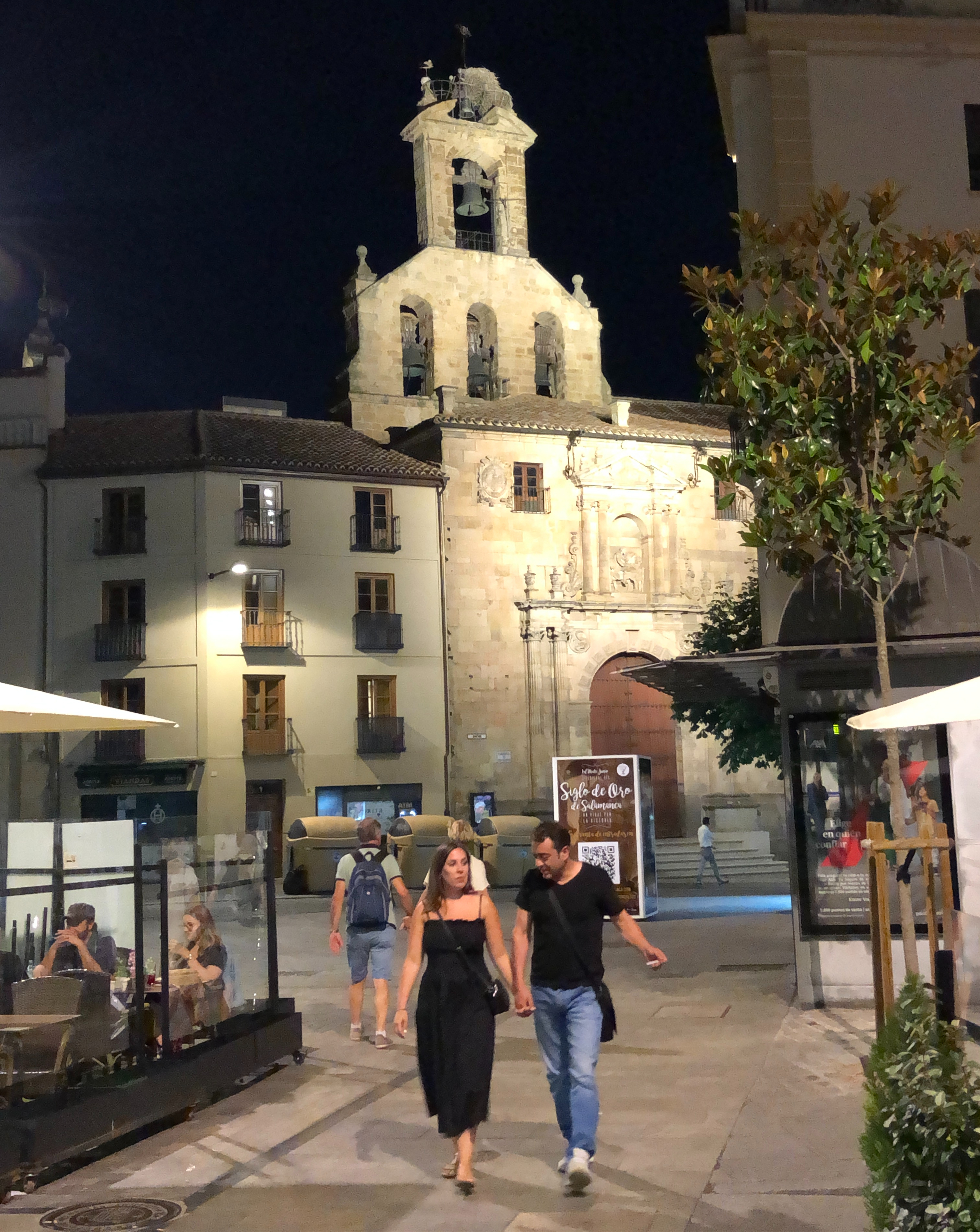
Salamanca’s Old Town doesn’t roll up the sidewalks after dark. Floodlit church towers, domes and facades cast a romantic spell, and ornate iron lampposts illuminate the stone streets. Strolling around this enchanting labyrinth one night around 11:30, I witnessed people thronging restaurants and cafes, lining up at ice cream stands, and sitting on park benches and church steps as they watched the crowds parade by. (I’ll never get used to the Spanish penchant for late-night dinners.) There were even families out with young kids, and a few souvenir stores were open as midnight approached. I loved the ambience—lively but relaxed.

Why was I pounding the pavement well past my bedtime? Having been seduced by the Golden City, I just wanted to soak up every last drop of magic before I had to leave by train the next morning for Madrid and my flight home to Chicago. Salamanca is truly a treasure to savor.

Floodlit buildings cast a romantic spell on Salamanca’s Old Town, a lively district that stays open late.

Clixo Fidgety Fun Inspires Creativity During Travel and Beyond

By Alison Ramsey

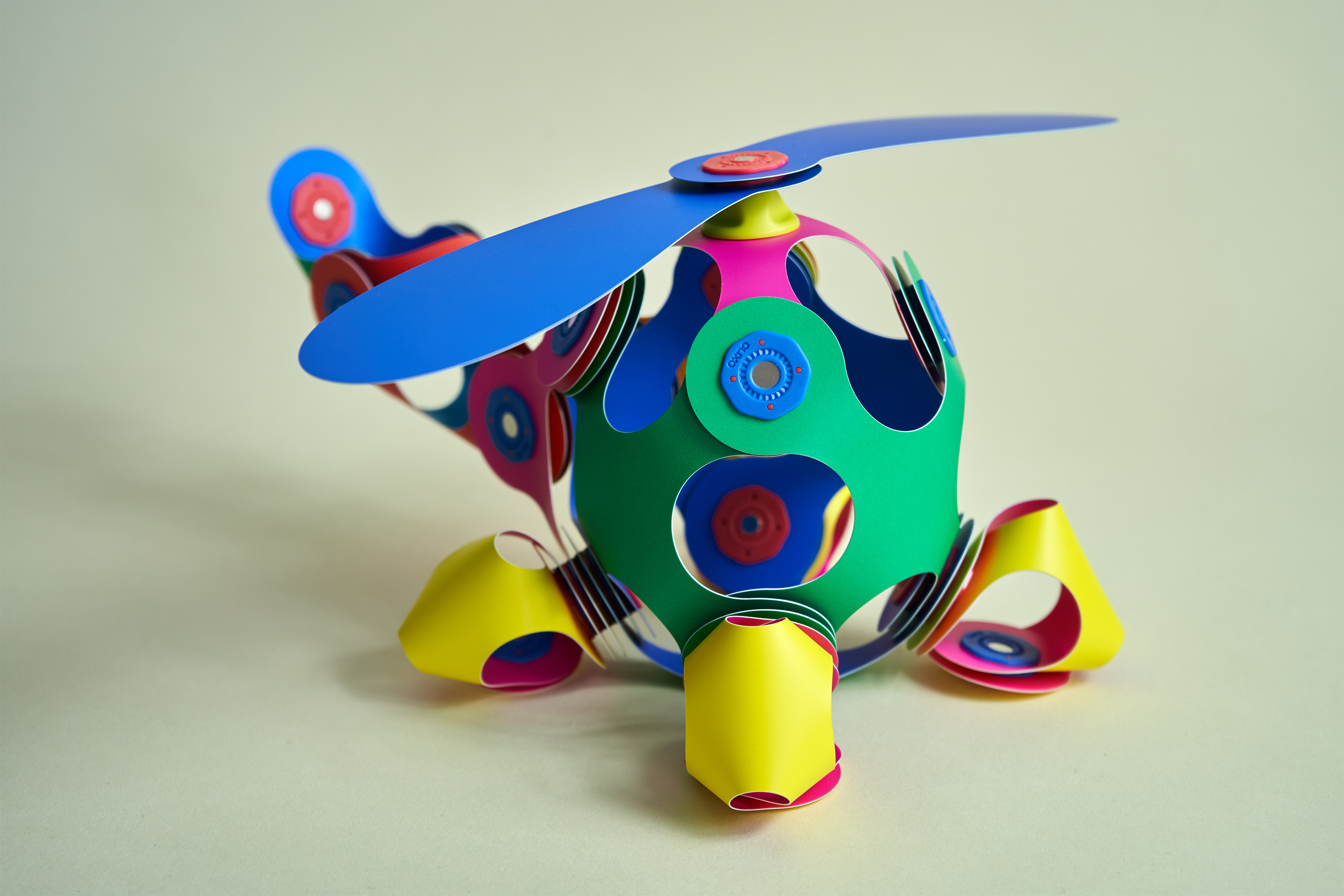
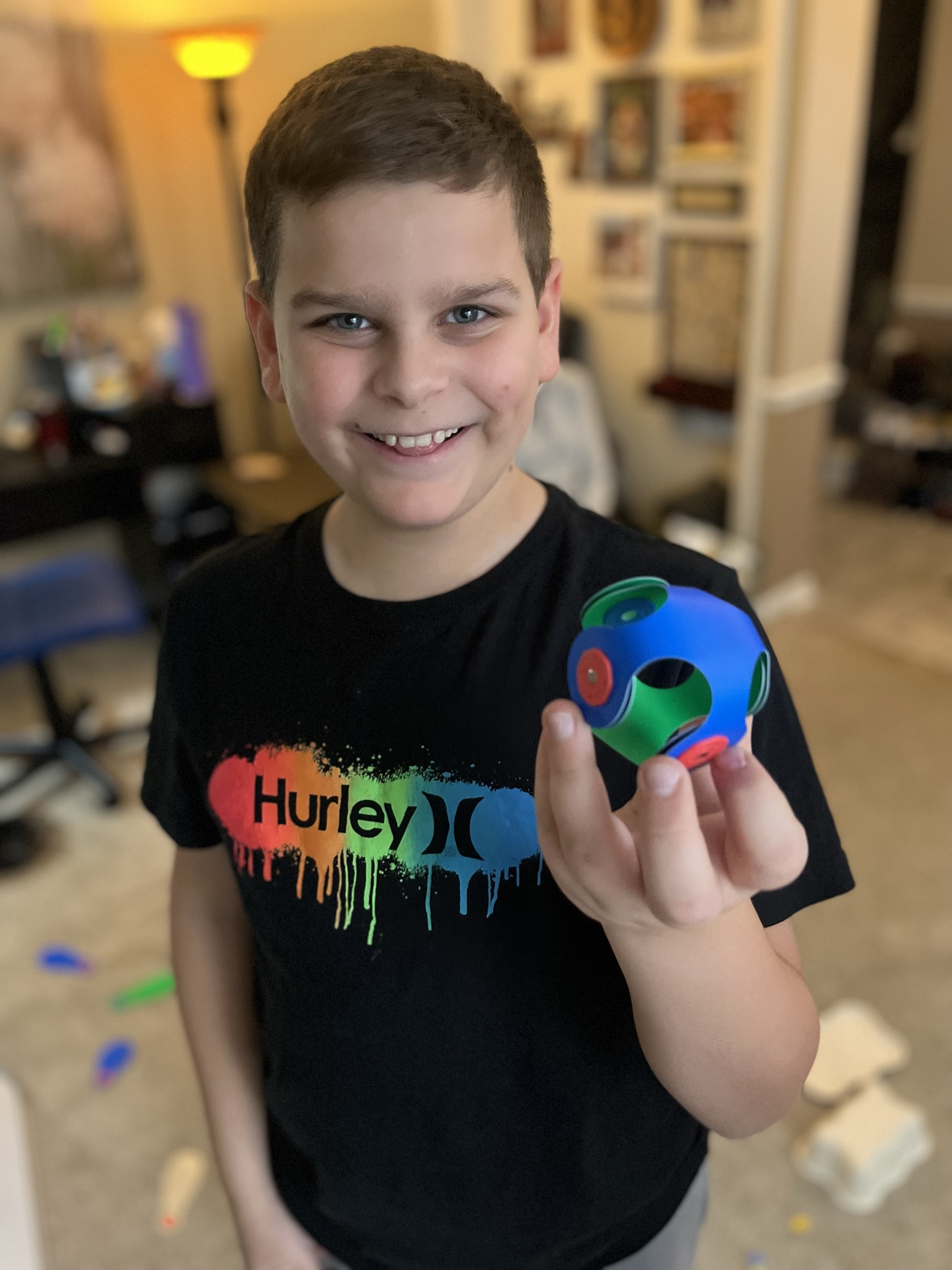
A unique toy for kids and adults alike, the easy-to-pack Clixo magnetic play system encourages freeform building and exploration—no rules or instructions required! Tuck a set of these flat, flexible building pieces into your day bag and pull them out to see your fussy or feisty traveling companions turn into creative geniuses.

Photos courtesy of Clixo.

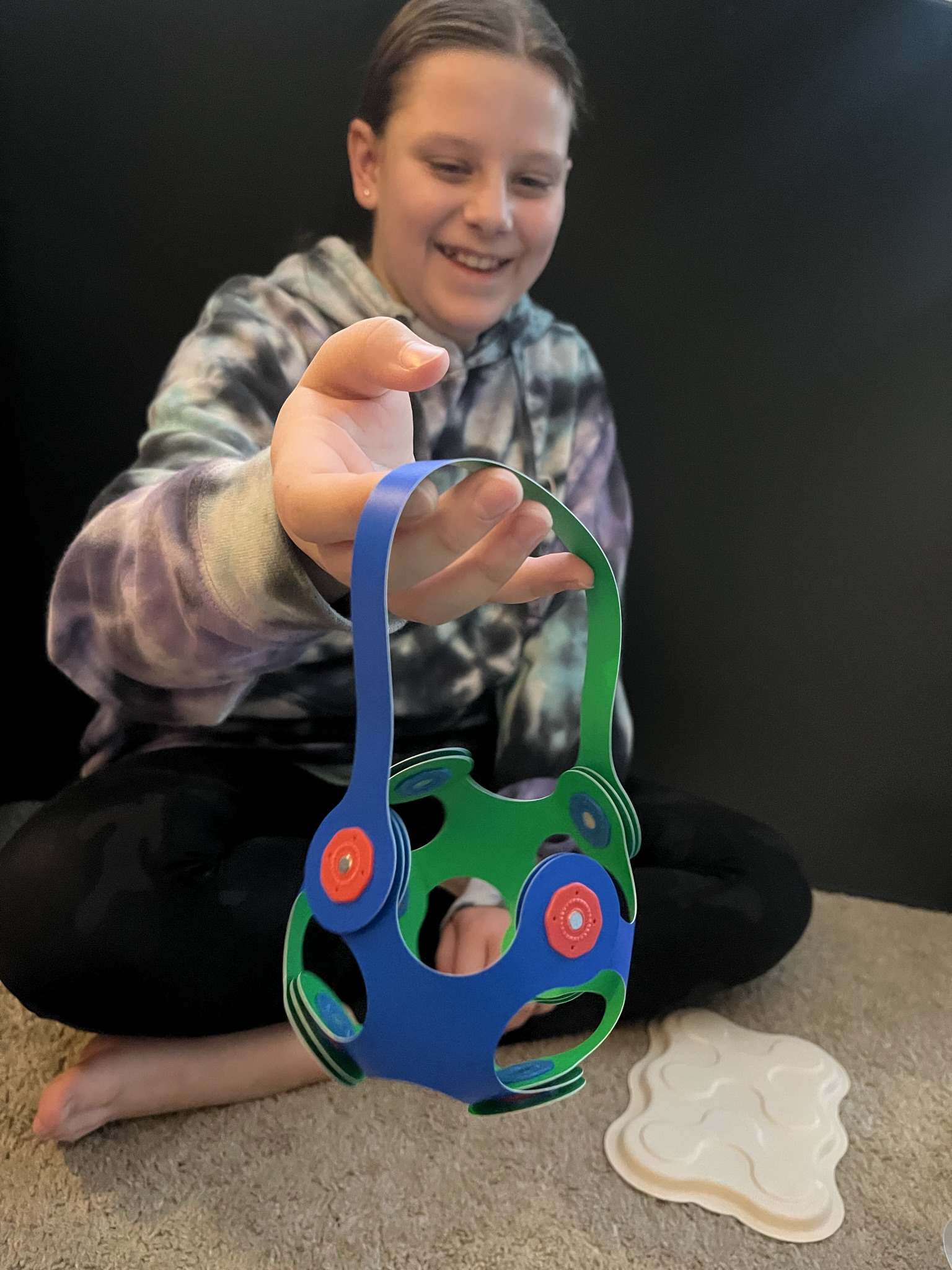
Visored motorcycle helmet, floppy beagle ears, a colorful handbag—within five minutes of opening a package of Clixo lightweight and flexible magnetic shapes, my kids’ creativity using these colorful pieces resulted in a plethora of fun creations. This award-winning building toy from Toyish Labs is packed with endless possibilities for playtime on the go or at home. The durable and compact flexible pieces can be stored flat and easily cleaned and sanitized. Secure magnets are safely fastened to key edges, allowing toy enthusiasts of all ages to snap together pieces and discover limitless creative possibilities. Creations can be stuck to the fridge, worn as accessories or, as with the Grip and Stick Pack, secured via suction cups to a window or flat surface—great for road trips and sticking to the interior of car windows! Some packages include special units that allow attached pieces to spin or roll on wheels, encouraging construction of propellers, vehicles, and other movement-inspired shapes.

Clixo needs no instructions or preamble. My kids were initially confused about what they were opening, but within several moments were excitedly clicking and snapping together pieces with no assistance or explanation needed. Open-ended, screen-free, hands-on play is Clixo’s strength, offering opportunities to create fun 3D structures from 2D pieces. These unique building sets were a finalist for the 2021 Toy of the Year Award, won the Top Toy of the Year Award from the 2022 Creative Child Awards, and have won the Oppenheim Toy Portfolio Gold Seal Best Toy Award and the Tillywig Toy Awards Best Creative Fun Award.

This summer, Clixo partnered with the Museum of Ice Cream (MOIC) in Chicago, Austin, and New York City to launch an interactive experience that allows guests to build colorful 3D creations on magnetic building walls. A special MOIC Clixo pack is sold on-location at these three venues, and features strawberry- and cherry-colored shapes. If your travels bring you to these cities, stop into the MOIC and add some creative constructions to the wall.

Photos courtesy of Clixo.

Assaf Eshet, CEO and Founder of Toyish Labs and creator of Clixo said, “We’re very excited to be working with Museum of Ice Cream on this collaboration and sharing Clixo with MOIC visitors. Museum of Ice Cream provides a fun and engaging experience for all kids and their parents. At Clixo, we share the same values of bringing play and creativity to kids and kids at heart.”

Photo courtesy of Clixo.

For more information or to purchase Clixo building sets, please visit www.clixo.com. The Black Friday Super Sale is currently offering up to 40% off sitewide, so take advantage of the sale prices for these colorful stocking stuffers or Christmas gifts while you can! May your holidays and holiday travel be peaceful, joy-filled, and inspiring.

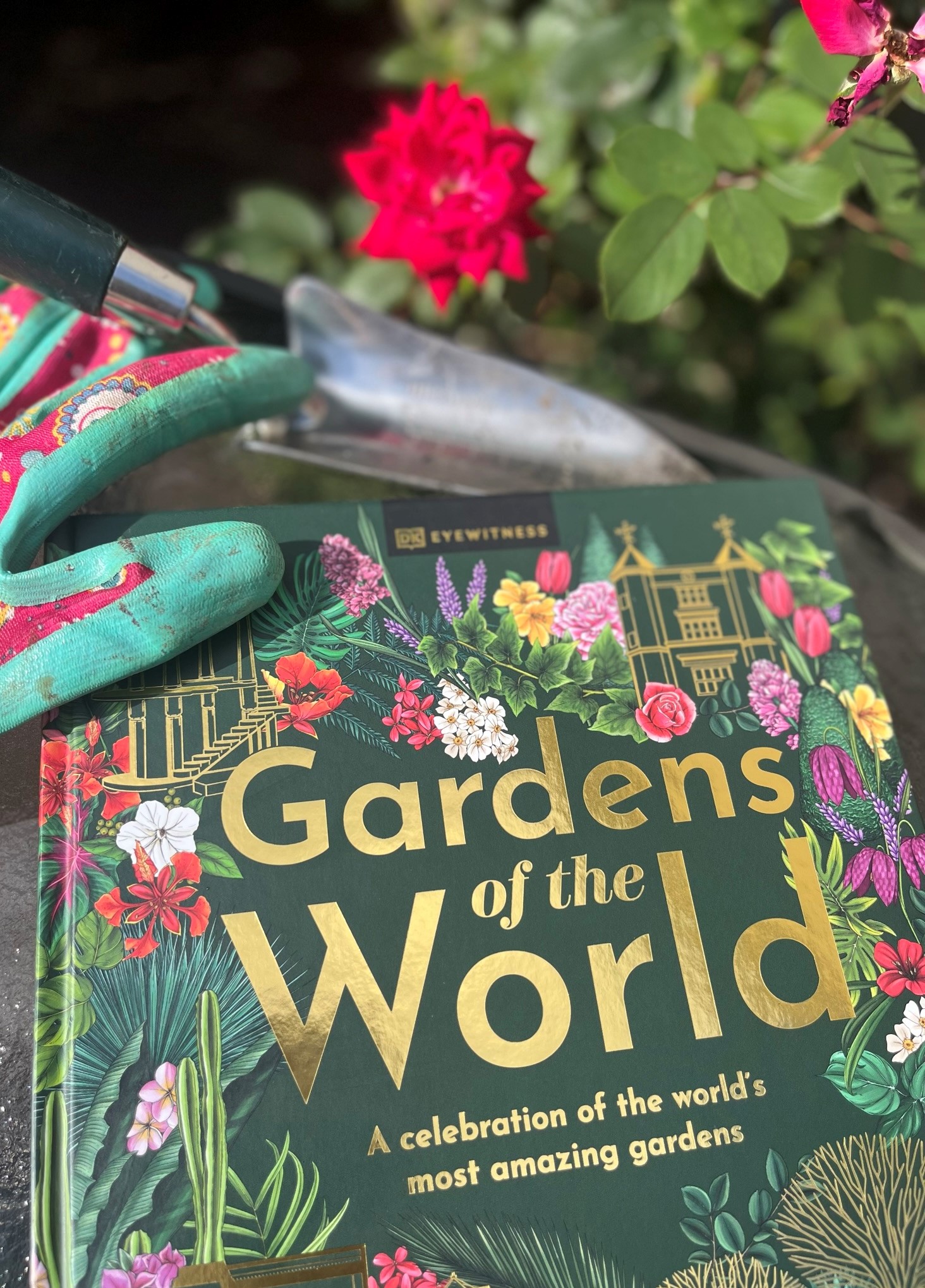
Gardens of the World: A Celebration of the World’s Most Amazing Gardens

From Monet’s idyllic water garden in Giverny, France, to the terraced gardens within Jewel Changi Airport in Singapore, this book introduces and explores places that uniquely celebrate the beauty of nature. Inspirational, iconic, and innovative gardens from all over the world have been selected for inclusion in this volume and are organized by theme: Carefully Curated, Mindful Spaces, Wild and Wonderful, Urban Oases, and Innovators and Influencers.

Pages from the Wild and Wonderful segment of the book include photos of the tumbling wisteria, rambling roses, wildflower-filled meadows, and sparkling crystal river that compose Giardini di Ninfa in Italy. Known as one of Italy’s most romantic gardens, lush foliage drapes over the crumbling ruins of medieval town Ninfa across a span of 20 acres. Pillaged by mercenaries and ransacked into ruin in 1381, the formerly vibrant town that Pope Boniface had bestowed upon the Caetani family became an “overgrown ghost town” until the overgrowth was cleared and some unstable structures restored in the early 20th century. This transformation, initiated by Prince Gelasio Caetani and his mother, included creating canals and a stream from once-stagnant, swampy waters. Other family members stepped in to design and maintain the gardens, add favorite plants and perennials, and set into motion the growth of a dreamy naturalistic garden gracing history-filled, ancient ruins.

Learn about unique landscape elements, native plant species, horticulture design inspiration, and history, and discover features and flora of 67 intriguing gardens that are yours to explore.    

For more DK Eyewitness titles, and further information about “Gardens of the World,” please visit https://www.dk.com/us/.  

Two New Books Encourage Adventurous Hiking and Biking

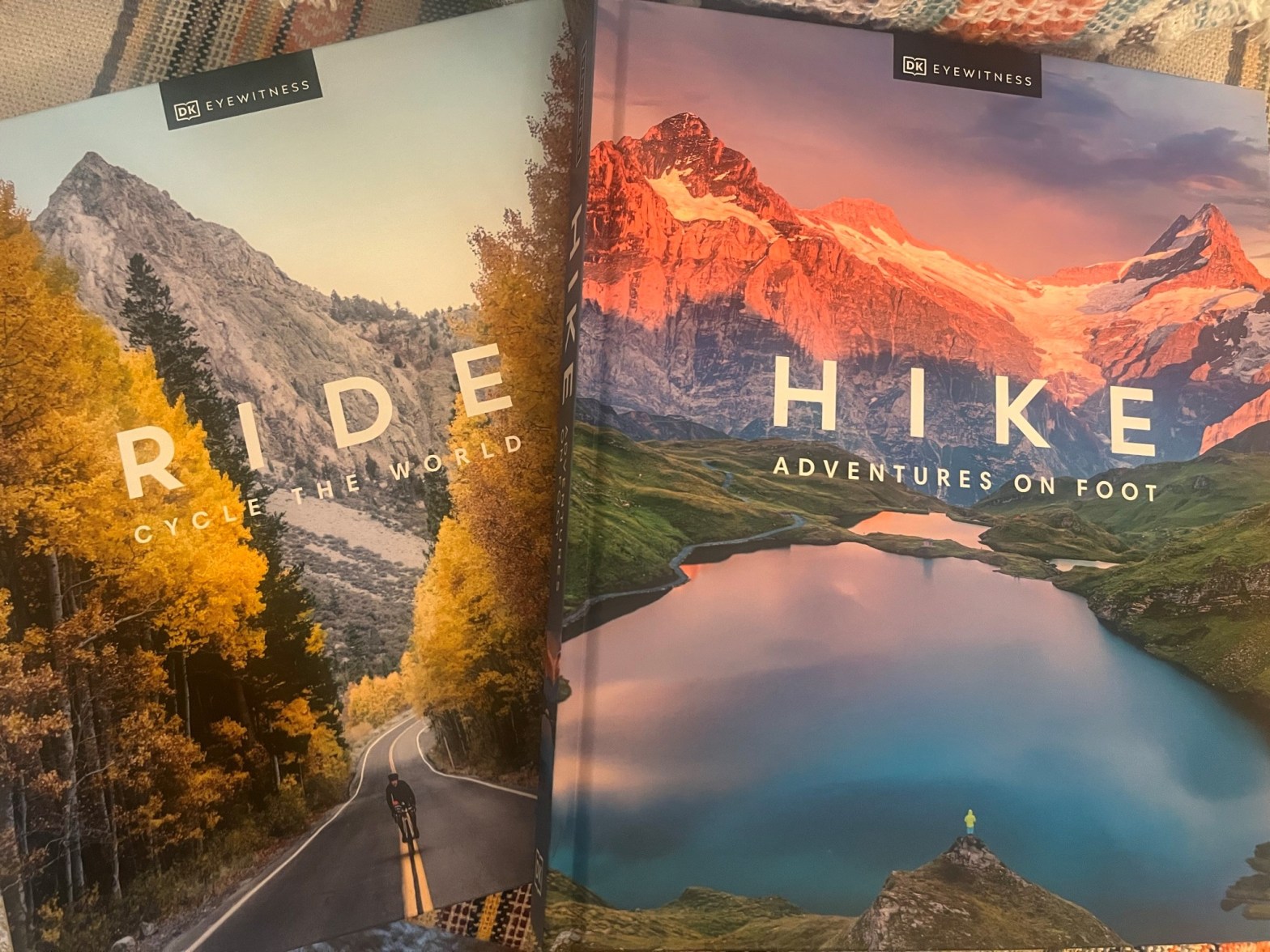
HIKE: Adventures on Foot
One hundred and twenty-five opportunities to move your body across the world in an exhilarating, sustainable way! This published compilation of walking trails is the work of outdoor enthusiasts who have selected each featured route for its spectacular scenery, interesting history, or unique challenges. Each trail suggestion includes practical information to help you plan your trip, including the distance, total ascent, elevation, duration, as well as sightseeing tips. Hiking newbies and veterans alike can benefit from the book’s preparation tips, trail etiquette guidelines, and essential gear checklist.

One scenic hiking trail suggestion, Dove Lake-Cradle Mountain (Ronny Creek, Tasmania, Australia), is a one-day circuit traversing boardwalks over moorland, passing through lush rainforest, and ascending large boulders on Cradle Mountain. Readers are advised to look for ambling wombats and gray-furred Bennett’s wallabies near Ronny Creek and to pause for photo opportunities of dramatic vistas from the summit of Cradle Mountain. The return trip passes numerous sparkling lakes and offers a chance to see quill-covered echidnas in their home near Dove Lake.

A fascinating book for active hikers and armchair travelers alike, “HIKE” binds maps, history, geography, and interesting photography together into an inspiring and informational volume.


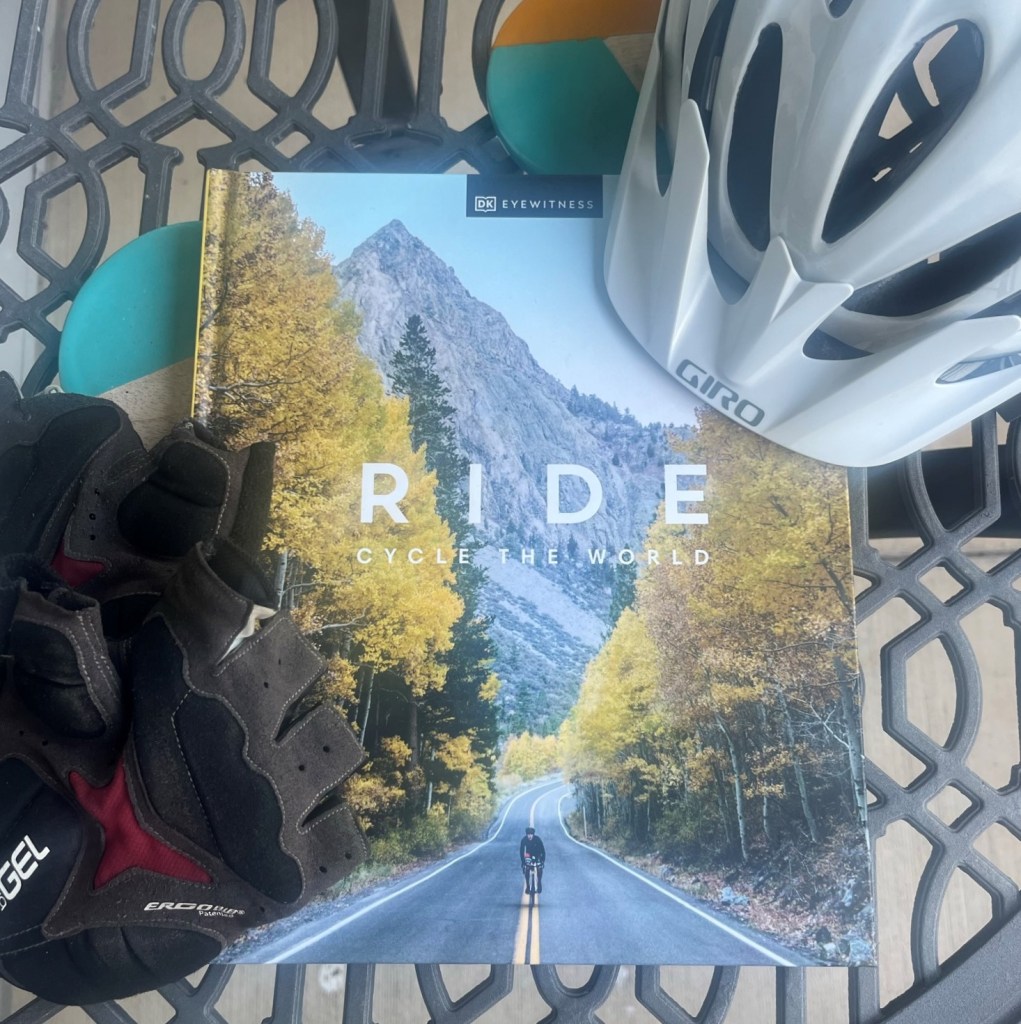
RIDE: Cycle the World
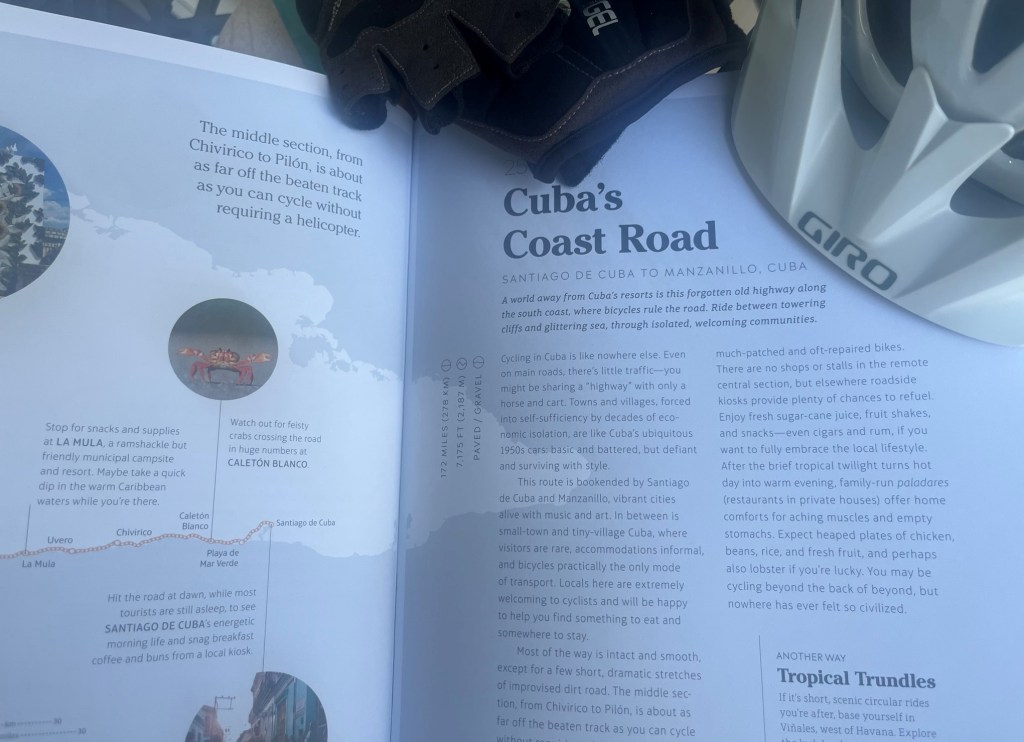
Explore the world by bike, cruising along the 100 cycleways presented in this compilation of trails recommended by avid cyclists. Along with colorful photos and area maps, this DK Eyewitness gem contains detailed route information, including road surface, elevation, total ascent, scenic outlooks, distance, and pit stops. Get inspired to go “bikepacking” in North America, Central and South America, Europe, Africa and the Middle East, Asia, and Australasia—wherever your travels take you.

Beginners, or those looking to upgrade their ride, are provided helpful guidance on which type of bike to choose for their adventures; road, mountain, gravel and touring, recumbent, and electric are the options explained and diagrammed in the opening pages of the book. Select a vehicle suitable for your experience level, desired terrain, comfort goals, and mobility needs, and prepare for your trip by reading up on bicycle maintenance, essential gear, and safety precautions.

Included in the book is a trail along the Helgeland Coast in Norway, which features a grouping of more than 6,500 islands rising from the sea. Best as a summertime route, with beautiful light but always a chance of showers, this Helgeland cycling opportunity traverses 126 miles in a “reasonably relaxed” ride on paved and gravel roads. “Syklist Velkommen” signs abound along the route, welcoming cyclists to stop for food, safe bike parking, and laundry facilities. Riders can expect photo-worthy vistas of mountain peaks, sandy beaches, and quaint and colorful wooden cabins, fishing huts, and houses. Along this route, stop at an old wharf along the trail to tour and sample sweets at Heidi’s Chocolate Factory in Dønna, eat a tasty meal cooked by famous chef Jon Aga at the Vega Havhotell, and visit the Vega World Heritage Centre to learn about eider ducks and how they helped earn the island UNESCO status.

Stock up on supplies and water, and prepare to feel the wind against your face as you explore spectacular sights via bicycle.  

For more DK Eyewitness titles, and further information about “HIKE” and “RIDE,” please visit https://www.dk.com/us/.   

Chicago “Staycation” Offers Family-Friendly Fun

Stories and photos by Alison Ramsey

The kids’ favorite part of a weekend in Chicago? “The hotel! The hotel’s fitness center!” Weekending in downtown Chicago with small children sounds overwhelming, but a kids’ suite hotel stay and a family-friendly itinerary ensure a safe, fun, and memorable vacation. Swissôtel Chicago’s kids’ suites are like a sky-high family apartment, with a cozy master bedroom and bathroom, spacious common area and bathroom, and a separate but adjoining bedroom and bathroom for the littles. Plenty of full-wall windows provide a panorama of the Windy City, with views of Buckingham Fountain, the Chicago River, Pritzker Pavilion, Maggie Daley Park, and Navy Pier.

The suite’s shared rooms and kids’ wing are equipped with age-appropriate toys, games, and art supplies to engage and entertain without even needing to turn on the TV. The teepee tent provides a snug hideaway and place to house stuffed animals along for the trip. A giggle-filled game of Twister, marker doodling on fresh paper, birds’-eye boat-watching, and exercising in the huge, clean, and upscale Penthouse Fitness Center—you can enjoy the city without ever leaving Swissôtel!

Eventually you’ll need to eat, though, and if room service isn’t your preference, you have plenty of dining options near the hotel. Eggy’s diner at the Chicago-Benton Place location is a 5-minute walk from Swissôtel across a beautifully landscaped park and serves home-cooked breakfast and lunch, coffee and tea, and bar drinks. Milkshakes, fresh-squeezed juices, smoothies, chocolate-chip pancakes, waffles, biscuits and gravy, crepes, skillets, sandwiches, and soups are among the delicious options for feeding a range of tastes. Crayons and a coloring sheet of cute food characters make waiting time seem fast.

Chicago’s one-of-a-kind spy-themed dining experience at the SafeHouse is a 15-minute walk from Swissôtel down the Magnificent Mile to River North. The Red Door at 60 E. Ontario is the entry point to spy headquarters, where you start in a non-descript office and either whisper the correct password to Moneypenny, the front office “secretary,” or engage in an amusing test to gain clearance. Upon entering the underground restaurant and Interpol Bar, you can make your way through dimly lit rooms to explore spy memorabilia, discover secret rooms, complete a checklist of secret agent duties, climb through a sewer pipe labeled “DANGER,” and email goofy selfies from the photo booth.

Silly surprises like one-way mirrors and alarms await in the bathrooms, and kids and adults alike can play with futuristic tech gadgets and create their own agent names. In-character waitstaff check with “Command” regarding food allergy inquiries and provide junior agents with top-secret disguises (sticky-backed fuzzy mustaches) upon request. Reasonably priced fare includes A License to Kill Mac & Cheese, “007” Layer Salad, Mission Impossible burgers, Camp Stanley Nachos, and Russian Finger Potatoes. Junior Spies can request meals like Goldfingers chicken nuggets, Carmen Cortez mac & cheese, or an Uncle Machete chopped taco salad. Make your escape by dialing a secret code in the hidden phone booth, dodge the maze of red lasers in the dark hallway, slap your agent nametag on the wall, and make your discreet exit back onto the city street.  

To head from dinner toward an evening at Skydeck Chicago in the Willis Tower, ride the scenic water taxi from the north side of the river at Michigan Avenue to the Ogilvie/Union Station stop, followed by a short walk, or call for a 13-minute Lyft drive. The winding, museum-tour walk to get to the elevator bank displays an artful collection of exhibitions, facts and figures about Chicago, and fantastic photo opportunities—an El simulation with vibrating seats and city scenes sliding by the window; a giant, plastic Chicago-style hot dog and deep-dish pizza to rest on; jazz, Oprah, The Second City, Wrigley Field, Cadillac Palace Theatre, and iconic city scene backdrops to pose in front of. A speedy ride in the elevator (1,600 feet per minute) shoots you up to the skyscraper’s viewing level.

The highest observation deck in the U.S., the Skydeck Ledge juts out over four feet from the 103rd floor—a breathtaking 1,353 feet above the Chicago River and Wacker Drive. View the city below with confidence, knowing that the Ledge can withstand four tons of pressure, hold 10,000 lbs, and is seamlessly constructed using three layers of half-inch thick laminated glass. Groups of guests are given a timed five minutes to step into one of the Ledge booths and take in the view, jump, do handstands, yoga poses—however they want to spend their time in the sky. Some feedback from kids who were initially wary of traveling up so high included, “We’re in the air, we’re super-secure, and we’re looking down 100 stories. It was a cool experience!” and “Well, that was awesome, and I totally don’t regret going on it!” A 1.5-mile Lyft ride or walk brings you back to Swissôtel.

From Swissôtel to the massive Chicago Park District play area, Maggie Daley Park, is a 7-minute walk. The largest free activity is the Play Garden, a series of interconnected, imaginative play spaces integrating landscaping with the sculptures and structures. The Sea area features a large-scale ship and lighthouse tower with ladders, slides, talking tubes, and lookout scopes. The Watering Hole’s animal-themed splash pad includes a shady area with a bench for parents. A Harbor boat play zone, Enchanted Forest sensory exploration pathway, and Wave Lawn of rolling topography and sloped hills offer varied equipment and opportunities to engage all senses and stimulate imagination. Slide Crater’s giant suspension bridge slung between two towers is thrilling to run across while trying to keep your footing. Experience slides of all sizes and formations in this area (although the metal variety can be HOT in the summer sun!). Talk through tubes with others around the structure, rotate knobs to spin giant wheels, and be the lookout at the viewing scopes.

Other free areas include the tennis courts, picnic groves, Cancer Survivors’ Garden, and skating ribbon (rollerblades and Micro scooters are available to rent if you don’t bring your own equipment). For a fee and no reservations needed, visitors of any age can scale the Climbing Wall (shoes, helmet, and harness rental is offered), and kids aged 4-8 can even take a 15-minute climbing lesson with an instructor to assist them. Mini golf and a bungee jump are available for a fee. Conveniently located by the skating ribbon, the Rink Café food truck sells hot dogs, burgers, giant pretzels, ice cream, and other refreshments to enjoy under shady umbrellas.

For an energetic, colorful, laughter-filled theater experience, bring the kids to the Blue Man Group at the Briar Street Theatre in the Lakeview neighborhood. While you wait for the show to begin, a scrolling marquee featuring jokes and ridiculous facts sets the tone for the event, warms up the crowd, and encourages audience participation. Through a series of comedic, surprising, awkward, and artful vignettes and instrumental songs involving PVC pipes, paints, lights, water, glow sticks, cereal, remastered instruments, and drums, the talented Blue Man Group cast opens an otherworldly dimension of sensory entertainment that enthralls and mesmerizes. Audience members in the front few rows don rain ponchos as protection from the show’s shower of water droplets, food, and paint. Several individuals were also singled out to participate in the show—on stage or from their seats—in “we’re laughing with you, not at you” situations. There is truly no comparison for this unique performance, and remembering those expressive, endearing blue faces will keep you smiling long after the lights go up.

Back at Swissôtel, the family can order refreshing drinks or nightcaps from the lobby bar and bring them upstairs to the suite, relaxing together in the living area to wind down for the night. A leisurely round of Pictionary or Connect Four or a warm shower under the rainfall showerhead brings an end to the eventful excursion in the city. Watch out the windows as Chicago dims its lights and rests up for a new day ahead.