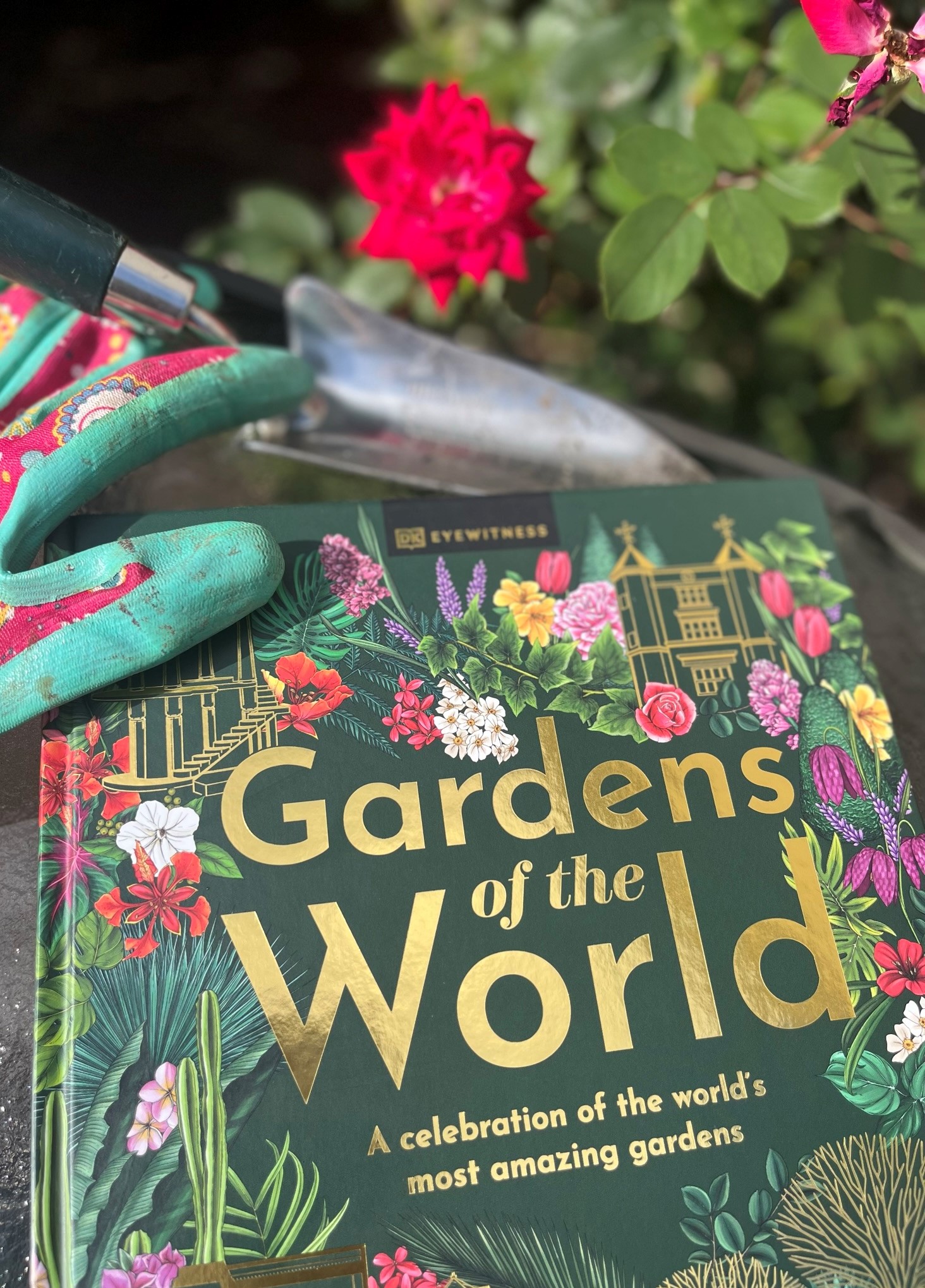
From Monet’s idyllic water garden in Giverny, France, to the terraced gardens within Jewel Changi Airport in Singapore, this book introduces and explores places that uniquely celebrate the beauty of nature. Inspirational, iconic, and innovative gardens from all over the world have been selected for inclusion in this volume and are organized by theme: Carefully Curated, Mindful Spaces, Wild and Wonderful, Urban Oases, and Innovators and Influencers.
Pages from the Wild and Wonderful segment of the book include photos of the tumbling wisteria, rambling roses, wildflower-filled meadows, and sparkling crystal river that compose Giardini di Ninfa in Italy. Known as one of Italy’s most romantic gardens, lush foliage drapes over the crumbling ruins of medieval town Ninfa across a span of 20 acres. Pillaged by mercenaries and ransacked into ruin in 1381, the formerly vibrant town that Pope Boniface had bestowed upon the Caetani family became an “overgrown ghost town” until the overgrowth was cleared and some unstable structures restored in the early 20th century. This transformation, initiated by Prince Gelasio Caetani and his mother, included creating canals and a stream from once-stagnant, swampy waters. Other family members stepped in to design and maintain the gardens, add favorite plants and perennials, and set into motion the growth of a dreamy naturalistic garden gracing history-filled, ancient ruins.
Learn about unique landscape elements, native plant species, horticulture design inspiration, and history, and discover features and flora of 67 intriguing gardens that are yours to explore.
For more DK Eyewitness titles, and further information about “Gardens of the World,” please visithttps://www.dk.com/us/.
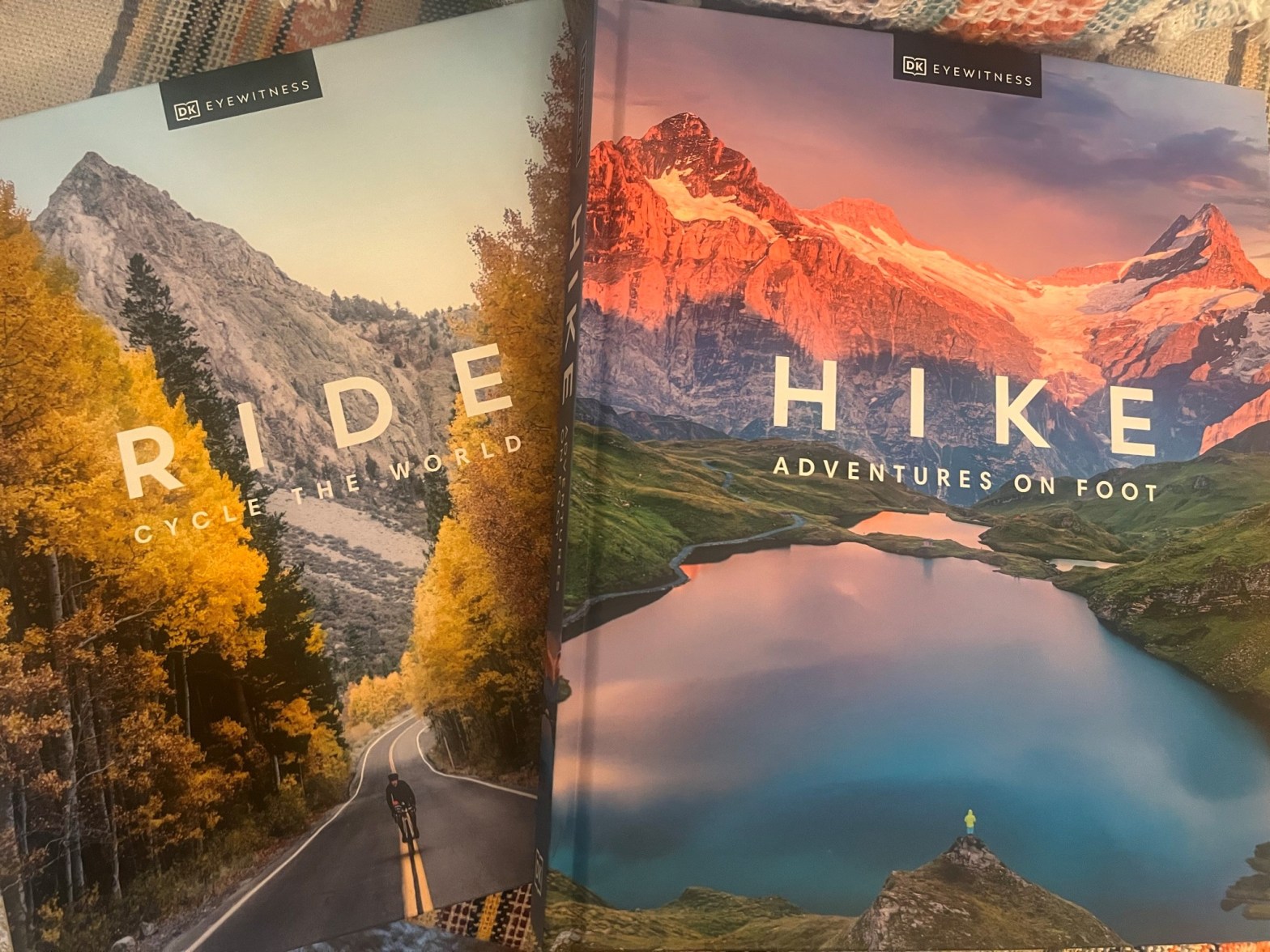
HIKE: Adventures on Foot One hundred and twenty-five opportunities to move your body across the world in an exhilarating, sustainable way! This published compilation of walking trails is the work of outdoor enthusiasts who have selected each featured route for its spectacular scenery, interesting history, or unique challenges. Each trail suggestion includes practical information to help you plan your trip, including the distance, total ascent, elevation, duration, as well as sightseeing tips. Hiking newbies and veterans alike can benefit from the book’s preparation tips, trail etiquette guidelines, and essential gear checklist.
One scenic hiking trail suggestion, Dove Lake-Cradle Mountain (Ronny Creek, Tasmania, Australia), is a one-day circuit traversing boardwalks over moorland, passing through lush rainforest, and ascending large boulders on Cradle Mountain. Readers are advised to look for ambling wombats and gray-furred Bennett’s wallabies near Ronny Creek and to pause for photo opportunities of dramatic vistas from the summit of Cradle Mountain. The return trip passes numerous sparkling lakes and offers a chance to see quill-covered echidnas in their home near Dove Lake.
A fascinating book for active hikers and armchair travelers alike, “HIKE” binds maps, history, geography, and interesting photography together into an inspiring and informational volume.
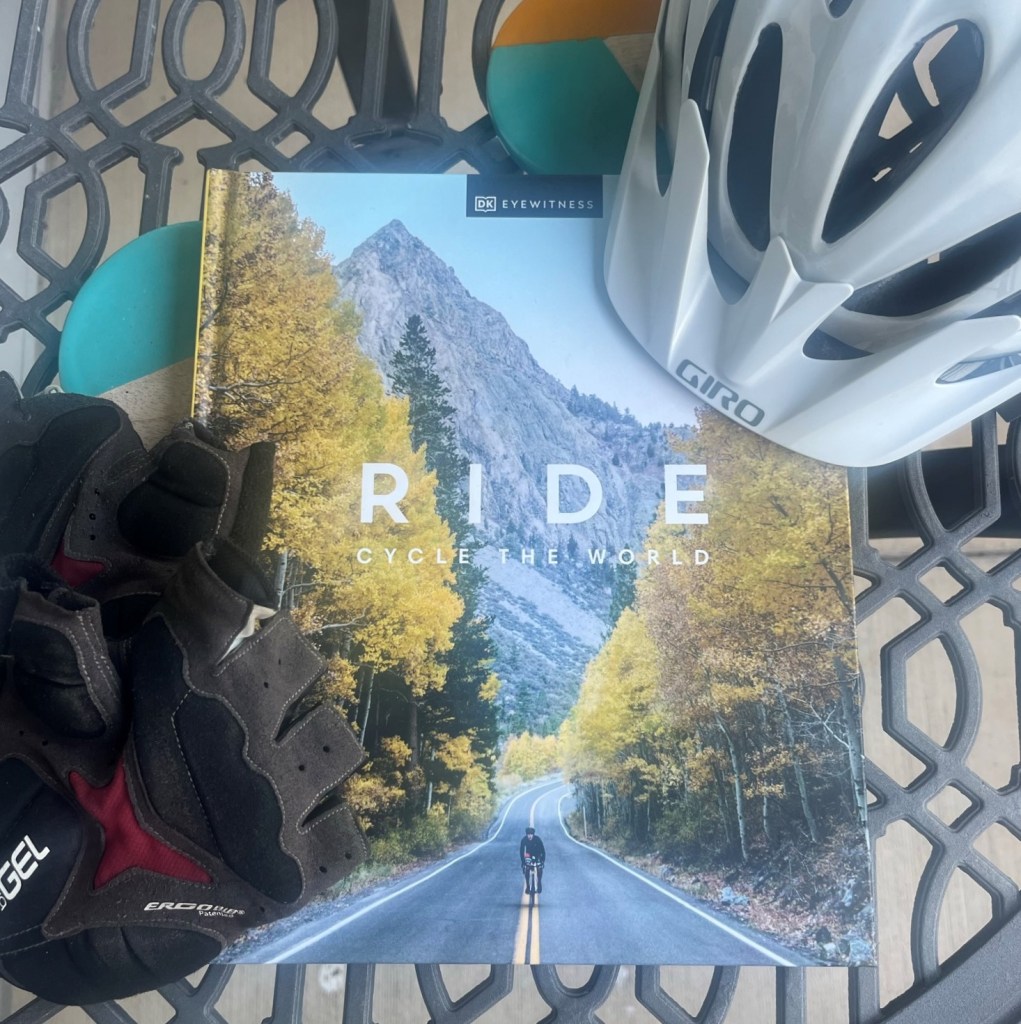
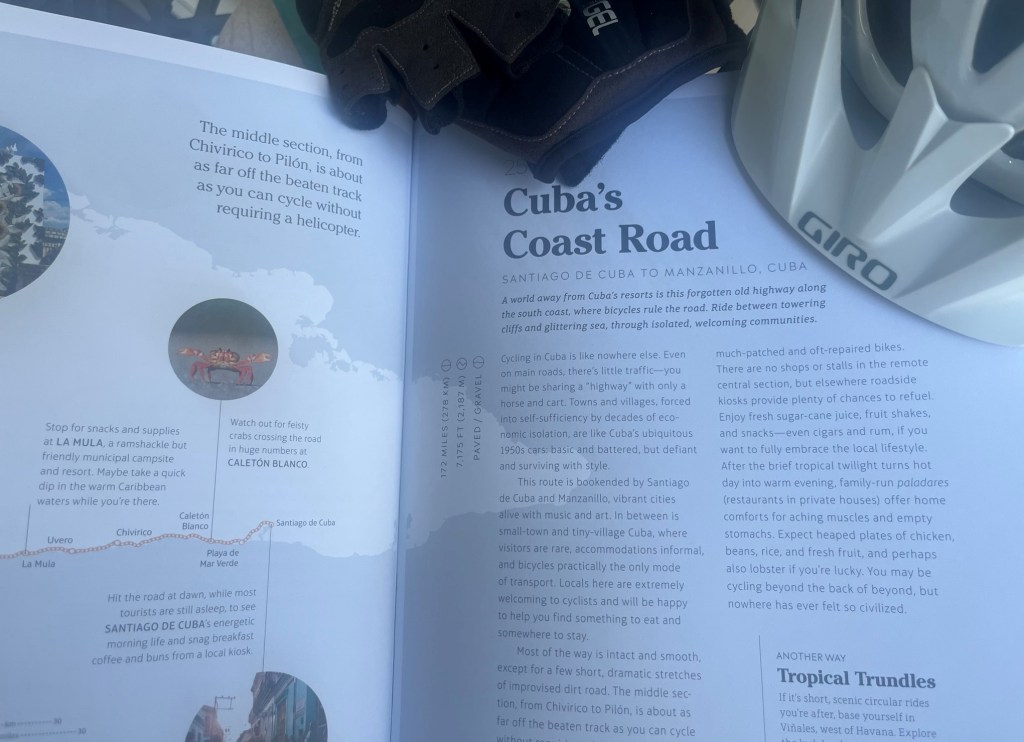
RIDE: Cycle the World Explore the world by bike, cruising along the 100 cycleways presented in this compilation of trails recommended by avid cyclists. Along with colorful photos and area maps, this DK Eyewitness gem contains detailed route information, including road surface, elevation, total ascent, scenic outlooks, distance, and pit stops. Get inspired to go “bikepacking” in North America, Central and South America, Europe, Africa and the Middle East, Asia, and Australasia—wherever your travels take you.
Beginners, or those looking to upgrade their ride, are provided helpful guidance on which type of bike to choose for their adventures; road, mountain, gravel and touring, recumbent, and electric are the options explained and diagrammed in the opening pages of the book. Select a vehicle suitable for your experience level, desired terrain, comfort goals, and mobility needs, and prepare for your trip by reading up on bicycle maintenance, essential gear, and safety precautions.
Included in the book is a trail along the Helgeland Coast in Norway, which features a grouping of more than 6,500 islands rising from the sea. Best as a summertime route, with beautiful light but always a chance of showers, this Helgeland cycling opportunity traverses 126 miles in a “reasonably relaxed” ride on paved and gravel roads. “Syklist Velkommen” signs abound along the route, welcoming cyclists to stop for food, safe bike parking, and laundry facilities. Riders can expect photo-worthy vistas of mountain peaks, sandy beaches, and quaint and colorful wooden cabins, fishing huts, and houses. Along this route, stop at an old wharf along the trail to tour and sample sweets at Heidi’s Chocolate Factory in Dønna, eat a tasty meal cooked by famous chef Jon Aga at the Vega Havhotell, and visit the Vega World Heritage Centre to learn about eider ducks and how they helped earn the island UNESCO status.
Stock up on supplies and water, and prepare to feel the wind against your face as you explore spectacular sights via bicycle.
For more DK Eyewitness titles, and further information about “HIKE” and “RIDE,” please visit https://www.dk.com/us/.
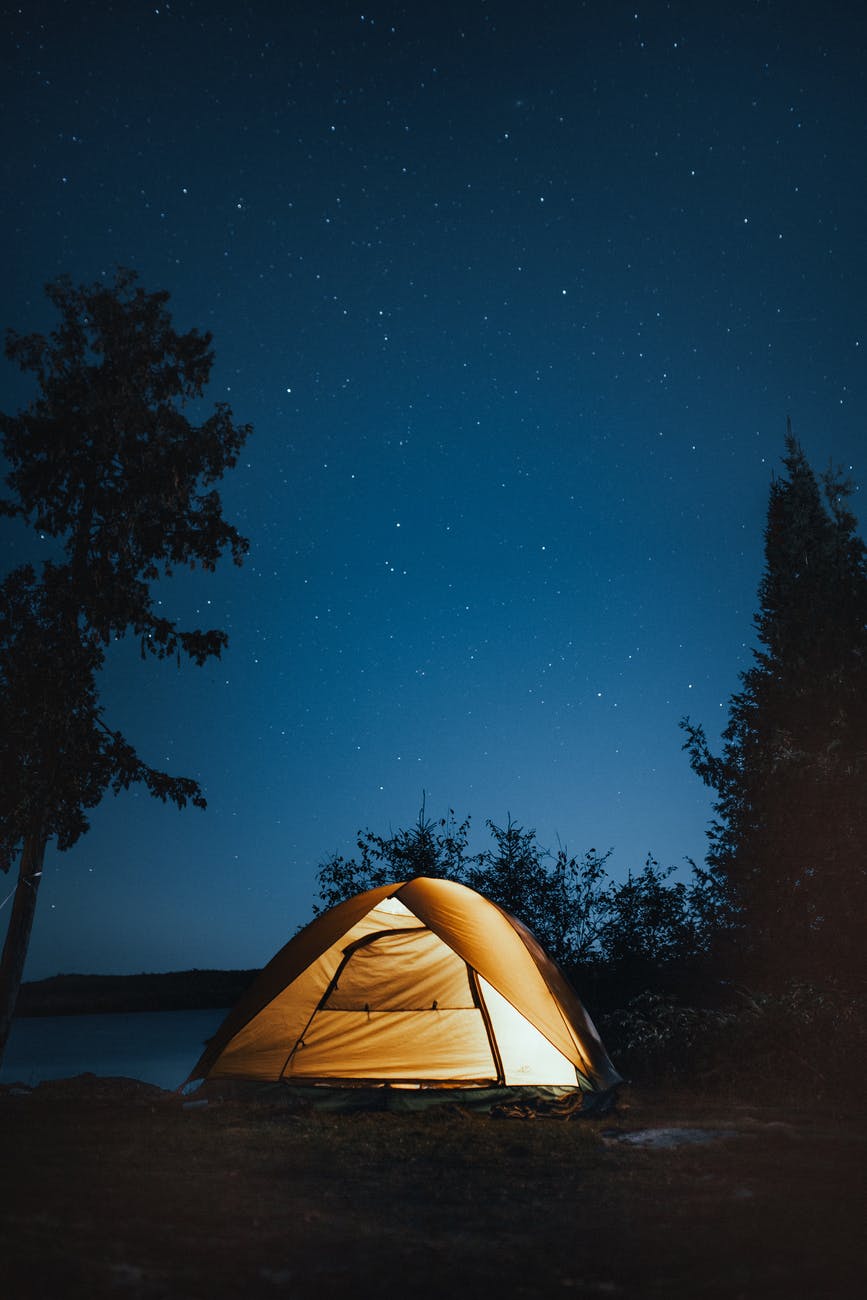
In a city where the average daily temperature ranges from 30 °F to 66 °F across the entire year, camping and other outdoor activities are popular. From May to September, the temps are typically in the mid 60s to low 70s, so it is perfect weather for water sports. The only time it gets really cold is November to March, when it is in the 30s.
Whether you want to camp in a tent in the woods or do some glamping in a fancy cabin, Prague has all of that and more. Many of the campgrounds are along the Vltava River—the longest river in the Czech Republic—so you can fish, swim, and do some boating. Leave your bags with a Prague suitcase storage facility first for safekeeping while you have a great time outdoors.
The most popular camp in the city, Oase Praha boasts 167 sites and seven cabins. The basic sites have 328 square feet without any hookups; standards include 328 square feet with electricity. The comfort sites have 328 to 492 square feet, water, and electricity. The premium sites have 558 square feet, water, and electricity.
The cabins (luxury mobile homes) have room for up to six people, with three bedrooms, a kitchen with appliances, satellite TV, a bathroom, and a shower. Onsite you can find a restaurant, playgrounds, indoor and outdoor pools, a dog park, a horse trail and horses, and pedal go-karts, and much more. Showers, dishwashers, and washing machines are also onsite.
Centrally located in Prague, its name says it all. River Camping Prague is right on the Vltava River, so you can enjoy lots of water fun. A neighboring water sport facility rents out kayaks, rafts, and canoes. The restaurant has delicious Czech cuisine, and you can order rolls to be delivered for breakfast in the morning. Pets are welcome.
Rent a bike to get to the zoo or botanical gardens just a few minutes away. The snack shop is fully stocked, many sites have fire pits or grills, and you can get wood from the reception area. Electric hookups are also available, and you can shower or wash clothes at the wash facility.
Near the river as well as the zoo, botanical garden, and Troja Palace, Autocamp Petrokova is the perfect place for those who want to be near the major attractions. They boast large sites for tents, caravans, or motor homes, with hookups for electricity and water. Pets are welcome.
You’ll be right near a tram stop, and a bus stop where the bus can take you to the train station so you can get around to the palaces, museums, and Charles Bridge. The park provides showers, washing machines, and a kitchen for cooking. There is a private road that runs along the Vltava River where you can walk, bike, or skate.
Whether you want to pitch a tent, park your RV, or rent a bungalow, Matyas Camp has all that and more. Fall asleep to sounds of the river just feet from your site, with a view of the hills in the background. The campground boasts clean facilities, home cooking in the restaurant, and a fun-for-all-ages pool.
Electricity and water are available, and pets are welcome. Washing machines and showers are available nearby, and you can also rent a boat or bike for your enjoyment. The kids will love the playground, swings and hammocks, fishing pier, sandbox, and table tennis while you enjoy an adult beverage at the bar.
In the middle of the Vltava River on the island of Císařská louka, under the stars across from the Vyšehrad Castle, you’ll find Caravan Park Prague. Whether you want to park a trailer or pitch a tent, there is plenty of open space to enjoy. Electricity and water are available for use as well.
You have a variety of choices at Triocamp. Bungalows offer room for six with beds, AC, bathroom, and a kitchen. Cabins boast room for four with beds, a small fridge, heat, and dining set with 24-hour restrooms and showers. They also have a hotel with beds for up to three people, and private restrooms with showers.
For a really unique way to camp, try the safari tents. Up to six people will enjoy two bedrooms, a kitchen, seating area, and a deck with furniture. They also have large sites for tents and RVs with electricity, restrooms with showers, and a kitchen. In addition, they have a pool, play areas, and a bistro featuring live music nights.
Just 15 minutes from the zoo, botanical garden, and Troja Castle, Camp Dana has lots of space to park your RV, van, or pitch a tent. You will have electricity and water, as well as the use of hot showers and toilets 24 hours a day. Cook in the outdoor kitchen and shop at the camp market while the kids play on the equipment.
Enjoy the terrace and garden or watch television in the lounge area. The hotel has rooms for 2-4 people, with a seating area, shared bathrooms, and an onsite laundry. The Stromovka Park is also nearby, where they have ponds, playgrounds, and a restaurant.
Prague Camping Džbán— (For 2022, only open by reservation for groups of 30 people maximum)
Just a few minutes from downtown Prague, Camp Džbán is right on the edge of a nature reserve with hiking, swimming, and the national forest. The campsite boasts 320 spots for RVs or tents with electricity, picnic tables, and lots of green space to enjoy. The chalets have beds for four, kitchens, and outdoor seating.
There is a playground, tennis/badminton/volleyball courts, and a golf driving range right at the campground. No need to go anywhere else unless you really want to. The café serves meals and a wide range of drinks and beer. Showers, toilets, and washing machines are also available.
Camping Drusus has room for 70 RVs or tents as well as eight cabins, and a guesthouse that accommodates visitors year-round. Campsites have electricity and plenty of space as well as access to showers, restrooms, kitchen facilities, and laundry. Several rooms at the guesthouse hold up to four people, and some have private baths. You can dine at the onsite restaurant, GUSTA, with its own mini-brewery for home-brewed beer.
Be sure to check with these campgrounds to see if you need reservations in advance. Also, verify the rules about pets, because some do not allow them. And don’t miss your chance to go into the city and visit the attractions like the Řepora Museum, Koněpruské Caves, and Karlštejn Castle.
Air travel and outdoor adventure can dehydrate skin, but Ku’Panda has herbal solutions to bring your inner glow back to the skin’s surface!
Ku’Panda Skincare offers plant-based and herbal tea-infused skintreats for your skincare toolkit. Ku’Panda means “to plant” in Swahili, and the company’s well-researched “Plants First” philosophy is to combine plant-based botanicals with active ingredients that are scientifically proven through clinical studies to treat common skin issues. Based in the Sonoran Desert of Southern Arizona, the company sources plants and raw herbs from all over the world for the herbal teas that provide the necessary rejuvenation, anti-aging, and anti-inflammatory properties of their products. Rich with antioxidants, polyphenols, and natural acids, these dried herbs steamed in distilled water are Ku’Panda’s secret to moisturizing and rejuvenating inflamed and dehydrated skin.
Founder and CEO, Janae Peats, said, “I wanted to include botanicals and natural ingredients, but also ingredients that are proven to deliver the real results we look for. I was intentional about the ingredients and used powerful herbal teas like butterfly pea flower, hibiscus, white willow bark, and chaga mushroom, which target hydration and rejuvenation. Active ingredients like niacinamide, lactic acid, and hyaluronic acid are combined with these botanicals to deliver the results we seek.”
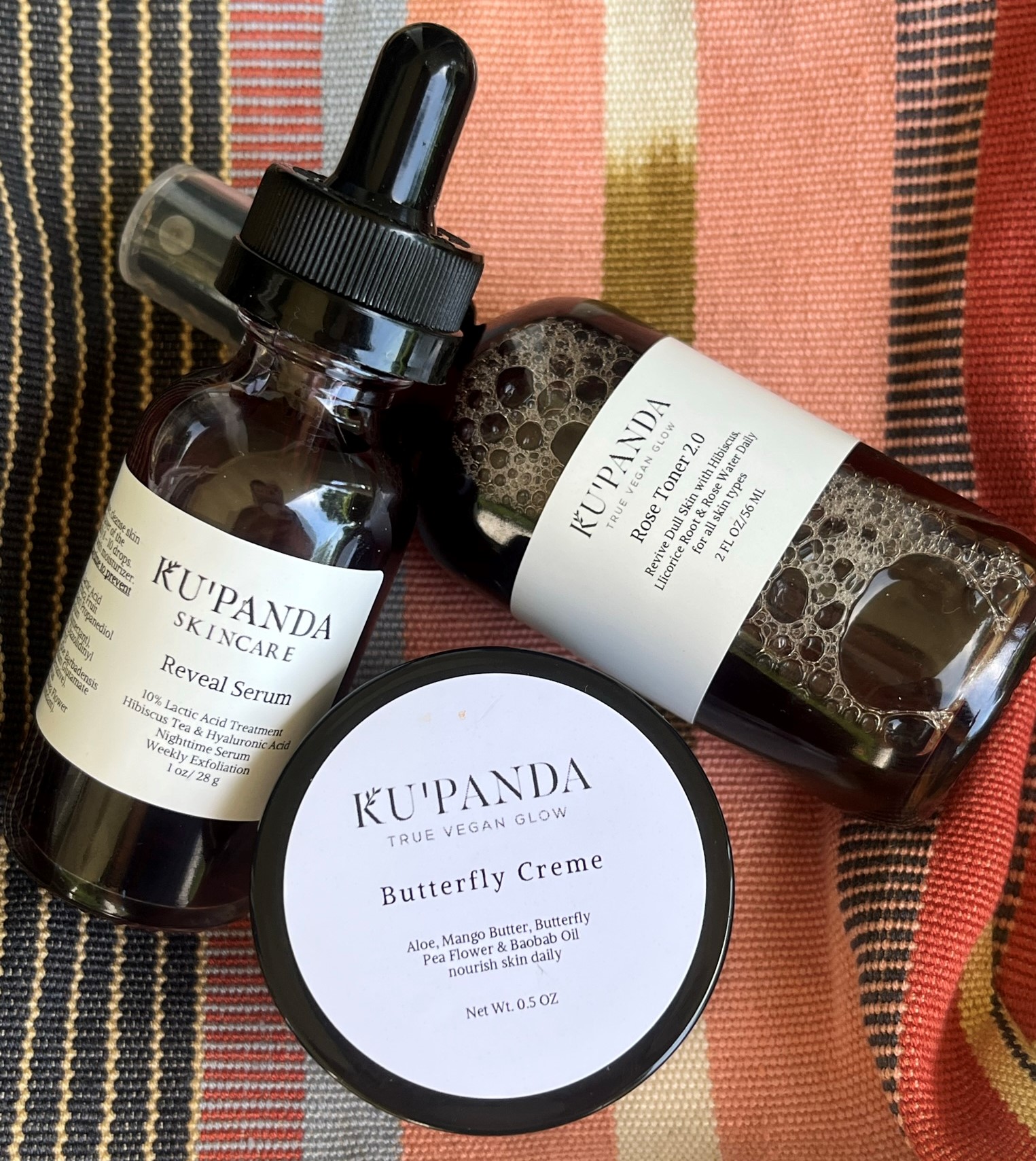
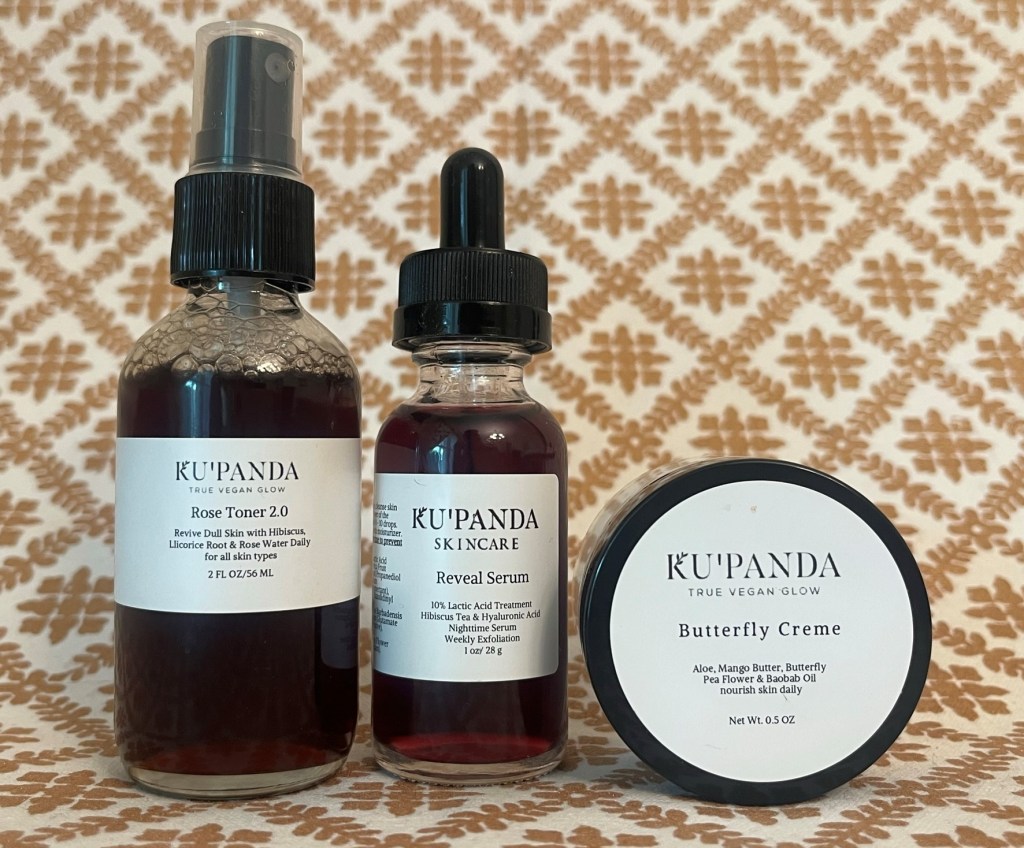
Travelers with long, dehydrating airplane flights but a desire to look and feel fresh upon landing could include several key Ku’Panda products in their carry-ons. Best-selling Butterfly Creme contains butterfly pea flower and has a fragrance-free whipped consistency that absorbs easily into thirsty skin. Rose Toner 2.0 is a small cooling spritz that revives dull skin with fresh hibiscus flower, licorice root, and rose water – ingredients that refresh, brighten, and revitalize your glow. Reveal Serum is a gentle, hibiscus tea exfoliant solution administered weekly to the skin via eye dropper, to combat hyperpigmentation and skin congestion using lactic acid and hyaluronic acid in combination with skin-soothing, fruit-based Vitamin C.
Packaged in gender-neutral glass containers, and essentially unscented, the Ku’Panda skincare line can benefit people of all skin type and shade. No one is excluded from the healing benefits of nature’s best. At Kupandaskin.com, full size products as well as sample sizes can be ordered, with all shipping included in the cost.
Economic and Earth-friendly, herbal teas in Ku’Panda skin products are a way to use nature to replenish the skin’s lost hydration with a sustainable solution. The “to plant” definition of the company name also reflects Ku’Panda’s positive and noteworthy viewpoint on intentional manifestation: “We can all have the life we desire, planted one seed at a time.”
By Barbara Gibbs Ostmann All photos courtesy Switzerland Tourist Board
Switzerland is celebrating 150 years of Alpinism this year, and there’s no better way to celebrate than by going for a long mountain hike.
Aristocratic English adventurers were on to a good thing back in 1857 when they reached the summit of the Finsteraarhorn and later, upon their return to London, founded The Alpine Club, the first mountaineering association in the world.
By 1863, English climbers had ascended more than 50 Swiss peaks, firmly launching Switzerland as the playground of Europe and the center of mountain tourism. Today’s hikers can choose from more than 40,000 miles of well-marked paths throughout the country.
NEED COMFORTABLE BOOTS Touring Switzerland by foot is a lot different than touring it by train or car, and worth all the sweat and effort. The key to a successful hiking trip is a pair of well-broken-in hiking boots — it is not the time to try out a new pair.
Having lived in Switzerland for two years as a graduate student, and visiting it many times, I had my doubts about going on an organized hiking tour. But hiking in a group proved to be a great way to visit Switzerland, providing moral support and camaraderie. Although we had prepared for the trip by hiking at home, we all benefited from the well-planned itinerary that began with easy walks and built up to the steeper climbs, preparing us physically for the more difficult parts of the hike.
My group of hiking companions, ranging in age from 13 to 67, set off in high spirits from Les Avants, above Montreux on Lake Geneva in the French-speaking part of Switzerland, and arrived 10 days later, foot weary but fulfilled, in M̹rren in the heart of the Bernese Oberland in German-speaking Switzerland.
STARTED EASY The adventure began with an easy hike through the forest up to the Col de Jaman (Jaman Pass), above Lac Leman (Lake Geneva). We spent the first night on the trail in a matratzenlager or dormitory — a large room filled with side-by-side mattresses. It was a good introduction to what to expect in the final stages of our hike when we would be in the mountains for three days, carrying all our food and clothing. For most of the trip, we carried a day pack and a sack lunch each day, while our suitcases were transported by bus to the next village and hotel where we would spent the night.
It was early to bed because it was early to rise. At a little more than 11 miles, the next day’s walk was the longest of the trip, and much of it was on paved roads— hard on the feet and legs. However, the scenery along the Lac de L’Hongrin was beautiful and the weather was sunny and warm. The day’s hike ended in L’Etivaz, a small village in the French part of Switzerland.
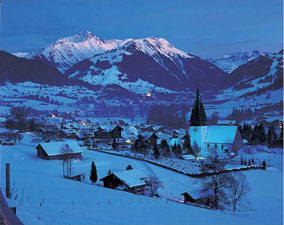
DAY THREE The third day’s walk was more typical of those to come. We started with a steep climb out of the valley and up to the windy Col de Jable (Jable Pass), where we huddled behind a rock fence to eat lunch. Upon crossing the Col de Jable, we left the French Canton of Vaud and entered the German Canton of Bern. Descending, we arrived in the glitzy resort town of Gstaad. There was time to shop, but in our hiking gear, we didn’t look the part of fashionable Gstaad jet-setters.
In the morning, we hiked through drizzling rain to the bus stop and took the postal bus from Gstaad to the village of Lauenen, where we set out on the day’s hike. As we trudged over the Tr̹tlisberg Pass, the rain grew heavier and the temperature dropped. At the top of the pass, it was sleeting, and we were wet, cold and miserable. No stop for a picnic lunch at the top of this pass! In fact, no stop for lunch at all. All we wanted was to get to the next town, Lenk, and get warm and dry.
We did hole up briefly on the porch of an unoccupied chalet where we nibbled chocolate bars, changed from wet to dry clothes (if you were lucky enough to have any dry ones in your pack) and generally fortified ourselves for the remaining descent. We finally arrived at our small hotel in Lenk, where we rushed to get into hot baths midpoint of hike the hotel quickly ran out of hot water.
The next day, the midpoint of the hike and a free day, dawned sunny and bright. Many of us took the ski lift up to Leiterli from where we could see across the valley to the pass we had crossed the day before in the rain. We could pick out the chalet where we stopped, the place where we got lost and had to climb on our hands and knees on the slippery scree to get back up to the path, and where we had turned off to take a shortcut to town. It looked better in the sunshine than it had in the rain the day before!
Sunday, it was back to the trail. We started with a short bus ride to the hamlet of B̹elberg, from which we hiked to the Hahnenmoos Pass. It was drizzling, but nothing like the rainy day we’d had before. As we descended, the rain stopped, and we arrived in the lovely town of Adelboden with time to visit the shops.
The journey from Les Avants to Adelboden had been an introduction to the days to come. From Adelboden on, the mountains were higher and more rugged, and much of the trail was above the timberline.
The next day’s 9-mile hike began with a long, hard climb up to the Bunderchrinde Pass — more than 3,500 feet over slippery shale rock — then on to Kandersteg. As I sweated, puffed and panted, I wondered if I could actually make it. But when I reached the pass at 7,500 feet, it was more than worth the effort.
In my notebook I wrote, with words inadequate to describe the satisfaction of being there: What a thrill. The view is worth the whole hike. We are above the clouds, and in the clouds, as they move and change position. The north face of the Eiger just popped out of the clouds — thrilling! Eiger and Munch
Later, both the Eiger and the M̦nch were stunning as they poked through the clouds. Sighting the Eiger that day was the first of many such glimpses as we continued toward it and ended up directly across from it at our final destination of M̹rren. We were now at the heart of the hike — three days in the mountains with everything on our backs, hiking from Kandersteg to M̹rren, across the Bernese Oberland into the shadow of the Jungfrau, the magnificent mountain and glacier above Interlaken.
Luck was with us, and we had great weather for the three days, and even the next day in M̹rren, when we visited the Jungfraujoch in bright sunlight.
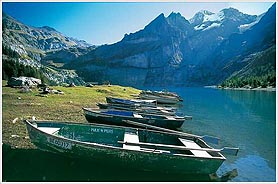
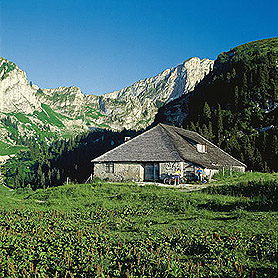
Leaving Kandersteg and its comforts, we started with a chairlift up to the Oeschinnensee, a spectacular Alpine lake with blue waters in an incredibly beautiful setting. From the lake, it’s a climb of more than 3,600 feet to the Hoht̹rli Pass, where we spent the night in an Alpine hut on the Bl̹misalp, next to a glacier. The hut, perched precariously on the top of the pass, is a popular spot for summer hikers and mountain climbers. In the winter, it is covered completely by snow. The accommodations at the hut consisted of a large room filled with mattresses, where we all piled in and slept like logs.
COLORFUL, AWESOME SUNSET One of the thrills that day was watching the colorful sunset, as the sun sank into the clouds, framed by the mountain peaks. From the pass, we could pick out the Eiger, now bigger and closer than its first sighting yesterday, as well as the Schilthorn with its restaurant perched on top, the scene of the James Bond movie, “In Her Majesty’s Secret Service.”
We began the morning’s descent by clinging to a steel cable pegged into the mountain wall as we slipped and slid on loose scree. The descent of 4,000 feet before reaching Alpine pastures seemed interminable. We just kept walking-and walking-and walking and going down and down and down.
We finally reached the valley floor where a glacial river flowed, icy cold and steel gray in color. We peeled off as much clothing as we could and still be decent and cooled off in the stream. Then it was on to a nearby chalet for cold beer and our sack lunches.
In the afternoon, we hiked along a wide path with wildflowers and bright sun. It was a delightful walk, leading us to our accommodations for the night: a cow and goat barn at Unter D̹rrenberg.
A ‘LOFTY’ SLEEP We climbed a ladder from the stables to the loft. (You quickly learn to hold the sides of the ladder, not the rungs, unless you want a handful of cow manure!) In the loft, there were side-by-side mattresses, as in the dormitories. Only here, the air was scented with ammonia from the goats and cows below. It was primitive, but one of the trip’s highlights for me, but not for some of my fellow hikers. It was probably a good thing that the next night we would find ourselves in a comfortable hotel once again.
The next day was the last day of the hike, and we hated to see it end. The morning’s climb was the most difficult of the entire trip — or maybe I was just getting tired. I thought I’d never make it across all that slippery scree and obtain the summit. But once again, upon arriving at the pass, the Sefinenfurke, the views were so spectacular and the feeling of accomplishment so great that I immediately forgot the ordeal of arriving there.
MAKE IT LAST We dawdled over lunch at the pass; everyone wanted to make the day last as long as possible. A snooze in the sun, a scramble to a nearby peak for photos, and soon it was time to descend. We crossed from the shale into Alpine pastures into forest and down into M̹rren, a picturesque village perched on the side of the mountain, facing the Jungfrau, M̦nch and Eiger across the valley.
The snow-covered mountains radiated sunlight as we descended, alpenstocks (walking sticks) in hand. After watching the Eiger grow larger and larger for several days, suddenly there it was, bigger than life and bathed in bright sunlight.
The feelings of the group could be summed up in the words we saw carved in German on an ancient chalet in the village of Kandersteg:
“He who drinks of the high mountain light, shall know no unhappiness on earth.”
For hiking tips and itineraries specific to Switzerland, visit www.myswitzerland.com and click on “hiking.”
The most important item for a hiking trip is a good pair of boots that fit you well and are thoroughly broken in. Other things to include in your pack are: moleskin, Band-Aids, Swiss Army knife, water bottle, sunscreen, Ace bandages, medicated powder, poncho, wool or fleece sweater or jacket, flashlight, binoculars, compass, hat, sunglasses, resealable plastic bags for keeping articles dry. Be sure to dress in layers — the weather in the mountains can change swiftly.
ABOUT THE WRITER Barbara Gibbs Ostmann is an award-winning journalist with 30 years of writing and editing experience in newspapers, magazines, cookbooks and newsletters. She was food writer for the New York Times Regional Newspaper Group from 1993-2005 and food editor of the St. Louis Post-Dispatch from 1975-1990. She joined the faculty of the University of Missouri-Columbia as an assistant professor and the coordinator of the Agricultural Journalism program from 1991-1993.
Barbara has co-edited 12 cookbooks and is co-author of “The Recipe Writer’s Handbook,” a style manual, and was copyedited or contributed to 17 other books. She writes about travel, food and wine for regional and national magazines, and copyedits manuscripts for several publishing houses.
Barbara is treasurer of The Culinary Trust, the philanthropic arm of the International Association of Culinary Professionals (IACP). She is also on the Board of Directors of the Midwest Travel Writers Association and the Missouri Association of Publications. She has traveled extensively in Europe, Asia, Australia, Africa, North America and South America.







 European Traveler