Discover Monte Isola: Fishing Heritage and Local Cuisine

By Alison Ramsey

Northern Italy island cuisine and fishing boats follow tradition

Literally translated to “Mount Island,” the beautiful village of Monte Isola, Italy, rises from the middle of Lake Iseo in the Brescia province in Lombardy. Monte Isola comprises three islands, the principal being Montisola—the largest inhabited lake island in Europe—reachable only by boat (ferries run approximately every 20 minutes during the day). Beneath the glittering cobalt water swims the sea life that, for years, inhabitants relied on for sustenance and livelihood. Montisola’s main industry is now tourism, but in the past, it was fishing.

Montisola island in Lake Iseo has many docks and fishing boats

Montisola island in Lake Iseo is lined with docks and fishing boats.

Fishing boats and islands dot Lake Iseo in the Brescia region of Italy

Fishing boats and islands dot Lake Iseo in the Brescia region of Italy.

Unique Wooden Fishing Boats

Shipbuilding yards focused heavily on making a typical style of fishing boat called the Naèt—long and narrow wooden boats, similar in style to the famous Venetian gondolas. Islanders depended on these light and agile boats for fast transportation to the mainland as well as for successful fishing. Naèts are difficult to construct and require great skill to make, with builders using an ax, hammer, chisel, and plane to cut and shape chestnut wood for the frame and durable larch wood for the remainder of the body.

The original flat 4.5-foot-wide boats were almost 23 feet long, with sails attached to two intercrossed chestnut wood poles—about 11.5 feet and 13 feet each. Around 1958, builders began removing the sails and adding engines to these boats, which shortened the boat length by about two feet. At the very center depth of the hull, the width remains only 80 cm. Every village uses its own color for their Naèts, so a quick glance at the docks identifies where each boat originated.

The only remaining shipbuilding yard on the island is Cantiere Nautico Ercole Archetti, and this craftsmanship-focused family company has trained five generations of carpenters to reach shipbuilding expertise. Building unique wooden boats since 1600, the team now uses cutting-edge technology but still makes their products entirely by hand, using carefully selected marine wood and employing highly qualified Master Shipwrights. Maintenance, storage, and rental are other offerings from Ercole Archetti Shipyards.

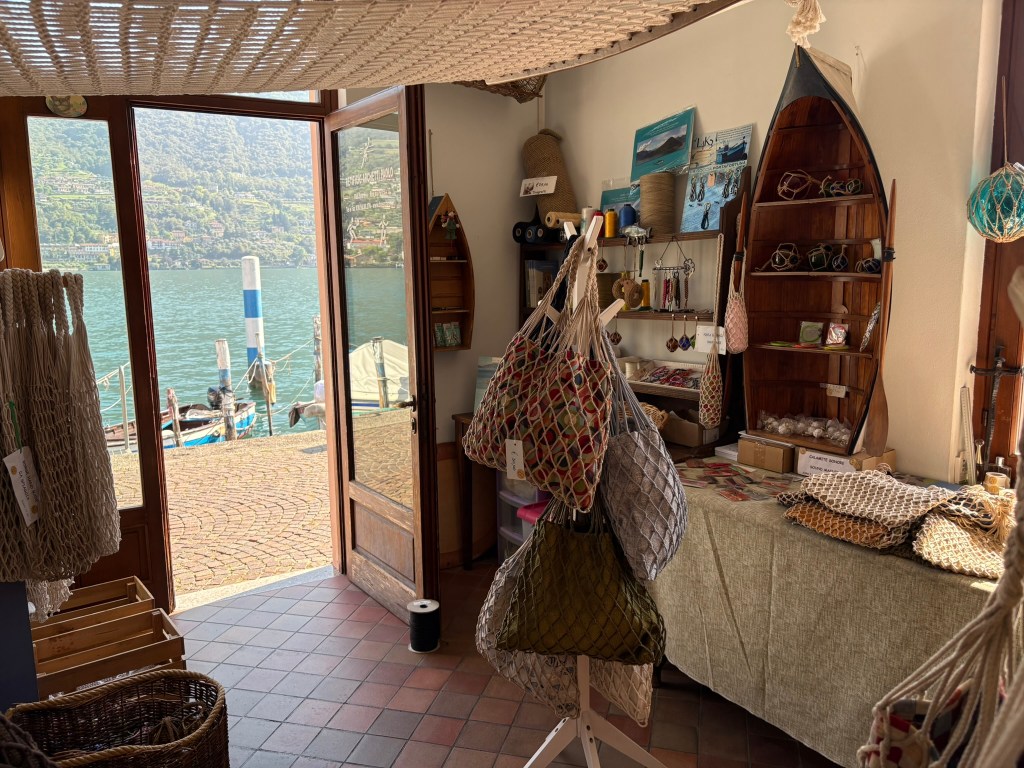
Paolo Archetti, owner of local net manufacturing company Bresciareti, said that nuns used to own property on the island and wanted to be paid for the land they lent out. Renters with limited cash began to pay the nuns in fish instead of funds—children loaded the special two-ended wooden needle with thread and women handwove the nets men used for fishing. Because fishing was most productive during the warm months of April, May, and June, islanders learned how to preserve their catches, drying the fish and conserving them in oil for later payment.
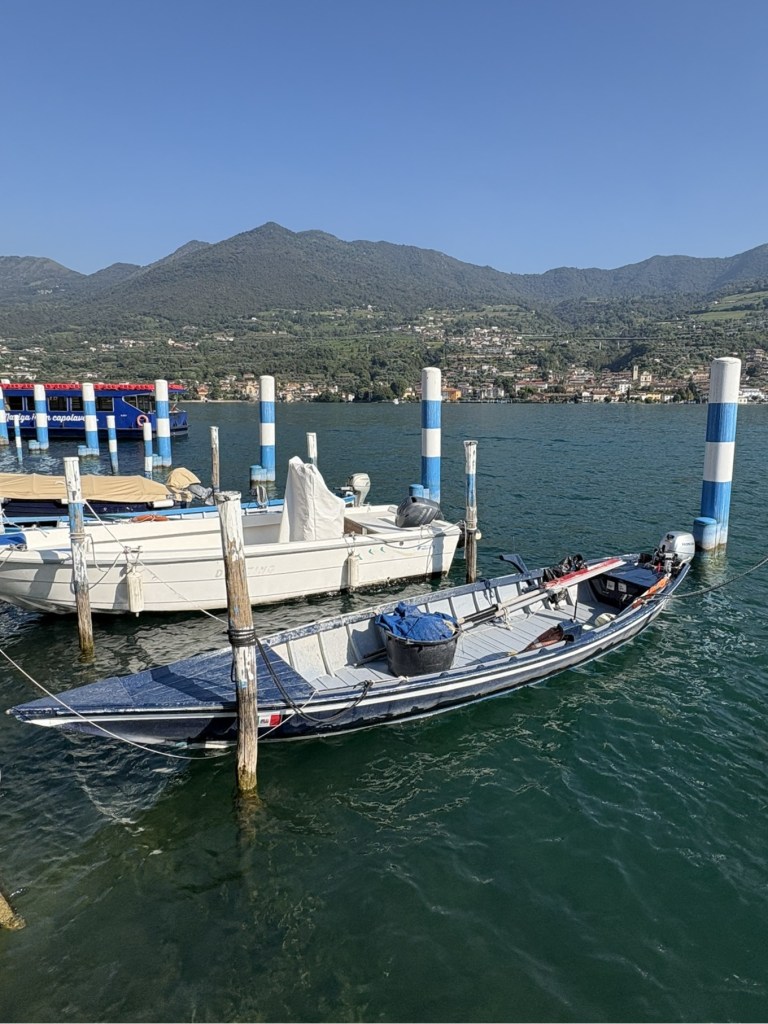
Top left: The color of a Naèt indicates from which village the boat originated.
Top right: The Bresciareti storefront sells handwoven net accessories and the company fulfills large orders of machine-created nets for sports, construction, and aviary control.
Bottom (photo courtesy of Michele Turla): Peschiera Maraglio port has always been a hotspot for boat parking.

Island Cuisine Includes Preserved Sardines

The pretty, pink-embellished Church of St. John the Baptist in Carzano, a small lakeside settlement on Montisola, is also known to locals as “St. John of the Sardines.” Independent tour guide Elena Confortini explained that on June 24 residents historically celebrated St. John’s feast day. On this day, which fell during the final seasonal period when sardines came closest to the shore and there was an abundance of fish, the church used to cook sardines in its front square and serve them freely. Although locally referred to as “sardines,” these fish are actually a species of freshwater twaite shad (Alosa fallax locustris) but are called sardèna in Italian because their appearance is similar to true sardines.  

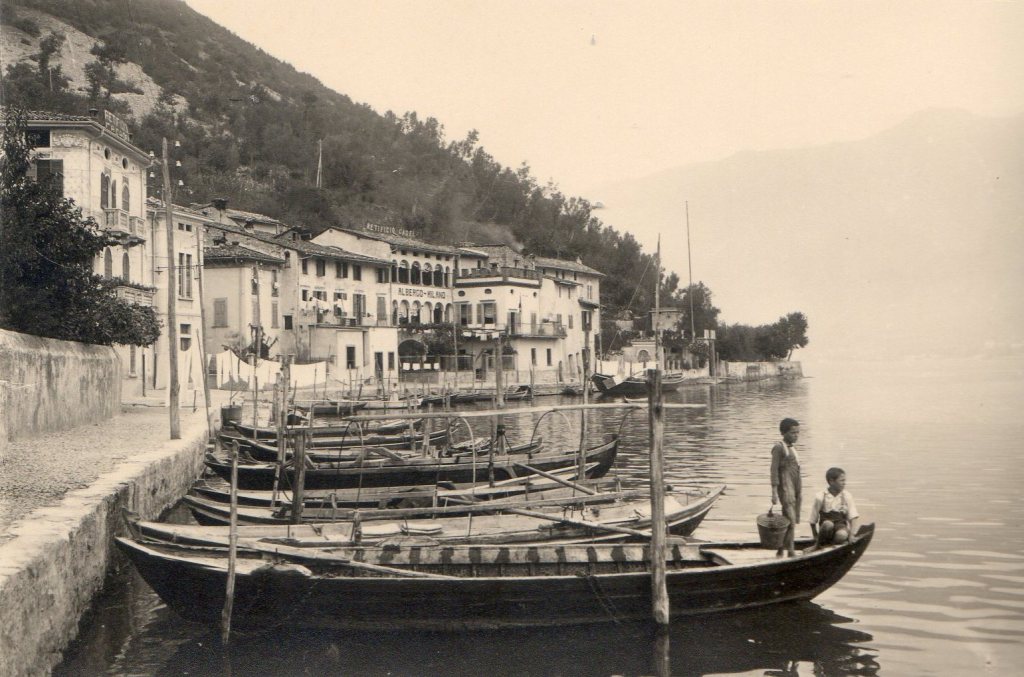
Left (photo courtesy of Michele Turla): Fishing was the primary industry in historical Monte Isola.
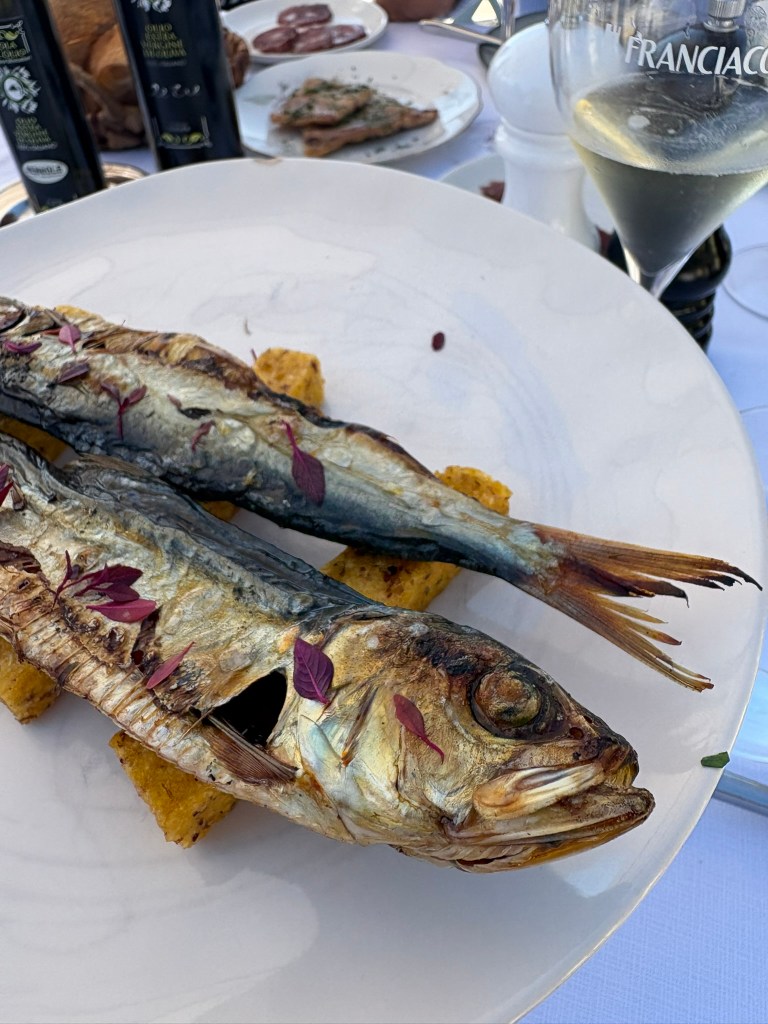
Right: Dried, salted, and preserved sardines on polenta are a traditional treat served by Sensole Locanda Contemporanea restaurant.

For centuries now, island cuisine has included dried, salted, and preserved fish—characteristically sardines, perch, and the common European whitefish (known in Italian as coregone). These fish, cured with salt and dried in the sun for 24 hours, are then washed and strung up in parallel lines dangling from hooks or tacked upon arches of ash branches secured with thread on both ends. After sunning outdoors in the heat for 5-10 days, the fish are removed into iron containers and pressed in olive oil. Several months in this state turns sardines a golden color, and they can then be seasoned simply with garlic, parsley, and oil, and grilled quickly over a hot fire. The surname “Archetti” is one of the more common names on Montisola. Translating to “little bows,” this name is derived from the bowed wooden frames erected all over the island for fish-drying.
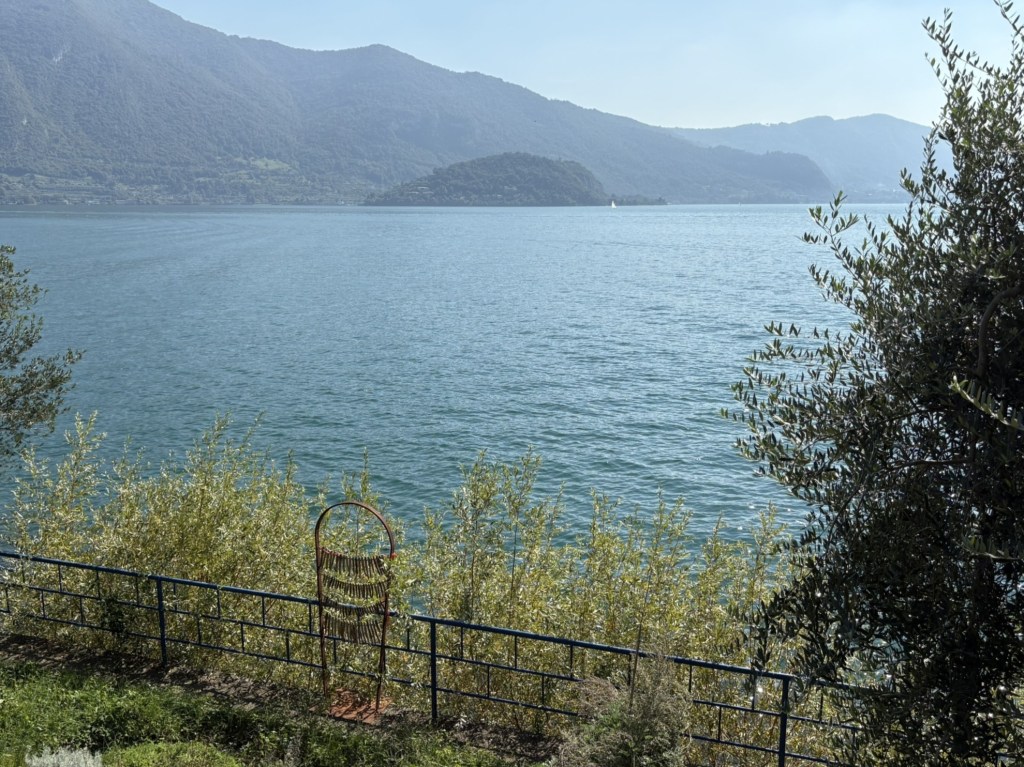
Monte Isola fish-preservation techniques from the past are still used today across the island, and garden art pieces imitating fish-drying frames decorate the lakeside. (Black-and-white photo courtesy of Michele Turla)

Only two eateries on the island currently serve sardines, one of which is Sensole Locanda Contemporanea. This charming, yellow-walled lakeside restaurant sits directly down the rocky hillside below Martinengo Fortress, a privately owned castle with a recognizable circular lookout tower. Young restaurant owner, Giovanni Lo Bresti, expertly serves traditional dishes using locally grown products, with each course gorgeously plated. Try the intensely flavorful dried sardines (use fingers, not utensils, to eat it the authentic way!) alongside tasty bars of fried polenta. Enjoy Monte Isola smoked salami, grilled dry coregone fish, fried pike balls, homemade bread, butter sprinkled with perch bottarga (salted, cured fish roe), and spiced salami ragout with bread gnocchi.

The upper outdoor deck of Sensole Locanda Contemporanea restaurant overlooks beautiful Lake Iseo, while the lower outdoor patio invites guests from the pedestrian walk.

Montisola Olive Oil and Franciacorta Wine

At Sensole restaurant, diners can also try the deliciously light local extra virgin olive oil labeled “l’isola dell’olio” (translation: “island of the oil”). One olive grove of just nine trees produced 50 bottles of this particular oil in 2025, the last bottle of which was down to the last drops in late September.

The whole of Monte Isola contains approximately 15,000 olive trees of several varieties, with groves planted on steep terraces to match the upward sloping terrain. Although difficult to harvest mountainside, the olives produced are of high quality and thrive in the unique lake island microclimate. Montisola’s restaurants prepare homegrown products with local oil and pair dishes with DOC “controlled designation of origin” wines from the region, such as Caruna 100% Chardonnay Brut from the Franciacorta region’s vineyards (served only in the Franciacorta-specific tulip-shaped glasses that stimulate bubble longevity).
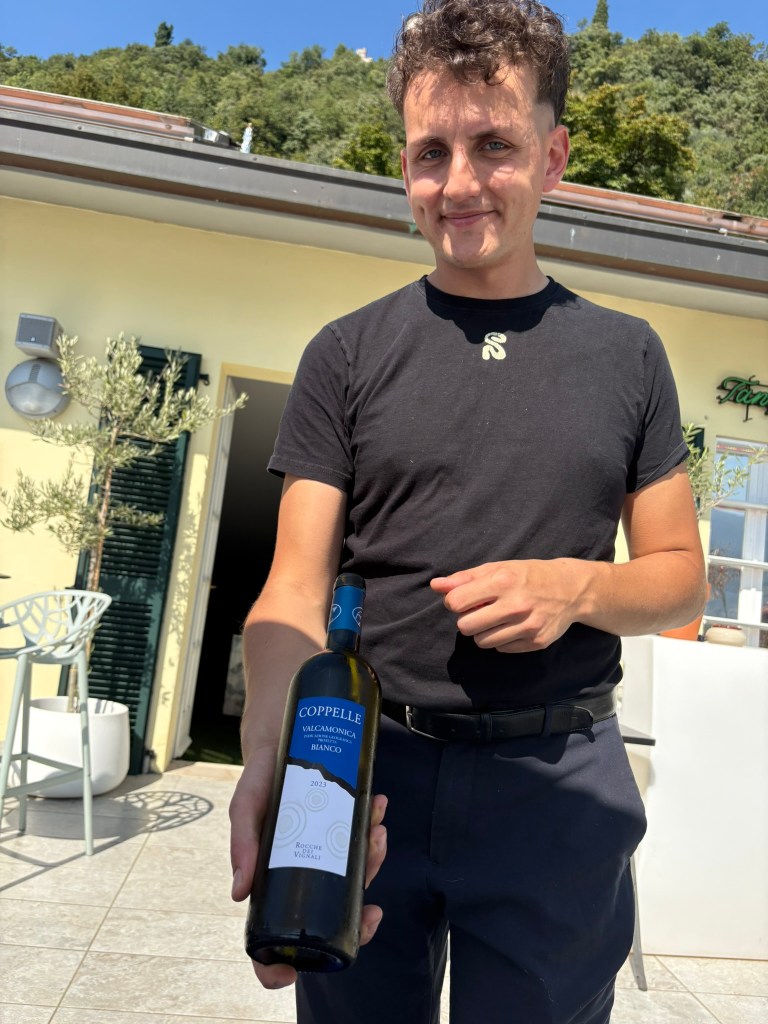
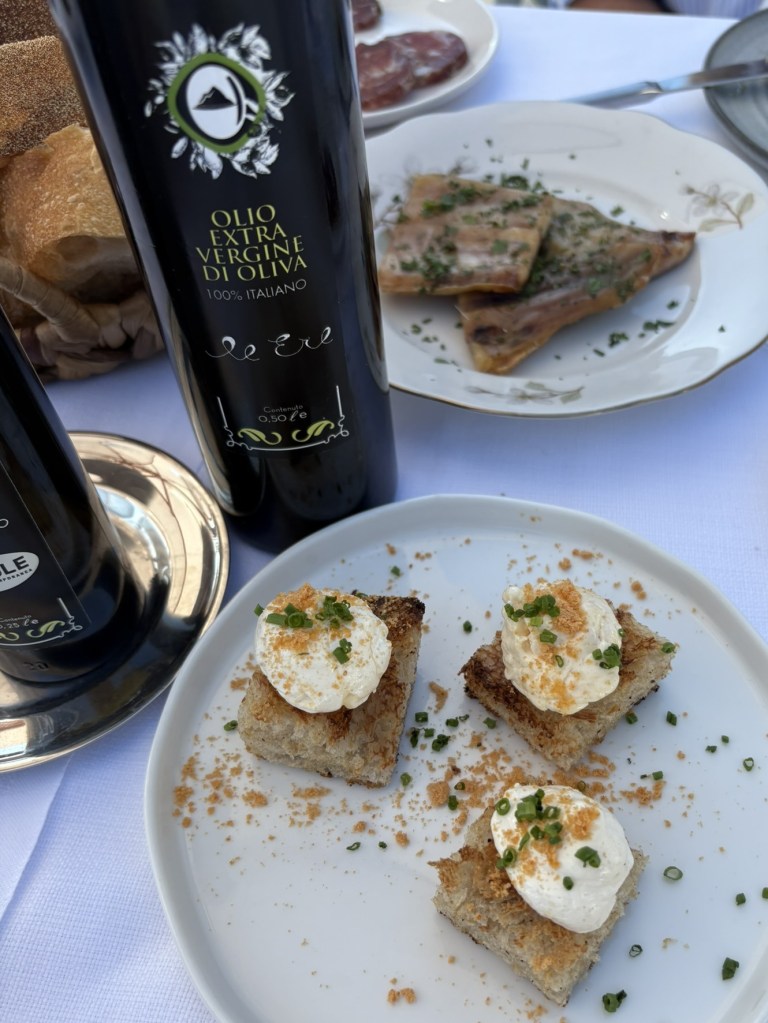
Tasty local olive oil and flavorful, high-quality wines from the Franciacorta wine-growing region round out a relaxing and delicious meal provided by owner, Giovanni Lo Bresti, at Sensole Locanda Contemporanea.

All along the lakeside, pedestrians and bikers move down the winding path that separates glimmering water from flowering bushes and trees heavy with ripe fruit. Beside this promenade, sunbathers bask in golden rays and swimmers leap into the cool water to paddle amongst ducks and swans.

Here you can feel like you’ve stepped back into bygone times, commune with untouched nature, and enjoy an unhurried and uncrowded getaway. Wander the path to see garden art structures made of metal and wooden fish—imitating the ancient practice of drying the catch-of-the-day on arched racks—and peruse shops and cafes that use sardine and net décor to echo the fishing culture that sustained Monte Isola for so long.   

HOW TO GET THERE… ✈️
Fly NEOS Air from JFK airport in New York to Milan, Italy, and then travel by train or car to Sulzano, on the eastern shore of Lake Iseo. Then, take the 5-minute ferry ride from mainland Sulzano to Peschiera Maraglio on Monte Isola. Visit neosair.com/it for flights and schedules.
Tip: If you follow NEOS Air on social media, you can often score flight discounts and coupons to use toward airfare.

WHERE TO STAY… 🛏️
For a day trip to Monte Isola, stay at the romantic and rich-with-history Cappuccini Resort (Via Cappuccini, 54, 25033 Cologne BS, Italy), a 30-minute drive from the Sulzano ferry dock. This charming monastery-turned-resort is beautiful, clean, peaceful, and tastefully furnished with a blend of vintage relics and modern décor. A separate building with yoga, sauna, steam cave, and bubbling grotto spa with fountains and sun-heated waters provides numerous relaxation opportunities. Wander the sprawling hillside grounds to visit the outdoor pool and explore blooming rose gardens and fruit orchards. For more information, please visit cappuccini.it/en.


🔍 Search the site to discover more European Traveler feature stories. 🌍

FOLLOW US:

Afloat on the Rhine and Moselle

A dream river voyage on the Scenic Opal spotlights cozy towns in the heart of Europe

By Randy Mink

With its half-timbered houses, tangle of cobbled alleyways and picture-perfect castle perched on a crag high above the market square, the German village of Cochem struck me as something plucked from a medieval fairy tale.

Almost too good to be true, the Moselle River town of 5,500 was one of several stops on “Charming Castles & Vineyards of the Rhine & Moselle,” a seven-night cruise itinerary offered by Scenic, an Australia-based company with 12 luxury river ships in Europe. My brother and I were aboard the 163-passenger Scenic Opal, our floating hotel for the week.

Happily, in Cochem and some other ports of call, the historic town centers lay just steps from the ship’s gangway. I love being in the middle of everything within minutes of disembarking.

Clockwise: The Moselle River town of Cochem, Germany, as seen from hilltop Reichsburg Castle. (Photo credit: German National Tourist Board)
Reichsburg Castle looms high above the Moselle River town of Cochem.  (Larry Mink Photo)
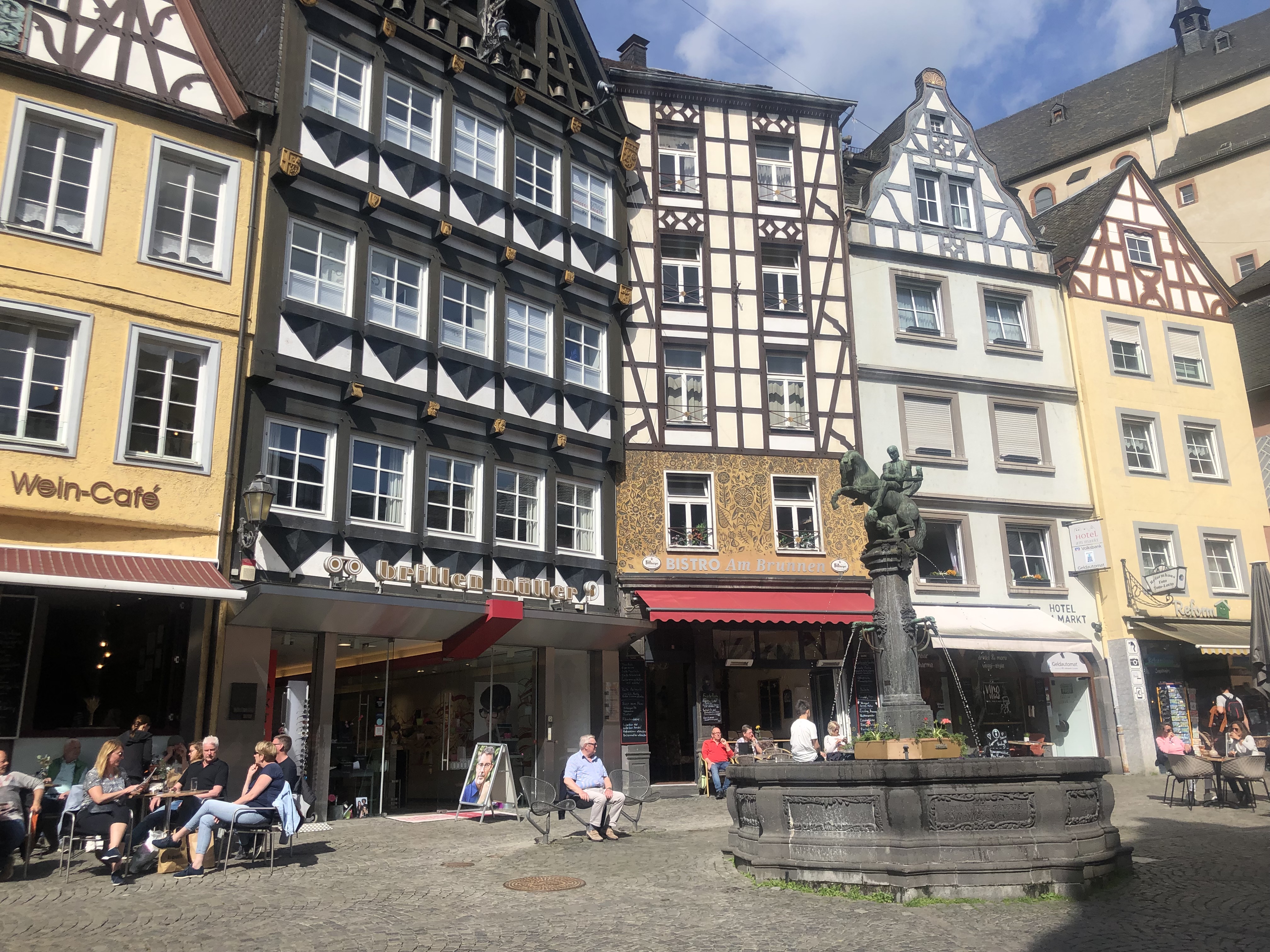
Cochem charms visitors with its ancient, half-timbered buildings. (Randy Mink Photo)

Because of my ancestry and the fact that my first trip to Europe was a summer German language program in Austria, I’ve always had an affinity for German-speaking countries. Until this cruise, however, I had never been to the Rhine or Moselle valleys.

It was the Moselle’s inclusion that steered me to the itinerary, as not all Rhine cruises venture to this narrower, slower-moving, more intimate tributary, which twists and turns more than 100 picturesque miles between the German cities of Trier and Koblenz. Many Rhine journeys spend time in the more industrial stretches to the north.

I also liked this particular circuit because it touched four countries. Besides shore excursions in Germany, Scenic offered tours in France and the Grand Duchy of Luxembourg. The cruise ended in Basel, Switzerland, where we stayed two nights in a hotel before flying home.

The Rhine travels nearly 800 miles from the Swiss Alps to Rotterdam on the North Sea, forming the border of southwestern Germany and eastern France. From the Vosges Mountains, the Moselle flows through northeastern France and Luxembourg to Germany, joining the Rhine at Koblenz, our first port after embarking the day before at Mainz, a city of 200,000 about 40 minutes from the Frankfurt airport.

Both waterways dish up a passing parade of vineyard-covered slopes, hilltop castles and idyllic towns with gabled houses, church steeples and leafy riverside promenades—an eye-popping feast for those of us who thronged the railings or drank it in from deck chairs. Steady streams of barges, sightseeing boats and pleasure craft also kept us engaged. One afternoon on the Moselle, the Scenic Opal went through three locks, the first one upon leaving Koblenz for the pretty Moselle Valley, my favorite part of the trip.

Koblenz: At the Confluence

In Koblenz I opted for a ship-arranged walking tour but easily could have wandered on my own. The colorful squares and alleys of Old Town, a largely pedestrianized shopping zone with plenty of cafes and bakeries, were a short walk from our berth at the beautifully landscaped Rhine Promenade. (My brother chose the e-biking excursion, exploring on one of the ship’s electrically assisted bicycles.)

The park-like river walk led to Deutsches Eck, or German Corner, the point where the mighty Rhine meets little sister Moselle. Lording over the tip of land is a monumental equestrian statue of Kaiser Wilhelm I (1797-1888), first emperor of the New German Empire. Destroyed in World War II and replaced in 1993 after the fall of the Berlin Wall, the statue now represents German unity. Nearby stand three concrete slabs from the infamous wall and text about life under Communism in East Germany. Overlooking the confluence is Ehrenbreitstein Fortress, a massive complex reached by cable car from the promenade.

Clockwise (Randy Mink Photos): An equestrian statue of Kaiser Wilhelm I, the first emperor of the New German Empire, overlooks the confluence of the Rhine and Moselle rivers in Koblenz, Germany. The meeting point is called Deutsches Eck, or German Corner.
Scenic Opal passengers explore Koblenz, Germany, on a guided bike tour.
Tempting bakeries and cafes are just a few blocks from cruise ships’ Rhine River berths.

Little Luxembourg

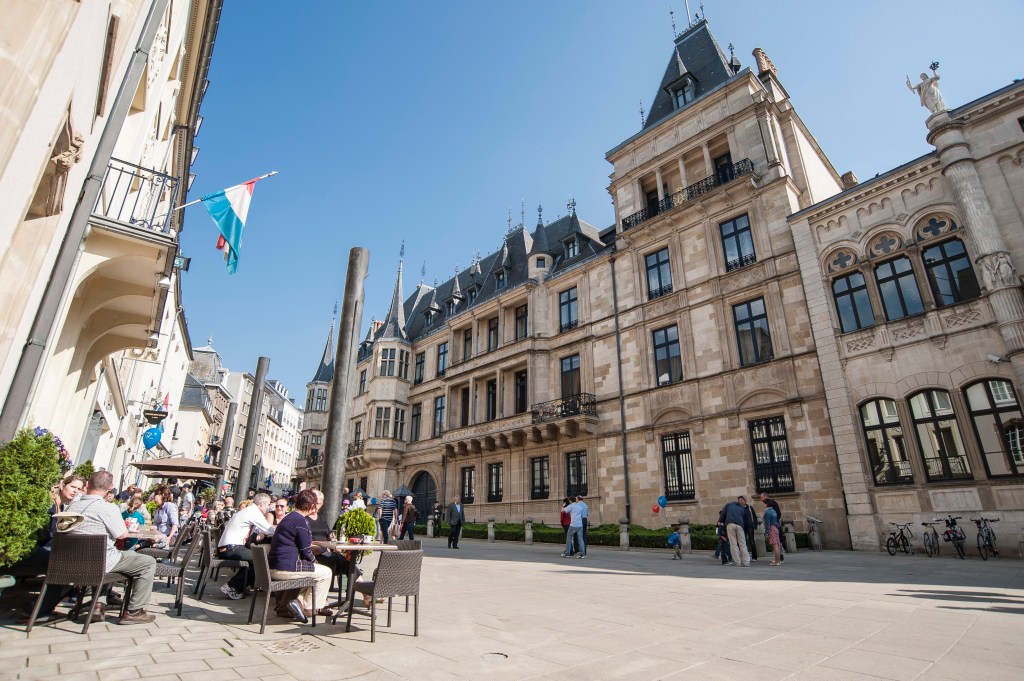
From our next stop, the Moselle Valley town of Bernkastel, we took a morning excursion to Luxembourg City, an hour-and-a-half away. Our guided ramble through the capital city’s oldest quarter, famed for the stone bastions and battlements rising above dramatic ravines, focused on the shop-filled pedestrian zone and included panoramic lookout points. After the tour my brother and I relaxed over hot chocolate at the Chocolate House, snaring an outdoor table across from the Grand Ducal Palace, where we earlier had snapped pictures of the soldiers on guard duty. Passengers who didn’t sign up for Luxembourg could choose to visit a Bernkastel winery and sample the valley’s renowned Rieslings.

1: The imposing Grand Ducal Palace captivates river cruise passengers on the Luxembourg City shore excursion. (Photo credit: LFT/Christian Millen)
2: Soldiers stand guard at the Grand Ducal Palace. (Randy Mink Photo)
3: Ancient fortifications charm visitors to Luxembourg City, a shore excursion option from the Moselle River town of Bernkastel, Germany. (Photo credit: LFT/Alfonso Sagueiro)
4: Stunning panoramas abound in Luxembourg City. (Randy Mink Photo)

Moselle Crowd-Pleasers: Bernkastel & Cochem

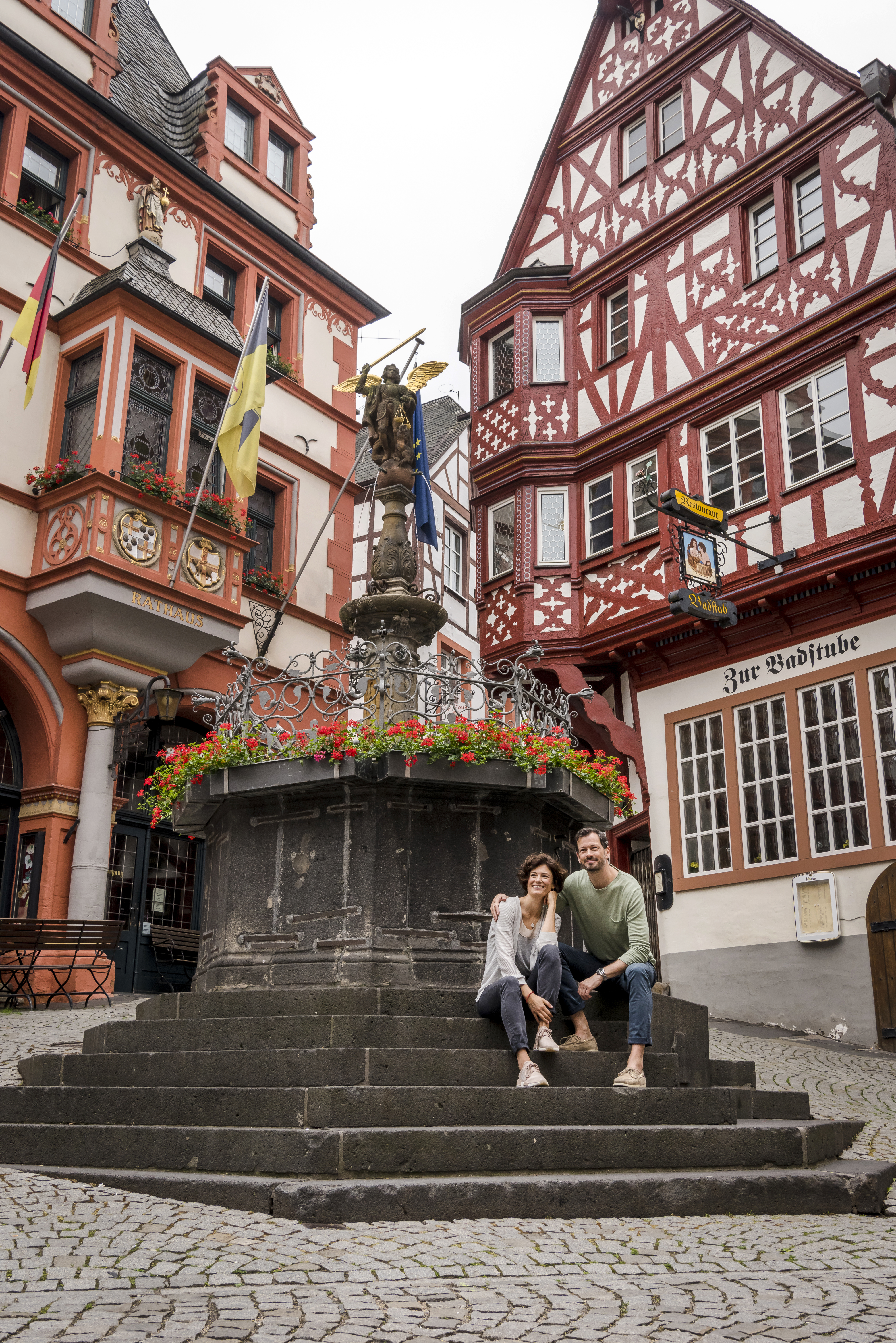
After lunch on the Scenic Opal, moored across the bridge from Bernkastel, we explored the storybook German town. Its riverfront facade didn’t look unusually quaint, but as we probed deeper into the web of little streets, the place just kept getting cuter and cuter. I wanted to photograph every square, crooked lane and antique building in my path, and slip into every wine tavern. Had we more time, I would have hiked up to Landshut Castle, frequented centuries ago by the territorial lords of Trier. Built in 1277 and in partial decay since 1692, it houses a restaurant and cafe.

Left: The fairy-tale town of Bernkastel is a popular stop on Moselle River cruises in Germany. (Photo credit: German National Tourist Board)
Right: Landshut Castle, dating back to 1277, overlooks Bernkastel.  (Randy Mink Photo)

In the evening, we all boarded buses for Trier, where Scenic had arranged a private classical concert staged amid the Gothic grandeur of the 13th century Liebfrauenkirche. Riding through Germany’s oldest city to reach the church, we grabbed glimpses of the famous Porta Nigra, the best-preserved Roman city gate north of the Alps.

Scenic Opal passengers attended a private classical concert at the 13th century Liebfrauenkirche in Trier, Germany. (Randy Mink Photo)

In Cochem, the hub of the Middle Moselle, our excursion featured a visit to Reichsburg Castle. From its lofty vantage point we enjoyed sweeping views of the river, the steep vineyard abutting the castle grounds and a skyline dominated by the onion-dome spire of St. Martin Church. Dating from the 11th century, Reichsburg was restored in the late 1800s by a wealthy Berliner who created an idealized version of a medieval stronghold. Although not architecturally faithful, it certainly gives Cochem a photogenic landmark, and three-fourths of the main tower is original. Mounted animal heads, suits of armor and period furniture set the mood inside. Afterwards, our walking tour of Cochem showcased its compact central square, Baroque town hall and ancient town gates.

Clockwise (Photo credits: German National Tourist Board): Cochem’s Reichsburg Castle has all the trappings of a rustic baronial estate.
The Middle Ages come alive on tours of Reichsburg Castle.
Reichsburg Castle and the onion-dome spire of St. Martin Church frame this view of the Moselle River town of Cochem, Germany.

On the Romantic Rhine

Next we traveled the 32 miles from Cochem back to Koblenz, where our ship overnighted in order to get in position for a morning journey to Rüdesheim that would spotlight the Upper Middle Rhine Valley, or Rhine Gorge, the river’s most castle-studded corridor. This would be our big day, the one we’d been waiting for.

As we looked out from the breezy top deck, it was castle after castle, many of them, romantically, in various states of ruin. Some crowned distant summits, others rose straight from the shore. Vine-ribboned hillsides and timeless villages seemed to be waiting around every bend.

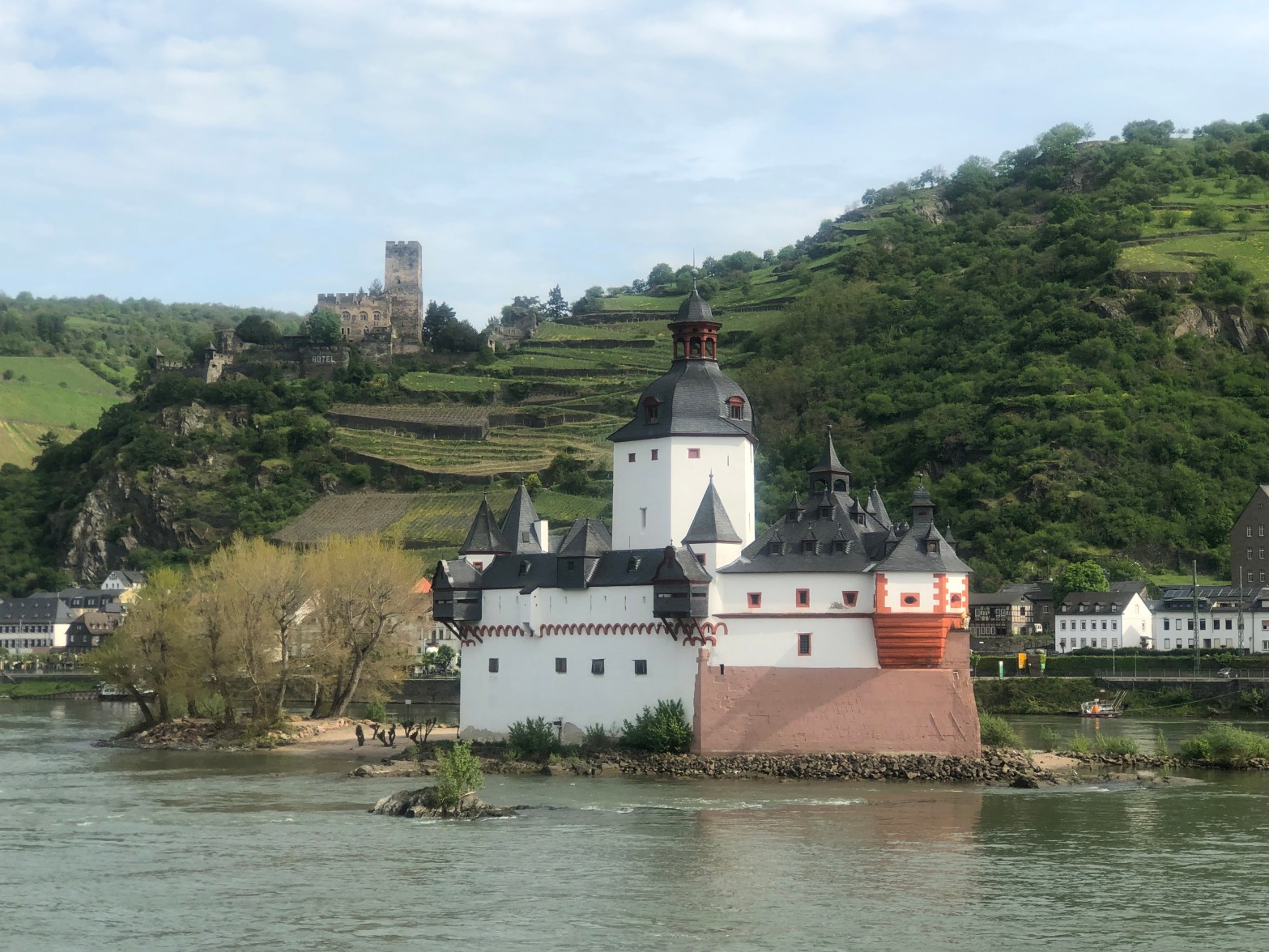
As we learned from the cruise director’s narration and from Tailormade (the Scenic smartphone app), some of the fortresses have been repurposed as museums, restaurants, hotels or private residences. Castle Stahlek in Bacharach, now a youth hostel, once served as a Nazi indoctrination center and military hospital during World War II.  (The app’s commentary also came in handy for exploring ashore and helped us identify the towns and landmarks we passed while cruising.)

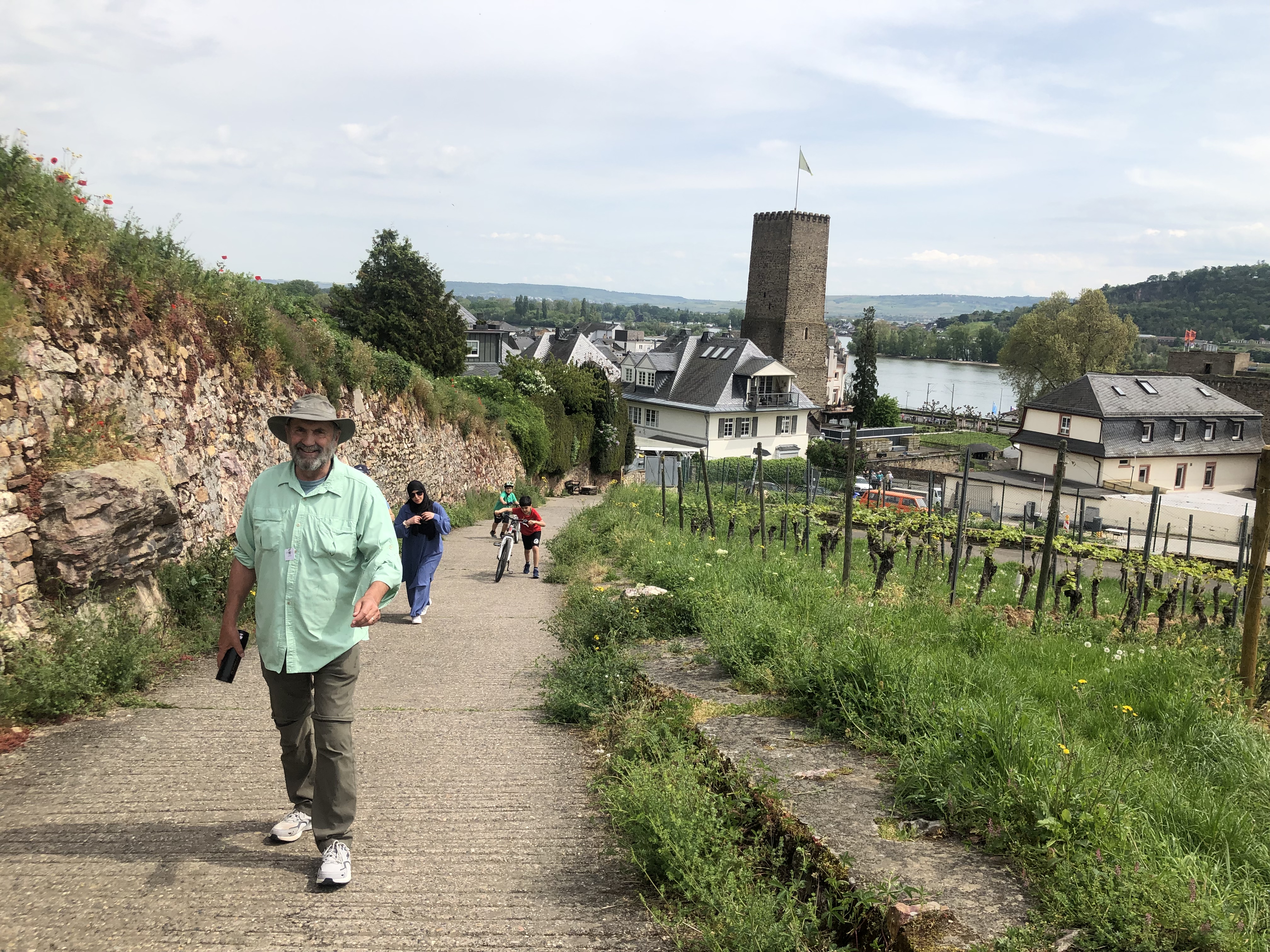
In Rüdesheim, a tourist-packed village crammed with wine taverns and souvenir shops, we hiked through vineyards to Niederwald Monument, a grandiose memorial that commemorates the 1871 founding of the German Empire after the end of the Franco-Prussian War. Our uphill trek was challenging, the cable car ride down a lot more fun.

Left: It’s an uphill trek for Scenic Opal passengers who choose to walk to the hilltop Niederwald Monument high above Rüdesheim. (Randy Mink Photo)
Right: Shore excursions in the Rhine River town of Rüdesheim visit the Niederwald Monument, a grandiose memorial that celebrates the 1871 founding of the German Empire after the end of the Franco-Prussian War. (Photo credit: German Tourist Board)

Forays into France

Heading south on the Rhine, the Scenic Opal tied up at two more German towns. From Rastatt we were torn between a tour to the German spa town of Baden-Baden and one to Strasbourg, capital of France’s Alsace, a region that historically has flipped back and forth between German and French control. In Breisach, our last port of call before Basel, we had to weigh Colmar, Alsace’s most beautiful town, against Freiburg, a Black Forest gem renowned for its medieval Old Town.

Since we had seen plenty of Germany, we went all in for Alsace and enjoyed walking tours of Strasbourg and Colmar, both with cozy, traffic-free historic cores chockablock with pastel, flower-laden, Hansel-and-Gretel houses. It’s just that touch of fairy-tale fantasy we needed to put a happily-ever-after ending to our trip through the enchanting heart of Europe—the Europe of our dreams.

Left: The Cathedral of Notre-Dame, a towering landmark cast in red sandstone, dominates this view of Strasbourg’s historic core. (Randy Mink Photo)
Right: Rheinstein Castle, near the German town of Trechtingshausen, is one of many medieval castles that captivates Rhine River cruise passengers. (Photo credit: German National Tourist Board)


To read about the Scenic Opal luxury river ship, including its accommodations and dining experiences, please visit https://europeantraveler.net/2023/10/19/cruising-through-the-heart-of-europe/

Two New Books Encourage Adventurous Hiking and Biking

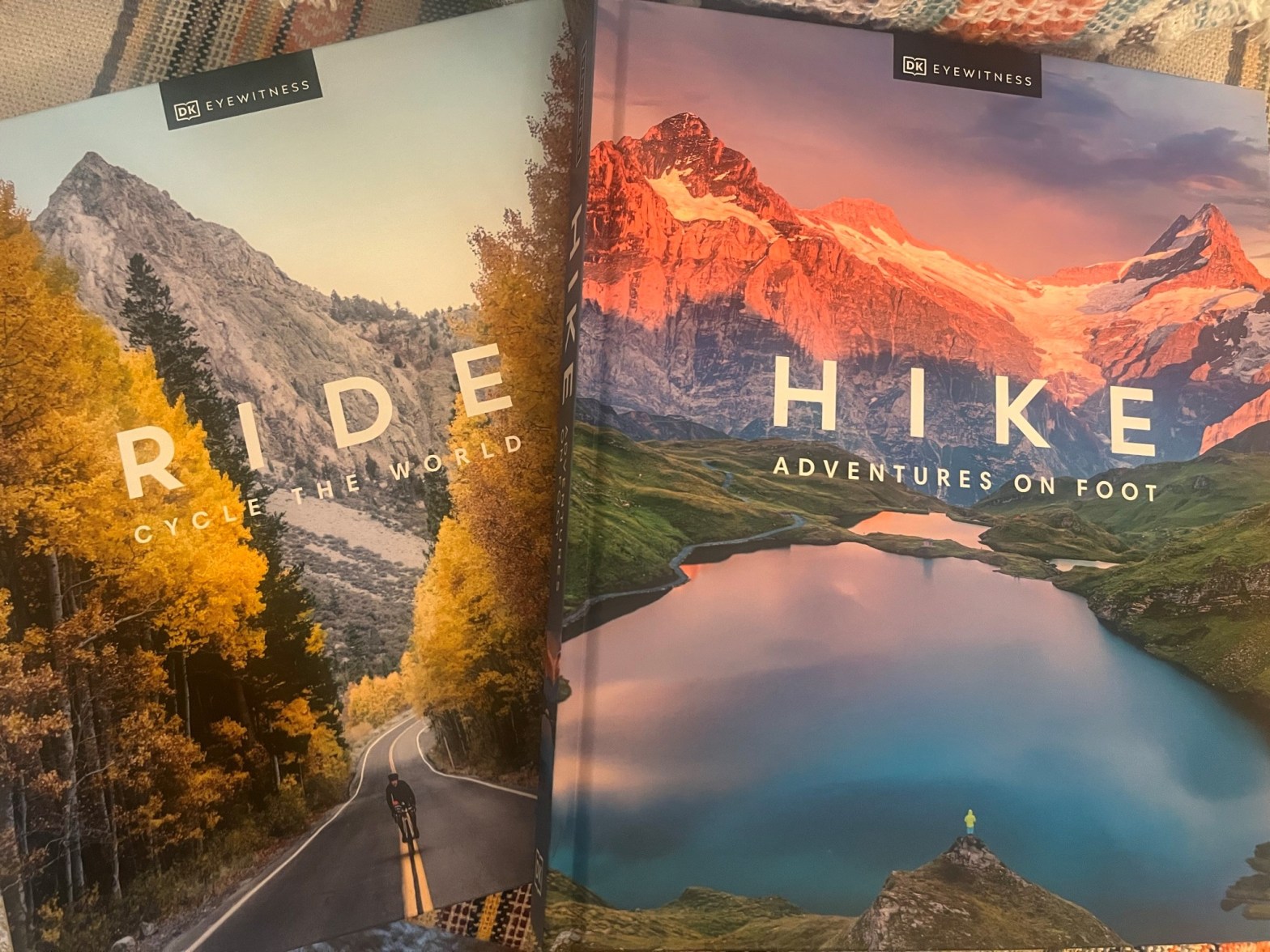
HIKE: Adventures on Foot
One hundred and twenty-five opportunities to move your body across the world in an exhilarating, sustainable way! This published compilation of walking trails is the work of outdoor enthusiasts who have selected each featured route for its spectacular scenery, interesting history, or unique challenges. Each trail suggestion includes practical information to help you plan your trip, including the distance, total ascent, elevation, duration, as well as sightseeing tips. Hiking newbies and veterans alike can benefit from the book’s preparation tips, trail etiquette guidelines, and essential gear checklist.

One scenic hiking trail suggestion, Dove Lake-Cradle Mountain (Ronny Creek, Tasmania, Australia), is a one-day circuit traversing boardwalks over moorland, passing through lush rainforest, and ascending large boulders on Cradle Mountain. Readers are advised to look for ambling wombats and gray-furred Bennett’s wallabies near Ronny Creek and to pause for photo opportunities of dramatic vistas from the summit of Cradle Mountain. The return trip passes numerous sparkling lakes and offers a chance to see quill-covered echidnas in their home near Dove Lake.

A fascinating book for active hikers and armchair travelers alike, “HIKE” binds maps, history, geography, and interesting photography together into an inspiring and informational volume.


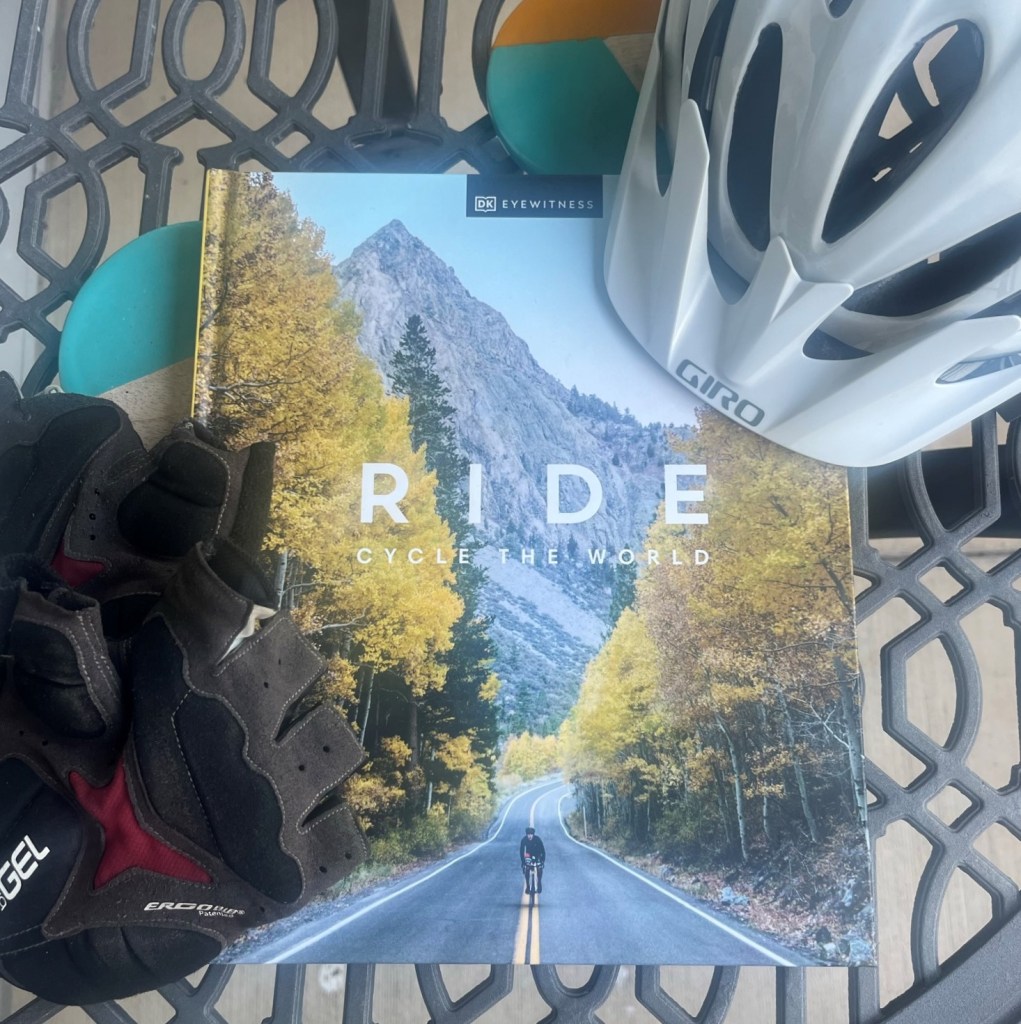
RIDE: Cycle the World
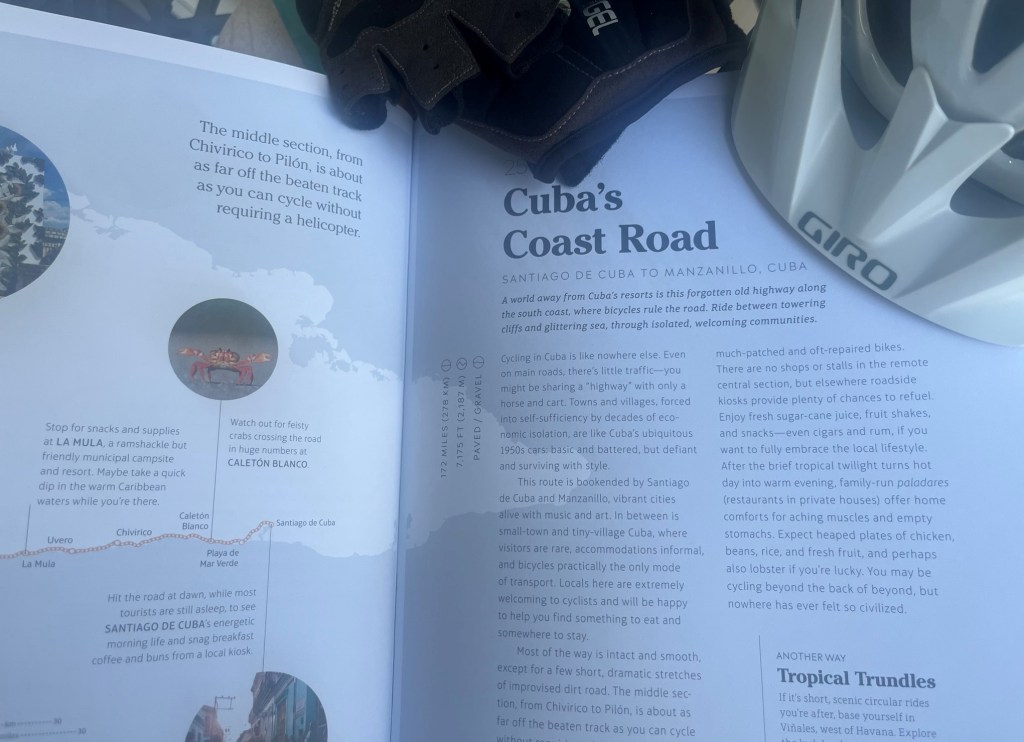
Explore the world by bike, cruising along the 100 cycleways presented in this compilation of trails recommended by avid cyclists. Along with colorful photos and area maps, this DK Eyewitness gem contains detailed route information, including road surface, elevation, total ascent, scenic outlooks, distance, and pit stops. Get inspired to go “bikepacking” in North America, Central and South America, Europe, Africa and the Middle East, Asia, and Australasia—wherever your travels take you.

Beginners, or those looking to upgrade their ride, are provided helpful guidance on which type of bike to choose for their adventures; road, mountain, gravel and touring, recumbent, and electric are the options explained and diagrammed in the opening pages of the book. Select a vehicle suitable for your experience level, desired terrain, comfort goals, and mobility needs, and prepare for your trip by reading up on bicycle maintenance, essential gear, and safety precautions.

Included in the book is a trail along the Helgeland Coast in Norway, which features a grouping of more than 6,500 islands rising from the sea. Best as a summertime route, with beautiful light but always a chance of showers, this Helgeland cycling opportunity traverses 126 miles in a “reasonably relaxed” ride on paved and gravel roads. “Syklist Velkommen” signs abound along the route, welcoming cyclists to stop for food, safe bike parking, and laundry facilities. Riders can expect photo-worthy vistas of mountain peaks, sandy beaches, and quaint and colorful wooden cabins, fishing huts, and houses. Along this route, stop at an old wharf along the trail to tour and sample sweets at Heidi’s Chocolate Factory in Dønna, eat a tasty meal cooked by famous chef Jon Aga at the Vega Havhotell, and visit the Vega World Heritage Centre to learn about eider ducks and how they helped earn the island UNESCO status.

Stock up on supplies and water, and prepare to feel the wind against your face as you explore spectacular sights via bicycle.  

For more DK Eyewitness titles, and further information about “HIKE” and “RIDE,” please visit https://www.dk.com/us/.   

Biking Along the German Rivers

BIKING THE GERMAN RIVERS

Germany is famous for its rivers; they cut through beautiful landscapes from north to south, from east to west, from the sea to the mountains. The rivers have been the modes of mass transportation long before roads and today the Elbe, Rhine, Main, Moselle or Danube invite hundreds of thousands of tourists each year for river cruises. But you cannot only discover Germany’s rivers on a boat. Cycling paths follow them through ever changing landscapes, past old castles, romantic towns and buzzing cities.

The Elbe Cycling Path is one of the most attractive in Germany. It leads for 520 miles from Dresden in the southeast all the way to the North Sea. The route is split in several stages, all easily doable in a day, and you can choose between both sides of the river. Leading through fascinating landscapes from wetlands to hills, connecting UNESCO World Heritage Sites such as the city of Dresden, the Luther town of Wittenberg and the harbor city of Hamburg, there is plenty to discover along the way. The river has historic significance as part of the former West German-East German border and you can still see the transformation of this region in process. Along the way you will find plenty of bike-friendly hotels, hostels and camping grounds, and many package tours make this a very accessible route.

The Moselle Cycling Path in Germany’s west between the wine-growing region of the Elbling wine near Trier, a wine specialty of the Upper Moselle, and Koblenz invites you to a pleasurable bike tour. For 150 miles discover the 2,000-year-old history of the region, from old Roman ruins in Trier and Koblenz, to romantic wine villages such as Bernkastel or Cochem and great spas in Traben-Trabach. The trail is predominantly level, with an excellent network of cycle tracks and rural roads as well as old towpaths and accurate sign-posting, offer optimum conditions for the casual cyclist.  

For 360 miles the Main River Cycling path leads from east to west through the northern Bavarian Region of Franconia and the State of Hesse to Frankfurt. Highlights along the way are the majestic Wagner town Bayreuth, the UNESCO World Heritage Site of Bamberg, known as Germany’s beer capital and for its Baroque architecture, the wine growing region around Wuerzburg and the buzzing financial metropolis of Frankfurt. Stop along the way in one of the many local breweries or vineyards and be enchanted by 1,000-year-old castles and cathedrals. 

The second longest river in Europe, the Danube, springs unofficially in the park of the princely Fuerstenberg castle in Donaueschingen at the border of the Black Forest in southwestern Germany, contained in a magnificently decorated, circular fountain from the 18th Century. “Mother Bear” presides over the fountain and shows her “daughter,” the young Danube and all cyclists the way.

The Danube Cycling Path leads for 360 miles through the German states of Baden-Wuerttemberg and Bavaria from the Black Forest to Passau in the southeast. The cycling road is signposted and package tours with several itineraries from seven to 15 days are bookable. Highlights along the way are the Sigmaringen and Hohenzollern castles of the Hohenzollern dynasty that ruled Germany in Baden-Wuerttemberg. Also interesting are the cathedral and merchant town of Regensburg, with the largest core of undestroyed medieval houses in Germany, and the three-river city of Passau. Discover the Danube from its fast flowing beginnings until it grows into a wide and impressive river in Bavaria.  

www.cometogermany.com
www.elberadweg.de
www.mosellandtouristik.de
www.mainradweg.com
www.donau-radweg.info

Cycling Through the Green Vilnius

Cathedral of Vilnius on Cathedral Square

Photos courtesy Vilnius Tourism

Vilnius, capitol of Lithuania, is not only famous for its old town, which is included in the UNESCO World Heritage list, but also for all its greenery. This city can definitely also be called a cyclist’s dream.

Start the route around the old town from Cathedral Square, considered to be the very heart of Vilnius. Visit the snow-white Cathedral of Vilnius.

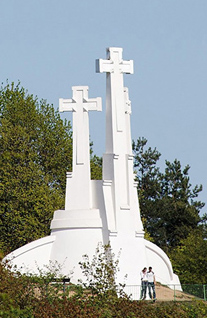
Hill of Three Crosses

From the square you can see Gediminas Hill with its 15th century tower of the Upper Castle and the Hill of Three Crosses. Climb these hills and enjoy an amazing view of the old town.

The cycle path from Cathedral Square leads to Pilies Street, the oldest and the most gorgeous street in the entire city. Pilies Street widens into Didžioji Street, at the end of which stands the white Vilnius Town Hall.

Here you can turn right into Vokiečių Street. Cross over Traku Street to Vilnius Street, which brings you to Gediminas Avenue, the main street of the capital. Turn right and here you are again, standing in front of the cathedral.

Cross the Neris River on the Mindaugas Bridge and you arrive at a section of the cycle path, where you will forget you are in a city. Feel the greenness and quietness surrounding you. All the way around the Neris River is on the right.

Starting at the Santariškės traffic ring, a 3-mile-long asphalt cycle path has been built. It goes along Green Lakes, crosses Verkiai forest, and finally ends at the intersection with
Gulbineliai Street.

While on this path don’t miss the architectural complex of Verkiai Palace, built 200 years ago. In ancient times, there was a pagan temple here. Behind the palace, on a cliff, is an observation platform, from which a view of the Neris Valley opens up.

Take forest roads from Verkiai Palace and you arrive at Ežerėliai Geomorphologic Reserve. At the top of the hill you will see Alsas Lake. Go down to Gulbinai Street which leads towards Balsys Lake and cross the small linden forest and finally you arrive at Balsys Lake, where swimming on a hot summer day is refreshing.

If you prefer not to travel alone, you can always join cycling trips around Verkiai Regional Park, organized by the Pavilnys and Verkiai Regional Parks administration. During the warm season you can travel the route Verkiai Palace – Ežerėliai – Green Lakes – Riešė and Turniškėlė – Verkiai Palace.

For more info http://www.vilnius-tourism.lt/en

Neris River